 Start here
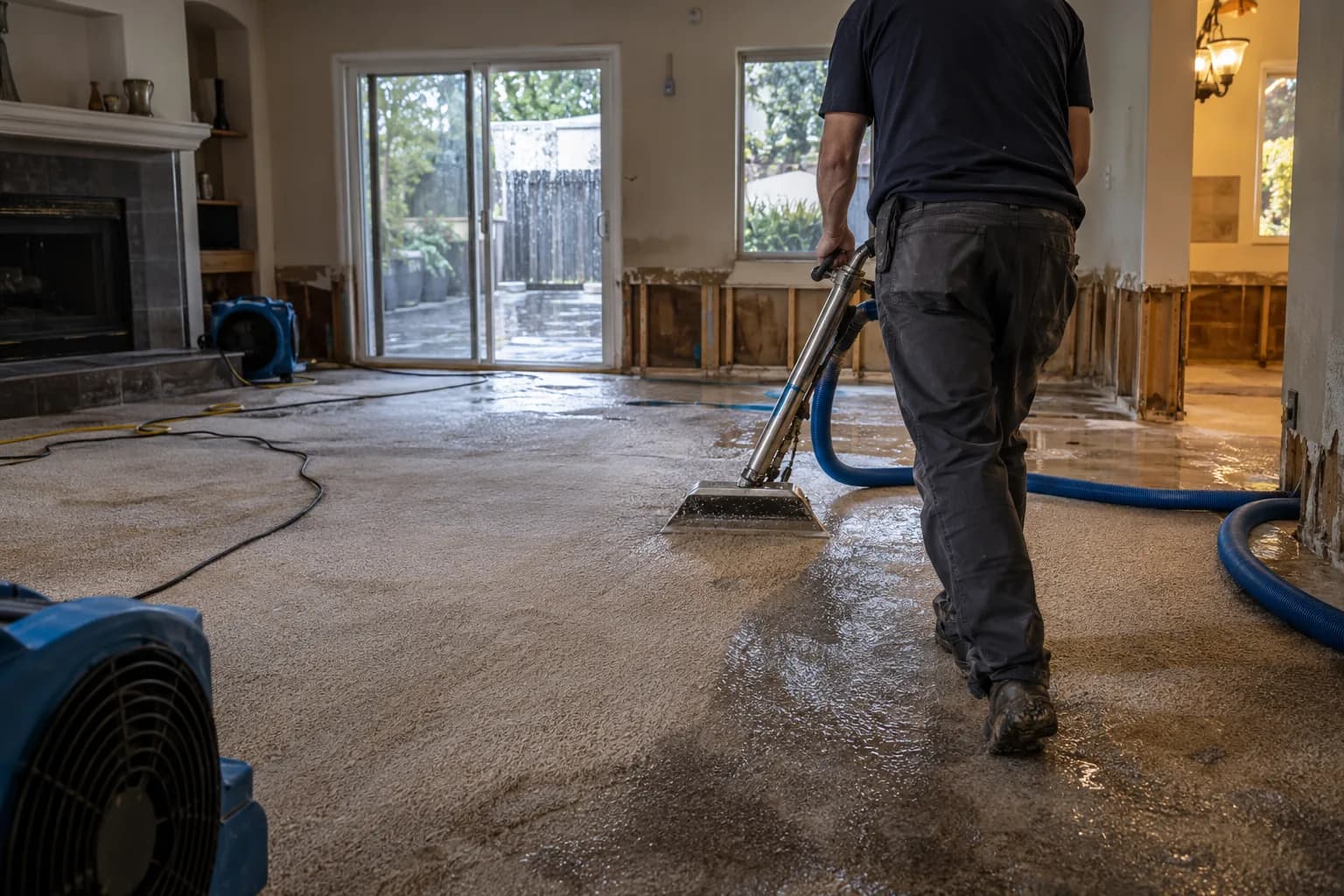
Emergency Water Extraction
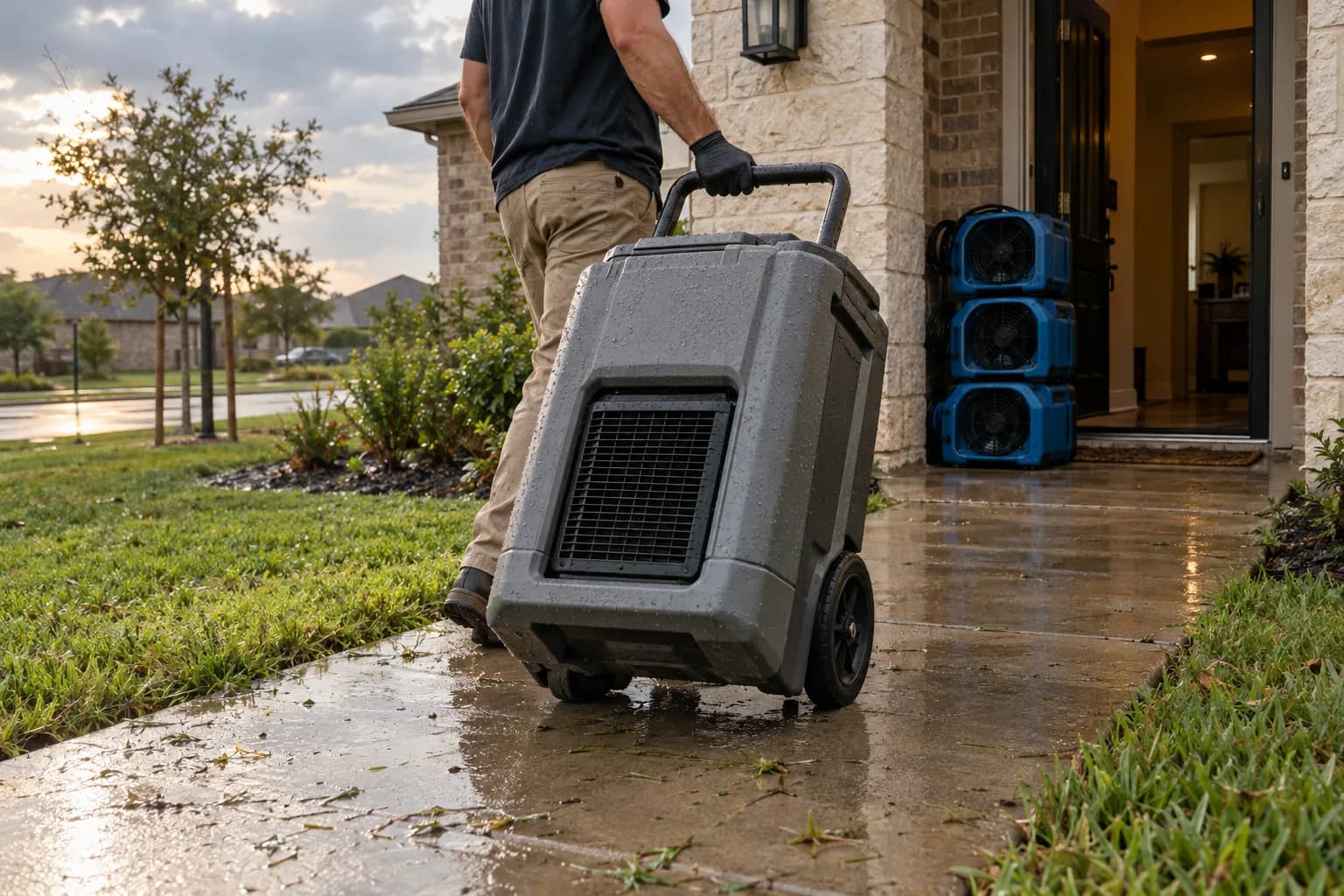
Fast removal of standing water with truck-mounted and portable units before it soaks into more material.
See emergency water extraction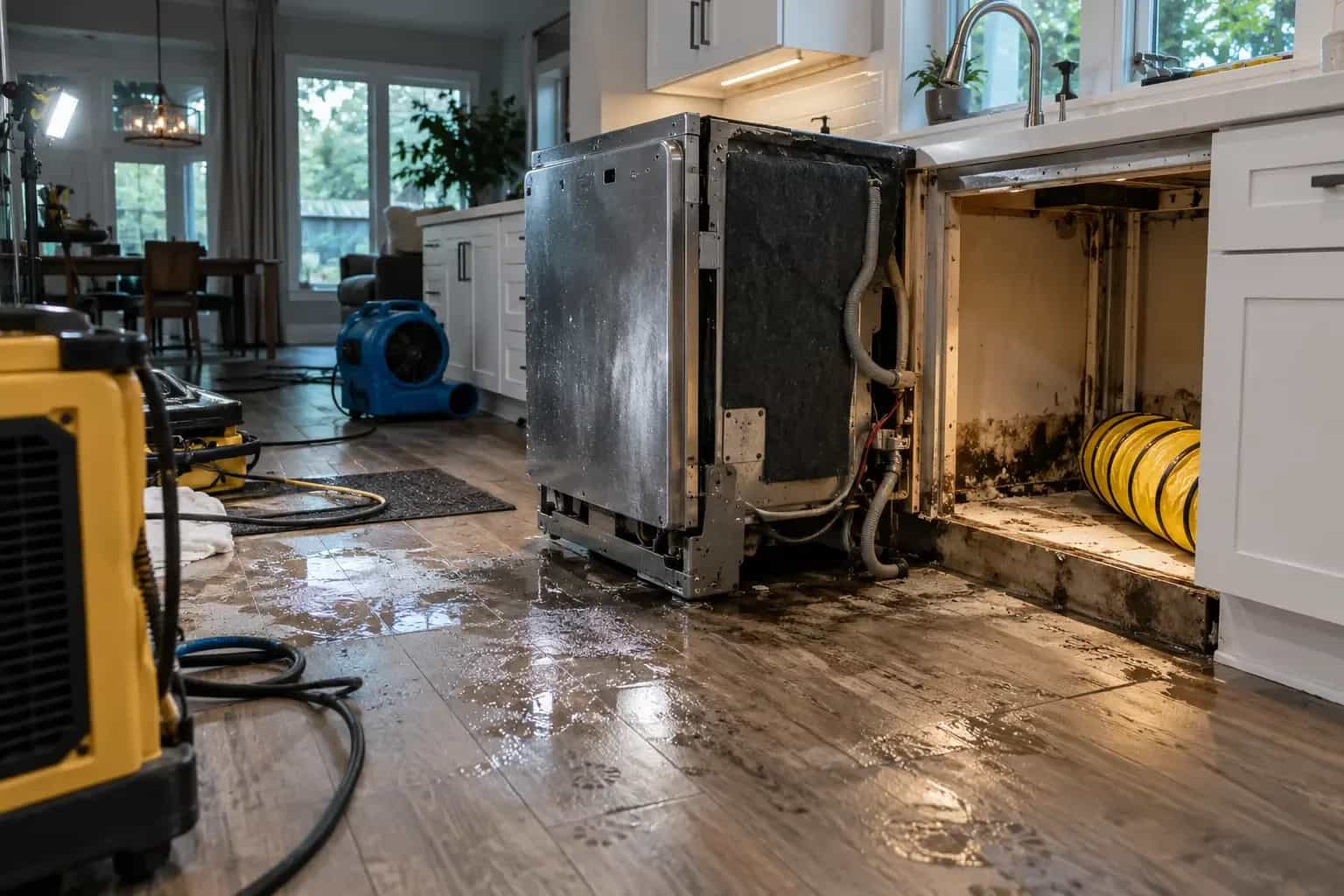
San Marcos, TX & Hays County · 24/7 response
Water heaters, washer hoses, dishwashers, fridge lines, and AC condensate pans fail quietly. We clean up and dry what soaked into the cabinets and subfloor, 24/7 in San Marcos.
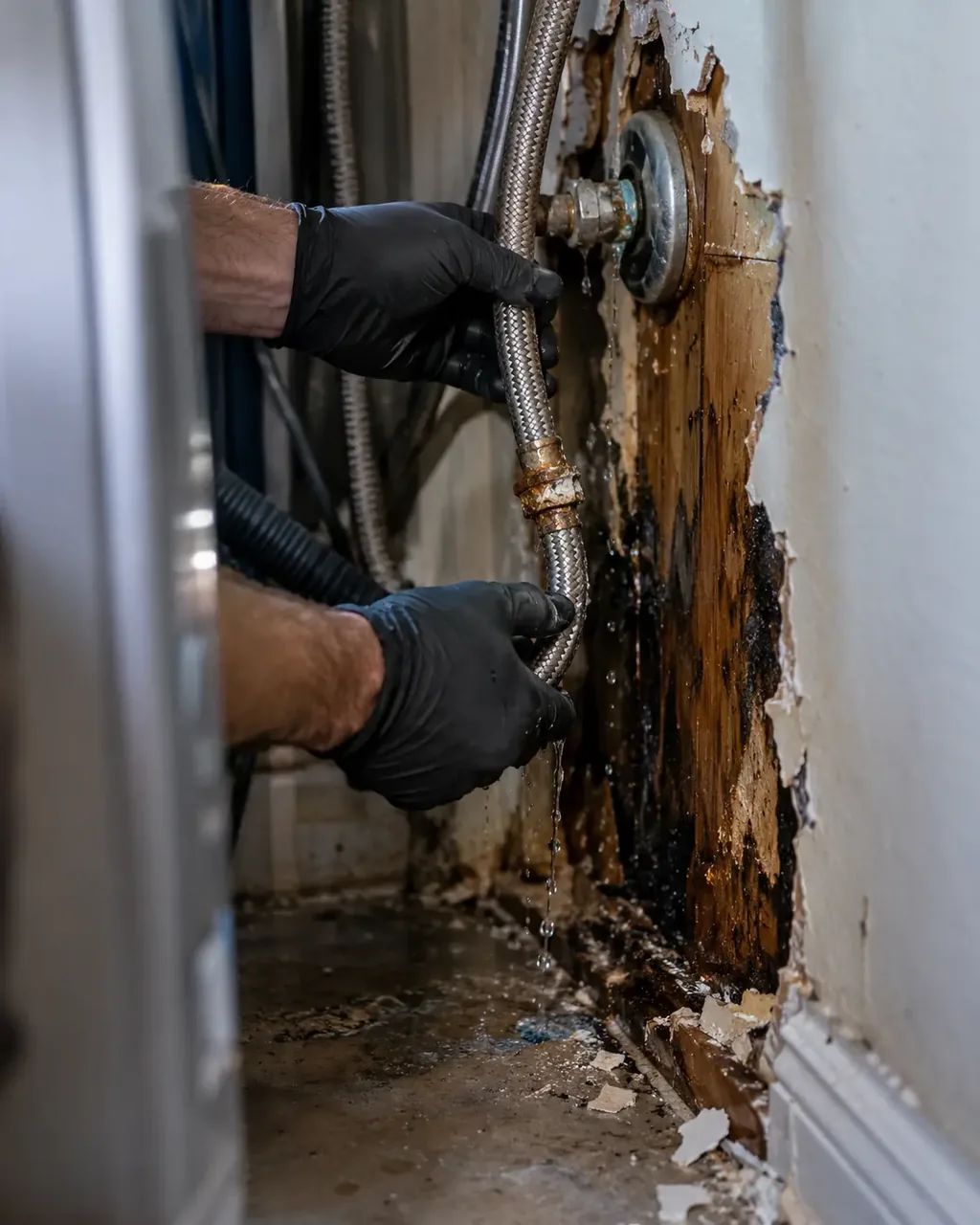
Appliance leak cleanup covers slow and sudden failures at the water heater, washing machine, dishwasher, refrigerator line, or AC condensate drain. The visible puddle is rarely the expensive part. Water that wicked under cabinets and into subfloor drives the cost, and typical San Marcos mitigation jobs land between $2,500 and $5,000.
Water is pooling around the water heater, the washer, or under the kitchen cabinets, and you need it stopped now. Shut off that appliance's water supply, then call. The water on the floor is the part you can see. The part that costs money is what already wicked into the cabinets and subfloor while the leak ran quietly.
Appliance flooding the floor? Tap to call now. Reach us around the clock for appliance leak cleanup across San Marcos and Hays County.
After an appliance leak, shut off that appliance's water supply valve first, then unplug it if you can reach the cord safely. Mop or extract the standing water and pull wet items clear. Then call for help. Slow hidden leaks wick into cabinets and the subfloor, so moisture mapping finds the water you cannot see.
Those first moves buy you time. Here is how to do each one without making the situation worse than it already is.
Every water-fed appliance has its own valve. The short version is the water heater's cold-water inlet at the top, the valves behind a washer, the supply line under the sink for a dishwasher, and the small line feeding a fridge ice maker. Close the one feeding the leak. If you can't find it fast, your main shut-off stops everything.
Cut power to the appliance if you can reach the cord or breaker without standing in water, because a flooded floor plus a live appliance is a real shock risk. If the outlet is already wet, leave it. Kill the circuit at the breaker.
Get the visible water up with towels or a wet vac, and move boxes, rugs, and anything porous off the wet floor. Then call. Surface water is the easy part. The water under the cabinet base and into the subfloor is what we're here for, and the sooner drying starts, the more stays salvageable.
Five appliances cause most residential water losses, which means water heaters, washing machines, dishwashers, refrigerators with ice makers, and HVAC condensate systems. What they have in common is a connection under constant pressure or a drain that quietly clogs, hidden behind or under something nobody moves.
| Appliance | Usual failure point | Rough service life | Where the water goes | Earliest warning sign |
|---|---|---|---|---|
| Water heater | Tank corrosion, then a seam or bottom failure | About 10 to 12 years | Straight onto the floor, often a garage or interior closet | Rust at the base, weeping at the T and P valve |
| Washing machine | Rubber supply hose bursting under constant pressure | Hoses roughly 5 years | Wall behind the machine, then under the laundry floor | A hose that feels stiff, bulged or cracked at the crimp |
| Dishwasher | Door gasket, or the supply line at the elbow | Varies widely | Under the cabinet kick space into the subfloor | Cupping or darkening at the flooring seam in front |
| Refrigerator ice maker | The small plastic supply line behind the unit | Varies widely | Behind and under the fridge, unseen for weeks | A faint musty smell in the kitchen, warped flooring edge |
| HVAC condensate | Clogged drain line, failed pan | Clogs seasonally | Attic ceiling below the air handler, or a closet floor | The secondary pan filling, a ceiling stain under the unit |
A residential water heater typically lasts about 10 to 12 years before failure becomes likely (appliance service-life industry data). If yours is older than that and sits above finished space or on a second floor, the cheap insurance is a drain pan plumbed to a drain and a leak sensor, not a replacement schedule.
The two that do the most damage per gallon are the ones nobody sees. That means dishwashers, because the water goes under the cabinet run instead of onto the floor, and ice-maker lines, because they weep behind an appliance too heavy to move casually.
The quiet ones do the damage. A pinhole drip behind a dishwasher or a sweating fridge line wicks sideways under the cabinet kickplate and into the subfloor for weeks before a single drop reaches open floor. By then the water has spread two to three times wider than the visible wet spot.
By the time the cabinet base swells or the floor cups, that spread is exactly what moisture mapping and thermal imaging are built to find.
Age is a quiet factor too. A residential water heater typically lasts about 10 to 12 years before failure becomes likely (appliance service-life data), and the failure often starts as a slow weep at a tank seam or fitting rather than a dramatic burst. That weep can dampen a garage slab or a closet subfloor for weeks before you notice. If your water heater is past the ten-year mark and you spot rust or a musty smell near it, treat it as a leak that hasn't announced itself yet.
San Marcos humidity makes this worse. Our humid Central Texas climate accelerates mold growth, and mold can begin within 24 to 48 hours once materials stay saturated (ANSI/IICRC S500 and S520), so a drip you ignore in May can be a mold and subfloor job by July. That's why surface mopping a hidden leak leaves the real problem behind. The floor looks fine while the materials underneath stay wet.
Our crews follow the ANSI/IICRC S500 standard for drying appliance-leak damage, so cabinets, subfloor, and wall bases get dry the right way. The order is fixed. We pull the appliance, map how far the water traveled, extract what is standing, then dry the cavity and log readings until meters confirm a dry standard.
We start at the machine. Most appliance leaks trace to one of two spots. A failed braided supply hose, or the shutoff valve behind the unit that never fully closed. We confirm the source is stopped, then use thermal imaging and moisture meters to map the full wet area behind and beside the appliance, not just the visible spot. That map shows how far the water traveled, which on a slow hidden leak is usually two to three times wider than what shows on the floor.
Out comes the water, and out comes the unit. We remove standing water with extraction units, pull the appliance clear or block it up off the wet floor so air can reach underneath, and lift water trapped in carpet, pad, and floor seams before it migrates further.
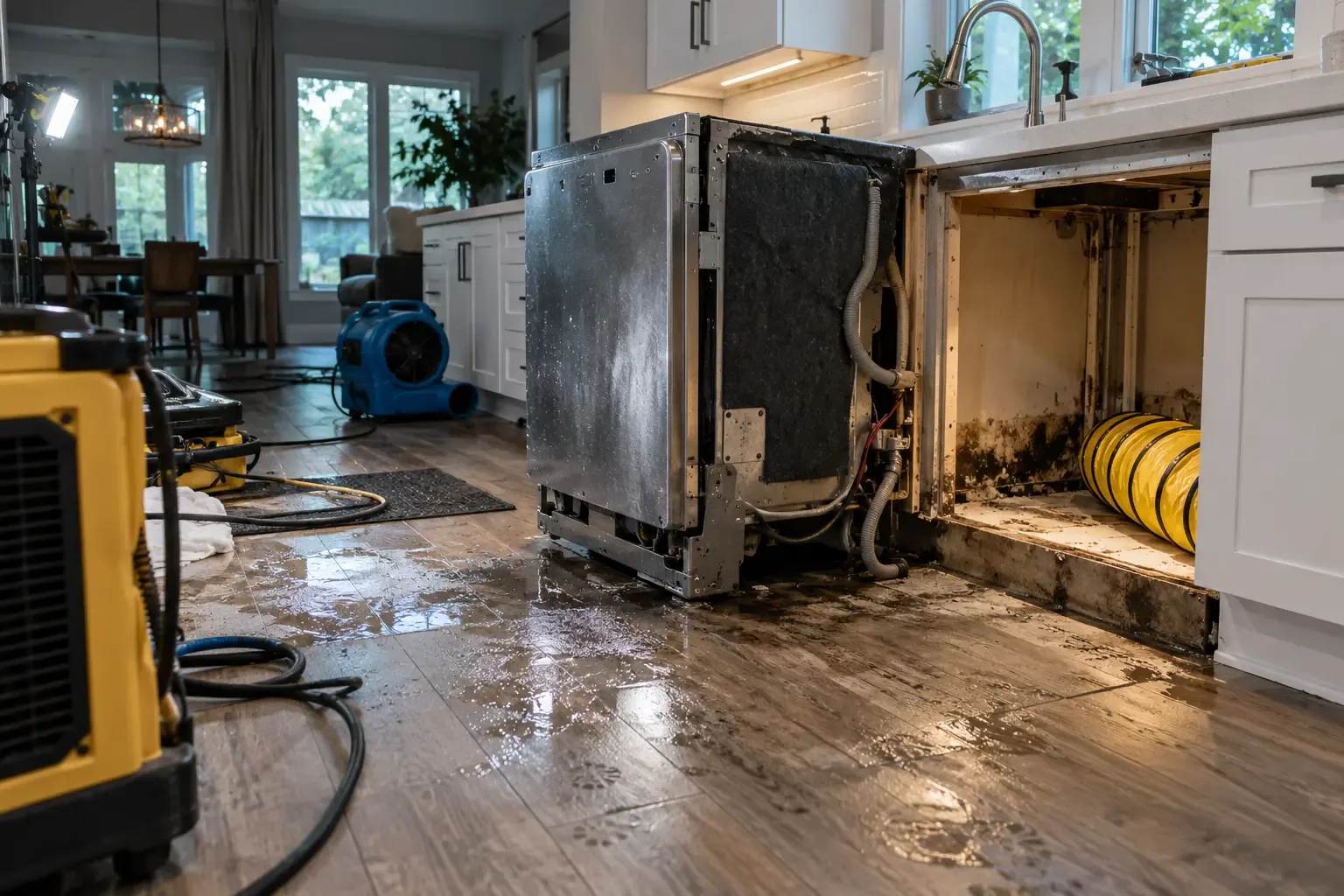
This is where the hidden water gets handled. Appliance leaks wick into the cabinet toe-kick and down into the subfloor, so we set air movers and dehumidifiers aimed at those low, closed spaces and dry the cabinet base, the subfloor, and the lower wall to a documented standard. Where air can't reach behind a kickplate, we drill discreet access points rather than gut a kitchen.
Because appliance leaks often run for weeks, we confirm the damage isn't wider than the obvious wet spot before closing out. We log daily moisture readings until materials hit the dry standard, watch for the tell-tale sideways wicking under adjacent cabinets, and document the readings for your insurer or, for rentals, for your property file. That paper trail proves the job was done right.
Watch for the quiet tells before the obvious flood. Here that means a cabinet base that has darkened or swelled, flooring that cups or lifts near an appliance, a musty smell under the sink, a warm spot on the floor, or a water bill that climbed without any change in use.
A soft kickplate is often the first sign of a leak that's run for weeks behind the cabinet, wicking quietly into the base and the floor before anything shows on the surface. By then the subfloor is usually involved too.
The window is short. Clean Category 1 water from a supply line degrades toward contaminated Category 2 or 3 the longer it pools, and in our humid climate mold can begin within that same window once materials stay saturated. Pull the water and start drying inside it and most cabinets and subfloor survive.
Let an appliance leak sit a few days and you're often replacing a cabinet run and a section of subfloor instead. Speed is the cheapest part of this whole job.
Two patterns drive appliance leaks here. The first is new-build subdivisions. In Blanco Vista, Stonebridge, La Cima, and Kissing Tree, factory-installed braided supply lines, dishwasher fittings, and fridge ice-maker lines fail in the first few years and flood brand-new finishes overnight.
A two-year-old home is not too new to flood; the cheap factory hose is often the part most likely to give.
The second is the TXST student-rental district. Washer overflows, dishwasher leaks, and ignored slow drips in shared units leave property managers needing a unit cleaned, dried, and documented fast between tenants. We work on that timeline and provide the documentation a PM needs for the file. To get ahead of the next one, see how to prevent water damage in your home, and if a tank let go, here's what to do when a water heater leaking and flooded the floor.
Hidden water spreads fast. Talk to a local tech.
Most appliance leaks caught early are clean Category 1 water, priced at the bottom of the Central Texas band, roughly $3.00 to $4.00 per square foot against $3.00 to $7.50 across all water losses (industry cost data, scoped under ANSI/IICRC S500). A slow leak that ran for weeks turns grey and climbs the band.
| Scenario | Category | Typical affected area | Market range at published rates |
|---|---|---|---|
| Dishwasher caught same day | 1, clean | 60 sq ft under and in front of the run | $180 to $240 |
| Washer hose burst, laundry and hallway | 1, clean | 200 sq ft | $600 to $800 |
| Water heater failure in a garage or closet | 1, clean | 300 sq ft | $900 to $1,200 |
| Slow ice-maker leak found after weeks | 2, grey | 150 sq ft plus cabinetry | $600 to $975 |
| Long-running under-cabinet leak with mold | 2 to 3 | 200 sq ft plus remediation | $800 to $1,500 plus remediation scope |
That is published market arithmetic, not a quote from us. Real invoices also carry a practical minimum for the callout and equipment set, so a very small job will not price at $180 in practice.
This is where appliance claims go wrong, so here is the distinction in one table.
| What broke or got wet | Usually covered by a Texas homeowners policy? |
|---|---|
| The floor, cabinets, drywall the water reached | Yes, when the leak was sudden and accidental |
| The failed appliance itself | No, that is a maintenance or warranty item |
| The failed hose, valve or supply line | No, the component that failed is generally excluded |
| Damage from a leak that dripped for months | Commonly denied as long-term seepage |
| Mold that followed a covered sudden leak | Depends on the mold sublimit or endorsement |
| Mold from a leak you knew about and left | Commonly denied |
Deductibles in Texas commonly run $1,000 to $5,000, sometimes set as a percentage of dwelling coverage (Texas Department of Insurance), which is why a small appliance leak often is not worth claiming at all. Get the scope in writing first, compare it to your deductible, then decide. See does homeowners insurance cover water damage in Texas and filing a water damage insurance claim in Texas.
Before and after
Appliance leaks are quiet. A supply line weep or a failed door gasket sends water under the cabinet kick space and into the subfloor, where nothing is visible until the flooring cups or the cabinet base swells.
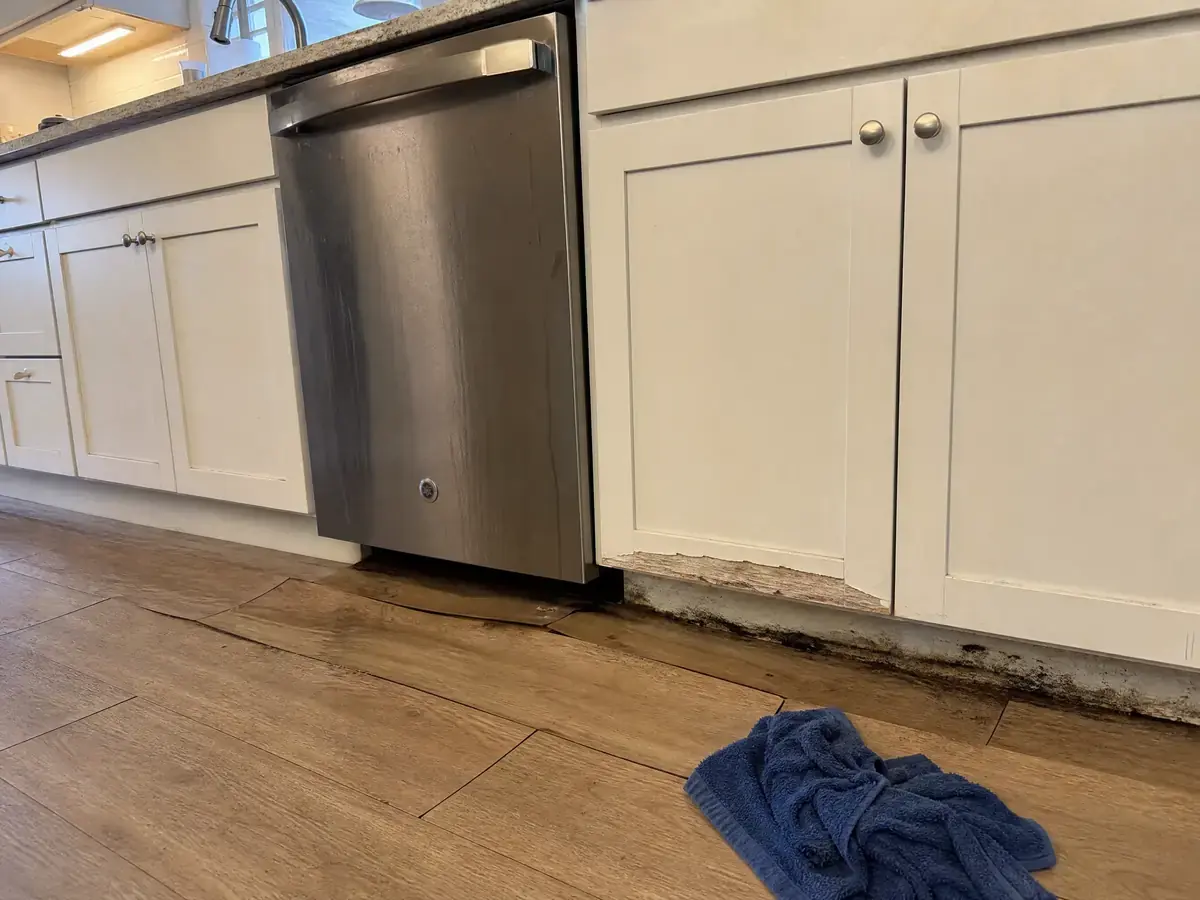 Before, hidden under the cabinet
Water under the kick space and into the subfloor, cabinet base swelling at the bottom rail, and no visible sign on the finished floor until the edges lift.
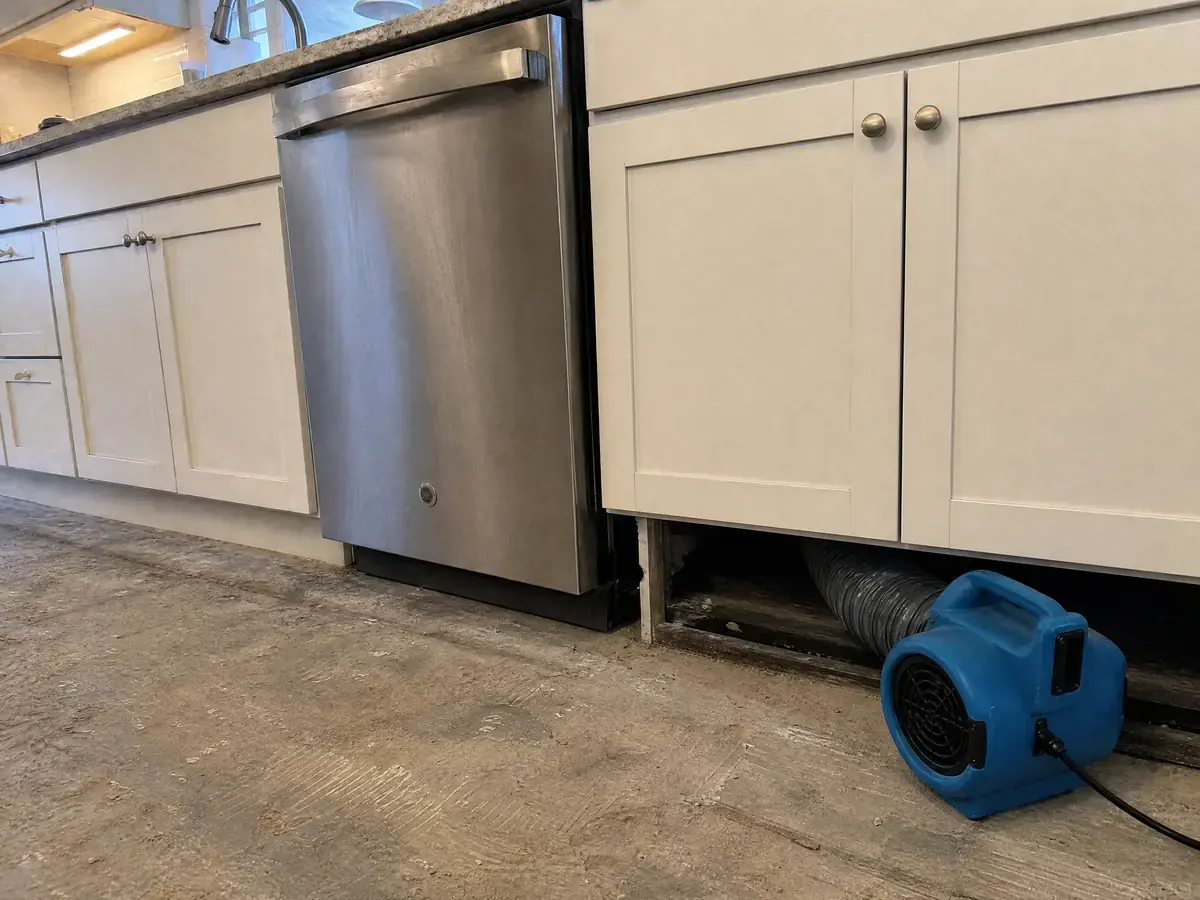 After, dried in place where possible
Kick space opened, targeted drying under the cabinet run rather than tearing the kitchen out, with readings taken at the same marked points every day.
Standing water? Call now, we answer 24/7.
A real local person picks up, then a crew heads your way.
Who we are
We put the things most companies keep vague in writing: real price ranges for this market, the standards we work to, and a moisture log your adjuster can read.
24/7
A real local person answers, day or night
24-48 hrs
The critical window to limit secondary damage
~25 mi
Served from our San Marcos hub across Hays, Comal & Caldwell
S500
The ANSI/IICRC drying standard our process follows
One local team handles every stage, so you are not juggling separate vendors.
Start hereFast removal of standing water with truck-mounted and portable units before it soaks into more material.
See emergency water extraction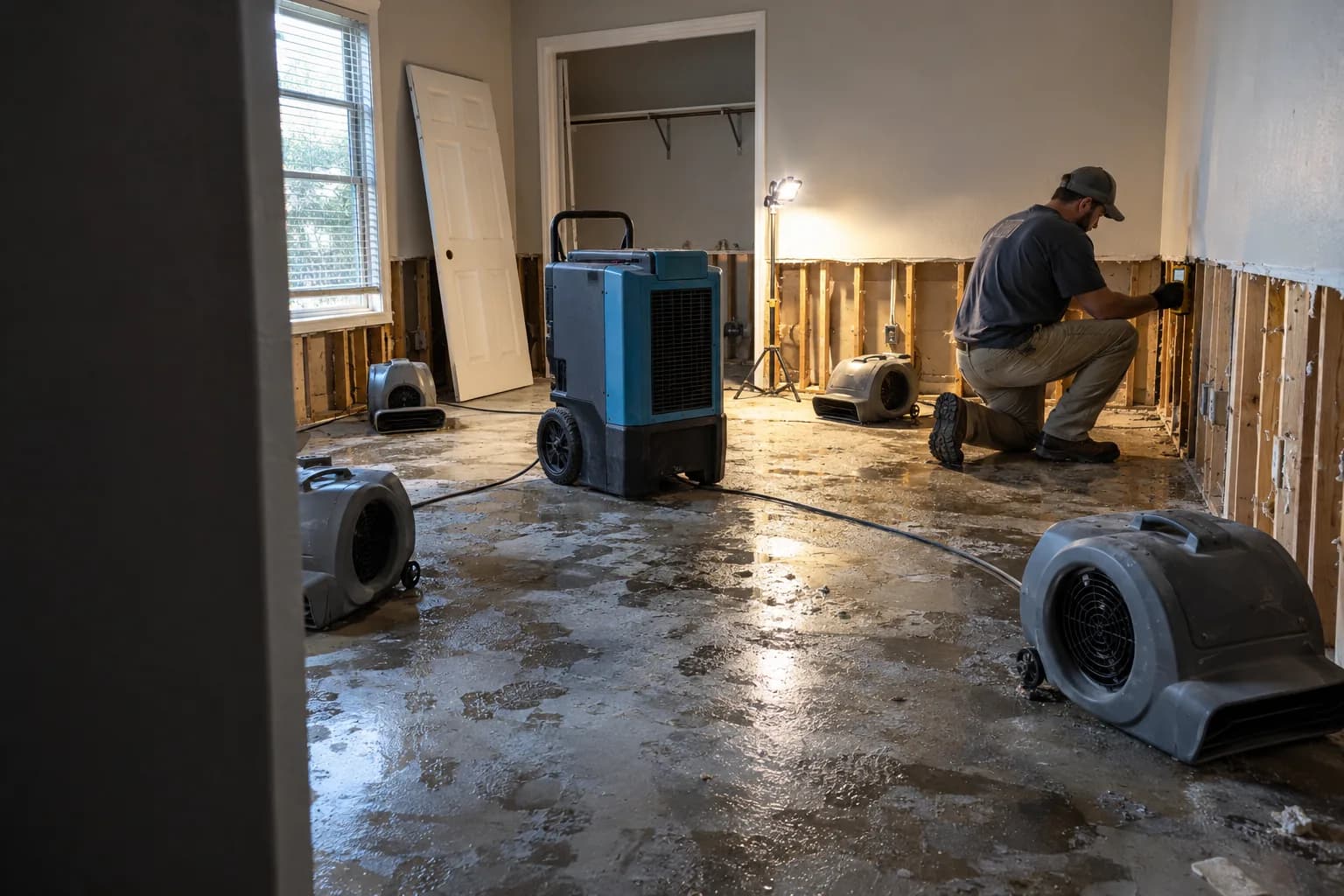
Air movers and LGR dehumidifiers with daily moisture readings, dried to a documented standard.
See structural drying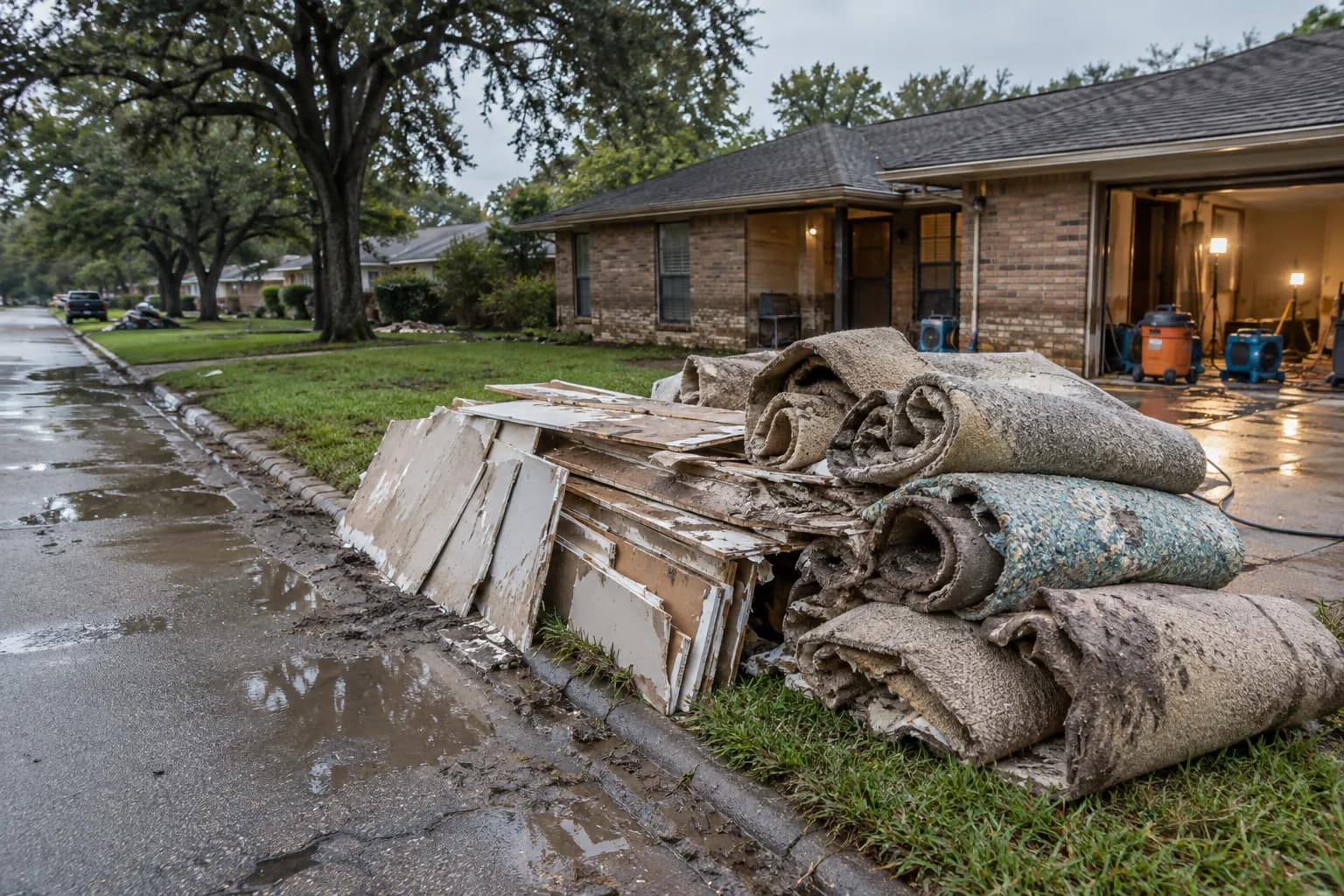
Muck-out and restoration after river flooding and flash floods along the San Marcos and Blanco Rivers.
See flood damage cleanupFAQ
Straight answers to what San Marcos homeowners ask most, on cost, insurance, mold timelines, and what to do first.
24/7
A real local team across Hays, Comal & Caldwell counties. Every job dried to a documented standard.
Have a question on your mind?
Get a quoteShut off that appliance's water supply valve first, then turn off power to the area at the breaker if water has reached outlets or the unit itself. Valve, then power. For a water heater, the cold-water inlet valve at the top stops the flow; for a washer, the hot and cold valves behind it do. Mop or extract the standing water and move wet items clear, then call for cleanup. The faster the water comes out and drying starts, the more of your floor and cabinets stay salvageable.
Yes, and slow leaks often cause more damage than dramatic floods because they go unnoticed for weeks. The quiet ones hurt most. Water from a dishwasher seal, a fridge ice-maker line, or an AC condensate overflow wicks sideways under cabinets and into the subfloor long before it reaches open floor. In San Marcos humidity, that trapped moisture accelerates mold growth, so a small drip can become a mold and subfloor problem. Professional moisture mapping finds the full wet area so all of it gets dried, not just the visible spot.
In most cases a sudden and accidental appliance leak, a burst washer hose or a water heater that lets go, is covered under a standard Texas homeowners policy, while slow, long-term leaks from neglected maintenance are commonly excluded. Sudden, usually yes. Coverage usually pays for the resulting water damage rather than the broken appliance itself. Documenting the source and the damage with photos and moisture readings early strengthens your claim. See our guide on whether homeowners insurance covers water damage in Texas for what to expect before you file.
We locate hidden appliance leaks with thermal imaging and moisture meters rather than tearing out cabinets to look. No demolition to find it. Thermal imaging shows the temperature difference where water has spread behind a kickplate, under a sink base, or into the subfloor, and a moisture meter confirms how far and how deep it traveled. This moisture mapping is what reveals water that has wicked two to three times wider than the visible wet spot, so the drying plan covers the real damage and nothing gets missed.
Tell us straight what is happening and we will tell you the next step. We pick up, then we are on the way.
A real local person answers, 24/7. Tell us what is happening and we are on the way.