 Start here
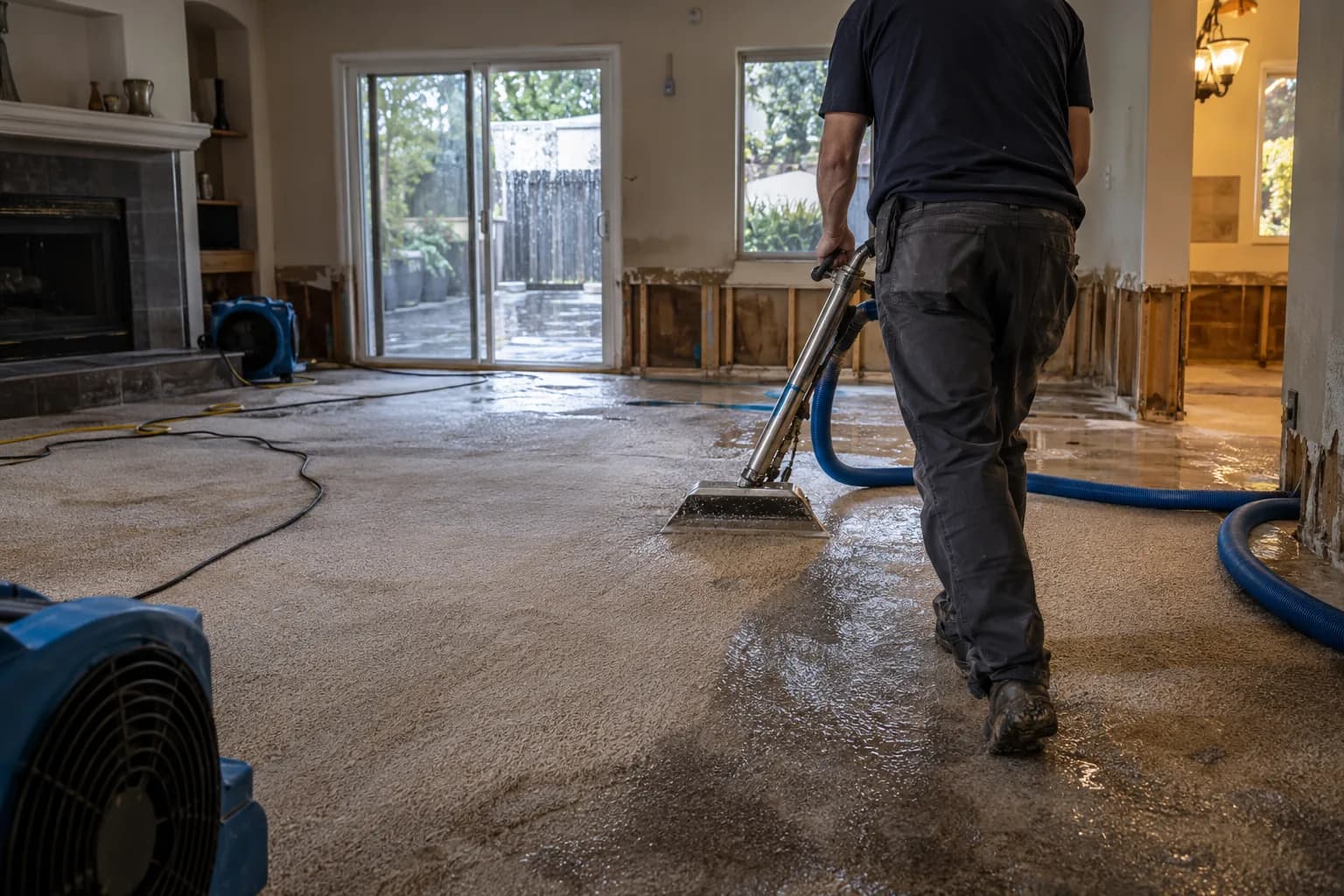
Emergency Water Extraction
Fast removal of standing water with truck-mounted and portable units before it soaks into more material.
See emergency water extraction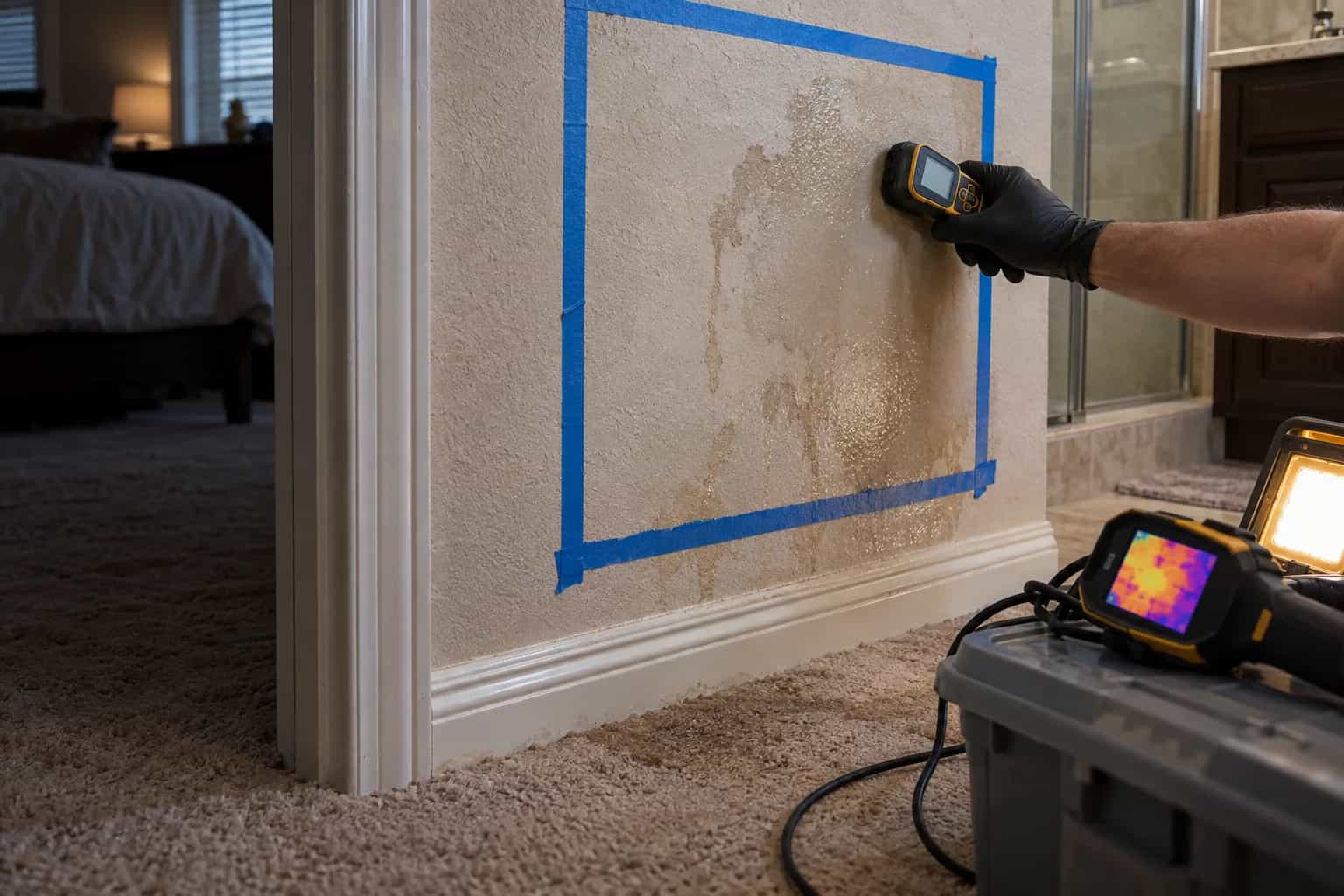
San Marcos, TX & Hays County · 24/7 response
Thermal imaging and moisture meters map how far the water actually travelled, then you get a written scope of work you can hand to an adjuster. San Marcos and Hays County.
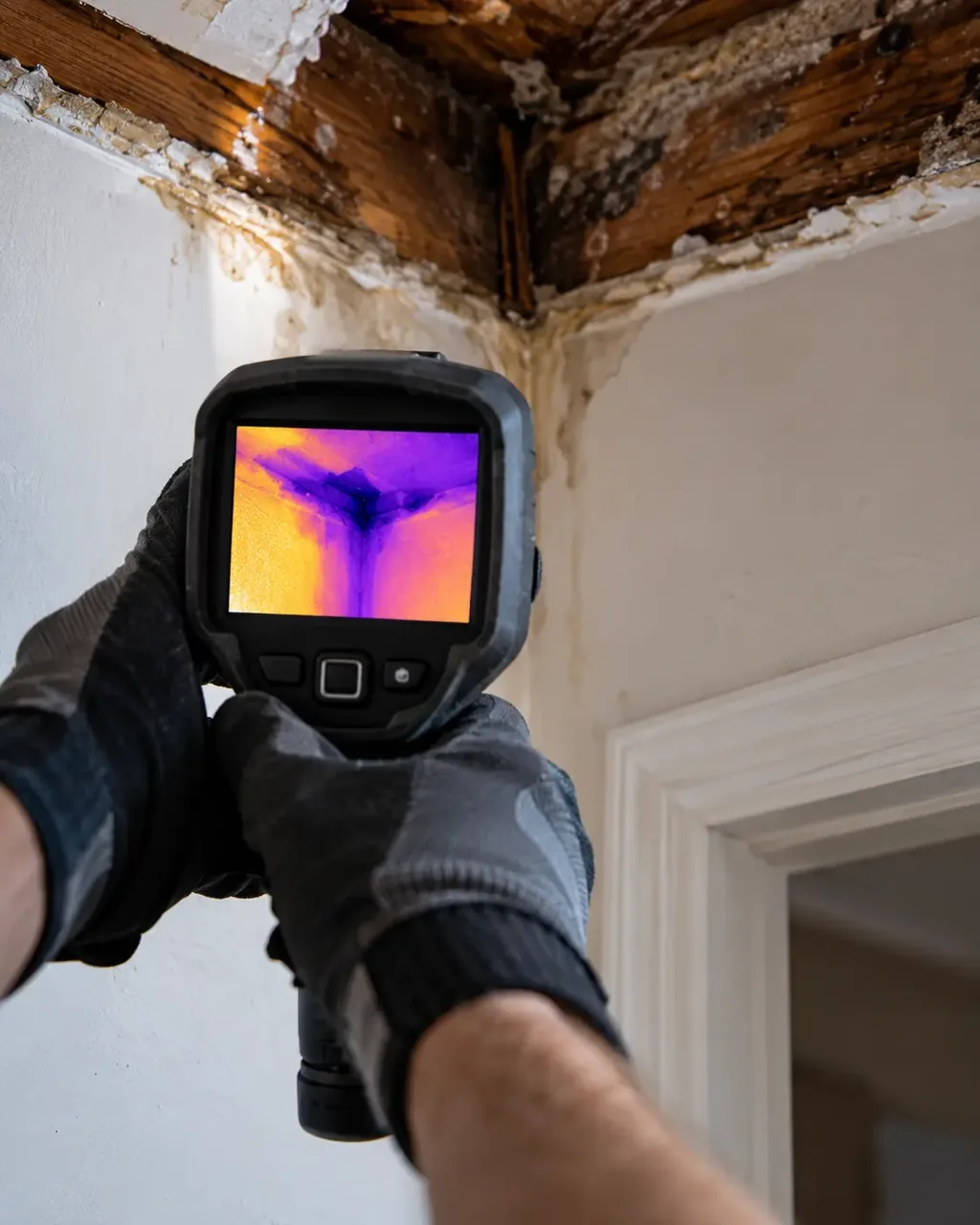
A water damage inspection maps moisture the eye cannot see, using thermal imaging plus pin and pinless meters, then documents every affected material in a written scope of work. That document is what an adjuster prices against. Texas homeowners deductibles commonly run $1,000 to $5,000, so the real scope decides whether filing is worth it.
A San Marcos closet smells musty three weeks after a rain, but the wall looks fine. That gap, between what you can see and what's actually wet, is the whole reason this service exists. An inspection settles it with readings instead of guesses, before it turns into a bigger repair. We're on the way. Call now if you want eyes on it today.
It is measured, not a glance. A proper water damage inspection locates where moisture has traveled, classifies the water category, measures how wet each material is with meters, and writes it all down so an insurer and a contractor can both act on the same record.
A visual look tells you a baseboard is stained. That is all it says. An inspection tells you the bottom plate of that wall reads far wetter than the unaffected framing across the room, that the water came from a Category 1 supply line, and that the wet zone runs four feet past the visible stain. One is an opinion; the other is evidence. Water also gets sorted into Category 1, 2, or 3 here, clean supply water, gray water, or black water from sewage or river flooding, and that drives what can be saved and what has to go.
Two tools, read together. Thermal imaging reveals temperature differences caused by trapped moisture, and a moisture meter then confirms readings inside walls and floors. Together they produce a documented moisture map and scope of work your insurer can act on.
Most people don't realize the costly water after a leak is the water you can't see. Wicked into a wall's bottom plate or sitting in the subfloor, where a surface meter reads "dry" while the cavity stays saturated. That's why a thermal scan plus a probe inside the wall changes the answer.
A thermal camera doesn't see water. It sees temperature. A damp patch behind drywall shows up as a cooler shape on screen even when the paint looks perfect. It has an honest limit. Here that means a cool spot can be a draft, a pipe, or sun-angle shade, not always moisture. Thermal imaging points the finger; it doesn't confirm the verdict alone.
This is the confirmation step. A moisture meter, used as a scanner and as a pin probe pushed into the material, reads the actual moisture level inside drywall, framing, and subfloor. We read the suspect area against the surrounding dry areas, then plot them into a moisture map showing the wet zone's shape and spread. One-board problem or whole-wall problem? Numbers on paper, not a hunch.
"Looks dry" is not a standard. Dry-to-standard is. The benchmark comes from ANSI/IICRC S500. A material is dry when it returns to the moisture content of similar unaffected materials in the same building. An inspection verifies a space against that benchmark, useful after a "dry-out" nobody measured. If the readings match, you're done.
Not every situation needs one. These do. In practice that means a leak you have stopped but cannot confirm is dry, a musty smell with nothing visible, a stain that keeps returning, buckling floors, or any insurance claim where you need measured evidence rather than a verbal description of the damage.
Humidity does the rest. San Marcos sits in Texas Flash Flood Alley, where the San Marcos and Blanco Rivers can rise fast, and a home can look fine the morning after a storm while still holding water behind a wall where it never showed.
Damp air helps it spread, so confirming a space is genuinely dry matters more here than in a dry climate. Around downtown and the Historic District near The Square, older properties add aging plumbing where slow leaks creep behind plaster long before anyone notices. The water has plenty of places to hide; an inspection is how you stop guessing.
An inspection gives you a moisture read, a written scope, and a straight answer on whether you have a problem worth acting on. Where an inspection turns into a documented report for a claim or a real-estate transaction, the scope is larger and priced separately, and we tell you which one you need before we start.
| Type of visit | What you get | Typical cost |
|---|---|---|
| Initial assessment | Thermal scan, meter readings, written scope of work, category assessment | Discussed on the call |
| Documented claim report | The above plus a moisture map, photo log and daily reading schedule | Quoted on scope |
| Second opinion on another company's scope | Independent readings against their scope, in writing | Quoted on scope |
| Pre-purchase or pre-lease moisture check | Whole-property scan with a written summary | Quoted on scope |
The reason to inspect early is arithmetic. Once water is confirmed and mitigation begins, Central Texas drying runs about $3.00 to $7.50 per square foot depending on the water category, and a typical San Marcos job spans roughly $1,200 for a small clean-water loss to $8,500 or more for a large or contaminated one (industry cost data). Catching a wet cavity while it is one board wide, instead of after it has fed a whole wall and started growing mold, is exactly what keeps a loss at the bottom of that range.
Here is the band the inspection result drops you into, which is why the category read is the most financially consequential line in the report.
| Water category set at inspection | Central Texas rate | 400 sq ft affected | 1,000 sq ft affected |
|---|---|---|---|
| Category 1, clean supply water | $3.00 to $4.00 per sq ft | $1,200 to $1,600 | $3,000 to $4,000 |
| Category 2, grey water | $4.00 to $6.50 per sq ft | $1,600 to $2,600 | $4,000 to $6,500 |
| Category 3, black water | $7.00 to $7.50 per sq ft | $2,800 to $3,000 | $7,000 to $7,500 |
Those are published market rates applied to an area, not our quoted prices. Note the gap between the top and bottom row on the same footprint. The short version is on 1,000 square feet it is more than $3,000, and the only thing separating them is how long the water sat and what it touched.
The classification driving those numbers comes out of the inspection itself. ANSI/IICRC S500 sorts water into Category 1, 2 and 3, and category degrades with time, so an early read can legitimately price a loss lower than the same loss inspected three days later.
A documented inspection is built to support a claim. The moisture readings, moisture map, Category classification, and written scope of work give your adjuster a measured record of what was wet and what it takes to return the property to pre-loss condition. Evidence, not a story.
We can share those findings with you and coordinate with your adjuster. Our guide on documenting water damage for insurance walks through what to capture.
Thermal imaging finds where to look. A moisture meter tells you whether you were right. Any company that scans a wall with a thermal camera and quotes a job off the picture alone is skipping the step that produces the evidence, and thermal images on their own are not accepted as moisture proof by adjusters who know what they are looking at.
| Thermal imaging camera | Pinless moisture meter | Pin moisture meter | Thermo-hygrometer | |
|---|---|---|---|---|
| What it measures | Surface temperature difference | Relative moisture through the surface layer | Actual moisture content at a known depth | Air temperature, relative humidity, dew point |
| What that indicates | Evaporative cooling, which usually means wet | Comparative wet versus dry, non-destructively | A number you can hold against a dry standard | Whether the room air can accept more moisture |
| Leaves a mark | No | No | Two small pin holes | No |
| Can it be fooled | Yes, by a cold pipe, a draught, a shaded wall, insulation gaps | Somewhat, by foil backing and metal | Rarely, but depth and species matter | No |
| Proves wetness on its own | No | Nearly | Yes | No |
| Where we use it | Scanning fast to find suspect areas | Mapping the wet footprint across a wall | Confirming readings and setting the dry standard | Sizing dehumidification and tracking daily progress |
A worked example of why both matter. A cool patch on a thermal scan under a second-floor bathroom looks damning. Pinless readings across it come back at the same level as the dry reference wall, and the pin meter confirms it. The cool patch was a gap in the insulation batt, not water. Scoping a tear-out off the camera image alone would have opened a dry ceiling and billed for it.
A report that supports a claim contains measurements taken at repeatable points, not adjectives. Here is what ours contains and what each part is for.
| Section | Contents | What it is for |
|---|---|---|
| Cause and source | Where the water came from, whether it is stopped | Decides coverage, more than anything else in the report |
| Category assessment | Category 1, 2 or 3 under ANSI/IICRC S500, with the reasoning | Sets the scope and the rate band |
| Moisture map | Marked reading points on a floor sketch, with values | Lets anyone repeat the same readings tomorrow |
| Dry standard | Readings from unaffected material of the same type | The finish line, without which drying is guesswork |
| Affected materials list | What is wet, what comes out, what dries in place | The tear-out scope your adjuster prices |
| Atmospheric readings | Temperature, relative humidity, grains per pound | Justifies dehumidification sizing and equipment days |
| Photo log | Timestamped, matched to the map points | Evidence, taken before anything is disturbed |
| Scope of work | The plan, in sequence, with equipment counts | What you are actually agreeing to pay for |
If you already have a report from another company and it has no dry standard in it, that is the question to ask them. Without a reference reading from unaffected material, there is no defined point at which the job is finished, and equipment days become a matter of opinion.
Before and after
An inspection is a mapping job. Thermal imaging shows a temperature difference where evaporation is happening, then a moisture meter confirms whether that cool patch is actually wet, because thermal alone cannot tell you that.
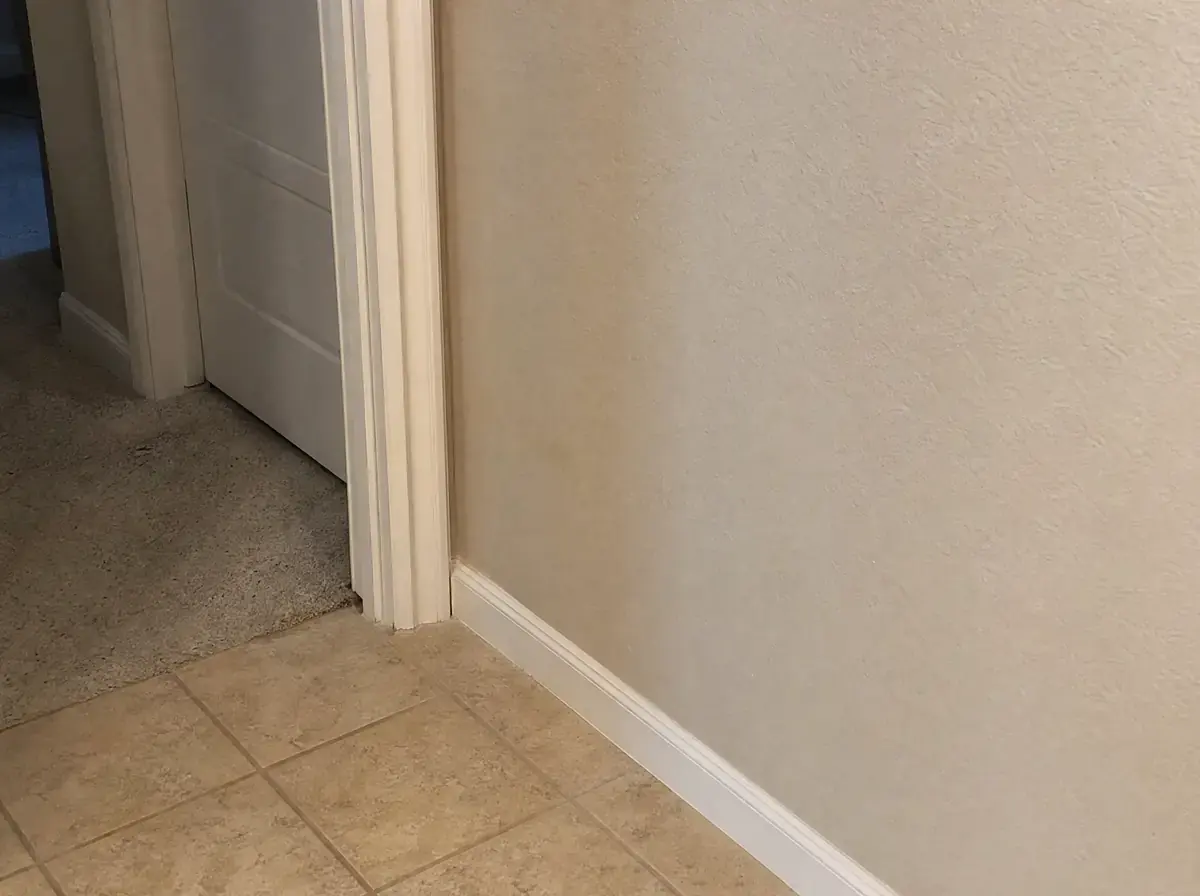 Before, what the eye sees
A small stain near the baseboard and nothing else obvious. Homeowners routinely call this a one-square-foot problem.
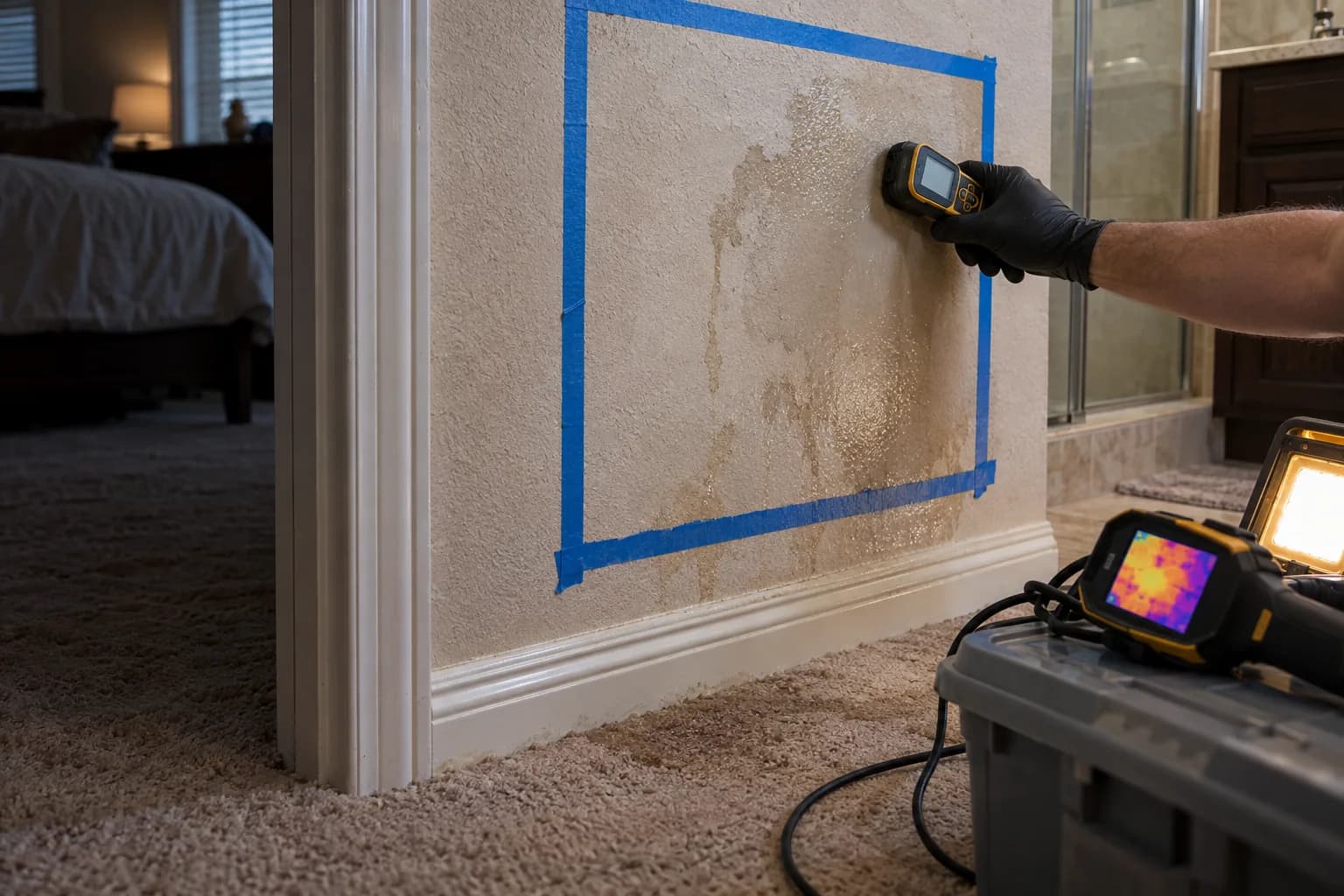
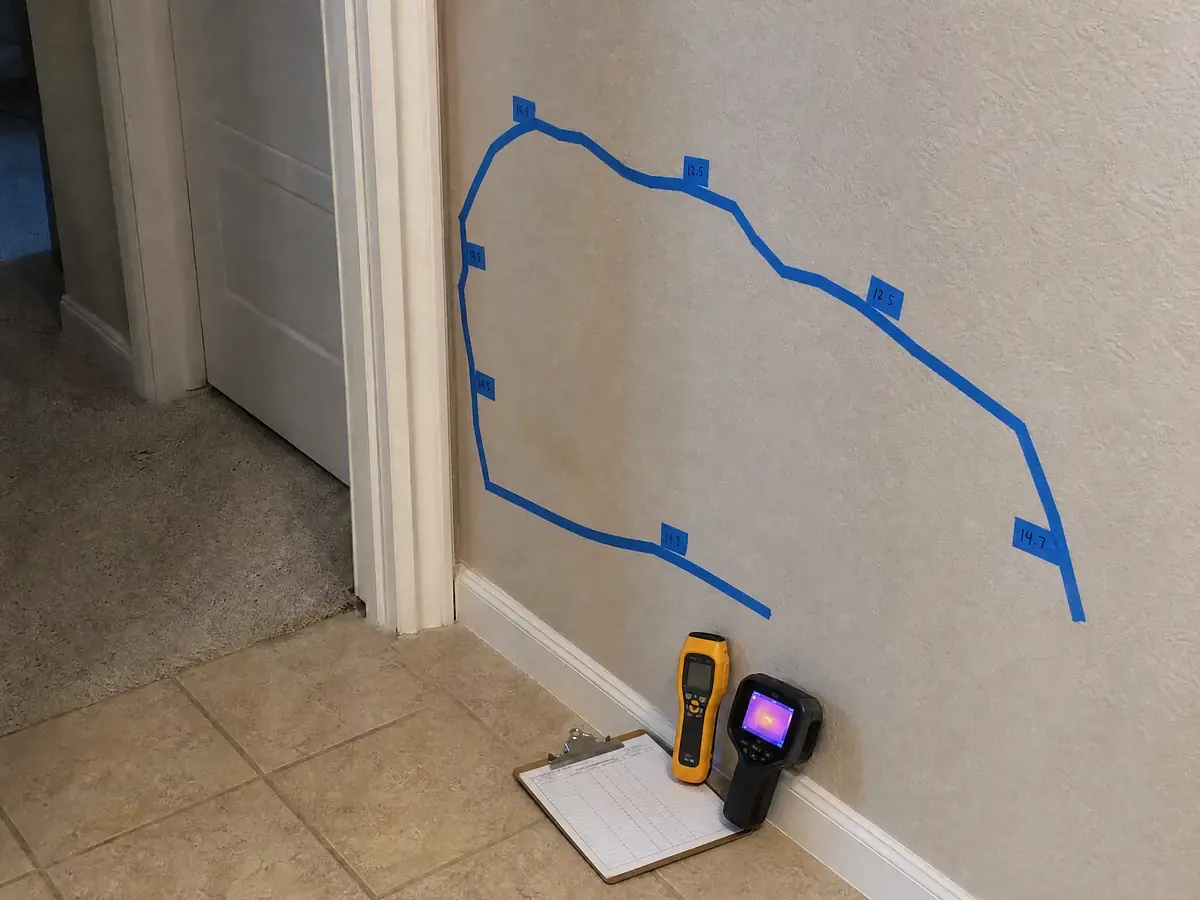 After, what the meters map
Thermal scan plus pin and pinless meter readings map the real wet footprint, which is usually several times the visible stain and decides the entire scope.
Standing water? Call now, we answer 24/7.
A real local person picks up, then a crew heads your way.
Who we are
We put the things most companies keep vague in writing: real price ranges for this market, the standards we work to, and a moisture log your adjuster can read.
24/7
A real local person answers, day or night
24-48 hrs
The critical window to limit secondary damage
~25 mi
Served from our San Marcos hub across Hays, Comal & Caldwell
S500
The ANSI/IICRC drying standard our process follows
One local team handles every stage, so you are not juggling separate vendors.
Start hereFast removal of standing water with truck-mounted and portable units before it soaks into more material.
See emergency water extraction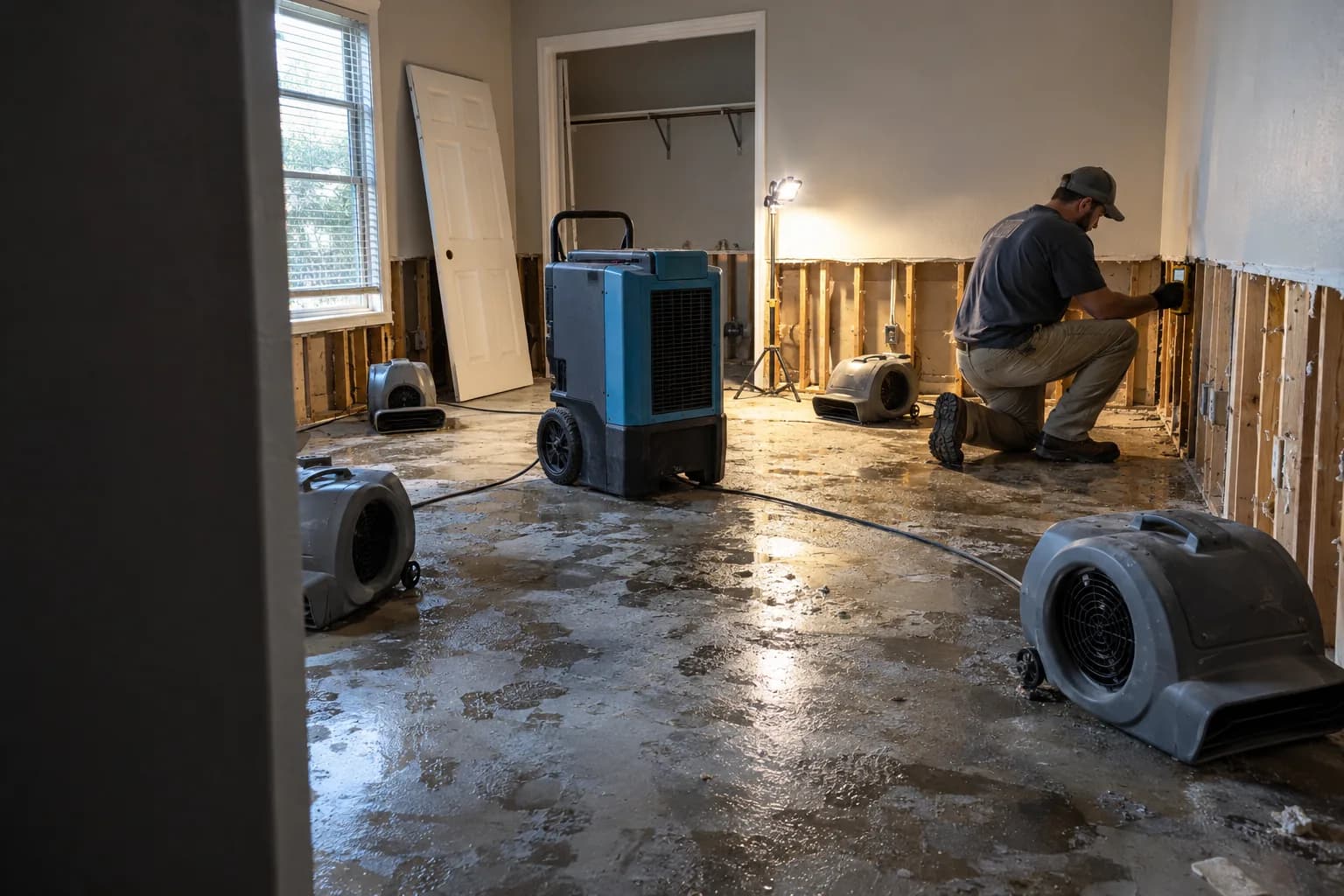
Air movers and LGR dehumidifiers with daily moisture readings, dried to a documented standard.
See structural drying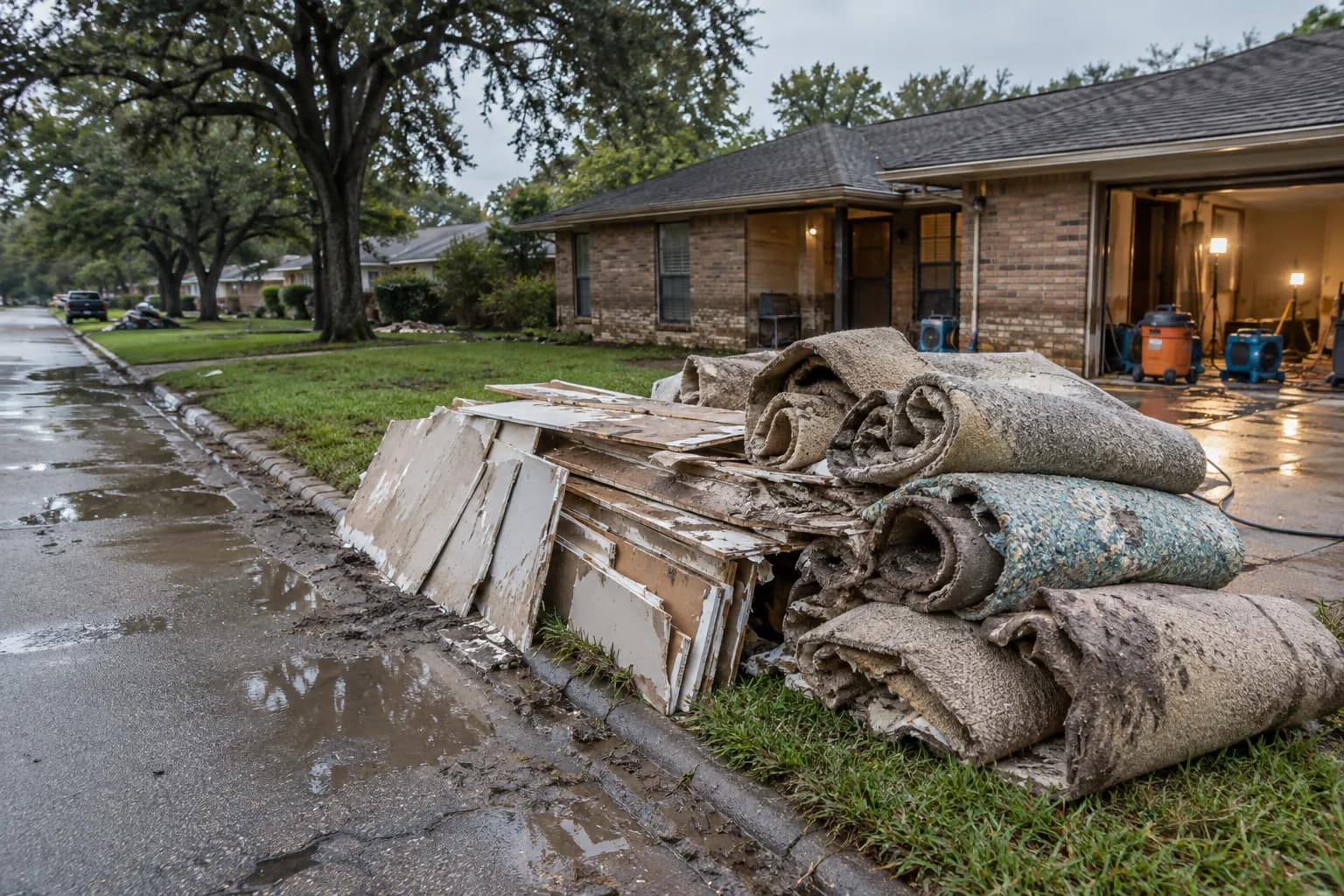
Muck-out and restoration after river flooding and flash floods along the San Marcos and Blanco Rivers.
See flood damage cleanupFAQ
Straight answers to what San Marcos homeowners ask most, on cost, insurance, mold timelines, and what to do first.
24/7
A real local team across Hays, Comal & Caldwell counties. Every job dried to a documented standard.
Have a question on your mind?
Get a quoteHidden water damage is found by pairing thermal imaging with moisture meter readings. Thermal imaging flags temperature differences across walls, ceilings and floors where trapped moisture changes the surface temperature, which points us to where to probe. Then we confirm. A moisture meter reads the actual moisture level inside the material, because a surface can read dry while the cavity behind it is still saturated. Those readings are plotted into a moisture map so you can see exactly where the water went and how far it spread. The map tells the story.
Often yes, especially if you smell something musty or earthy with no visible source. Water frequently travels behind baseboards, under flooring and into wall cavities where it never shows on the surface, and in Central Texas humidity that hidden moisture can begin feeding mold within a few days. The eye misses it. An inspection uses thermal imaging and moisture readings to confirm whether a space is genuinely dry to standard or quietly holding water. If everything reads dry, we'll tell you that. No work needed is a valid and good result, and we would rather say so than sell you drying you do not need.
Cost depends on the size of the area and how much diagnostic work it takes to confirm the moisture picture. We aim to keep the initial assessment straightforward so you can make an informed decision before committing to any repair. No hidden line items. For how restoration pricing works overall in San Marcos, see our cost guide, which breaks down the factors that move the number. We'll always walk you through exactly what an inspection includes, what it does not, and what the readings would have to show before any drying or repair work is worth booking.
Yes. A proper inspection is built to produce documentation your insurer can act on. In practice that means moisture readings, a moisture map, a water Category classification and a written scope of work. Built for the file. That documentation gives your adjuster a clear, measured record of what was wet and what it will take to return the property to pre-loss condition. Numbers carry weight. We can share those findings with you and coordinate with your adjuster as your claim moves forward. Our guide on documenting water damage for insurance walks through what to capture and why.
Tell us straight what is happening and we will tell you the next step. We pick up, then we are on the way.
A real local person answers, 24/7. Tell us what is happening and we are on the way.