San Marcos water damage guide
Brown Stain on the Ceiling: Water Damage Causes & Fixes
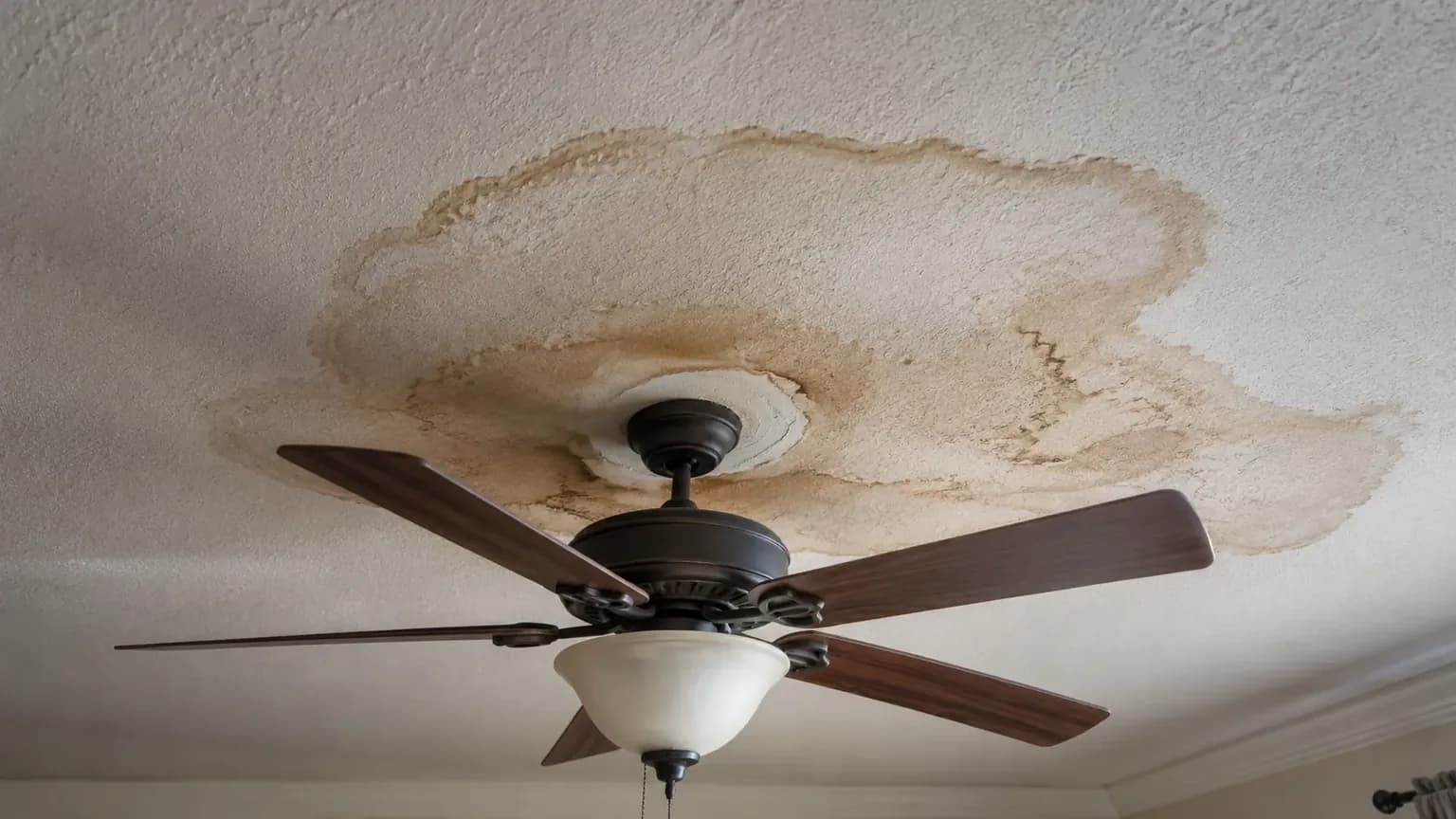
You looked up and there it was. A brown stain on the ceiling, water damage spreading in a ring you swear was smaller last week. The color is unsettling, but the stain itself is just a record. It is a clue. It means water reached the drywall from above, either right now or sometime in the past. The real question is whether the leak that put it there is still feeding moisture into your ceiling.
Published · Updated
In San Marcos, TX, that leak is often a storm-driven roof breach, a slow drip from an upstairs bathroom in an older downtown home, or summer AC condensate overflowing from the attic air handler. This guide reads the stain the way a tech would, so you know whether you are looking at an old scar or an active problem.
What Does a Brown Stain on the Ceiling Mean?
A brown stain on the ceiling almost always means water has reached the drywall from above, either now or in the past. Common causes are a roof or flashing leak, a plumbing leak from an upstairs bathroom, or condensation from an HVAC system. A stain that grows, sags, or feels soft signals an active leak that needs attention.
The brown color throws people. It is not dirt. As water passes through drywall, attic dust, and the joint compound between boards, it carries dissolved minerals and tannins down to the surface, and those settle into a ring as the water evaporates. That ring is the high-water mark.
Here are the usual sources behind a brown ceiling stain.
- Roof or flashing leak. Wind-driven rain finds a lifted shingle, a cracked boot around a vent pipe, or failed flashing at a chimney.
- Upstairs plumbing leak. A supply line, drain, or wax-ring seal under a second-floor bathroom drips into the ceiling cavity below.
- HVAC condensate overflow. An attic air handler's drain pan or clogged condensate line spills onto the ceiling under it.
- Condensation from poor ventilation. Warm, moist air meets cold attic surfaces, and the drips land on the drywall.
- A past leak that was never sealed. The source was fixed or stopped, but nobody primed and repainted, so the mark stayed.
Is the Leak Active or Old?
The stain's behavior tells you more than its color does. Watch how it acts and you can usually point at the cause before anyone opens the ceiling. A stain that darkens during rain points at the roof; one that grows on dry days points at plumbing.
Behavior beats color.
A stain that grows or darkens after a storm points at the roof. Watch it after rain. If it shows up during heavy San Marcos thunderstorms and fades between them, you are likely looking at a roof or flashing leak that only opens up when rain hits a certain angle. A stain that appears regardless of weather is the opposite tell. Weather-independent staining usually sits near a bathroom or under an attic air handler, which puts plumbing or AC condensate at the top of the list.
Then do the touch test. Press the stained area gently with a clean fingertip. A dry, firm, slightly crusty spot is most likely an old stain that already dried out. A spot that feels soft, cool, or spongy means moisture is still in the drywall right now, and that changes everything. Sagging is the loudest warning of all. If the ceiling bows downward or you see a bulge holding a pocket of water, it is actively wet and at risk of letting go, so keep people and furniture out from under it.
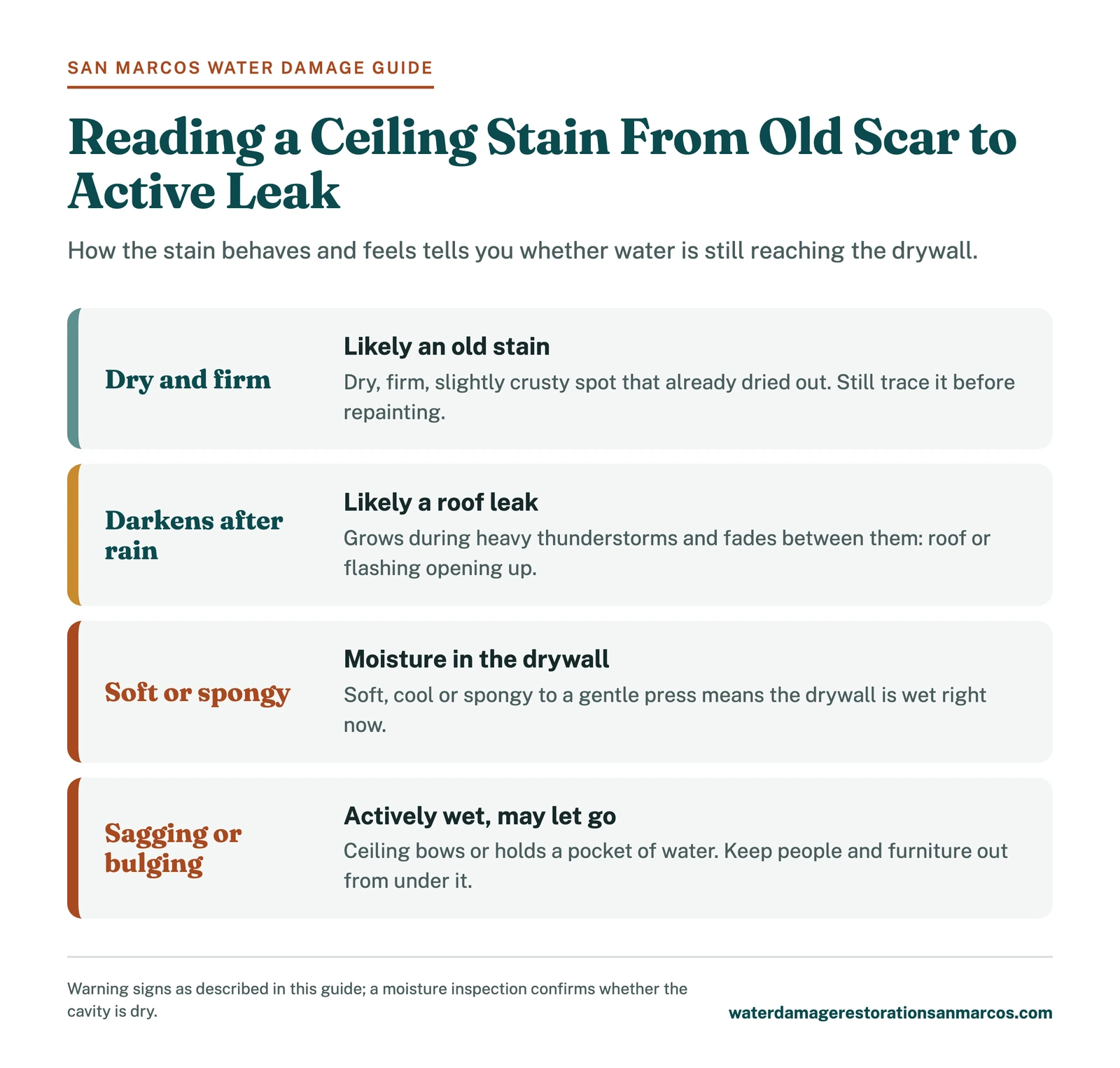
Text version of this infographic
Reading a Ceiling Stain From Old Scar to Active Leak. How the stain behaves and feels tells you whether water is still reaching the drywall.
- Dry and firm Likely an old stain
- Dry, firm, slightly crusty spot that already dried out. Still trace it before repainting.
- Darkens after rain Likely a roof leak
- Grows during heavy thunderstorms and fades between them: roof or flashing opening up.
- Soft or spongy Moisture in the drywall
- Soft, cool or spongy to a gentle press means the drywall is wet right now.
- Sagging or bulging Actively wet, may let go
- Ceiling bows or holds a pocket of water. Keep people and furniture out from under it.
Warning signs as described in this guide; a moisture inspection confirms whether the cavity is dry.
How the Source Is Found (Moisture Tracing)
Here is the part homeowners get wrong. The stain is rarely directly under the leak. Water runs along the top of drywall, travels down a truss, follows a pipe, and surfaces several feet from where it actually got in. Guessing from the stain alone sends you cutting open the wrong spot.
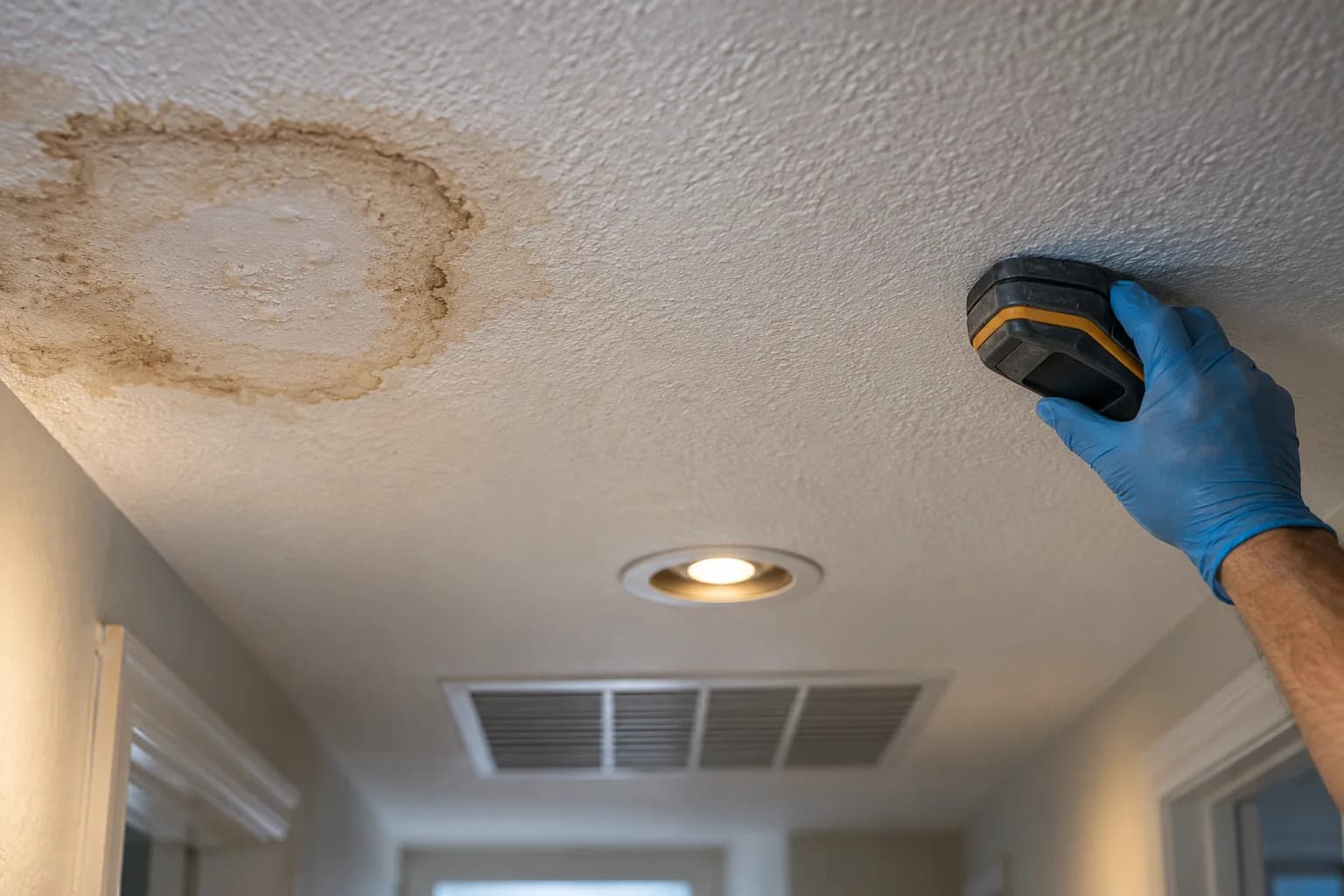
Tracing it properly means following the moisture, not the mark. Tools do this. A thermal-imaging camera shows the cooler signature of wet material spreading through the ceiling, which maps the wet zone without tearing anything open. A pinless moisture meter then confirms how far the dampness reaches and how saturated the drywall is. Together those tools point back to the true entry point, whether that is a roof penetration twenty feet away or a pinhole in a copper line above the hallway. This is exactly what a water damage inspection and moisture detection visit is built to do, and it is the step that keeps you from chasing the stain instead of the leak.
Worth knowing here. A dry stain still gets traced, because a mark that dried once can hide a leak that only reopens in the next hard rain, and confirming the cavity is genuinely dry is the only way to rule that out before you patch and repaint.
Why You Shouldn't Just Paint Over It
Painting over a water stain is the most common shortcut, and the most expensive one when the leak is still live. Paint hides the evidence. It does nothing about the water, the soaked insulation above, or the source still dripping every time it rains.
If the area is wet, hiding it buys mold a quiet place to grow. Mold can take hold within 24 to 48 hours of materials staying damp, and in the humid Central Texas climate it moves faster, so a painted-over wet ceiling is a colony waiting to happen out of sight. You can read how fast mold grows after water damage for the full timeline, but the short version is that paint and moisture together make the problem worse, not better.
There is an honest exception. An old stain that has been confirmed bone-dry, with the original source already fixed, is mostly cosmetic. That one you can prime with a stain-blocking primer and repaint, and it will not come back. The order matters, which means find the source, fix it, dry the cavity to standard, then seal and paint. Skip a step and the brown ring bleeds right back through your fresh coat within weeks.
Stain growing or sagging? Call us.
What to Do Next
Match your action to what the stain is telling you. A small, dry, firm mark with no active source is a paint-and-prime job you can plan at your own pace. A stain that grows, darkens after rain, feels soft, or sags is an active leak.
Read the stain first. The longer an active leak sits, the more drywall, insulation, and framing it ruins.
If the ceiling is sagging or holding visible water, treat it as urgent. Move belongings clear of the area and avoid standing under it. When the source is a storm-related roof breach, our ceiling and roof leak water damage repair covers moisture tracing, drying, and drywall repair, plus emergency tarping to stop the intrusion. We do not replace roofs, but we stop the water from doing more harm and dry what it already reached. The order never changes. Either way, the goal is the same. That means locate the source, confirm whether it is active, and dry the cavity before you ever pick up a paintbrush.
Written by the Water Damage Restoration San Marcos team
Local water-damage restoration in San Marcos, TX and Hays County. Our guidance follows the ANSI/IICRC S500 and S520 reference standards the industry plans around. Questions about your situation? Call (512) 778-8417, we answer 24/7.