 Start here
Emergency Water Extraction
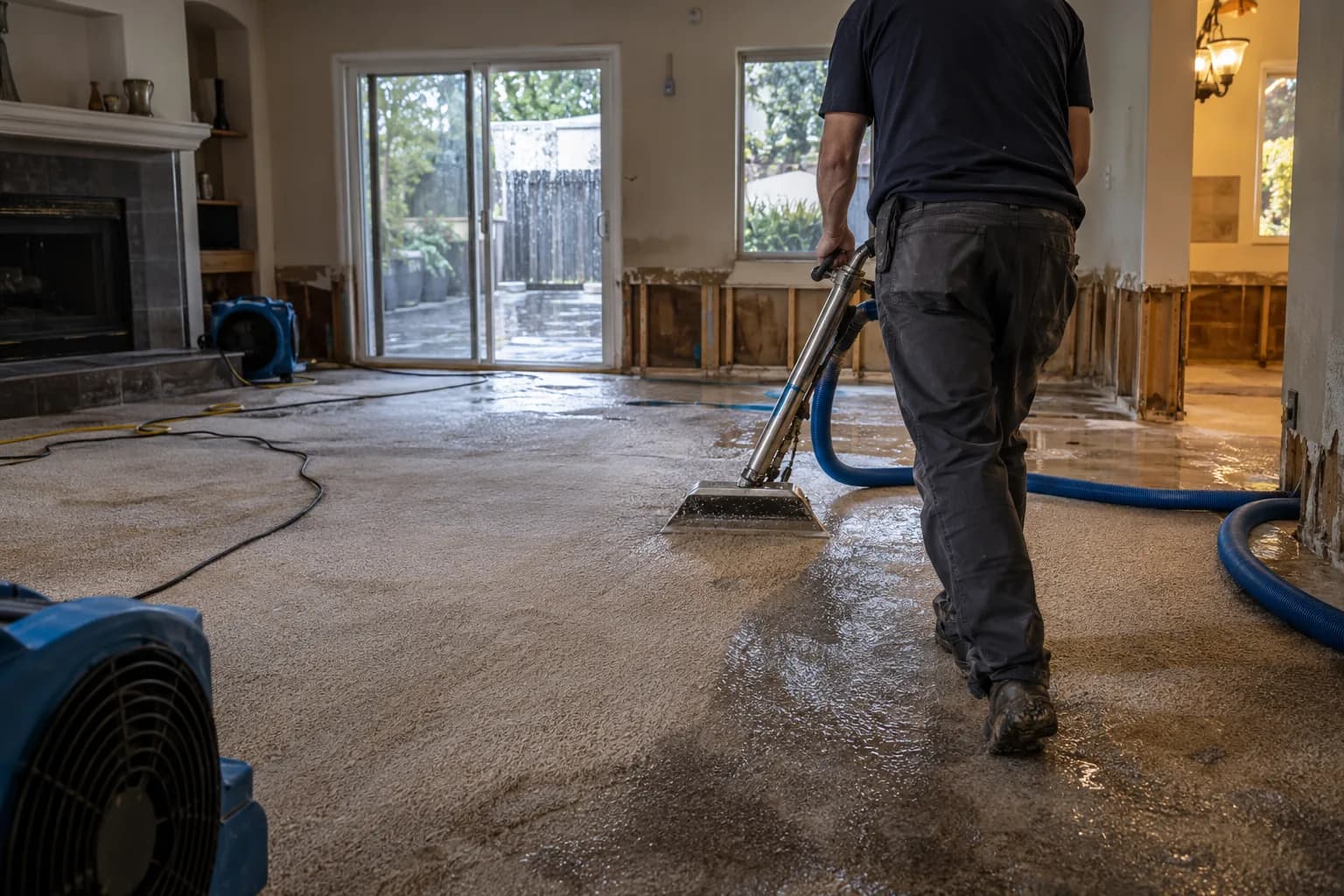
Fast removal of standing water with truck-mounted and portable units before it soaks into more material.
See emergency water extraction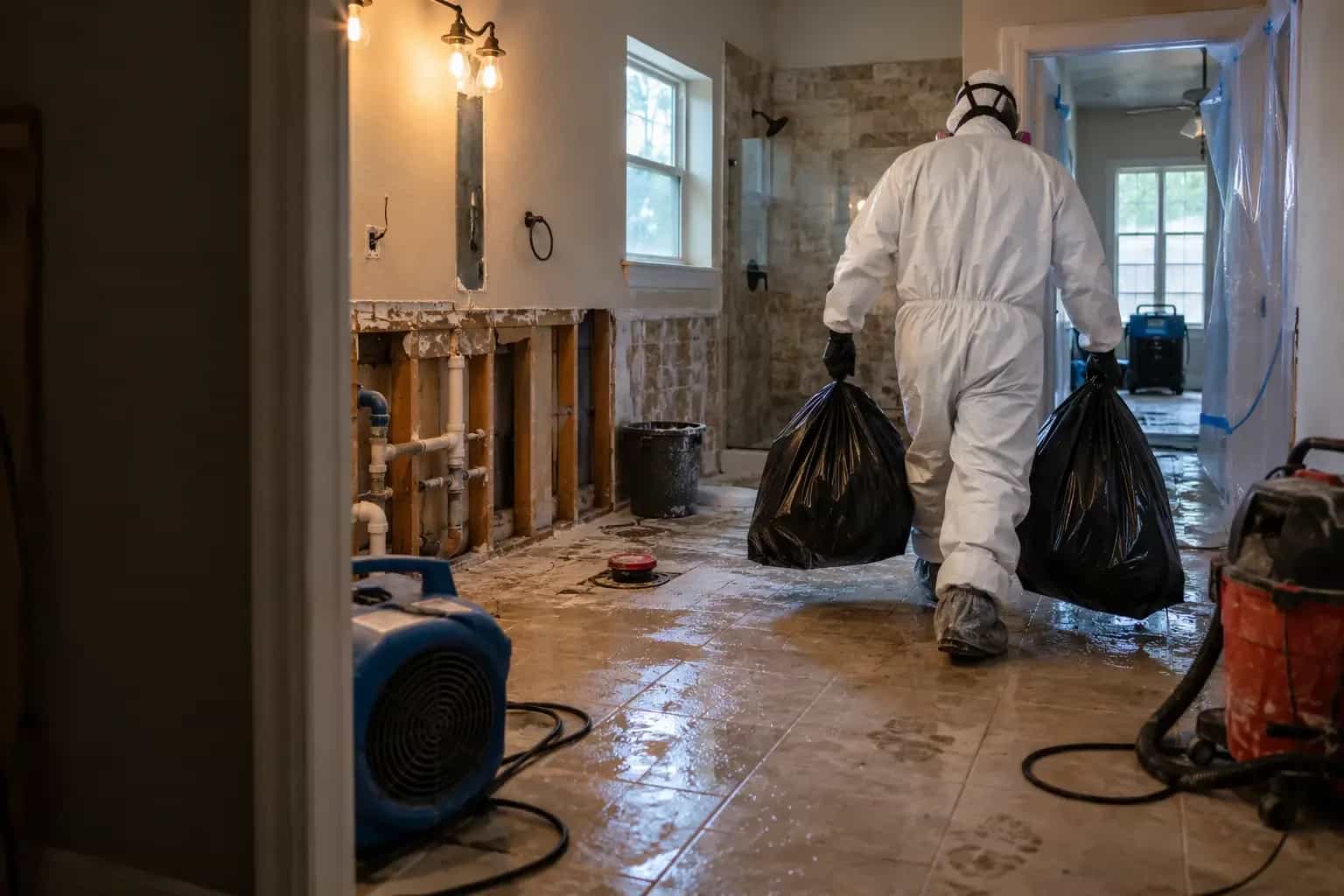
San Marcos, TX & Hays County · 24/7 response
A sewage backup is Category 3 black water, which makes it a containment and disposal job rather than a mop job. We handle it 24/7 across San Marcos and Hays County.
Sewage cleanup means Category 3 water under ANSI/IICRC S500: grossly contaminated and carrying bacteria and viruses. Porous material that absorbed it, carpet, pad, and drywall, gets removed rather than dried, and everything that stays is sanitized. This is never a DIY job, and the 24 to 48 hour window still applies.
Stay out of it. If a toilet overflowed, a floor drain backed up, or you're looking at dark water with a sewage smell, the first thing to do is keep yourself, your kids, and your pets away from the affected area. Sewage backup is Category 3 black water, and it carries bacteria and other pathogens that make it genuinely unsafe to handle unprotected. This isn't a job for a mop and a bucket.
We provide sewage cleanup and biohazard water removal across San Marcos and Hays County. The short version is safe Category 3 handling, antimicrobial sanitizing, and proper disposal, following the ANSI/IICRC S500 water categories the industry uses.
Yes. Sewage backup is Category 3 black water, which carries bacteria, viruses, and other pathogens, so it is unsafe to handle without protective equipment. Treat it as a health hazard. Safe cleanup means removing porous contaminated materials like carpet and pad, sanitizing hard surfaces with antimicrobials, and disposing of waste properly rather than just mopping it up.
For a fuller picture of when it's safe to remain in the home, our guide on whether it's safe to stay in a house after a sewage backup walks through how to judge it.
Stay out of the water. Keep everyone else out too. Sewage is Category 3 black water and can carry bacteria, viruses, and other pathogens, so contact is the risk. Shut off power to the affected area at the breaker if you can reach it safely, stop using drains and toilets, and call for help.
Resist the urge to start cleaning. Wiping contaminated water around spreads pathogens to surfaces that were fine a minute ago, and it puts you in contact with exactly what you should be avoiding.
Category 3, or black water, is grossly contaminated water that can contain bacteria, viruses, and other pathogens. ANSI/IICRC S500 grades water in three categories, and the grade decides whether a material gets cleaned or hauled out. Category 1 is clean supply-line water. Category 2, gray water, carries light contamination such as washing machine discharge.
That is why a Category 3 loss is handled as a health matter first and a property matter second.
Sewage backups are Category 3. So is flood water, which is why a flooded home and a sewage backup are treated with the same level of caution, and why the category drives everything that follows, from the protective equipment we wear to what gets removed instead of merely cleaned. That category also sets the pace. The first 24 to 48 hours are the window to limit secondary damage (ANSI/IICRC S500), and mold can begin growing within that same 24 to 48 hours after water intrusion (ANSI/IICRC S500 and S520). Our water damage categories explained guide breaks down all three.
Order matters most here. Sewage work runs in a careful sequence, with safety and containment first, before any water or material is touched. We isolate the area, extract contaminated water, remove porous materials that absorbed it, then sanitize and dry every surface to a documented standard.
Sewage damage is judged by what the water touched, not just how much there was. Here's the insider rule. Porous materials like carpet, pad, and the bottom of drywall that contact Category 3 water usually can't be saved by cleaning alone, so they're removed. Hard, non-porous surfaces are sanitized in place. Knowing what to pull versus what to save is what separates a real cleanup from a mop-and-spray, and it's most of what you're paying a professional to judge.
We clean and sanitize. We do not pump or repair septic systems. Sewage cleanup inside the home, extracting the water, removing contaminated materials, sanitizing, and drying, is our scope. Septic tank pumping and repair is a separate licensed trade, so we refer that out to a septic specialist. That keeps the contamination work and the system repair each in the right hands.
Stop the damage from spreading. Call for safe sewage cleanup →
Some of these are obvious. Some are early warnings worth catching. Sewage odor in a bathroom or laundry, more than one slow drain at once, gurgling from a toilet when a sink empties, or water backing up at the lowest fixture in the house all point to a main line problem.
That last one matters. When several drains back up at once, the problem is usually in the main line, not a single fixture, and the contamination can spread fast.
Local conditions shape these calls. Older homes in the Historic District near the Square run on aging plumbing, and those original lines back up more often than newer ones. TXST student rentals are another common source, where older or overloaded lines take more than they were built for.
Both tend to show the same pattern. A backup that's been building quietly, then a sudden overflow.
Flooding adds a second path. In Flash Flood Alley, after Central Texas storms, overwhelmed systems and saturated ground can push contaminated water back into homes, and flood water itself is treated as Category 3. Then the humid Central Texas climate does the rest. Contaminated water left in place doesn't just smell. It drives bacterial growth and feeds mold quickly in local humidity, which is why sanitizing and drying have to happen fast, and why sewage and mold remediation so often go together. Standing flood water is its own problem, covered under flood damage cleanup.
Sewage is Category 3 water, which prices at the top of the Central Texas band, roughly $7.00 to $7.50 per square foot against the $3.00 to $7.50 range that covers all water losses (industry cost data, scoped under ANSI/IICRC S500). It costs more because so much of the affected material is removed and disposed of rather than dried and kept.
| Affected floor area | Category 3 mitigation range | What is usually leaving the building |
|---|---|---|
| 100 sq ft, a single bathroom | $700 to $750 | Vinyl or carpet, pad, drywall to the marked cut line |
| 250 sq ft, bathroom and hallway | $1,750 to $1,875 | The above, plus affected base cabinetry and trim |
| 500 sq ft, a finished basement room or garage conversion | $3,500 to $3,750 | Flooring, pad, lower drywall, insulation, porous contents |
| 900 sq ft, a multi-room backup | $6,300 to $6,750 | All of the above across rooms, plus HVAC assessment |
That is the published rate band applied to a floor area, not a quote from us, and it covers mitigation only. Rebuild of what came out is a separate scope. Small jobs also carry a practical floor, so a single contained bathroom tends to land nearer the $1,200 bottom of the whole-job range than the raw multiplication suggests.
On coverage, read your declarations page before you assume anything. Standard Texas homeowners policies commonly exclude sewer and drain backup unless a specific backup endorsement has been added.
| Standard homeowners policy | With a water backup endorsement | |
|---|---|---|
| Sudden burst supply line | Usually covered | Usually covered |
| Sewer or drain backing up into the house | Commonly excluded | Covered up to the endorsement limit |
| Sump pump failure | Commonly excluded | Usually covered under the same endorsement |
| Typical limit | Not applicable | Often a fixed sublimit, frequently $5,000 to $10,000, well below the dwelling limit |
| Rising river or flash flood water | Excluded, needs NFIP or private flood | Still excluded, the endorsement does not cover flooding |
Texas deductibles commonly run $1,000 to $5,000 and are sometimes set as a percentage of dwelling coverage (Texas Department of Insurance), which matters on a smaller backup where the deductible can approach the whole bill. Document everything with photos before cleanup begins, and our Texas water damage insurance guide explains the endorsement wording.
The rule under ANSI/IICRC S500 is about porosity, not appearance. Anything porous that absorbed Category 3 water is a removal item, because contamination has gone into the material where cleaning cannot reach it. Hard, non-porous surfaces are cleaned, sanitised and kept.
| Material | Outcome | Why |
|---|---|---|
| Carpet and carpet pad | Out | Pad in particular acts as a sponge and cannot be decontaminated |
| Drywall below the contamination line | Out, cut above the wicked height | Gypsum absorbs, and the wick line sits above the visible mark |
| Fibreglass or blown-in insulation | Out | Holds water and contamination through the batt |
| Particleboard and MDF cabinetry, laminate flooring | Out | Swells and delaminates, and the core cannot be sanitised |
| Solid wood framing and subfloor | Cleaned, treated, dried | Non-porous enough to decontaminate at the surface, then dried to standard |
| Tile, sealed concrete, glazed surfaces, metal | Cleaned and treated | Non-porous, contamination stays on the surface |
| Solid hardwood flooring | Case by case | Sometimes salvageable, and the readings and the finish decide it |
| Soft contents, mattresses, upholstered furniture, toys | Out | Cannot be verified clean, and this is where people push back hardest |
That last row is the hardest conversation on a sewage job, and we will not tell you what you want to hear about it. If a soft item absorbed Category 3 water, there is no way to demonstrate it is safe afterwards, so it goes on the disposal inventory. We photograph and list everything before it leaves so the contents portion of your claim has evidence behind it.
Stay out of the affected rooms, and if the backup is large, in the HVAC return path, or anywhere near a bedroom, plan on staying elsewhere until containment is up. The risk is not only what is on the floor. Disturbing contaminated material sends it into the air, and a running air handler distributes that through the whole house.
| Situation | Reasonable to stay | Reason |
|---|---|---|
| Small backup contained to one bathroom, door shut, HVAC off | Usually yes | Containment is simple and the affected zone is isolated |
| Backup reaching hallway or living space | No, not until containment is set | Foot traffic tracks contamination through clean rooms |
| Any contamination near an HVAC return | No | The system distributes it building-wide within minutes |
| Anyone immunocompromised, pregnant, elderly, or an infant in the home | Leave regardless of size | Lower tolerance for exposure, and it is not worth the argument |
Turn the HVAC off before you do anything else. It is the single action that prevents the largest amount of secondary contamination, and it costs nothing. Our guide on whether it is safe to stay in the house after a sewage backup goes further.
Before and after
Sewage is Category 3 water under ANSI/IICRC S500. The rule is not about how it looks. Porous material that absorbed it comes out, hard surfaces get cleaned and sanitised, and nothing gets dried in place and called done.
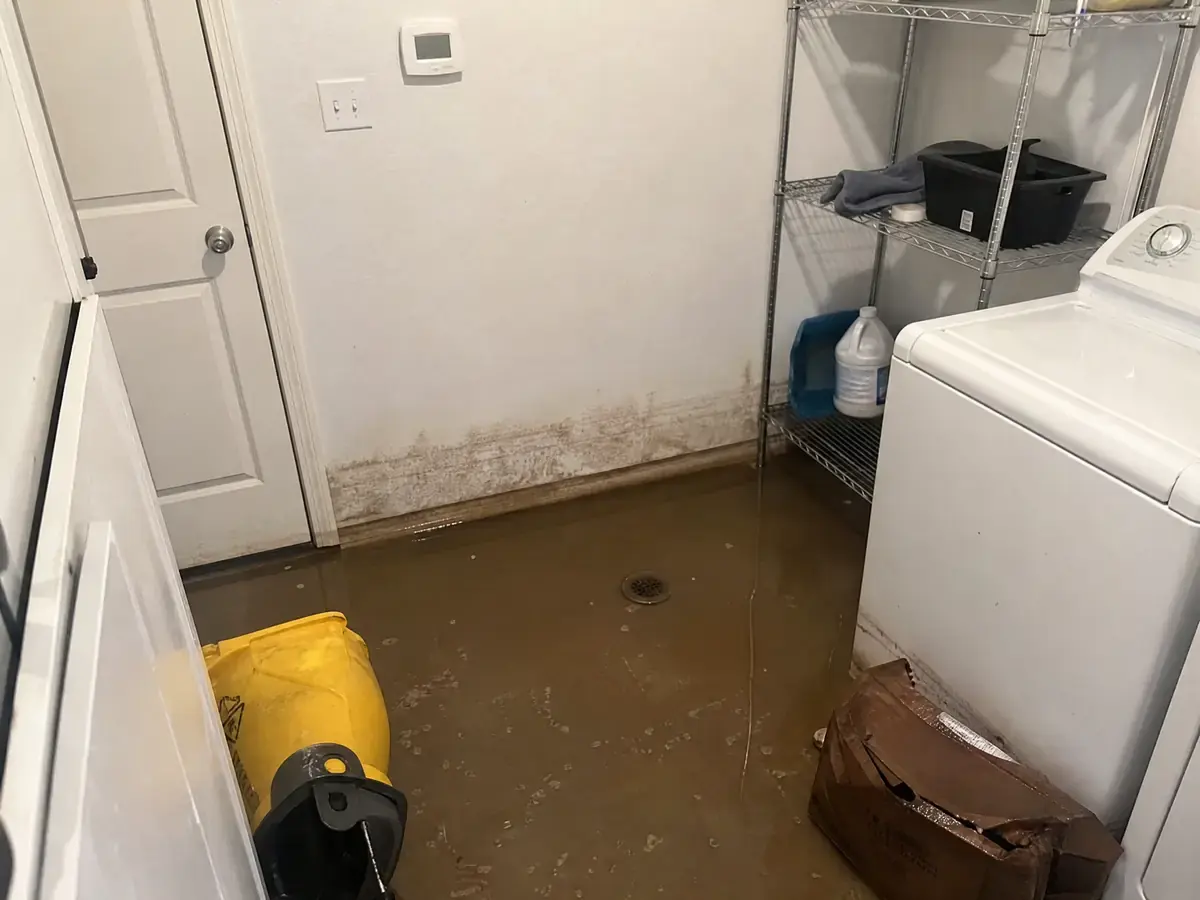 Before, contaminated
Grossly contaminated water across the floor, wicking into drywall and pad. Everything porous it touched is now a removal item, not a cleaning item.
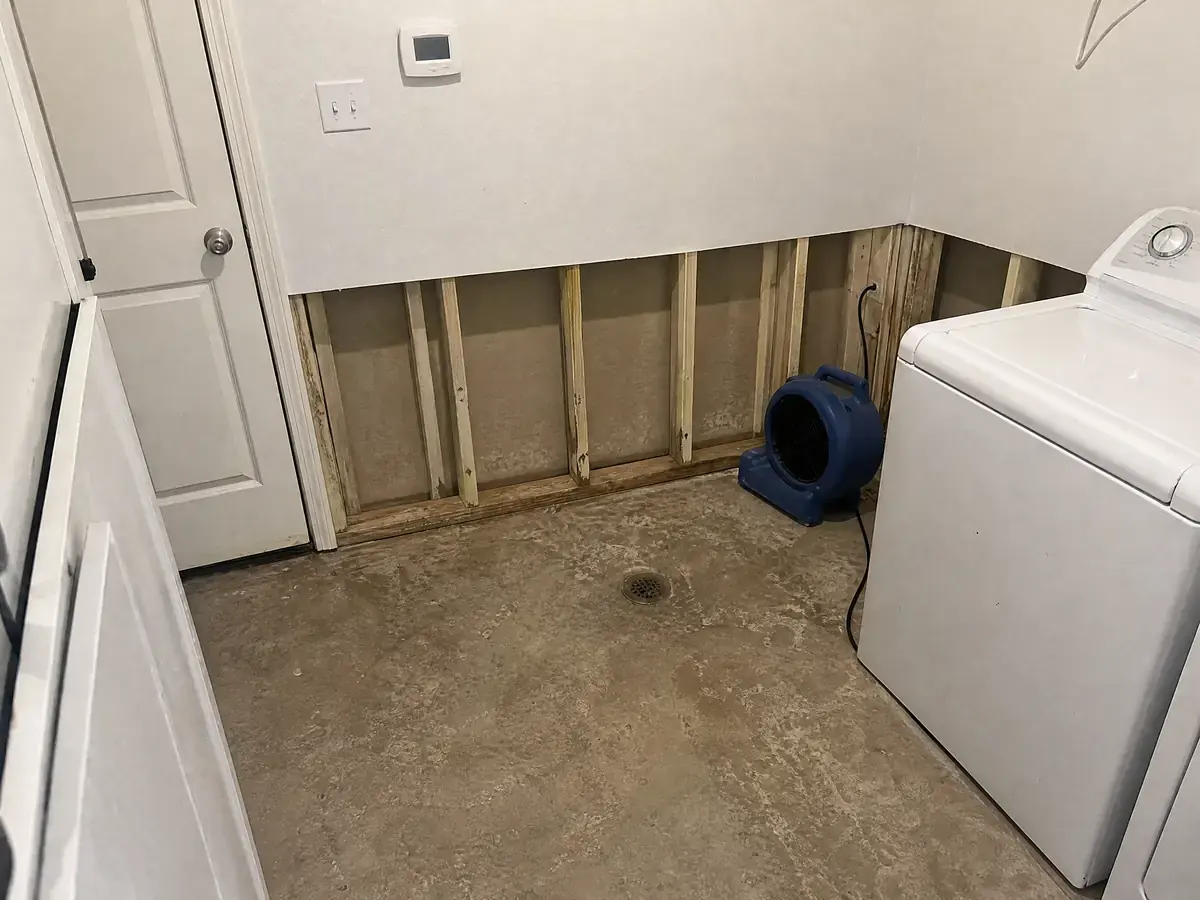 After, removed and sanitised
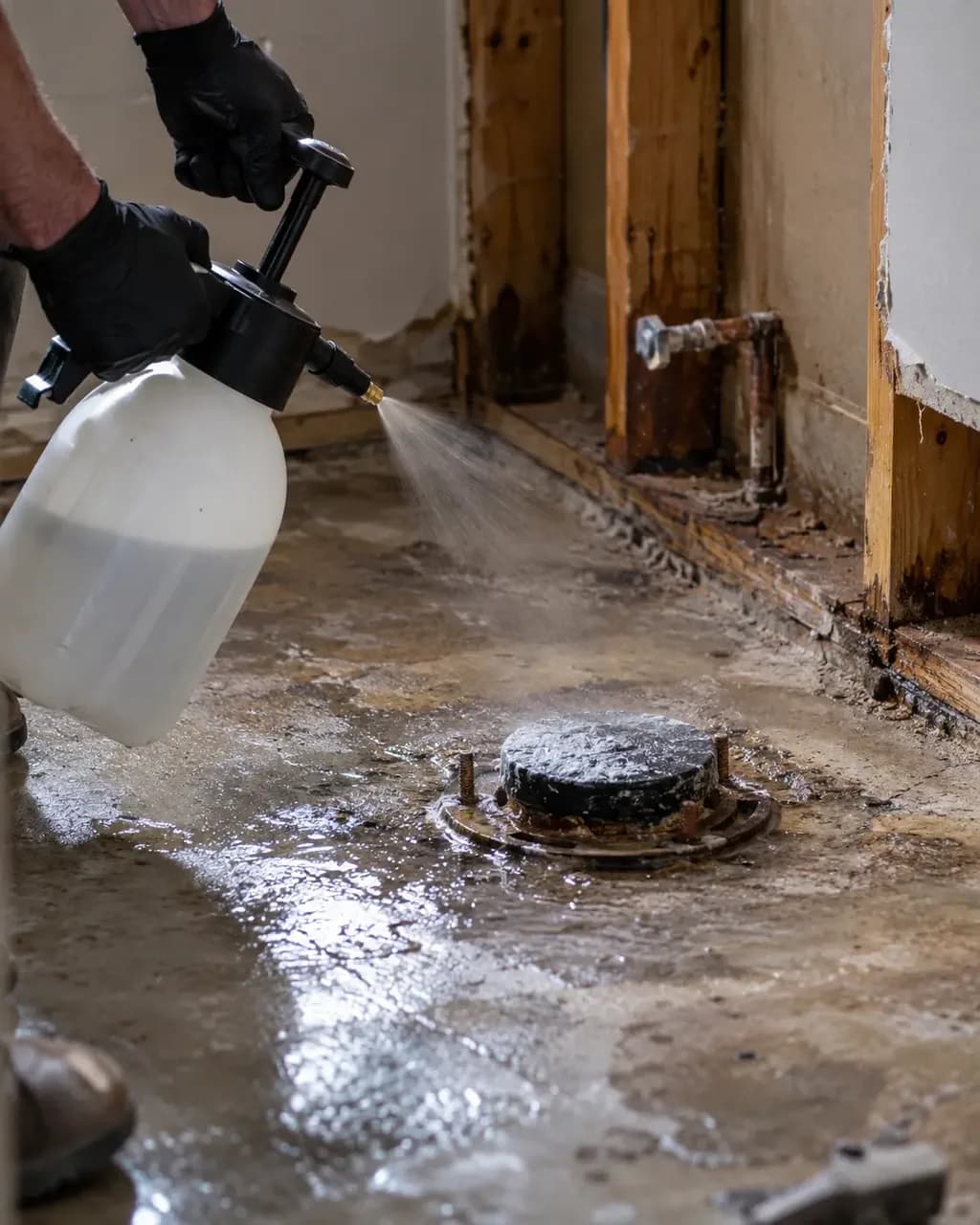
Affected porous material bagged and disposed of, framing and hard surfaces cleaned and treated with an antimicrobial, then dried to a documented standard.
Standing water? Call now, we answer 24/7.
A real local person picks up, then a crew heads your way.
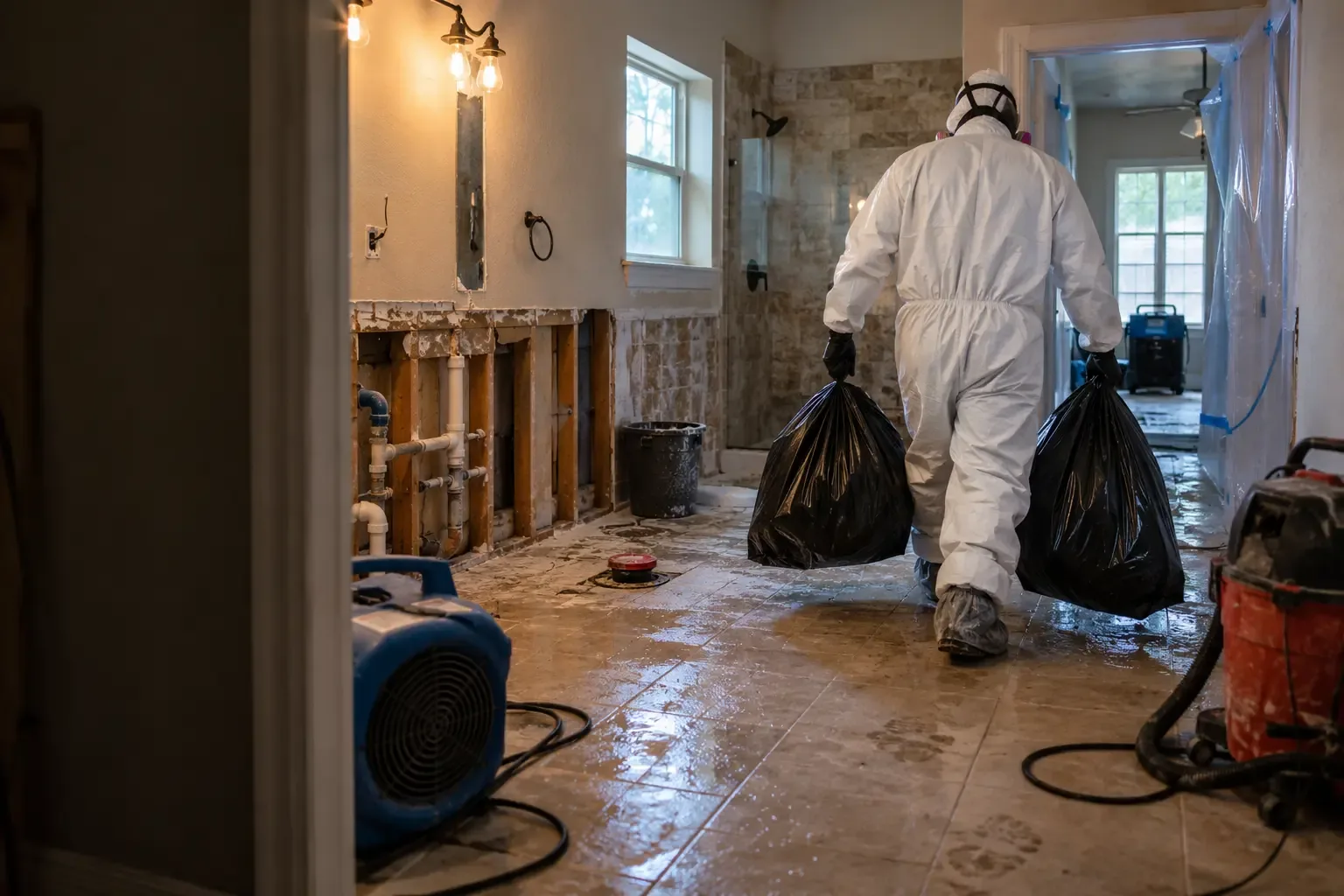
Who we are
We put the things most companies keep vague in writing: real price ranges for this market, the standards we work to, and a moisture log your adjuster can read.
24/7
A real local person answers, day or night
24-48 hrs
The critical window to limit secondary damage
~25 mi
Served from our San Marcos hub across Hays, Comal & Caldwell
S500
The ANSI/IICRC drying standard our process follows
One local team handles every stage, so you are not juggling separate vendors.
Start hereFast removal of standing water with truck-mounted and portable units before it soaks into more material.
See emergency water extraction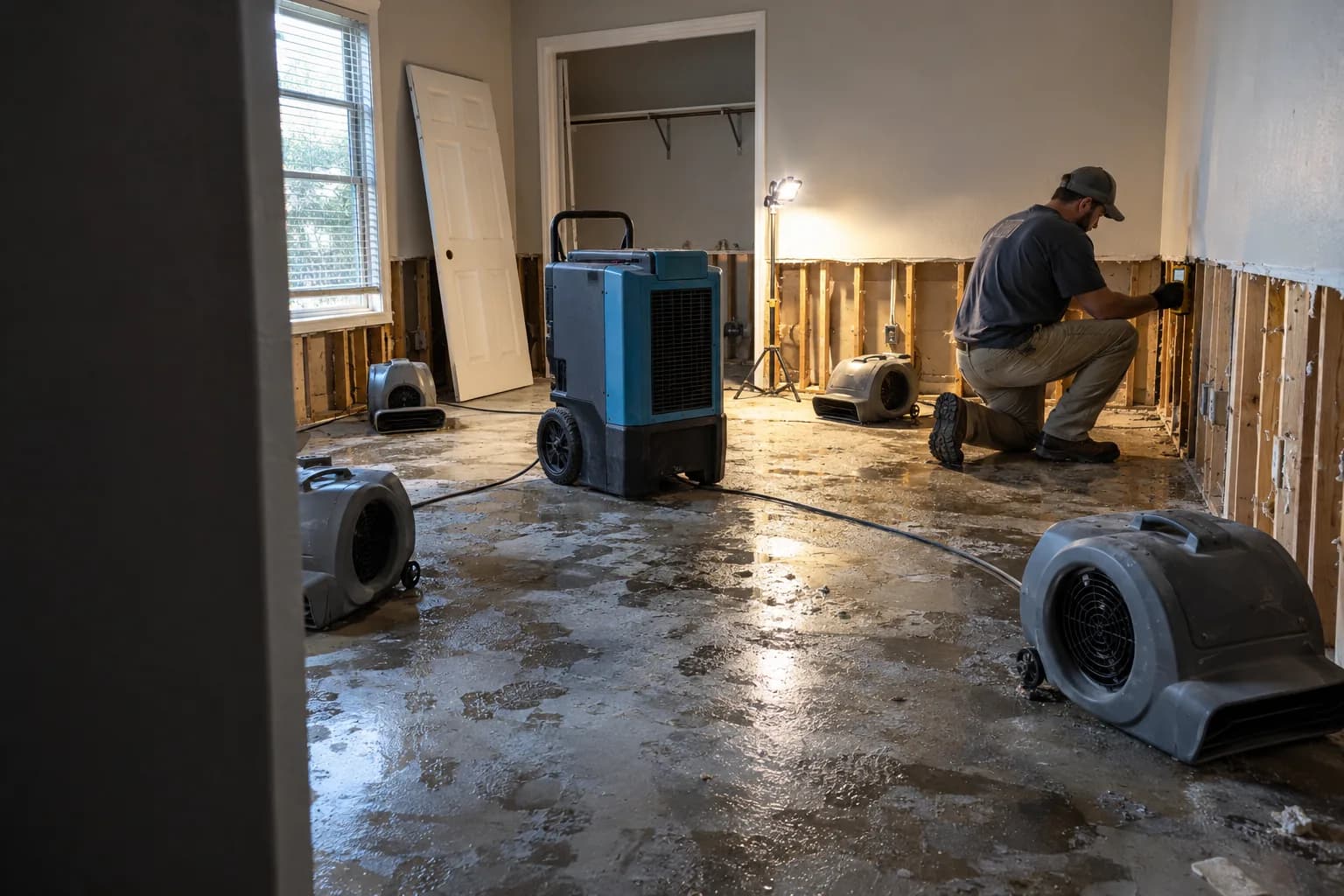
Air movers and LGR dehumidifiers with daily moisture readings, dried to a documented standard.
See structural drying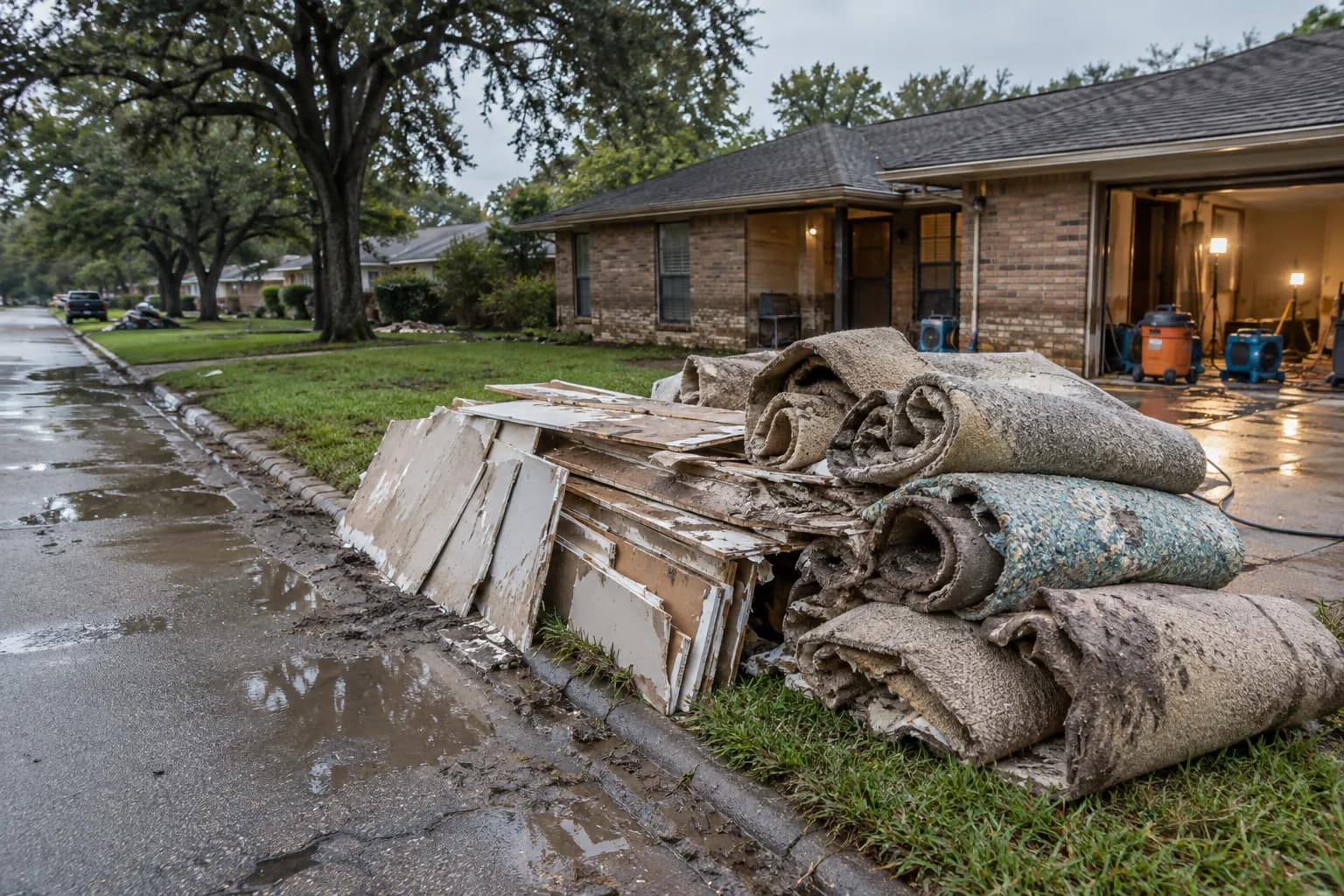
Muck-out and restoration after river flooding and flash floods along the San Marcos and Blanco Rivers.
See flood damage cleanupFAQ
Straight answers to what San Marcos homeowners ask most, on cost, insurance, mold timelines, and what to do first.
24/7
A real local team across Hays, Comal & Caldwell counties. Every job dried to a documented standard.
Have a question on your mind?
Get a quoteYes, sewage backup is dangerous because it is Category 3 black water carrying bacteria and other pathogens, and it's safest to stay out of the affected area. Treat it as hazardous. Keep children and pets away, avoid the contaminated rooms, and ventilate from a distance rather than spending time inside them. Whether you can safely stay elsewhere in the home depends on how far the contamination spread. Our guide on whether it's safe to stay in a house after a sewage backup covers how to judge it.
No, sewage is Category 3 black water and should not be cleaned up without proper PPE and training. Skip the DIY. The hazard isn't just the visible mess; pathogens spread to surfaces and into porous materials that look fine but can't be safely cleaned. Professional cleanup means containment, extracting contaminated water, removing soaked porous materials, and sanitizing with antimicrobials before drying, and attempting it yourself risks your health and usually leaves contamination behind, so it's worth calling a pro.
Category 3, or black water, is grossly contaminated water that can contain bacteria, viruses, and other pathogens, which is the class sewage backups and flood water fall into. It's the most hazardous of the three water categories used in the industry, above Category 1 (clean) and Category 2 (gray) water. Worst of the three. Because it's so contaminated, porous materials it touches usually have to be removed rather than cleaned. You can read the full breakdown in our water damage categories guide.
Sometimes, but standard homeowners policies often exclude sewer and drain backup unless you've added a specific backup endorsement to your policy. Read the fine print. Damage from a sudden covered event may be treated differently from a gradual backup, so the cause and your coverage both matter. Document everything with photos before cleanup begins, and check your declarations page for backup coverage. Our Texas water damage insurance guide explains the backup-endorsement nuance, and we can coordinate with your adjuster.
Tell us straight what is happening and we will tell you the next step. We pick up, then we are on the way.
A real local person answers, 24/7. Tell us what is happening and we are on the way.