 Start here
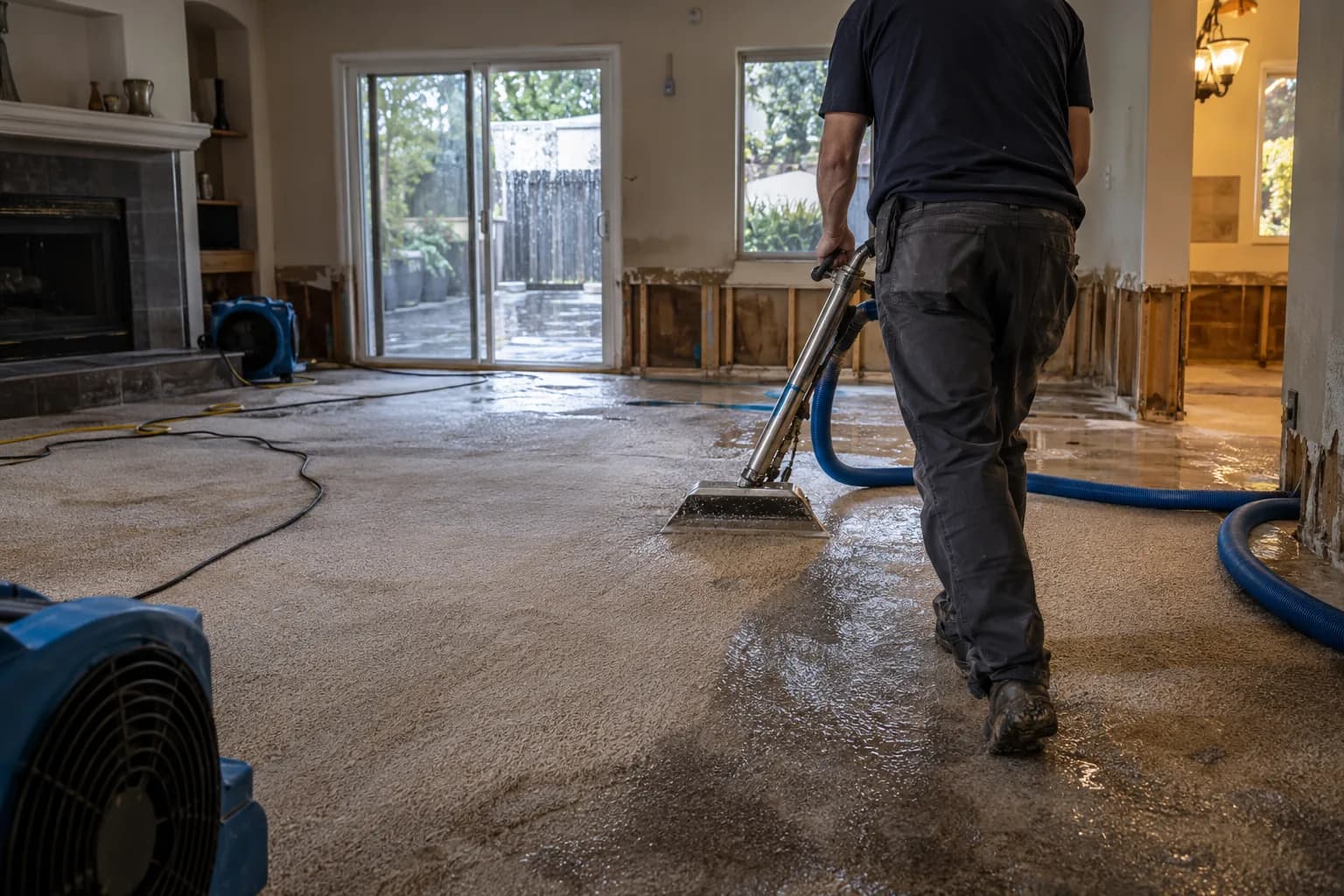
Emergency Water Extraction
Fast removal of standing water with truck-mounted and portable units before it soaks into more material.
See emergency water extraction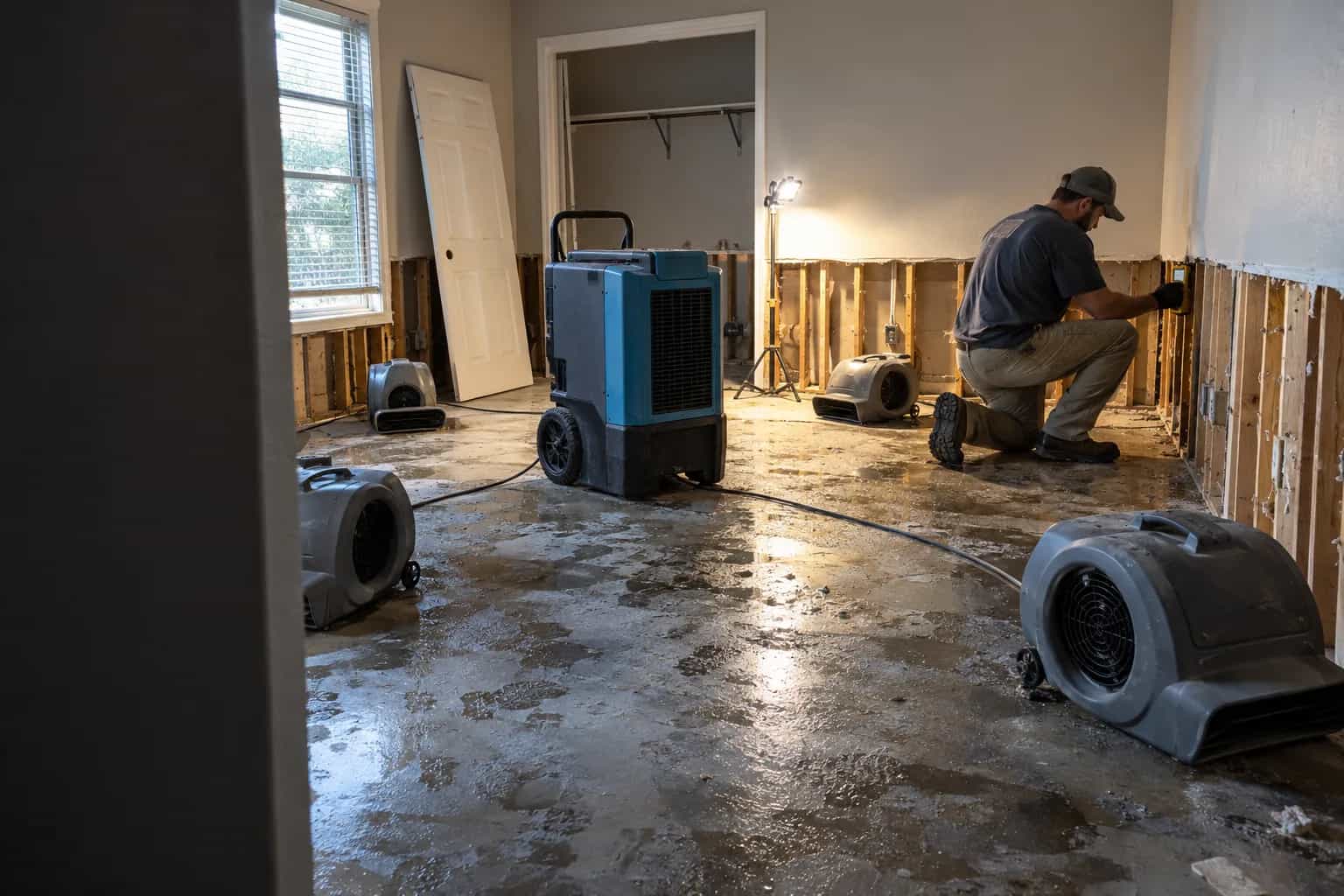
San Marcos, TX & Hays County · 24/7 response
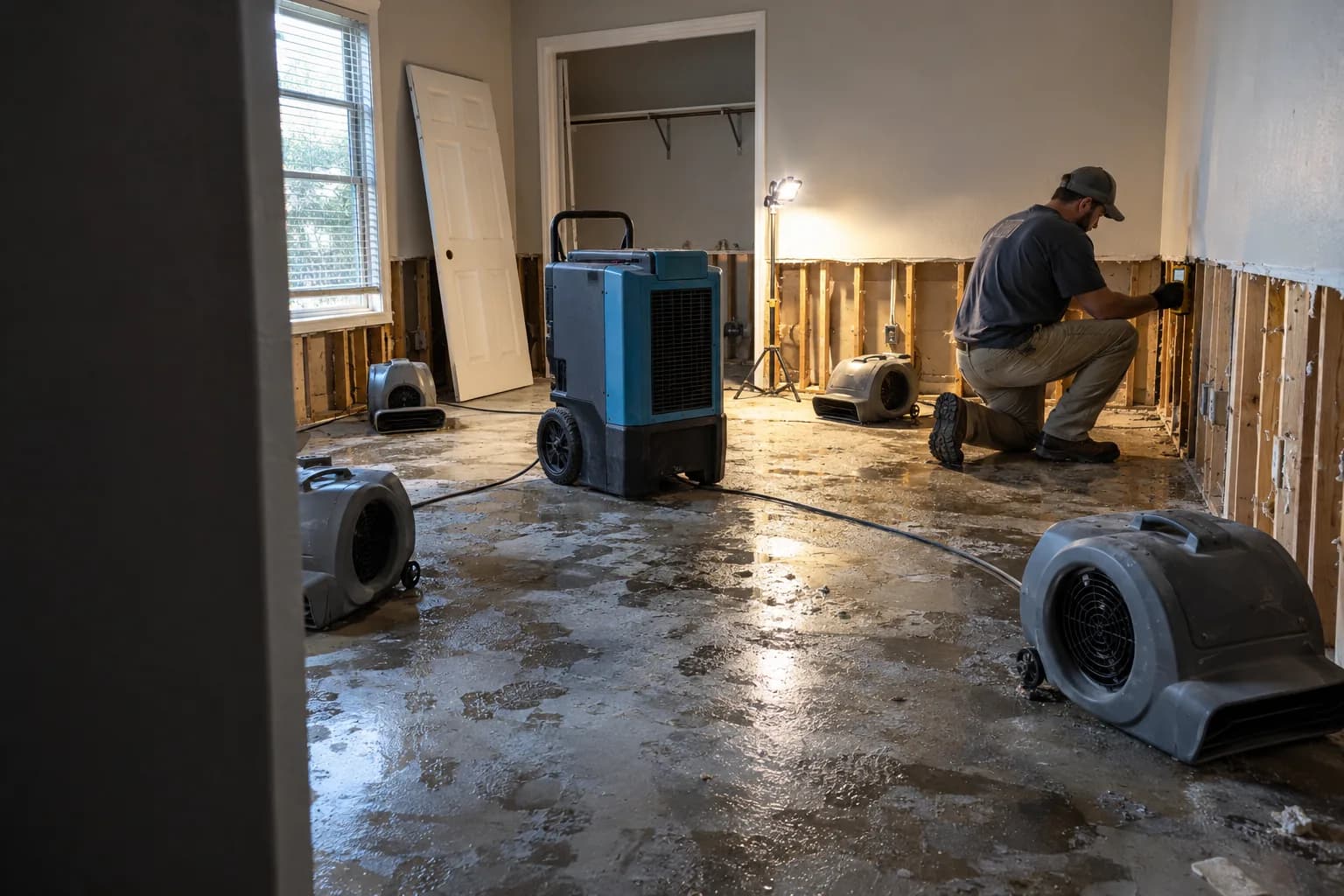
Air movers and LGR dehumidifiers pull water back out of framing, subfloor, and drywall cavities across San Marcos and Hays County, with moisture readings logged daily.
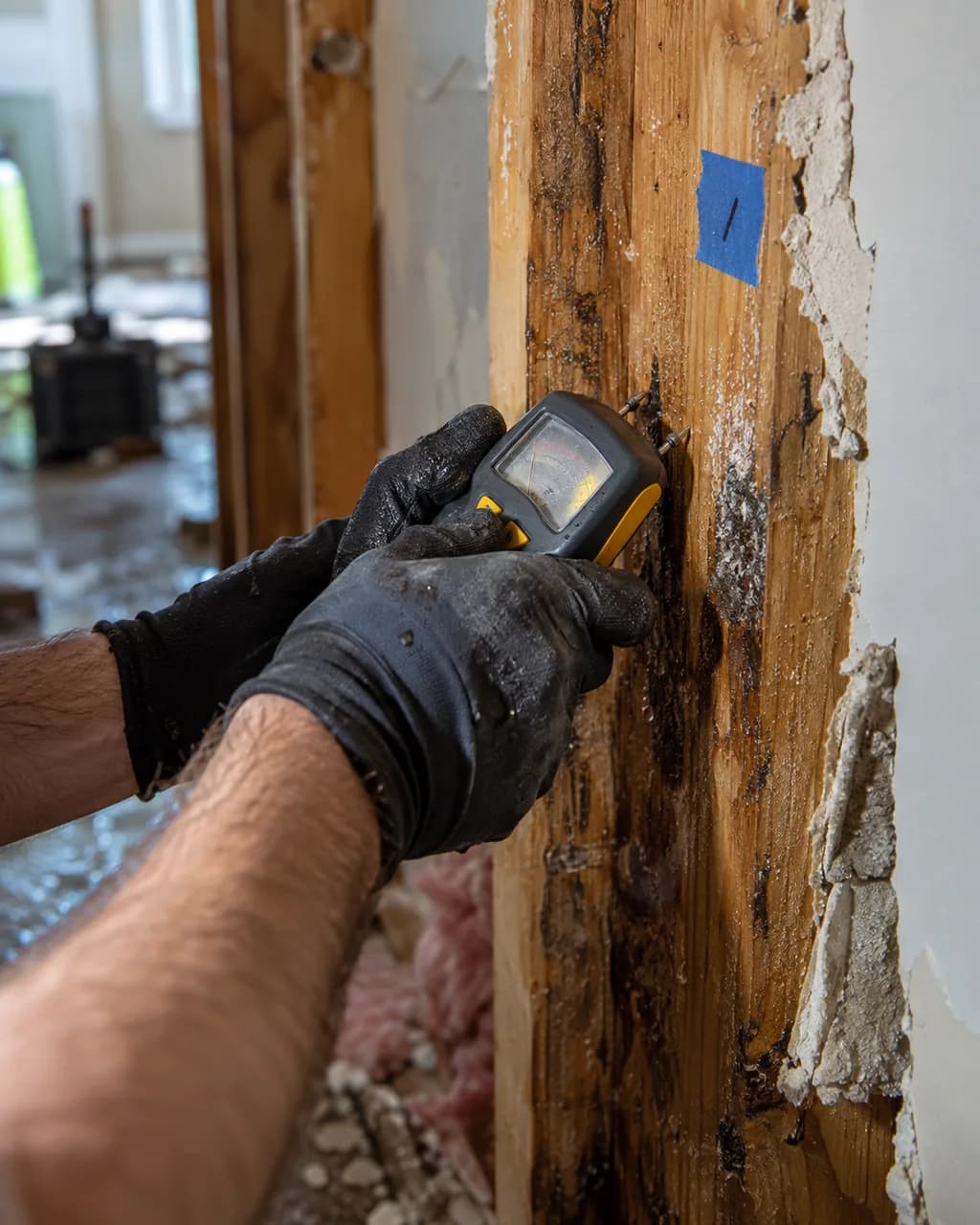
Structural drying is the stage after extraction: removing the water already absorbed into building materials. ANSI/IICRC S500 sets the target as a documented dry standard rather than a guess, so readings get logged every day and equipment stays running until the numbers hold. Secondary damage starts inside 24 to 48 hours.
Once the water's out, the real risk is what you can't see. The puddle is gone, the carpet feels dry to your hand, and yet moisture is still sitting inside the drywall, the subfloor, and the slab. Dry to the touch lies. That hidden water is what grows mold and warps floors weeks later.
Need it dried fast and properly? Tap to call now.
Structural drying is how you get rid of it properly. Water Damage Restoration San Marcos provides structural drying and dehumidification across San Marcos and Hays County, with round-the-clock dispatch around the calendar and the clock. We dry to a number, not to a guess.
This page walks through what that actually means, how long it takes, and how we prove the structure is dry instead of just hoping it is.
Structural drying is the controlled removal of trapped moisture from building materials such as drywall, subfloor, and concrete slab, using air movers and LGR dehumidifiers together. It goes further than surface drying, which only dries what you can see. It runs three to five days and ends when moisture meters confirm the structure is dry to standard.
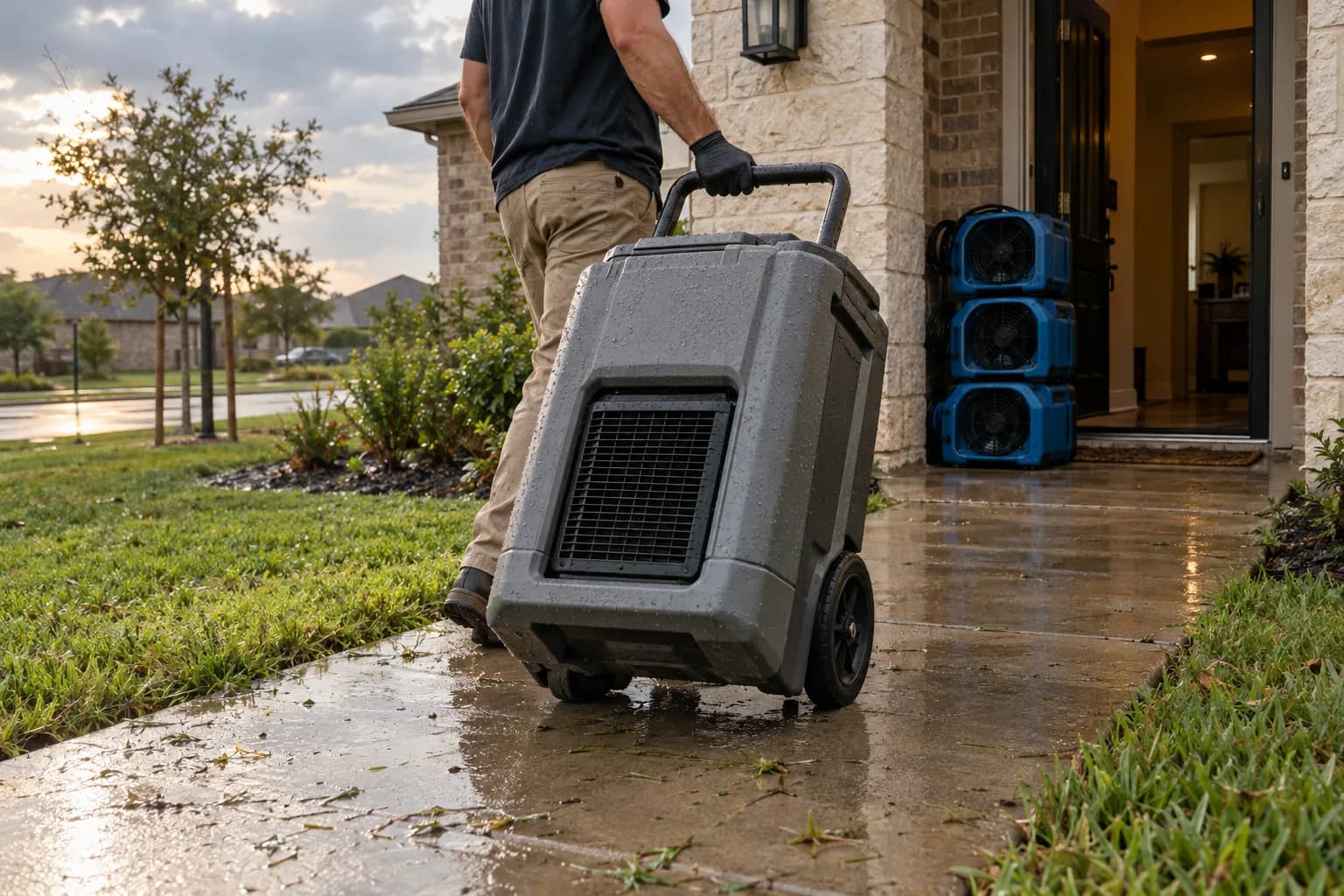
The key word is controlled. Air movers speed evaporation off wet surfaces, lifting moisture into the air. LGR dehumidifiers then pull that moisture back out of the room so it can't resettle into the walls and floors, which is the half of the job a box fan can never do on its own. Two jobs, one system. Run one without the other and you're just moving water around.
Our drying targets follow ANSI/IICRC S500 dry-standard methodology. That's the industry reference for when a material counts as dry, and it's the endpoint we work toward.
Plenty of people try to dry water damage with box fans and a store-bought dehumidifier. For a tiny clean spill, fine. For real water damage in Central Texas, that setup usually stalls within a day or two because the equipment can't keep pace with how much water a serious loss puts into the air.
Here's the science, in plain terms. Drying is governed by psychrometry, the relationship between temperature, humidity, and airflow. Air has a limit. Evaporation only pulls moisture out of a material if the surrounding air can accept more moisture. San Marcos air is already humid most of the year, so a box fan just blows damp air across a damp floor and nothing leaves the room. Worse, fans without dehumidification can drive surface moisture deeper into the structure.
That's the gap. A consumer dehumidifier can't keep up with the moisture load of a real loss in this climate. LGR units, low-grain-refrigerant dehumidifiers, are built to pull water out of air that's already humid, which is exactly the San Marcos problem.
Drying is measured work. We set a baseline moisture reading, place air movers and LGR dehumidifiers to a calculated load, then log readings daily until the materials hit their dry standard. Here is the sequence we follow on every San Marcos job.
In a typical San Marcos drying setup, day one is about placing equipment and baselining readings. The following days are about watching the numbers move, not about a calendar.
Most residential drying finishes in three to five days. Day one is extraction and equipment placement, days two to four are monitored drying, and the job closes when the affected materials read at the dry standard taken from an unaffected part of the same material. Saturated slabs, hardwood and plaster run longer.
Here is what a typical three-bedroom drying log looks like, using the same marked reading points every visit.
| Day | Subfloor moisture | Bottom plate | Room air | What changes |
|---|---|---|---|---|
| Day 0, set | 31% MC | 28% MC | 78% RH, 108 GPP | Extraction done, air movers and LGR dehumidifier placed |
| Day 1 | 24% MC | 23% MC | 61% RH, 74 GPP | Fastest drop of the job, most free water is already gone |
| Day 2 | 17% MC | 18% MC | 51% RH, 52 GPP | Curve flattens, equipment repositioned to the slowest material |
| Day 3 | 13% MC | 14% MC | 46% RH, 42 GPP | Close to standard, one material usually lags |
| Day 4, close | 11% MC | 12% MC | 44% RH, 38 GPP | Readings match the unaffected reference, equipment comes out |
MC is moisture content in the material, RH is relative humidity in the air, and GPP is grains of water per pound of air, which is the number that tells you whether the dehumidifier is actually winning. Watch the shape of that curve rather than any single figure. A flat day two to three usually means airflow is pointed at the wrong material, not that the structure needs more days.
Three things stretch the timeline here specifically. In practice that means a saturated concrete slab, which releases moisture for a week or more; hardwood over subfloor, which needs mat drying rather than ambient airflow; and a humid Central Texas week, where outdoor dew points in the seventies mean the dehumidifier fights the outside air every time a door opens.
It depends on the meter and the water category. Drywall wet by clean water for under 48 hours can usually be dried in place. Category 3 water, or drywall that stayed saturated, comes out. Solid hardwood sometimes recovers with drying mats; laminate and carpet pad rarely do. We read each material before deciding.
Speed is what buys the salvage. Clean-water drywall and many wood subfloors can often be dried in place if drying starts quickly, but heavily saturated materials, or anything touched by contaminated water, usually have to come out, because once a porous material sits soaked long enough the safer call is removal rather than a drying gamble. Here's the part that trips people up. A floor can feel perfectly dry to the hand while the subfloor underneath still reads high on a moisture meter, which is why crews chart readings daily and keep equipment running until the numbers, not the surface, hit the dry standard. The meter has the last word. Pulling equipment early is the single most common cause of hidden mold, and we'd rather run one more day than hand you a problem behind the baseboards.
Get a real drying timeline. Tap to call and we'll book it.
San Marcos has a humid subtropical climate, and ambient moisture stays high through much of the year. Dehumidification is non-negotiable here. Air drying alone often stalls because there is nowhere for the moisture to go, so trapped water lingers in walls and floors.
It lingers longer than a homeowner expects. The EPA recommends keeping indoor relative humidity below 60 percent, and ideally in the 30 to 50 percent band, to hold off mold (EPA). Hitting that number is harder in local air than the guidance makes it sound, which is exactly why LGR dehumidifiers do the heavy lifting instead of fans, and why we read to a target rather than trusting how a room feels.
Slab-on-grade homes add their own wrinkle. The concrete holds it. Moisture gets caught between the flooring and the concrete, so the slab and subfloor need targeted drying, not just fans waving over the surface.
After area-wide events along the San Marcos and Blanco Rivers, drying demand spikes across the county at once. Documented daily moisture readings are how a homeowner proves to an insurer that the structure reached a dry standard, not just that it looked dry when the crew left.
Drying is one line inside the mitigation scope, and Central Texas mitigation runs about $3.00 to $7.50 per square foot depending on the water category (industry cost data, scoped under ANSI/IICRC S500). The variable that moves the drying line specifically is equipment days. How many machines, running for how long.
| What you are paying for | Typical driver | Why it moves |
|---|---|---|
| Air movers | Roughly one per affected wall or 50 to 70 sq ft of wet floor | More wet surface means more units, billed per unit per day |
| Dehumidification | Sized to the wet volume and the outdoor dew point | A humid San Marcos week needs more capacity for the same room |
| Equipment days | 3 to 5 typical, longer for slab or hardwood | The single biggest lever on the drying line |
| Monitoring visits | One per day while equipment runs | This is the documentation your adjuster reads |
| Containment or specialty drying | Mat systems, injection drying, wall cavity ports | Added only when ambient airflow cannot reach the wet material |
Whole San Marcos jobs range from around $1,200 for a small clean-water loss to $8,500 or more for a large or contaminated one, with mid-range multi-room work near $2,500 to $5,000 (industry cost data). Drying is usually a third to a half of the mitigation half of that.
Here is the part worth arguing with your adjuster about, backed by the log. Equipment days are the line carriers question most often, and a daily reading sheet showing a material still above standard is the only thing that settles it. That is why we take readings at the same marked points every visit rather than a fresh spot each day. Our water damage restoration cost in San Marcos guide covers the rest of the scope, and homeowners insurance and water damage in Texas covers coverage.
Before and after
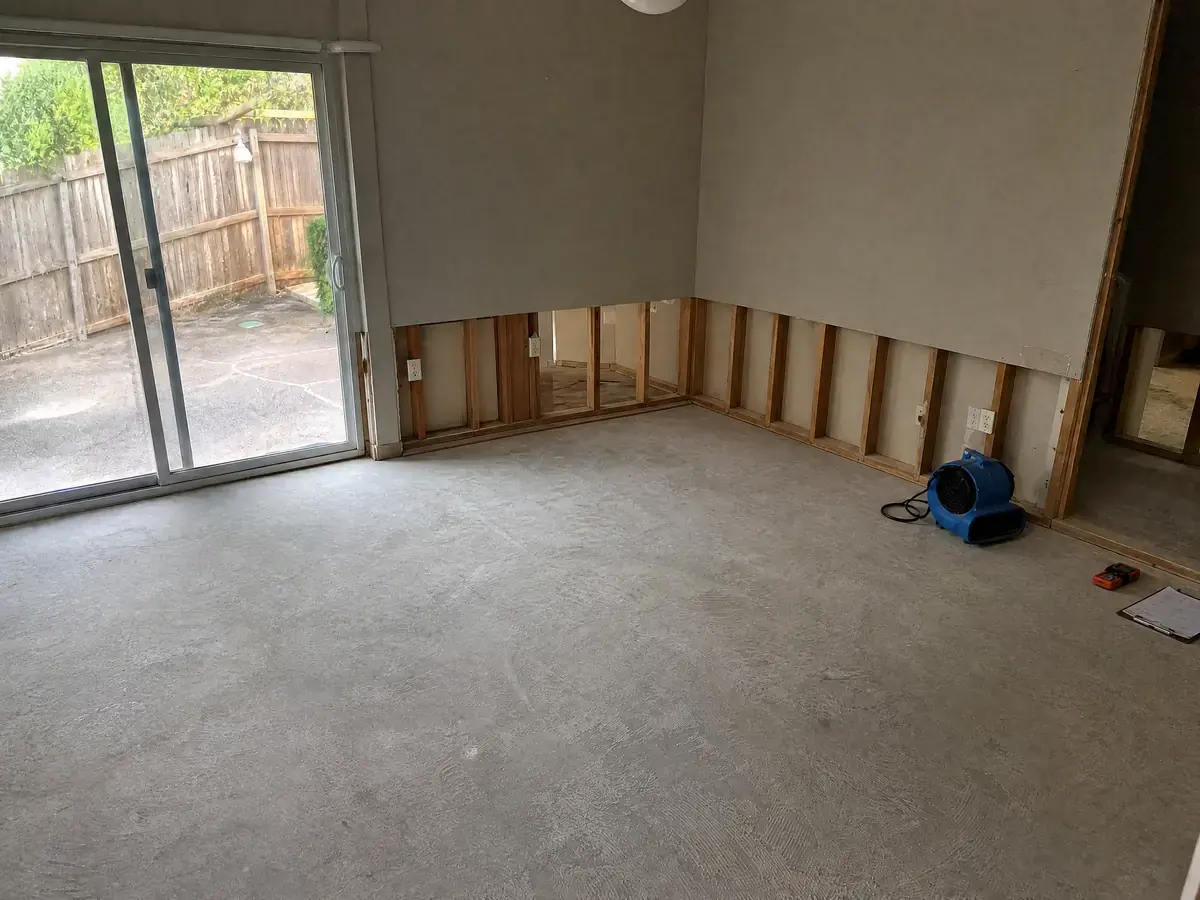
Drying is finished when meters say so, not when a surface feels dry to the hand. We set a dry standard from an unaffected part of the same material, then read the same marked spots every day until the affected material matches it.
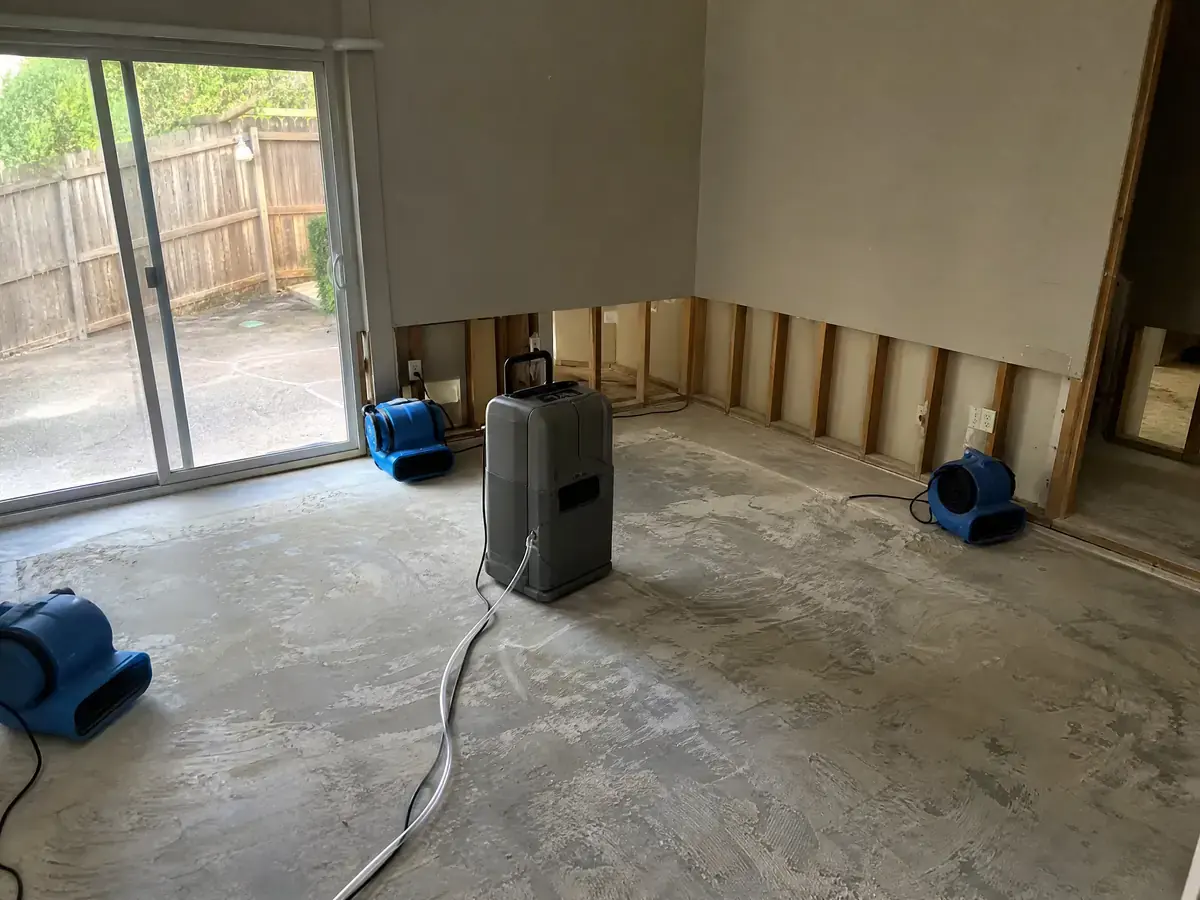 Day 0, equipment set
Subfloor and bottom plates read well above the dry standard taken from an unaffected room. Air movers and an LGR dehumidifier go in on the same visit.
 Day 3 to 4, dry standard met
Materials read at or under the reference taken on day zero, humidity is back inside the EPA range, and the completion reading is written down before equipment leaves.
Standing water? Call now, we answer 24/7.
A real local person picks up, then a crew heads your way.
Who we are
We put the things most companies keep vague in writing: real price ranges for this market, the standards we work to, and a moisture log your adjuster can read.
24/7
A real local person answers, day or night
24-48 hrs
The critical window to limit secondary damage
~25 mi
Served from our San Marcos hub across Hays, Comal & Caldwell
S500
The ANSI/IICRC drying standard our process follows
One local team handles every stage, so you are not juggling separate vendors.
Start hereFast removal of standing water with truck-mounted and portable units before it soaks into more material.
See emergency water extraction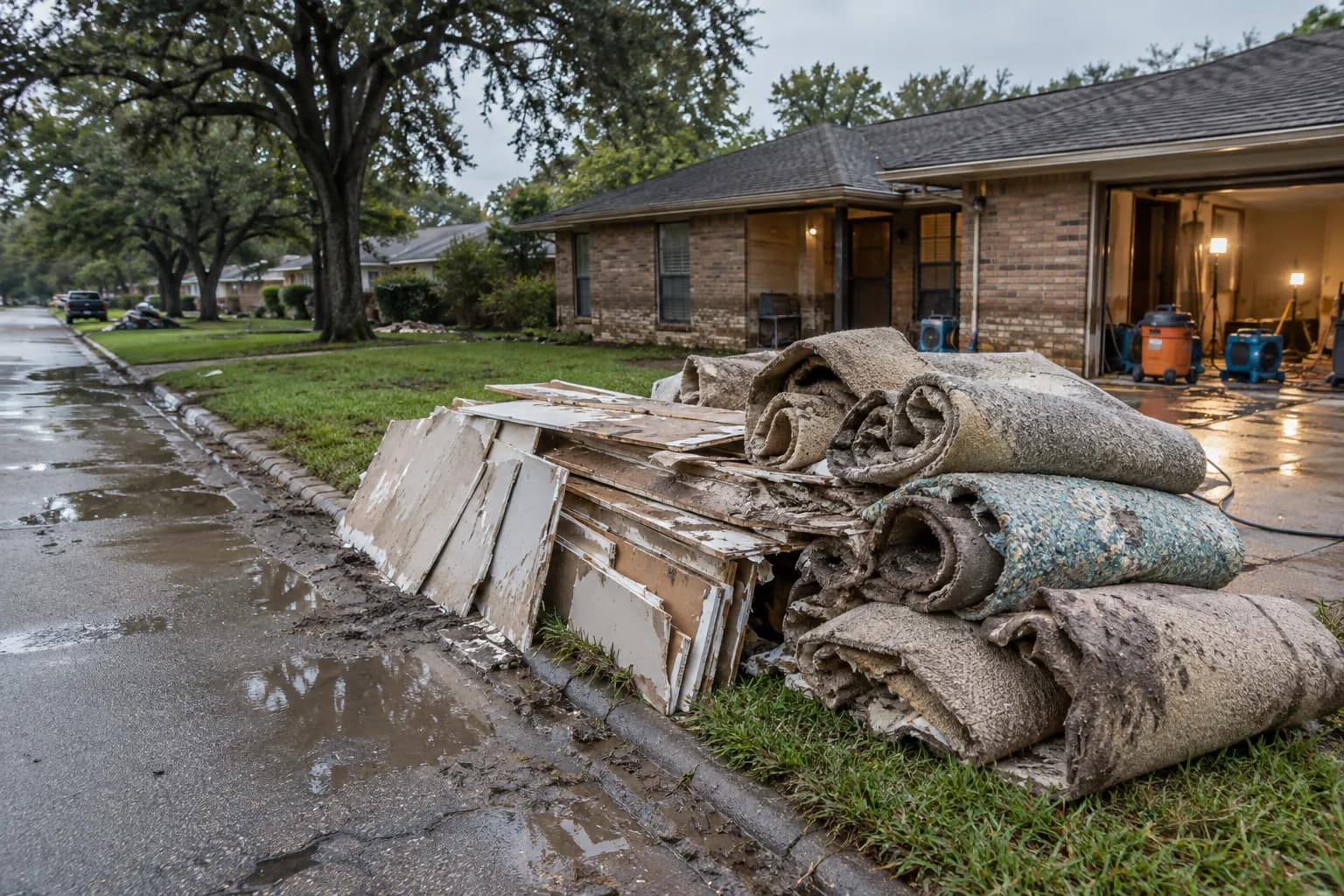
Muck-out and restoration after river flooding and flash floods along the San Marcos and Blanco Rivers.
See flood damage cleanup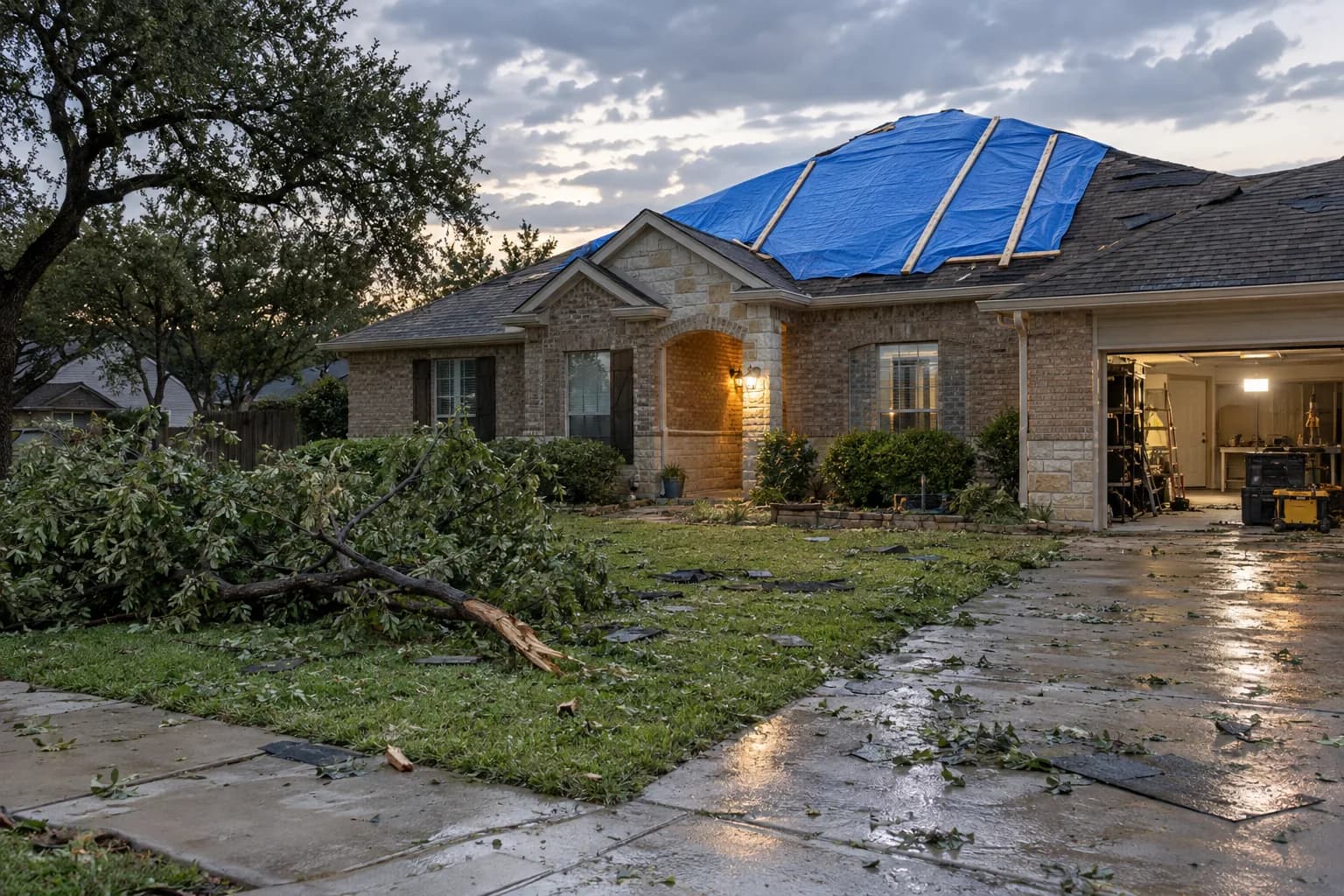
Water-intrusion repair after Central Texas thunderstorms, hail, and wind-driven rain.
See storm damage restorationFAQ
Straight answers to what San Marcos homeowners ask most, on cost, insurance, mold timelines, and what to do first.
24/7
A real local team across Hays, Comal & Caldwell counties. Every job dried to a documented standard.
Have a question on your mind?
Get a quoteMost structural drying takes three to five days, though it varies. A few things move it. The timeline depends on how much water there was, the water category, which materials got wet, and the surrounding humidity. Every loss reads differently. San Marcos's humid climate can stretch drying out, which is why LGR dehumidifiers are used instead of relying on airflow alone. Drying isn't finished on a calendar date; it's finished when moisture meters confirm the structure is dried to standard.
Usually not. Fans move air across surfaces, but on their own they only dry what you can see and do little for moisture trapped in drywall, subfloor, or the slab. Worse, in Central Texas's humid air, fans can even push moisture deeper without dehumidifiers removing it from the room. The fix is pairing. Proper structural drying pairs air movers with LGR dehumidifiers and verifies the result with meter readings rather than guessing by feel.
Dry-to-standard means a material has been returned to a documented baseline moisture level, confirmed with a moisture meter rather than by touch. Touch lies. Crews take baseline readings at the start, map the wet areas, and log readings each day until the numbers reach that target, and we hand you a completion record so you and your insurer can see the structure reached a dry standard. It is all on paper. A floor that feels dry can still read high underneath, which is why the meter, not the surface, decides.
It depends on how saturated the material is and what category of water reached it. Clean-water drywall and many wood subfloors can often be dried in place if drying starts quickly, while heavily saturated or contaminated materials usually have to be removed because the safer call beats a gamble. The meter decides. The call comes from moisture-meter readings and the water category, not guesswork, and drying fast while documenting every reading is what gives the best chance of saving materials and keeping the final bill down.
Tell us straight what is happening and we will tell you the next step. We pick up, then we are on the way.
A real local person answers, 24/7. Tell us what is happening and we are on the way.