San Marcos water damage guide
How Long Does It Take to Dry Out Water Damage?
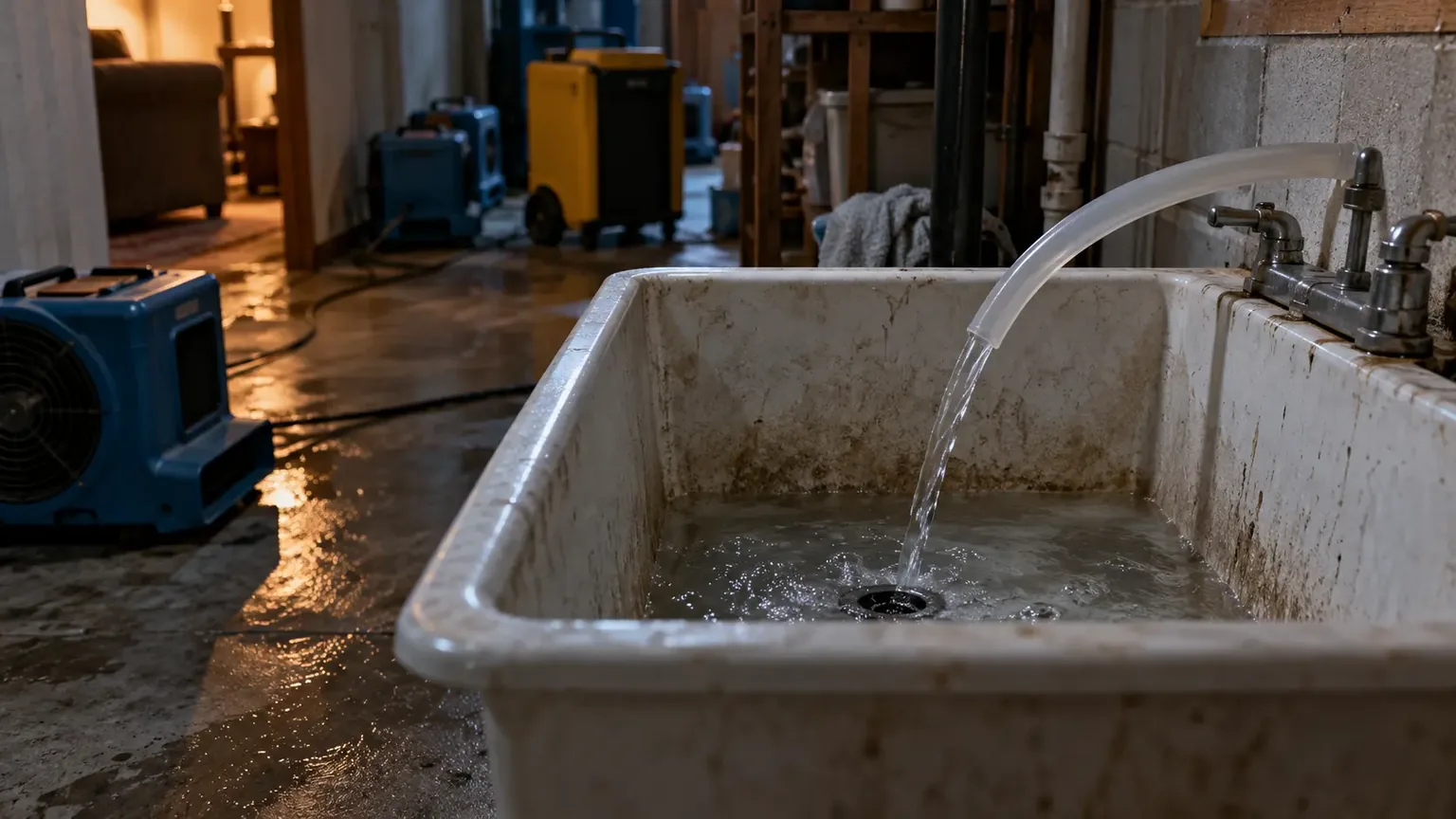
By now the equipment has been running in your house for a day or two, it's loud, and you want a finish line. Fair question. Most of the time, how long does it take to dry out water damage comes down to about three to five days of structural drying. That range moves, though. It depends on what materials soaked up the water, how far the water traveled, and how humid the air is. In San Marcos and the rest of Central Texas, that last factor matters more than people expect. Our summer humidity gives the dehumidifier more moisture to fight, so a job that might wrap in three days up north can sit closer to five here.
Published · Updated
Need drying started? Call for fast help.
How Long Does It Take to Dry Out Water Damage?
Most structural drying takes about three to five days, though it depends on the materials, how far the water spread, and the humidity. Thin materials like carpet pad and drywall dry faster; hardwood, subfloor, and concrete take longer. Drying is finished when readings match a dry reference area.
Density sets the pace. Readings rule, not whether surfaces feel dry.
Here's roughly how the common materials stack up, fastest to slowest.
- Carpet and carpet pad dry quickly once extracted, often inside a couple of days, assuming the water was clean and didn't sit.
- Drywall usually dries in two to four days if it wasn't saturated for long.
- Subfloor (the plywood or OSB under your flooring) holds water longer and frequently runs the full five days.
- Hardwood flooring is the stubborn one, sometimes a week or more, because wood resists giving moisture back up.
- Concrete slab can take the longest of all when water wicks into it, since it releases moisture slowly.
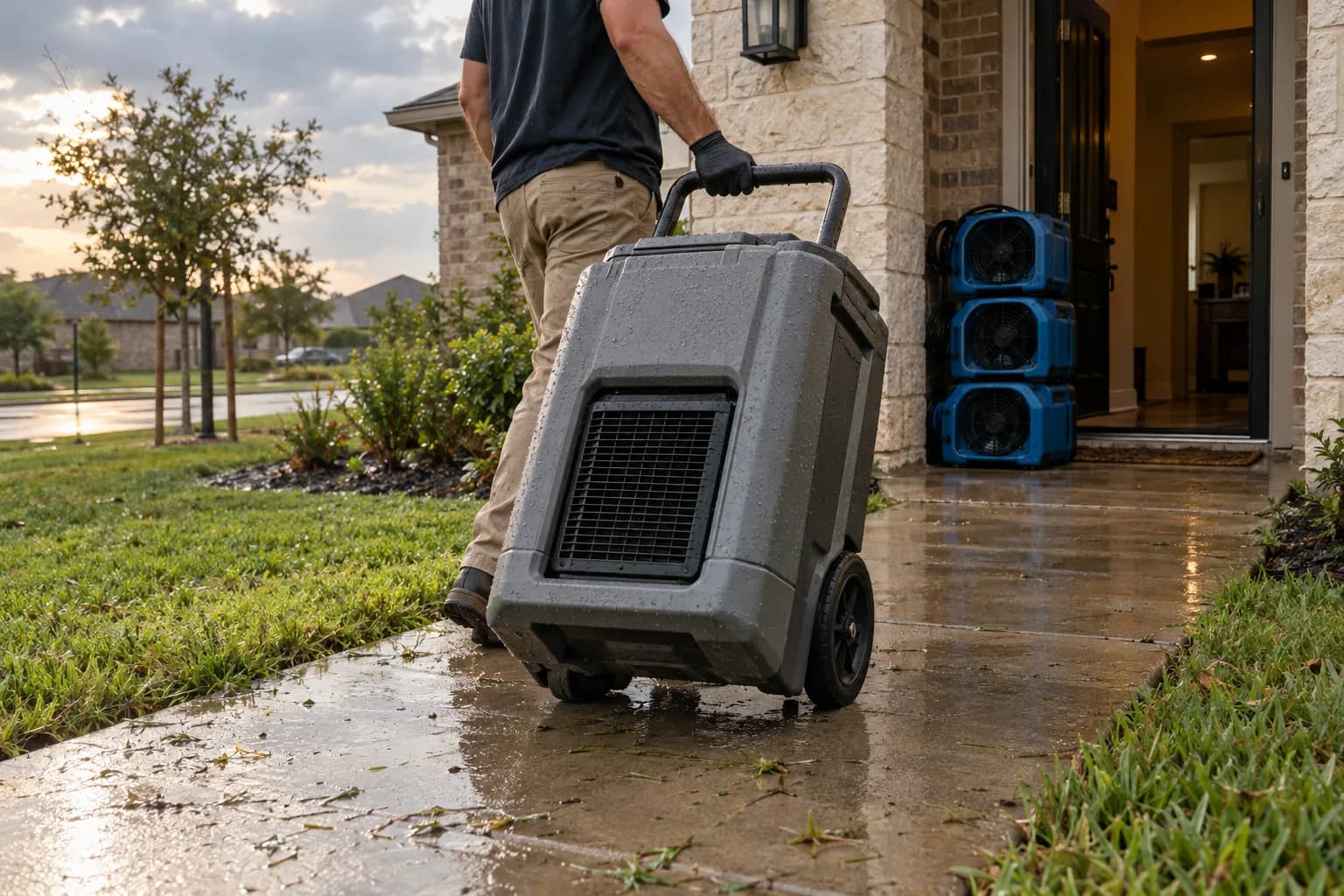
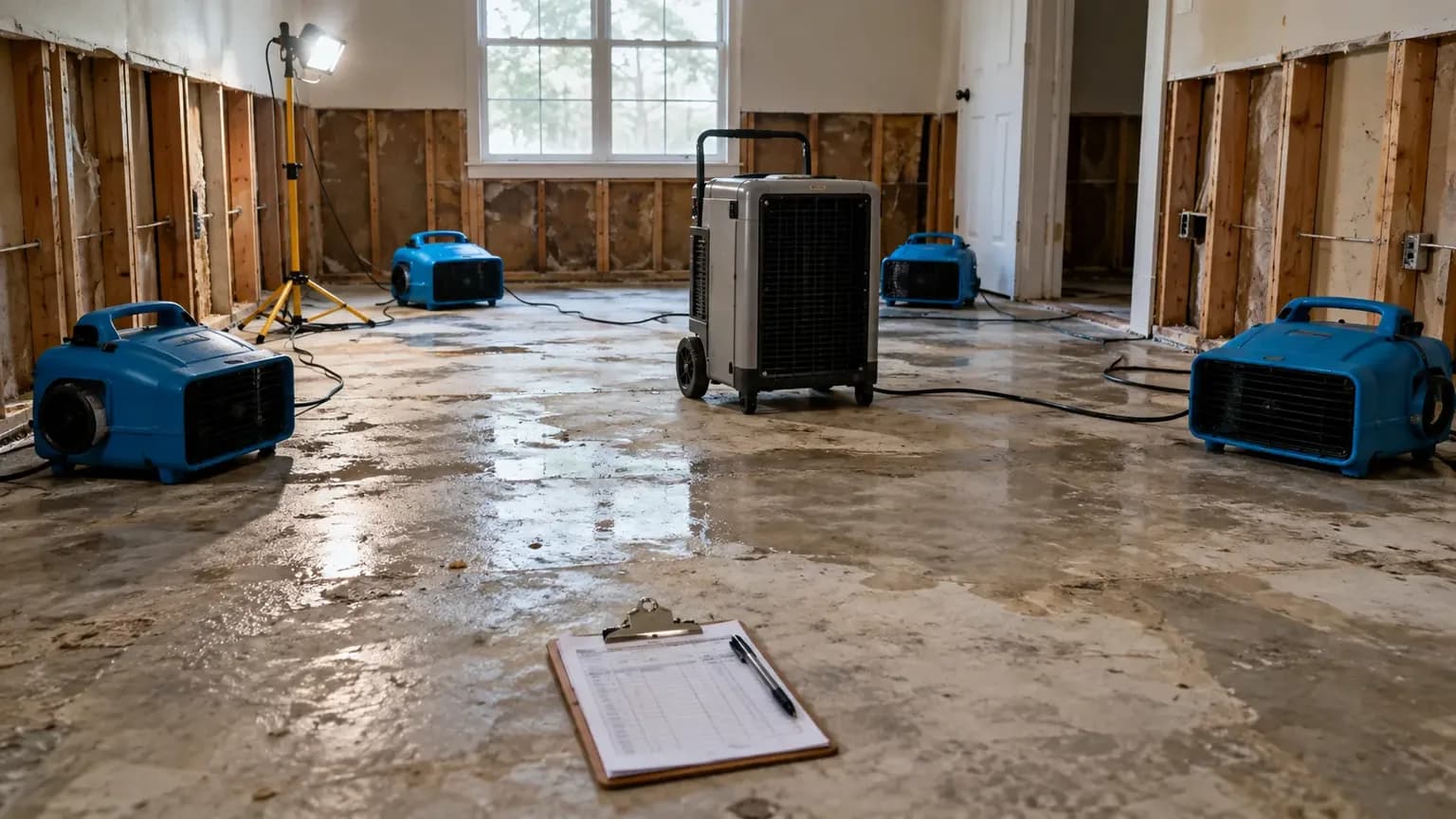
This is also why the right tools matter. Structural drying and dehumidification in San Marcos pairs air movers with an LGR dehumidifier so the moisture leaving your walls and floors actually leaves the building instead of resettling somewhere new.
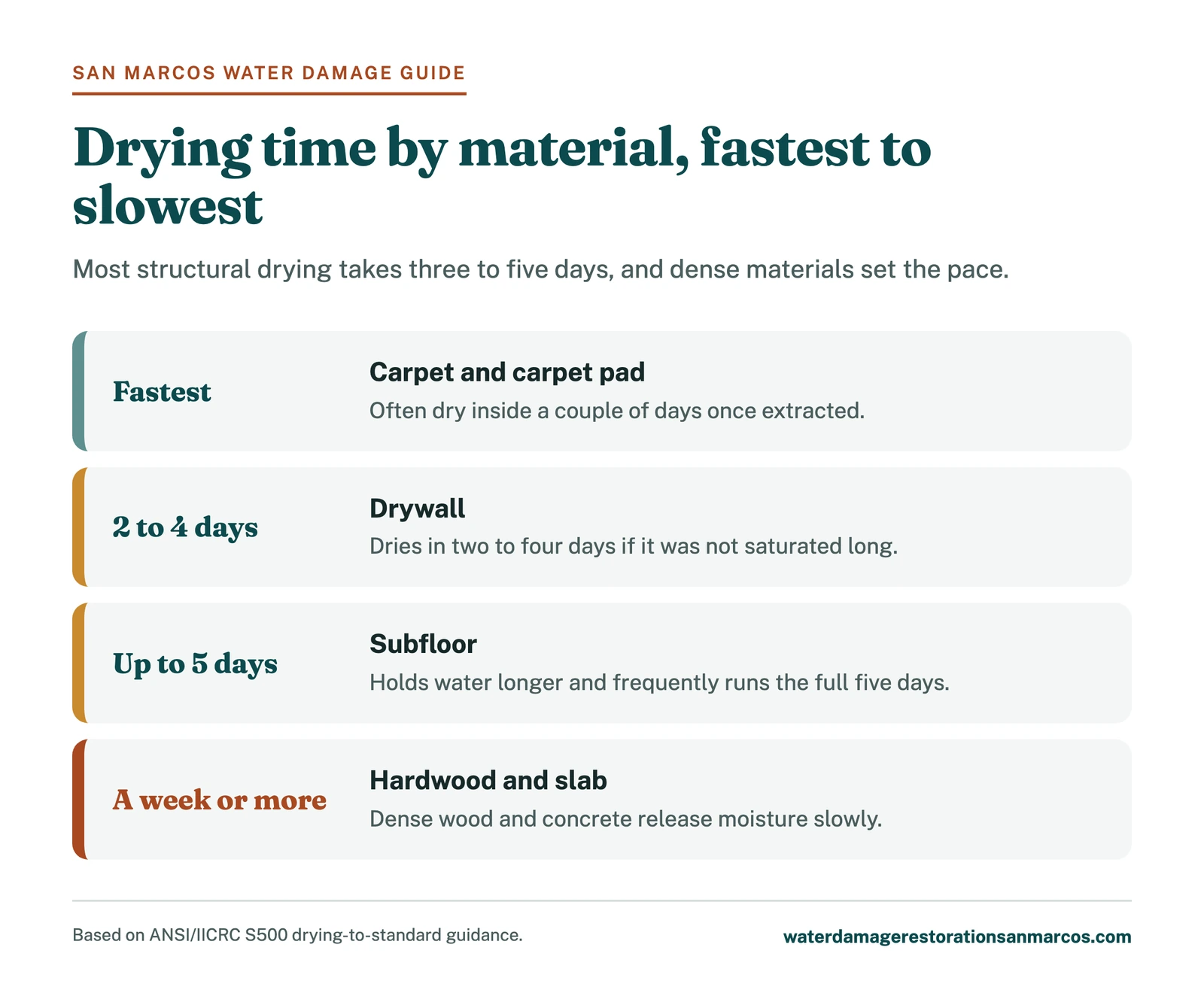
Text version of this infographic
Drying time by material, fastest to slowest. Most structural drying takes three to five days, and dense materials set the pace.
- Fastest Carpet and carpet pad
- Often dry inside a couple of days once extracted.
- 2 to 4 days Drywall
- Dries in two to four days if it was not saturated long.
- Up to 5 days Subfloor
- Holds water longer and frequently runs the full five days.
- A week or more Hardwood and slab
- Dense wood and concrete release moisture slowly.
Based on ANSI/IICRC S500 drying-to-standard guidance.
What Determines Drying Time
Several things, and they stack. Start with water category. Clean water from a supply line dries faster and more predictably than gray or black water, which often forces removal of materials before drying even begins. Then there is how far it spread.
Water that pooled on a tile floor for ten minutes is a different job than water that wicked up two feet of drywall and ran under the cabinets overnight.
Materials are the next variable. As the list above shows, drywall, hardwood, subfloor, and concrete all surrender moisture at their own pace, so a room with hardwood over a slab dries slower than the same room with vinyl plank. Ambient humidity is the one people forget, and it's the one that bites hardest here. Central Texas air is heavy with moisture for much of the year. The short version is the dehumidifier has to work harder to keep the surrounding air dry enough to pull water out of your structure, and that pushes a borderline three-day job toward the five-day end. Temperature and airflow round it out. Warmer air speeds evaporation, and good air placement keeps drying even instead of leaving wet pockets behind.
How "Dry" Is Actually Measured
This is where most homeowners get surprised. Dry isn't a feeling. A wall can feel bone dry on the surface and still read soaked an inch in. So the question isn't really "how many days," it's "have the materials hit their moisture target yet."
The way that target gets set is by comparison. A technician takes a reading from a dry, unaffected part of your home, the same kind of material, somewhere the water never reached. That becomes the reference. The affected materials get checked against it with a moisture meter, and the drying continues until the wet readings drop to match the dry ones. That's what the trade calls drying to standard, and it lines up with the ANSI/IICRC S500 framework the whole industry uses. The meter is the judge. Best practice is to log those readings daily so you can watch the numbers fall toward the reference over the three to five days. Numbers, not guesses. If you want the fuller picture, here's what structural drying actually involves and why surface-dry and truly-dry are not the same thing. The honest version. The equipment runs until the meter agrees, not until the clock says so.
Why Some Materials Take Longer
Density, and where the water hides. Hardwood is dense and both absorbs and releases water slowly, so a floor that got wet can take a week to come back, sometimes longer if it cupped. Subfloor sits under everything and traps moisture against the layers above it.
It hides water. The real headache is in-cavity moisture, the water inside wall cavities and under flooring where surface airflow never reaches. That is the hidden part.
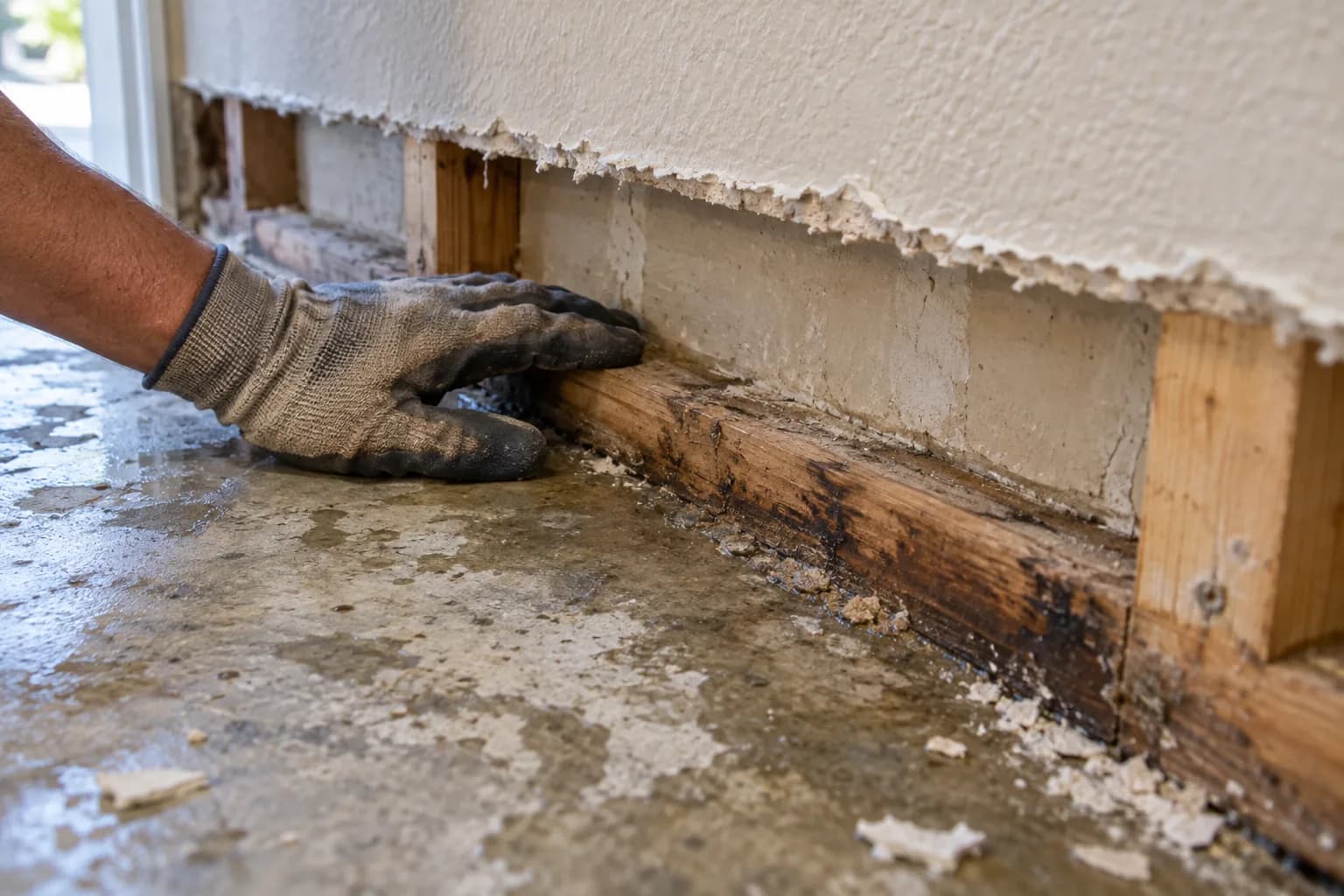
Slab-on-grade construction, which is everywhere in Kyle, Buda, and the newer San Marcos neighborhoods like Blanco Vista, adds its own twist. When water hits a slab, it wicks into the concrete and into the bottom plate of the walls, the lowest framing board sitting right on the slab. That low moisture dries slower than the drywall higher up the wall, because the slab keeps feeding it. The slab stays wet. Knowing where the slow spots are is half the job.
Why You Shouldn't Turn the Equipment Off Early
I get the temptation. The fans are loud, the dehumidifier hums all night, and the house feels dry to you. Please leave them running anyway, because surfaces feel dry long before the framing and subfloor behind them reach the dry standard the meters are checking.
Here's the why. When you shut the equipment off, even for one night, the moisture still trapped inside the materials redistributes back into the air and into the surfaces you'd already dried. You don't just pause progress, you partly undo it. Worse, you restart the clock on mold, which can take hold in the 24 to 48 hour mold window once conditions sit damp and still. In our climate that window is unforgiving. Turning the equipment off early is the single most common way a clean drying job turns into a mold call two weeks later. And one thing worth saying plainly. The equipment running an extra day isn't padding the bill. It's the standard doing its job. If the meter still reads wet, the fans stay on, full stop.
Drying After a Flood vs a Small Leak
Not the same animal. A contained leak, say a dishwasher line that let go and you caught it within the hour, might dry in two or three days because the water stayed shallow and clean. A flood is a longer road.
San Marcos sits in flood-prone country along the San Marcos and Blanco Rivers, and river water saturates deeply, soaking framing, subfloor, and flooring all the way through rather than just wetting the surface. It's also rarely clean. Floodwater carries contamination, which means flood damage cleanup usually adds an extraction-and-sanitizing stage before drying can even start, and only then does the three-to-five-day clock begin, often running past five. So if you flooded, plan for the longer end and a sanitizing step first. Two different roads. If you caught a small clean spill fast, you're likely on the short end.
If you're staring at the equipment wondering when normal life comes back, the honest answer is when the numbers say so, usually inside that three-to-five-day band, longer for floods and hardwood.
Written by the Water Damage Restoration San Marcos team
Local water-damage restoration in San Marcos, TX and Hays County. Our guidance follows the ANSI/IICRC S500 and S520 reference standards the industry plans around. Questions about your situation? Call (512) 778-8417, we answer 24/7.