San Marcos water damage guide
What Is Structural Drying (and Why Air-Drying Isn't Enough)?
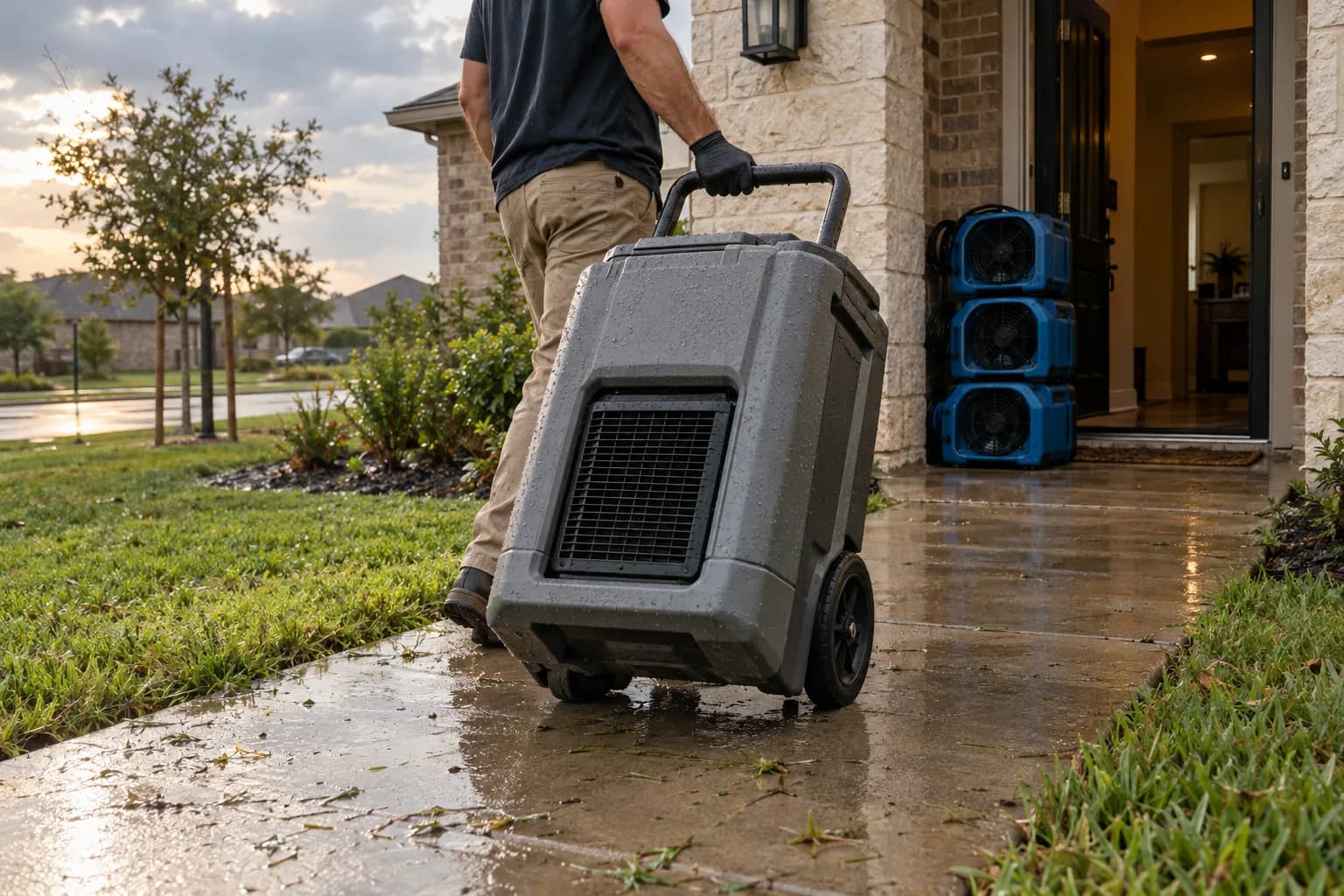
You got told your house needs "structural drying," and now you're looking at a quote wondering why a couple of fans and a dehumidifier cost professional money. Reasonable thing to wonder. So let's define it. Structural drying is the controlled process of pulling moisture out of a building's framing, drywall, subfloor, and other materials after water damage, using air movers and LGR dehumidifiers guided by the science of psychrometry. The short version of why it isn't just fans. The short version is air-drying leaves moisture hidden inside walls and floors, and in a humid San Marcos summer, opening the windows can actually make the room wetter. Stick with me and that'll make sense.
Published · Updated
Need moisture dried out properly? Talk to an expert.
What Is Structural Drying?
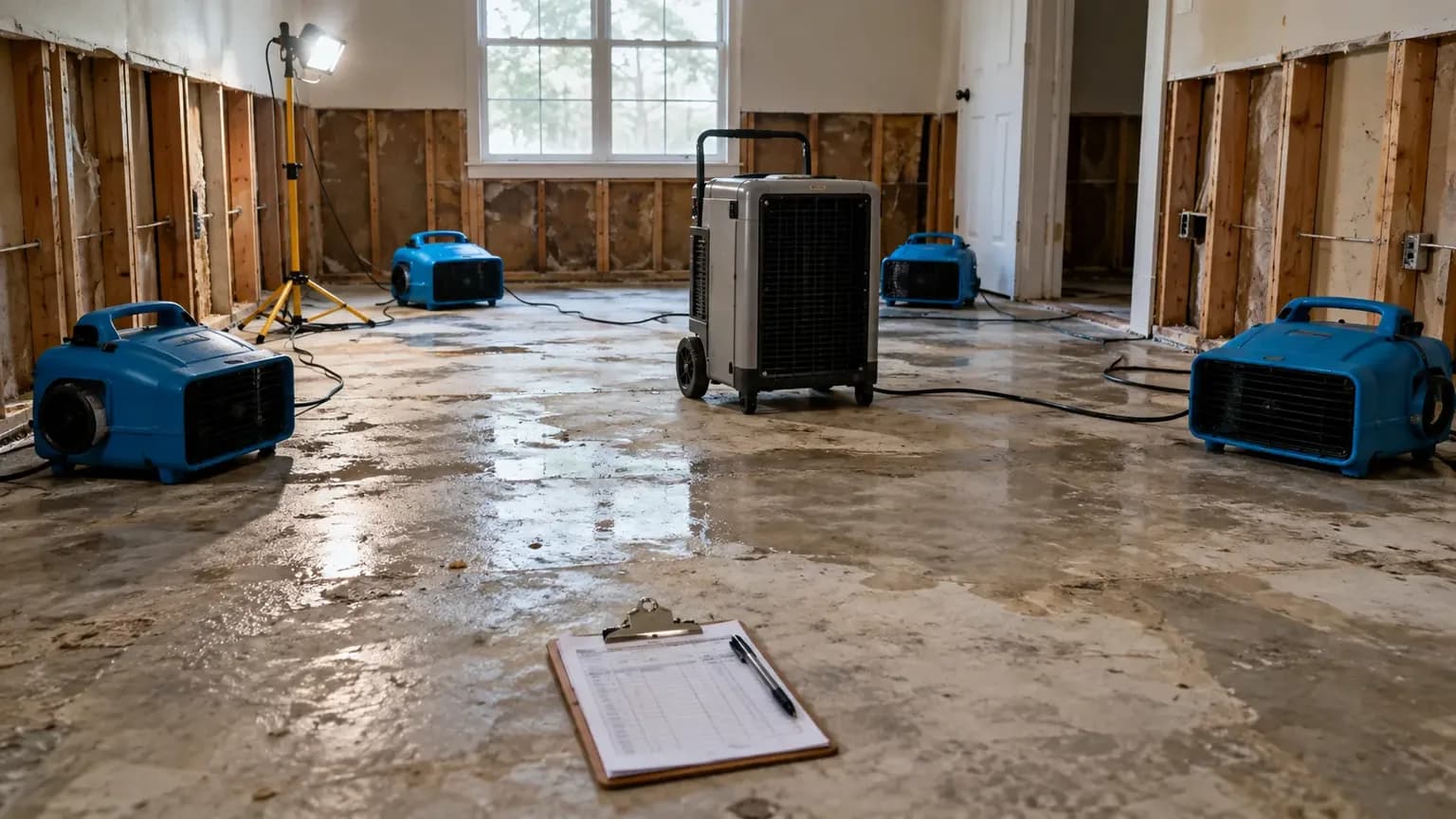
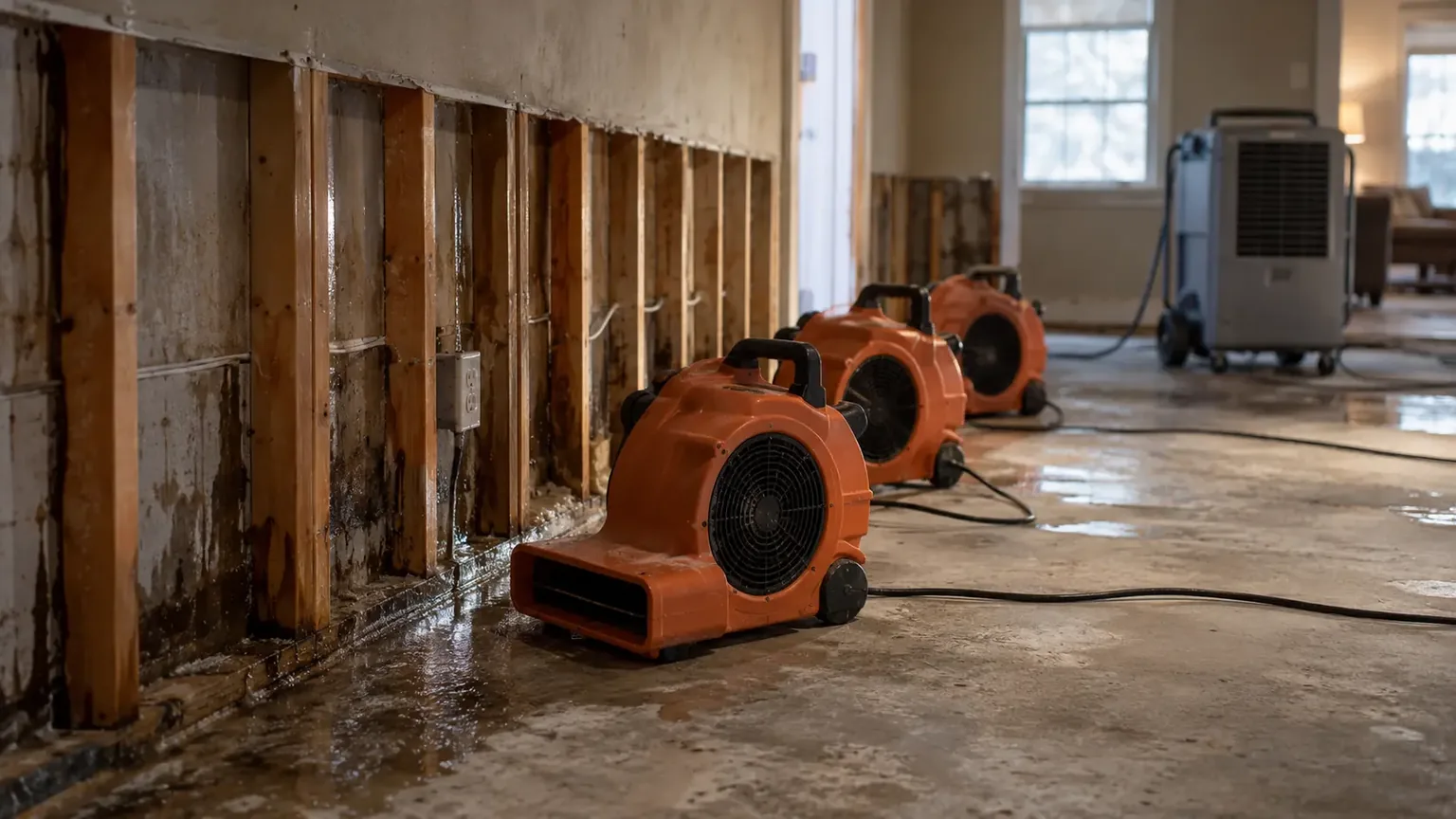
Structural drying is the controlled process of removing moisture from a building's framing, drywall, subfloor, and other materials after water damage, using air movers and LGR dehumidifiers guided by psychrometry. Fans alone will not do it. It targets hidden moisture inside walls and floors, verified with moisture meters against a dry standard.
At its core it relies on four things working together.
- Air movers to push evaporation off wet surfaces
- An LGR dehumidifier to pull that evaporated moisture out of the air
- Moisture meters to track progress against a dry reference
- A controlled environment, meaning the doors stay shut so the system can actually manage the air
When all four run together, you get professional structural drying in San Marcos that reaches the moisture trapped where you can't see it. That's the part fans alone never finish.
Why Air-Drying and Open Windows Aren't Enough
This is the misconception nearly everyone has. Open a window, point a box fan, let it air out. It feels right. It usually isn't, because outdoor air in Central Texas often carries more moisture than the air already inside the house on a humid afternoon.
Two problems. First, a fan by itself just moves wet air around the room. As water evaporates off your soaked baseboards, that moisture goes straight into the air, and with nothing removing it, the air gets saturated and the moisture re-absorbs into materials you'd already started drying. You end up re-wetting the structure. Second, and this one is specifically a Central Texas problem, opening the windows often adds moisture instead of letting it out. On a humid San Marcos afternoon, the outdoor air can carry more moisture than the damaged room does, so you're inviting wetter air inside. Then there's what neither approach touches. In-cavity moisture, the water sitting inside wall cavities and under flooring where surface airflow never reaches. I've walked into jobs where the homeowner ran fans for a week and the walls still read soaked an inch deep. The surface was dry. The structure wasn't. That gap is the whole reason structural drying exists.
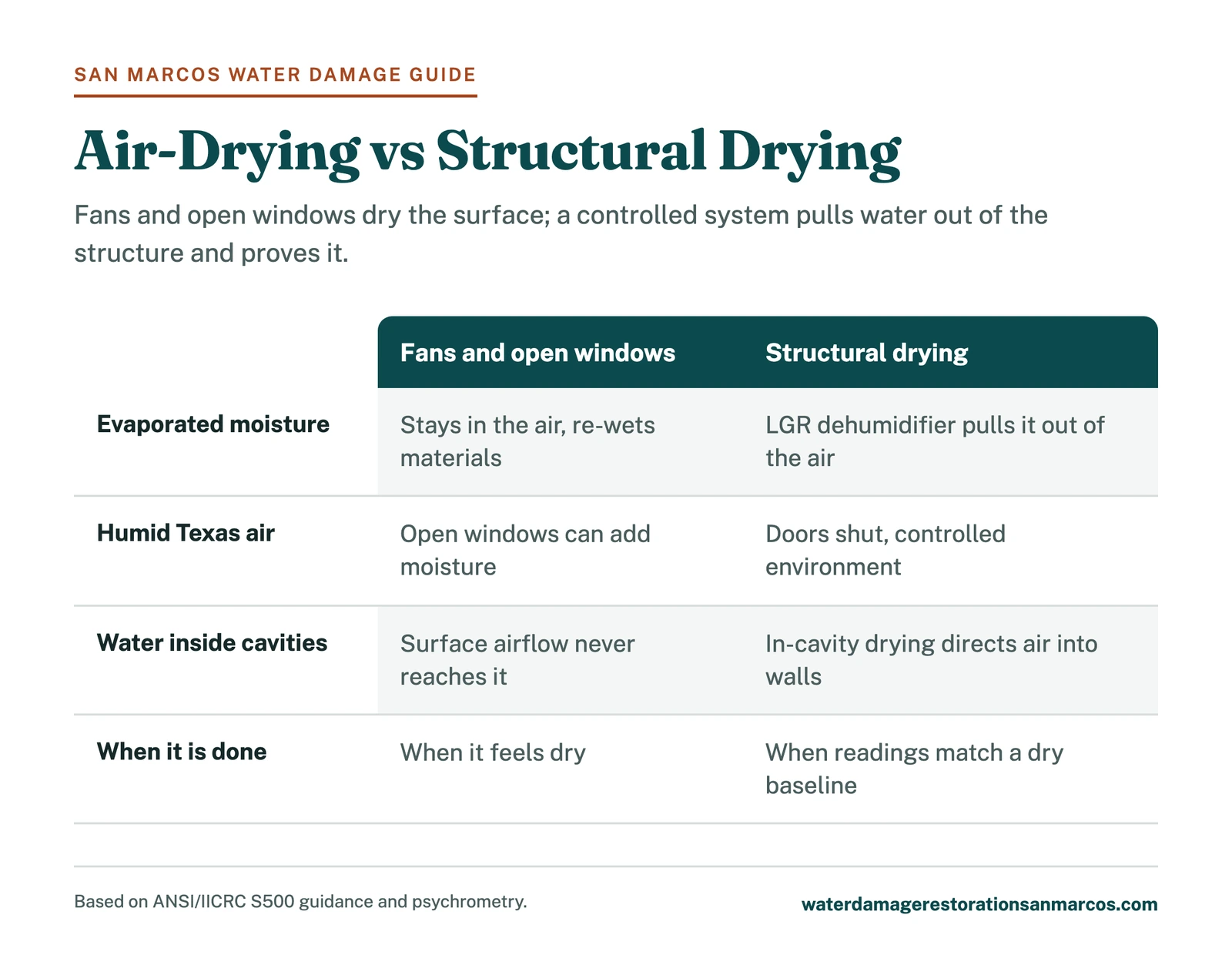
Text version of this infographic
Air-Drying vs Structural Drying. Fans and open windows dry the surface; a controlled system pulls water out of the structure and proves it.
| Item | Fans and open windows | Structural drying |
|---|---|---|
| Evaporated moisture | Stays in the air, re-wets materials | LGR dehumidifier pulls it out of the air |
| Humid Texas air | Open windows can add moisture | Doors shut, controlled environment |
| Water inside cavities | Surface airflow never reaches it | In-cavity drying directs air into walls |
| When it is done | When it feels dry | When readings match a dry baseline |
Based on ANSI/IICRC S500 guidance and psychrometry.
The Science, Psychrometry in Plain English
Psychrometry is the study of how temperature, humidity, and vapor pressure behave in air. It sounds technical. It is really the rulebook for moving water out of wet materials and out of the building, and it is why drying equipment is sized to a calculated load rather than guessed at.
Here's the plain version. Water moves from wet things into drier air, and from higher vapor pressure toward lower. If the air around your wet wall is already loaded with moisture, the wall has nowhere to send its water, so drying stalls. So it stalls. The job is to keep the surrounding air dry and warm enough that your materials keep releasing moisture into it, and then to keep removing that moisture before it builds back up. Temperature plays in too, because warmer air holds more water and speeds evaporation, which is why a drying chamber is kept warm rather than cold. Balancing those variables, air dryness, temperature, and the rate moisture leaves your materials, is the difference between precise drying and standing fans in a room and hoping. It's also the framework behind the ANSI/IICRC S500 standard the industry dries to.
The Equipment and What Each Part Does
People assume the air mover does the drying. It doesn't, not by itself. Air movers push evaporation off wet surfaces, lifting moisture into the air, and LGR dehumidifiers then pull that moisture out so it cannot resettle into dry materials. Here's the actual division of labor.
The air mover's job is evaporation. Against any wet surface sits a thin, still layer of saturated air, the boundary layer, that slows evaporation to a crawl. The air mover's high-velocity airflow shears that layer away so moisture can keep leaving the surface fast. But all that moisture is now in the room air, which is where the LGR dehumidifier earns its place. A low-grain-refrigerant dehumidifier pulls water vapor out of the air and drains it off, keeping the environment dry enough that the materials keep releasing moisture instead of reabsorbing it. Run the air mover without the dehumidifier and you just circulate damp air and re-wet what dried. Run the dehumidifier without air movers and evaporation crawls. You need both, which is the part a box fan and an open window can never replicate. For stubborn spots, in-cavity or specialty drying directs airflow into wall cavities and under flooring where the trapped water actually sits.
How "Dry-to-Standard" Is Verified
Drying ends on a number. The technician finds a dry, unaffected area of your home, the same material the water never touched, and reads its moisture content. That becomes the reference, and the wet materials must read down to it before equipment comes out.
The wet materials get checked against that reference with a moisture meter, and the equipment runs until the affected readings match the dry baseline. That match is what "dry-to-standard" means. Best practice is to log readings every day so the falling numbers tell the story instead of someone's gut. This matters because surface-dry and truly-dry are not the same thing, a wall reading dry on the outside can still hold moisture in the cavity, which is exactly what moisture detection and inspection is built to catch. If you're also wondering about the timeline, here's how long structural drying takes once the equipment is set. The meter, not the calendar, calls the finish.
Why Structural Drying Prevents Mold and Secondary Damage
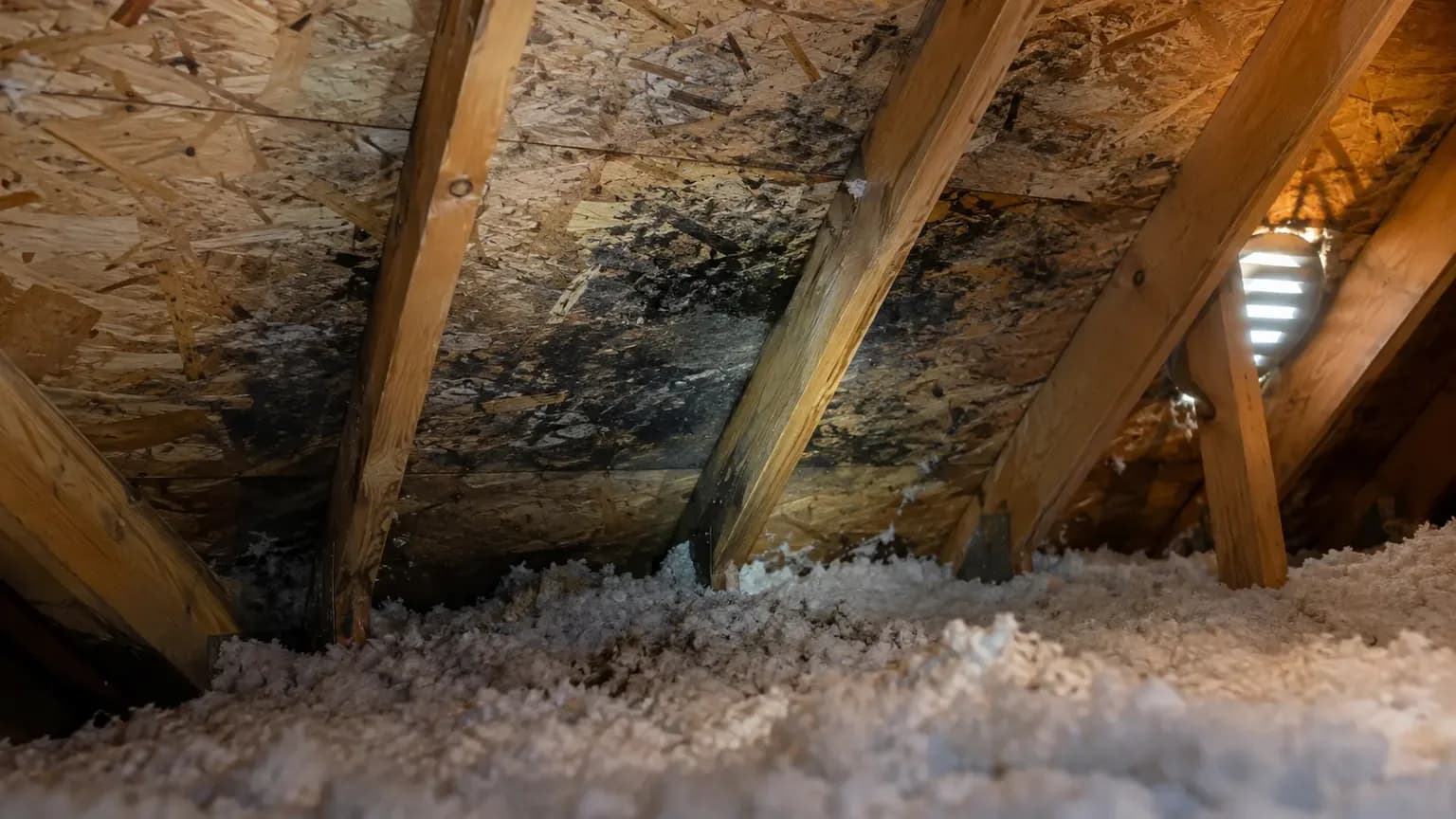
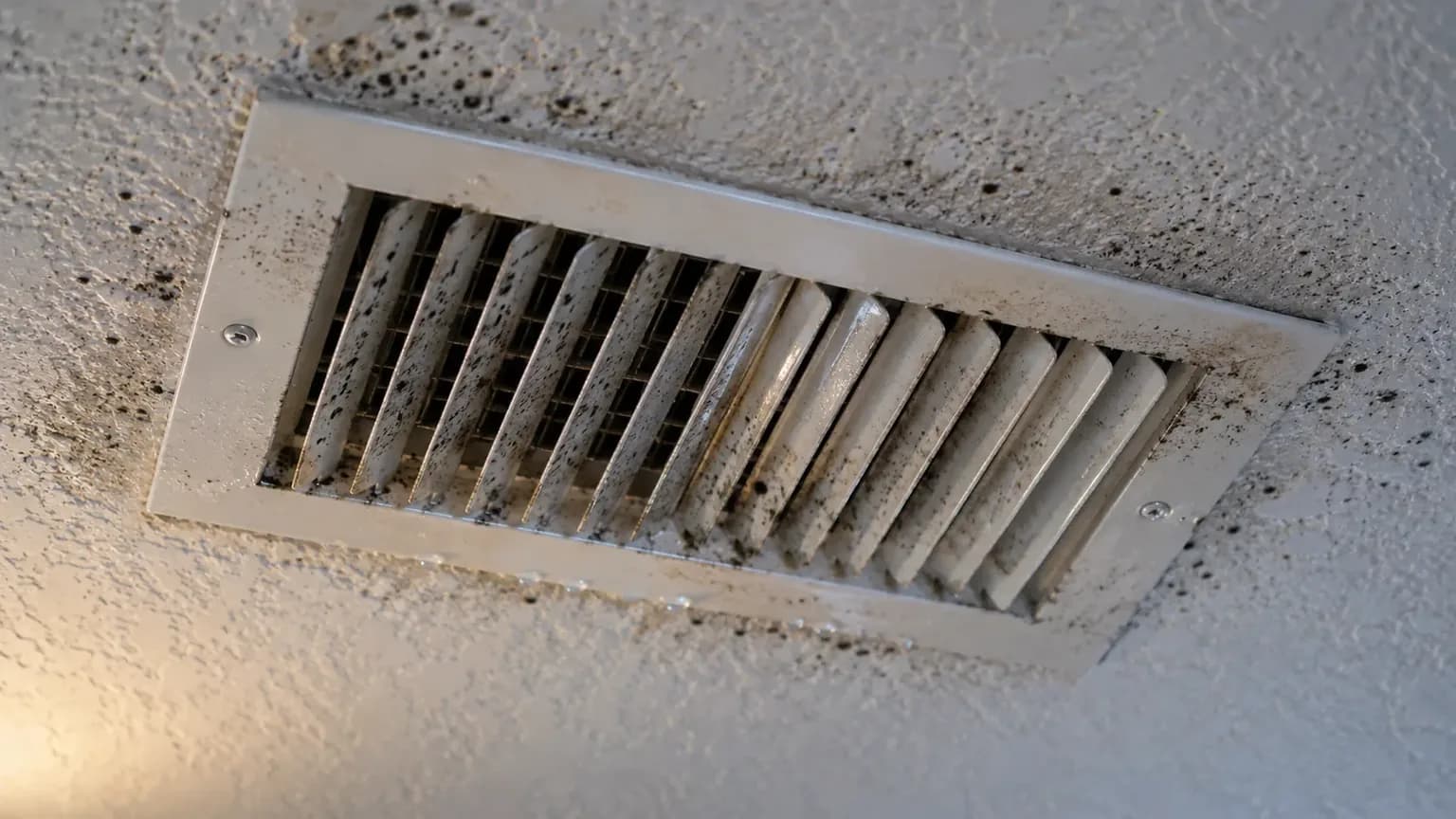
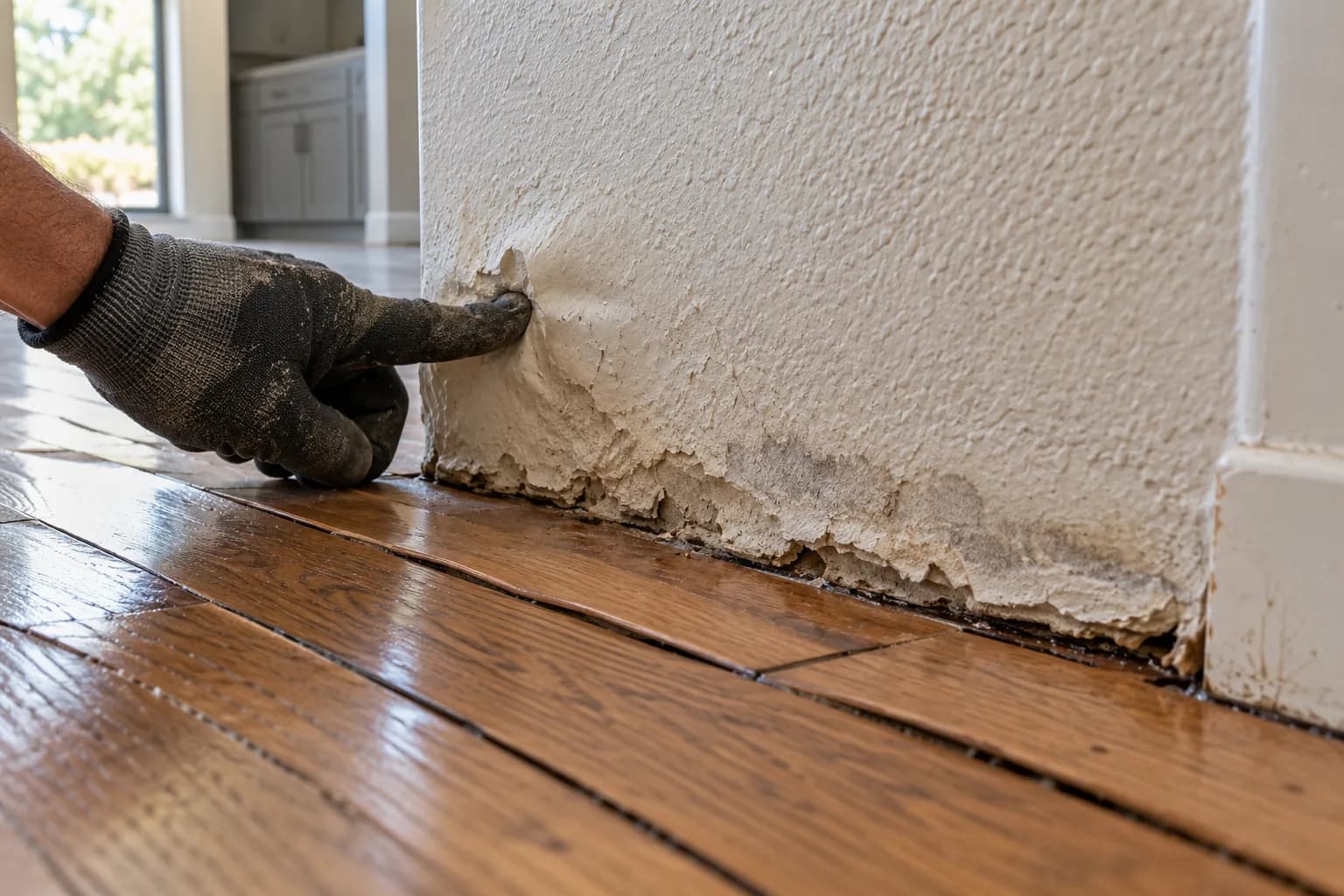
This is the payoff. Done right and done fast, structural drying heads off the expensive problems before they start, which means mold colonizing damp cavities, drywall losing strength, subfloor delaminating, and hardwood cupping. Every one of those turns a drying job into a demolition and rebuild job.
The clock is real. Leave materials damp and mold can take hold in the 24 to 48 hour window after water damage, faster in our humidity. Beyond mold, lingering moisture is what warps hardwood, swells and crumbles drywall, and rots subfloor, the secondary damage that turns a drying job into a rebuild. None of that is cheap. That's why controlled drying has to start fast, especially here, where flood and burst-pipe jobs can't wait around for passive air to maybe do something. Get the moisture out properly the first time and you avoid the second, costlier round.
So when someone says your home needs structural drying, that's what you're paying for. That means a measured, science-backed process that reaches the water you can't see and proves it's gone, not a couple of fans running up an invoice.
Written by the Water Damage Restoration San Marcos team
Local water-damage restoration in San Marcos, TX and Hays County. Our guidance follows the ANSI/IICRC S500 and S520 reference standards the industry plans around. Questions about your situation? Call (512) 778-8417, we answer 24/7.