 Start here
Emergency Water Extraction
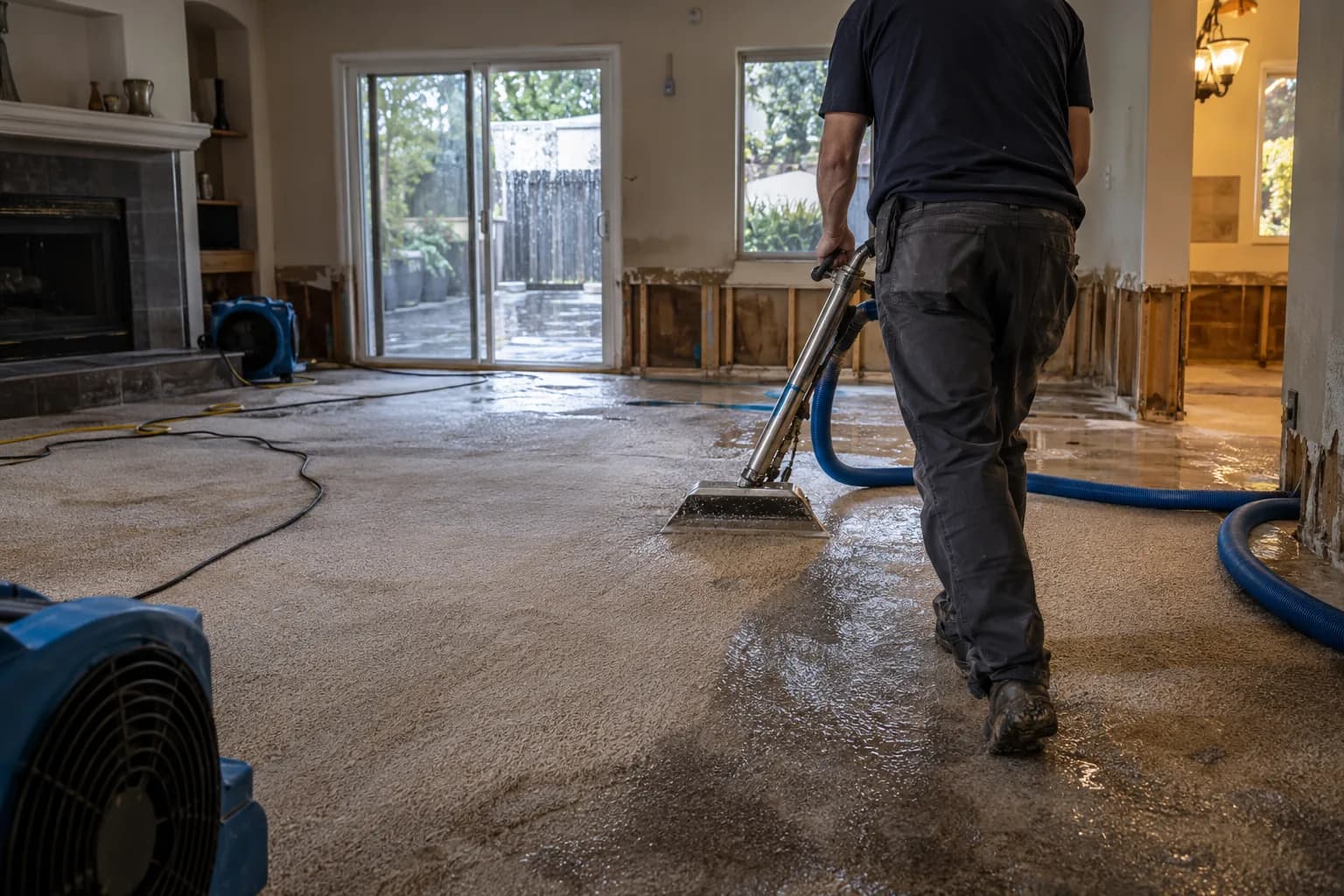
Fast removal of standing water with truck-mounted and portable units before it soaks into more material.
See emergency water extraction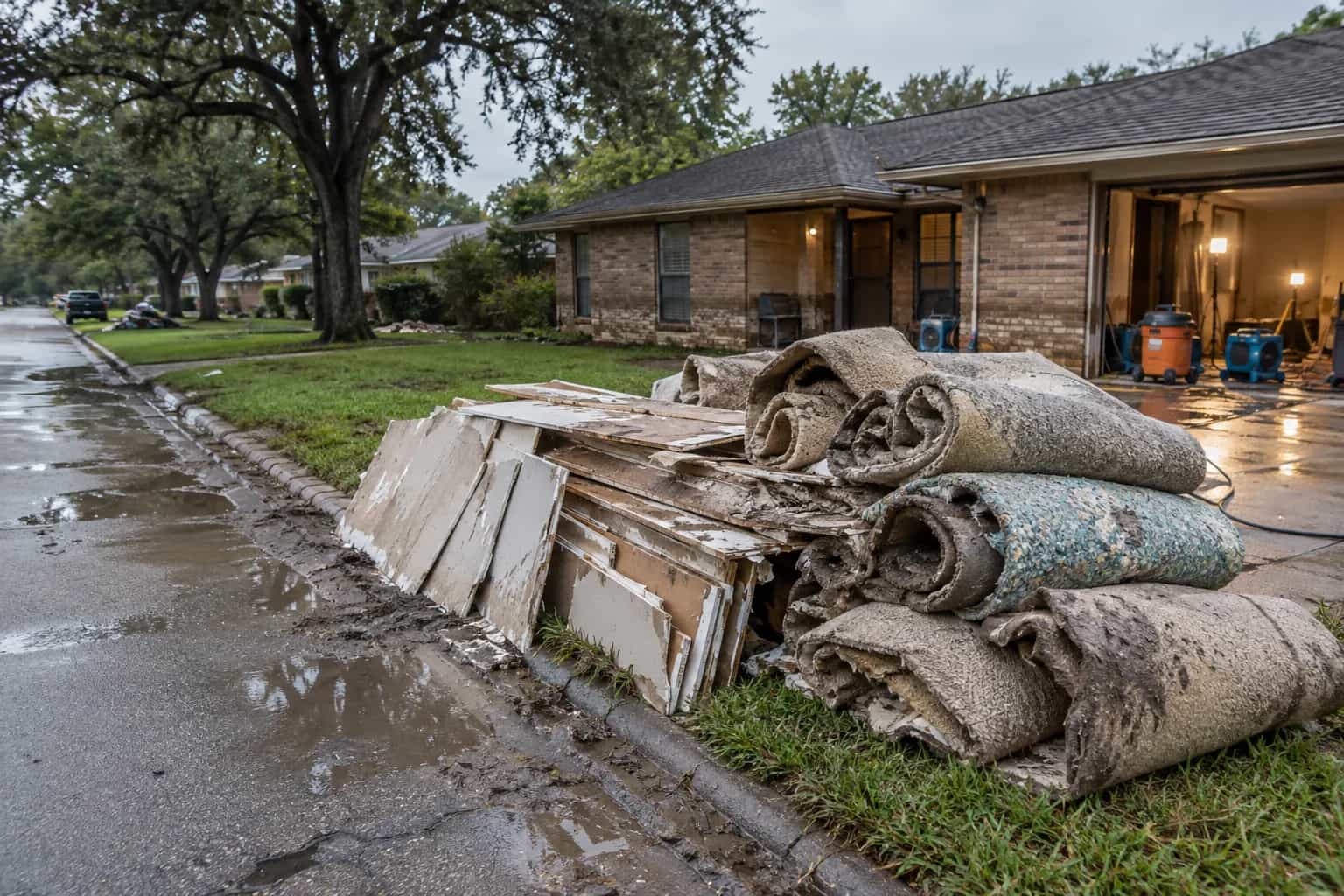
San Marcos, TX & Hays County · 24/7 response
River rise and flash flooding along the San Marcos and Blanco leave silt, contamination, and saturated framing behind. We muck out, sanitize, and dry, 24/7 across Hays County.

Flood damage cleanup handles Category 3 water that entered from outside: river rise, flash flood, or storm runoff. San Marcos sits in Texas Flash Flood Alley, and the 2015 Memorial Day flood crested the Blanco River at a record 40.21 feet and destroyed more than 2,000 Hays County homes.
San Marcos sits in Flash Flood Alley, right where the San Marcos and Blanco Rivers can rise faster than almost anywhere in the country. If you live here, you already know flooding isn't a once-in-a-lifetime event. It's a recurring risk.
Flooded? We're on the way. Tap to call now.
Water Damage Restoration San Marcos handles flood damage cleanup across the city and the river corridor beyond it, including Wimberley and Martindale, plus Kyle, Buda, and the wider Hays County area. Round-the-clock dispatch.
If water is in your home right now, get to safety, stay away from anything electrical the water has reached, and call. We'll walk you through the first steps and start staging a crew. Flood cleanup is its own kind of work, and treating it like a clean-water leak is how people end up with mold and a denied claim.
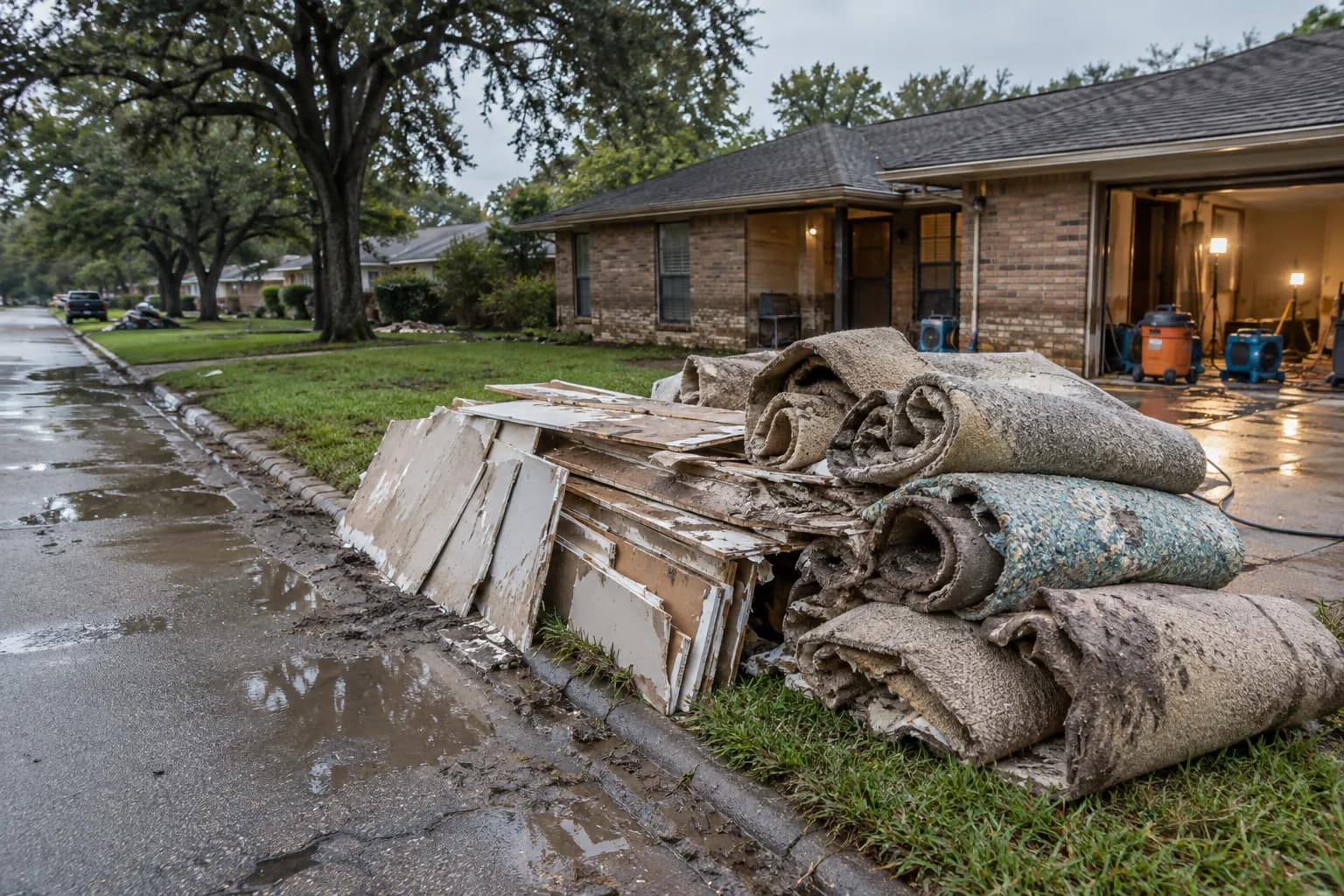
Flood damage cleanup involves mucking out mud, silt, and unsalvageable materials, treating the home as Category 3 black water because floodwater is contaminated, then sanitizing with an antimicrobial and drying the structure to standard. Along the San Marcos and Blanco Rivers in Flash Flood Alley, that contamination handling matters as much as the water removal itself.
That last part is the difference. A burst pipe leaves clean water you can extract and dry. Floodwater leaves contamination behind in the silt, in the wall cavities, and under the flooring, even after the visible water is gone. The job isn't done when the floor looks clear. It's done when the contamination is gone and the structure is dry.
Floodwater is Category 3, the most contaminated classification, also called black water. As it moves across roads, yards, and storm drains, it picks up sewage, fuel, lawn chemicals, animal waste, and whatever else is in its path. By the time it's in your living room, it's biologically active.
Here's what most people don't realize. Floodwater that recedes leaves a contamination line and silt inside the walls and under the floors that can look dry within a day but stays active for far longer. That's why a careful crew treats a receded-flood home as Category 3 and cuts the drywall to a set height above the line, rather than trusting how the surface looks. The surface lies.
A clean-water leak is dried. Flood-contaminated porous material is removed. Same wet house, two different jobs.
Flood cleanup follows a sequence built around contamination, not just water. Floodwater is Category 3 under ANSI/IICRC S500, so porous materials it touched are removed rather than dried in place. We muck out solids, extract standing water, tear out contaminated materials, disinfect every surface, then dry the structure to a documented standard.
In a typical Blanco Gardens river-flood call, the first step after the water recedes is to document that contamination line before any muck-out begins. Skip the documentation and you fight your insurer later.
The 2015 Memorial Day Flood reshaped how this community thinks about water. The Blanco River crested around 40.21 feet, more than 2,000 homes were destroyed across Hays County, and at least 12 lives were lost. Neighborhoods like Blanco Gardens flooded severely. Then, the same year, the October All Saints Flood hit the area again.
We reference those events with respect, not to scare anyone, because they are still part of how San Marcos families measure what a river can do and why a flood-ready crew prepares the way it does. The point is practical. It comes down to local knowledge. Local flood cleanup means understanding river silt, how contamination settles into a home, and how fast water can come back. A crew that's only ever handled a burst water heater doesn't know to look for the silt line behind the baseboard or to plan for a second rain band.
Flooding here has a pattern, and the cleanup has to match it.
Get a documented cleanup plan. Tap to call and we'll book it.
Yes, and here is the honest limit. During an area-wide flood every restoration company in Hays County is oversubscribed at once, so we triage by safety and severity instead of promising an arrival window we cannot hold. We answer 24/7, tell you your real place in the queue, and talk you through what to do first.
We dispatch round-the-clock and prioritize the hardest-hit homes when a regional event stretches the whole area at once. During a widespread flood, response can take longer than a single-home call, because access roads, utilities, and demand all spike together. So we'll be straight with you. No company in Flash Flood Alley can promise an exact arrival time when the entire county floods at the same hour. Anyone who does is selling you something.
What we can do is real. Get you on the list early. Walk you through safe first steps by phone so you can limit damage before we arrive. And reach you as fast as conditions actually allow. Calling sooner puts you ahead in the queue, which during an area-wide event genuinely matters.
No. Standard Texas homeowners policies exclude rising surface water, which is exactly what river and flash flooding is, so flood damage needs a separate National Flood Insurance Program policy or a private flood policy bought in advance. A burst pipe inside the house is a different claim and is usually covered. That distinction catches San Marcos homeowners out constantly.
| Cause of loss | Homeowners policy | NFIP flood policy | Private flood policy |
|---|---|---|---|
| Burst supply line inside the house | Usually covered | Not covered | Not covered |
| Roof opened by wind, then rain enters | Usually covered | Not covered | Not covered |
| Water rising off the San Marcos or Blanco River | Excluded | Covered | Covered |
| Flash flood water running across the ground into the house | Excluded | Covered | Covered |
| Sewer backing up because of flooding | Excluded without an endorsement | Limited, conditions apply | Varies by policy |
| Building coverage limit | Your dwelling limit | $250,000 | Often higher limits available |
| Contents coverage limit | Your contents limit | $100,000 | Often higher limits available |
| Waiting period before it takes effect | None | Typically 30 days | Often shorter |
Standard NFIP limits are $250,000 for the structure and $100,000 for contents (FEMA). In a town where the 2015 Memorial Day flood destroyed more than 2,000 homes in Hays County, those limits are worth checking against what it would actually cost to rebuild, because NFIP building coverage pays replacement cost only in certain circumstances and contents are commonly settled at actual cash value.
The 30 day waiting period is the detail that matters most locally. Flood insurance bought when the forecast turns will not be in force for the storm that prompted it. If you are in or near the floodplain, that decision has to happen in a quiet month.
Read our guide on flood insurance versus homeowners insurance in Texas, and we can coordinate documentation with whichever carrier applies to your loss.
Flood water is Category 3 the moment it enters a building, so the decision is made on porosity rather than on how bad something looks. Anything porous that absorbed it leaves. Hard surfaces are cleaned, sanitised and dried.
| Item | Outcome | Reason |
|---|---|---|
| Carpet and pad | Out | Pad is a sponge for contaminated water and cannot be verified clean |
| Drywall below the wicked line | Out, cut above the visible flood mark | Water climbs gypsum past the mark it leaves on the surface |
| Fibreglass or blown-in insulation | Out | Holds water and contamination inside the batt |
| Particleboard cabinetry, laminate and engineered flooring | Out | The core swells and delaminates, and cannot be sanitised |
| Solid wood framing and subfloor | Cleaned, treated, dried to standard | Surface decontamination works, then the meter decides |
| Solid hardwood flooring | Case by case | Sometimes salvageable with mat drying, often not after Category 3 |
| Tile, sealed concrete, metal, glazed surfaces | Cleaned and treated | Non-porous, contamination stays on the surface |
| Mattresses, upholstered furniture, soft toys | Out | Cannot be demonstrated clean afterwards |
| Documents, photographs, textiles of real value | Specialist referral | Freeze drying and specialist cleaning exist, and are worth asking about |
The cut line is where flood jobs are won or lost. Cutting at the visible flood mark leaves wet gypsum above it, because water wicks upward past the stain. We mark the cut above the wicked height that the meter shows, not the height the mud line shows, and we photograph both before anything is opened.
Flood water is Category 3, so it prices at the top of the Central Texas band, roughly $7.00 to $7.50 per square foot against $3.00 to $7.50 across all water losses (industry cost data, scoped under ANSI/IICRC S500). Whole jobs in San Marcos run from about $1,200 for a small loss to $8,500 or more for a large or contaminated one.
| Affected floor area | Category 3 mitigation at published rates | Usually also needed |
|---|---|---|
| 300 sq ft, one flooded room | $2,100 to $2,250 | Contents inventory, disposal, drying |
| 700 sq ft, several rooms on one level | $4,900 to $5,250 | The above, plus insulation replacement |
| 1,200 sq ft, whole ground floor | $8,400 to $9,000 | The above, plus HVAC assessment and duct cleaning |
| 1,800 sq ft, larger home taking river water | $12,600 to $13,500 | Full mitigation scope, then a separate rebuild scope |
Mitigation and rebuild are separate scopes, and that mitigation figure does not include putting the house back. Cleanup and drying are one claim phase, reconstruction is another, and an NFIP settlement handles them differently from a homeowners claim. Our San Marcos water damage restoration cost guide walks the full scope.
The rivers don't stop at the San Marcos city line, and neither do we. We cover the corridor along the San Marcos and Blanco Rivers, including flood cleanup in Wimberley and flood cleanup in Martindale, plus Kyle, Buda, Maxwell, and out toward New Braunfels and Canyon Lake.
Wimberley and the Blanco River corridor carry some of the highest flood exposure in the region. Martindale sits downstream on the San Marcos River. Geography decides the risk. Each area floods differently, and knowing how a given neighborhood takes on water is part of doing the work right.
Before and after
River and flash flood water is Category 3 the moment it enters a building. The cut line goes above the visible flood line, because water wicks upward past the mark it leaves and the material above it is wet too.
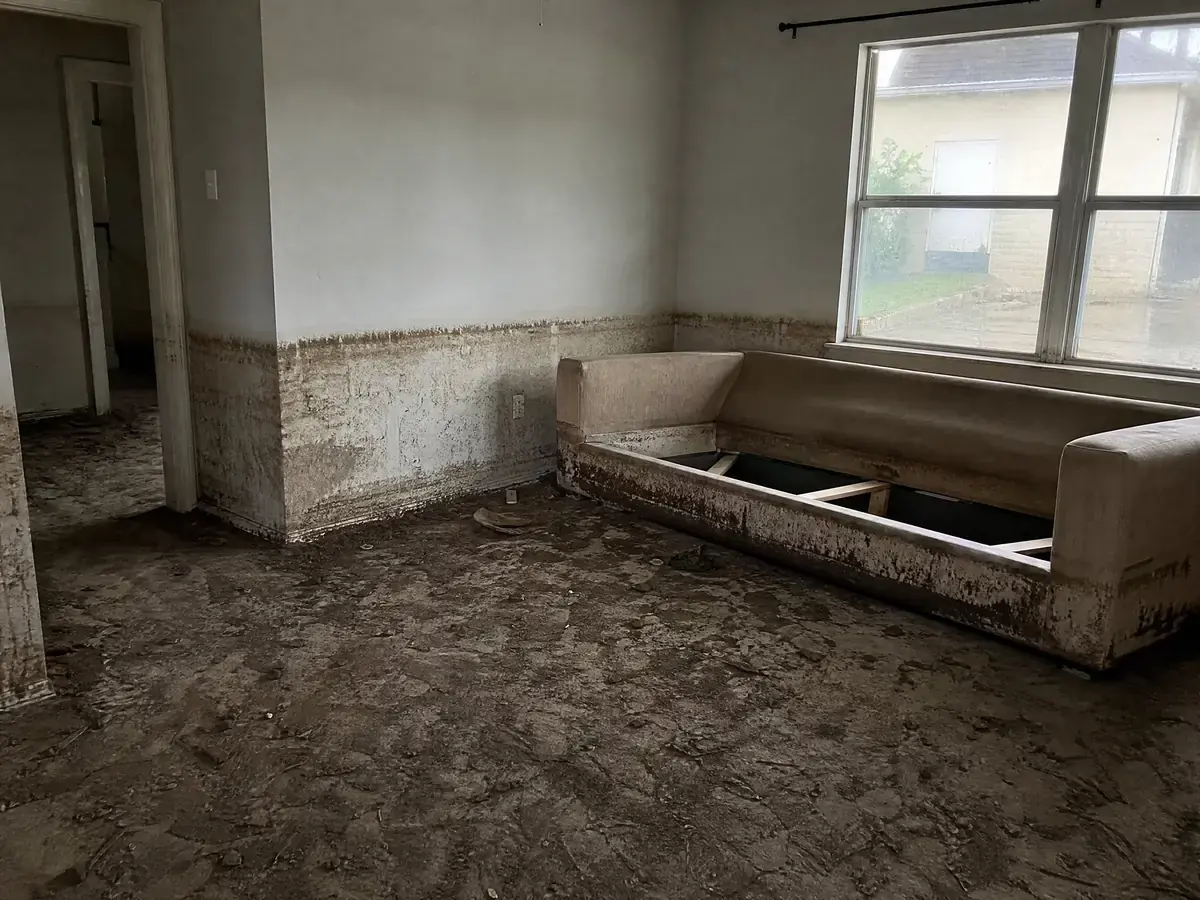 Before, after the water drops
A visible flood line with silt behind it, wet insulation in the cavity, and moisture already wicked well above the mark the water left.
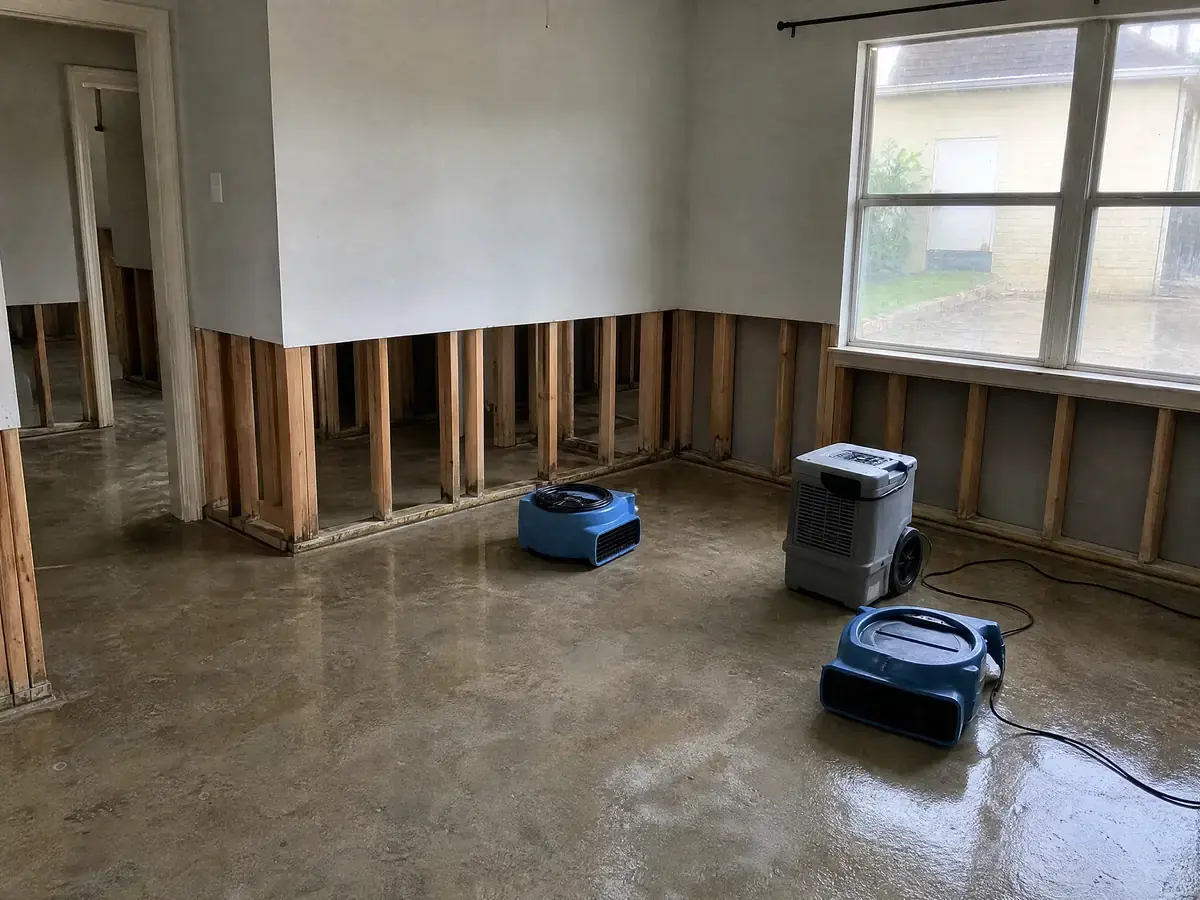 After, cut, cleaned, dried
Drywall cut above the wicked height, wet insulation and porous contents removed, framing cleaned and dried to a documented standard before rebuild.
Standing water? Call now, we answer 24/7.
A real local person picks up, then a crew heads your way.
Who we are
We put the things most companies keep vague in writing: real price ranges for this market, the standards we work to, and a moisture log your adjuster can read.
24/7
A real local person answers, day or night
24-48 hrs
The critical window to limit secondary damage
~25 mi
Served from our San Marcos hub across Hays, Comal & Caldwell
S500
The ANSI/IICRC drying standard our process follows
One local team handles every stage, so you are not juggling separate vendors.
Start hereFast removal of standing water with truck-mounted and portable units before it soaks into more material.
See emergency water extraction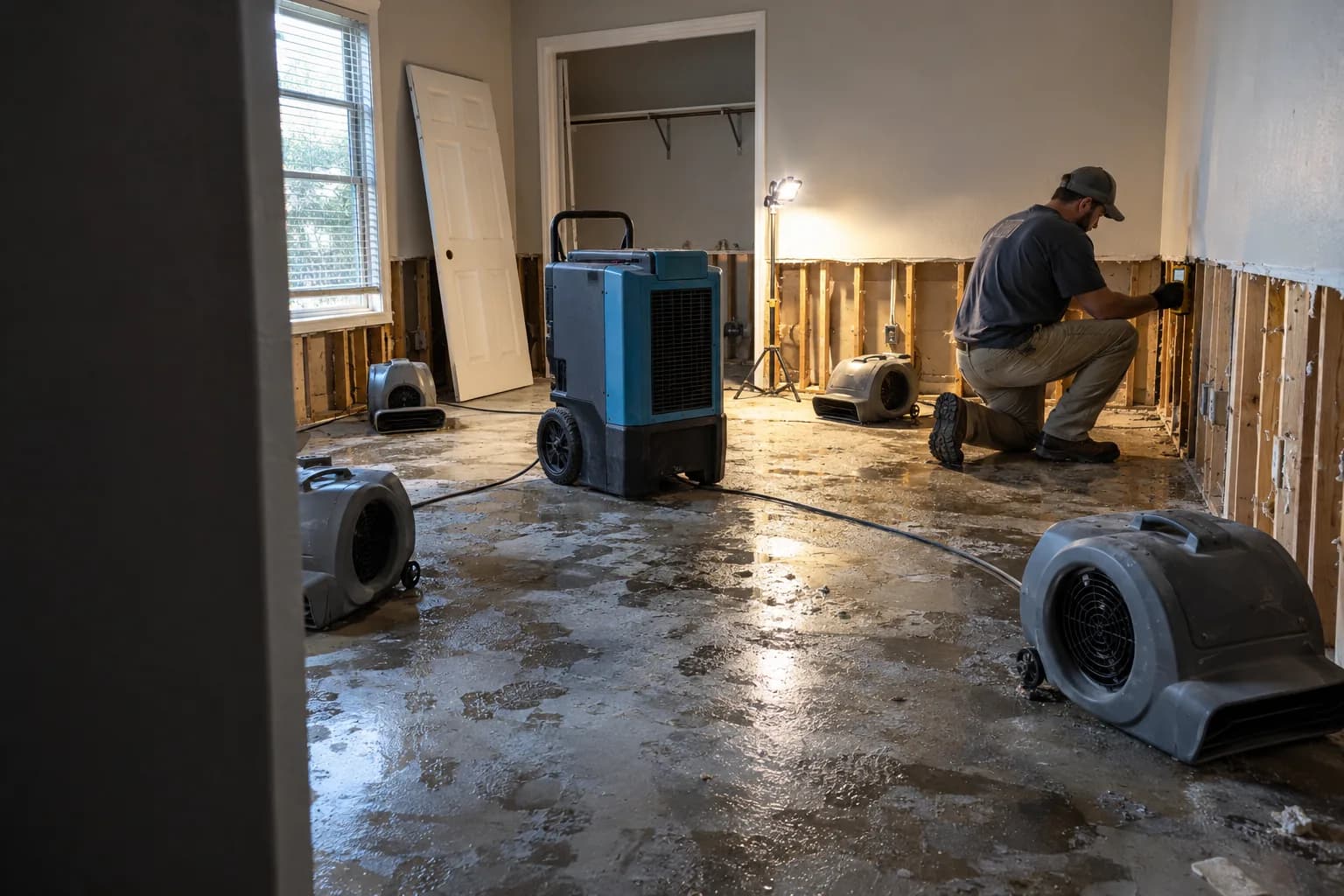
Air movers and LGR dehumidifiers with daily moisture readings, dried to a documented standard.
See structural drying
Water-intrusion repair after Central Texas thunderstorms, hail, and wind-driven rain.
See storm damage restorationFAQ
Straight answers to what San Marcos homeowners ask most, on cost, insurance, mold timelines, and what to do first.
24/7
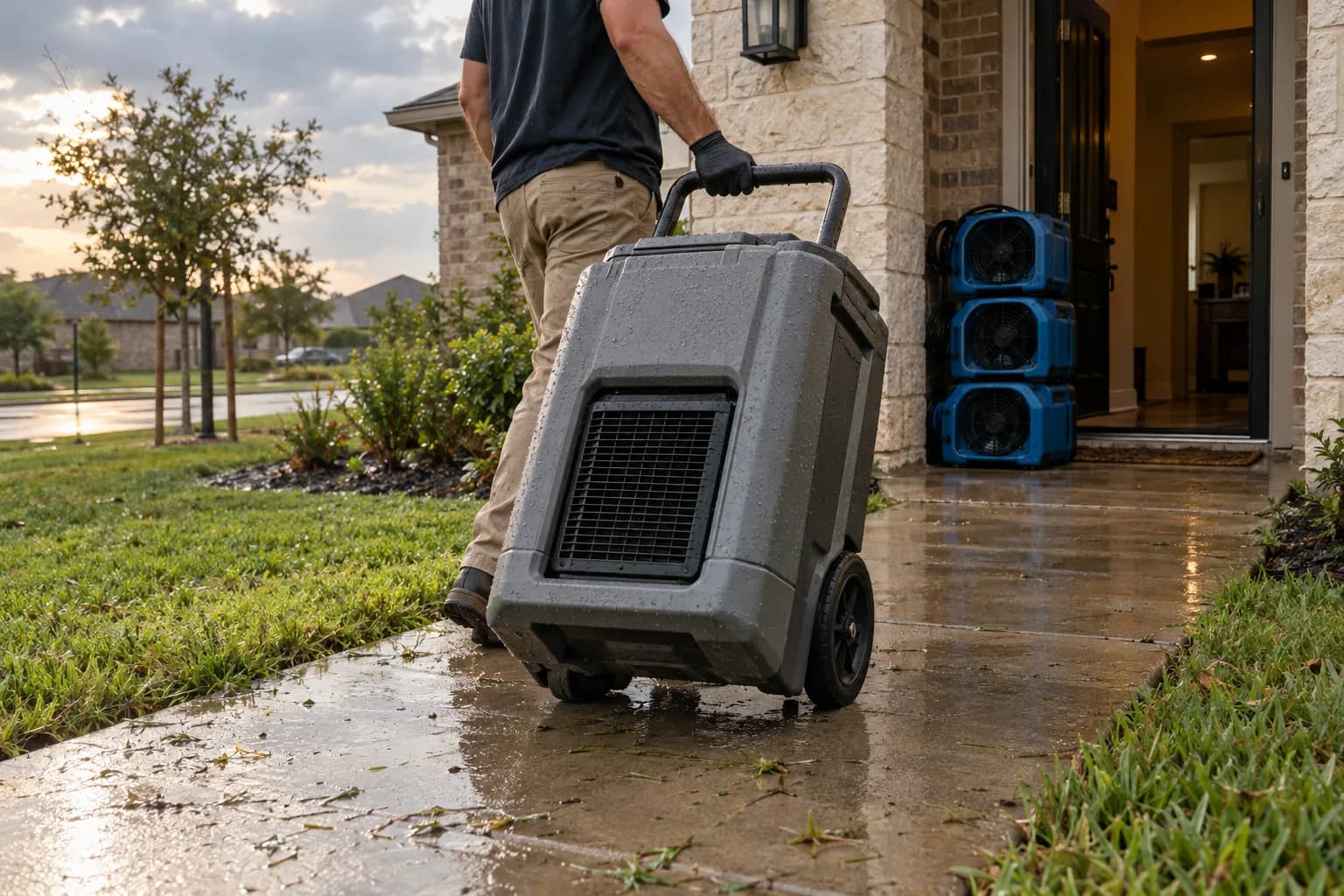
A real local team across Hays, Comal & Caldwell counties. Every job dried to a documented standard.
Have a question on your mind?
Get a quoteYes. Floodwater is classified as Category 3, or black water, because it can carry sewage, chemicals, bacteria, and ground contaminants picked up as it moves. It is biologically active. Along the San Marcos and Blanco Rivers, receding water also leaves contaminated silt inside walls and under flooring, even in spots that look bone dry on the surface within a day of the water going down. That's why flood cleanup includes sanitizing and often removing porous materials, rather than just drying them like a clean-water leak. Treating it as clean water is what leads to mold and lingering contamination.
We dispatch round-the-clock and prioritize the hardest-hit homes when a regional event stretches the whole area at once. We won't oversell it. During a widespread flood, response can take longer than a single-home call because access roads, utilities, and demand all spike, so we're honest that no company in Flash Flood Alley can promise an exact arrival time when the whole county floods. What we can do is get you on the list early, walk you through safe first steps by phone, and reach you as fast as conditions allow. Calling sooner puts you ahead in the queue.
Usually not. Standard Texas homeowners policies typically exclude rising water and flooding, which is covered separately through NFIP or private flood insurance, and FEMA assistance may apply after a declared disaster. Flooding is its own policy. A burst pipe is different and is often covered by homeowners. Because this trips up a lot of San Marcos homeowners, read our guide on flood insurance versus homeowners insurance, and we can coordinate documentation with whichever carrier applies.
It depends on the material and how contaminated it is. Hard surfaces survive. Non-porous items like sealed concrete, metal, and solid wood can often be cleaned, sanitized, and dried, while porous materials soaked with Category 3 water such as carpet pad, saturated drywall, and insulation usually have to be removed. Drywall is typically flood-cut to a set height above the contamination line. Acting fast and documenting everything gives the best chance of saving what's salvageable and supporting your claim.
Tell us straight what is happening and we will tell you the next step. We pick up, then we are on the way.
A real local person answers, 24/7. Tell us what is happening and we are on the way.