 Start here
Emergency Water Extraction
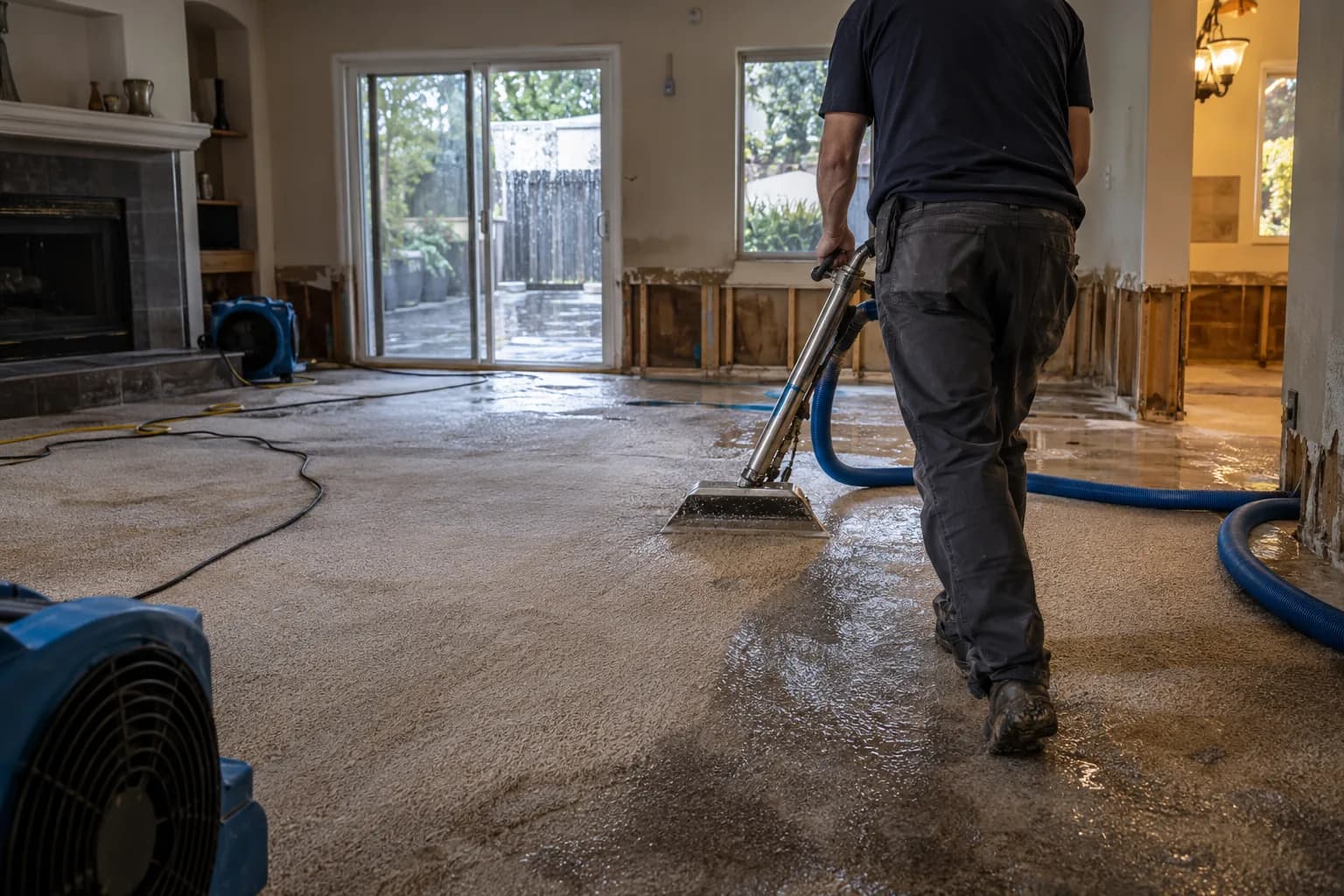
Fast removal of standing water with truck-mounted and portable units before it soaks into more material.
See emergency water extraction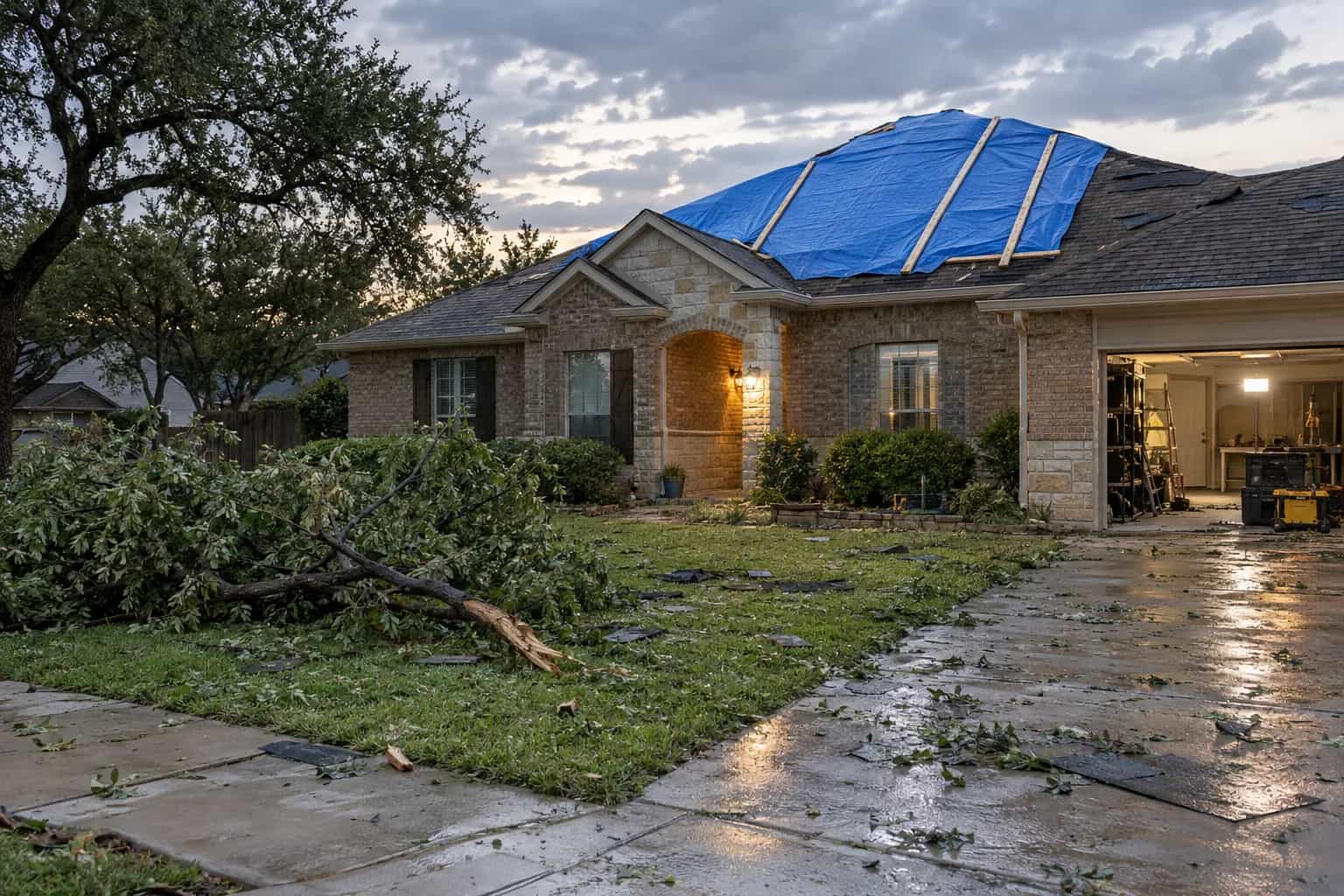
San Marcos, TX & Hays County · 24/7 response
Wind-driven rain, hail splits, and roof breaches put water into ceilings and wall cavities. We tarp, extract, and dry across San Marcos and Hays County, 24/7.
Storm damage restoration covers water that entered during a Central Texas thunderstorm through a compromised roof, window, or wall. The physics is the same as any water loss: find the moisture, dry to a documented standard, then repair. Mitigation in this market runs roughly $3 to $7.50 per square foot.
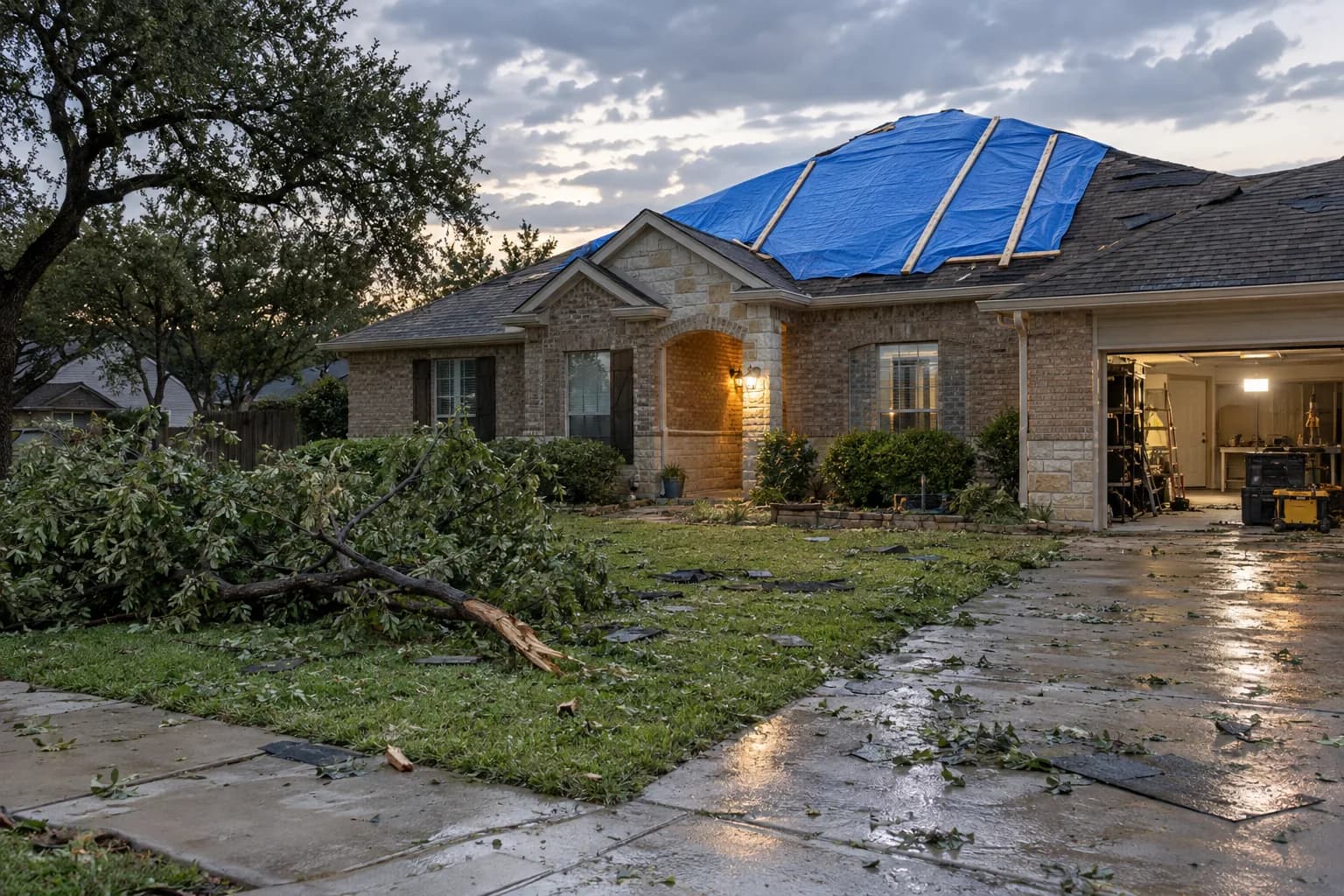
A Central Texas storm can move through San Marcos in twenty minutes and leave you with a leaking ceiling, soaked carpet, and water tracking somewhere you can't see. That is twenty minutes. San Marcos sits in Flash Flood Alley, where fast-moving thunderstorms drop heavy rain and wind-driven water finds its way through lifted shingles, blown-out vents, and window seals. If that's where you are, the priority is stopping the water and drying the structure before mold takes hold.
We provide storm damage restoration across San Marcos and Hays County. Here that means emergency tarping, water extraction, and structural drying after the storm passes. We're on the way.
Storm damage restoration in San Marcos starts with emergency tarping to stop water intrusion, then water extraction and structural drying to protect the building. It covers mitigation, not roof replacement. Full roof rebuilds go to a licensed roofer, while we dry the structure to standard and document it.
In practice, that breaks down into a short list.
What we don't do. Replace the roof itself, or handle structural engineering. Those go to specialists. We handle the water damage restoration services side, which is the part that gets time-sensitive the moment rain stops.
Work through these in order. Your safety comes first. Stay clear of downed power lines and standing water, and do not enter a room with a sagging ceiling. Once you are safe, document everything with photos before you move or remove anything, then call for help.
That third step matters more than people expect. Insurers treat documented, pre-cleanup evidence very differently from a photo taken a week later.
Here is how it runs. We make the structure safe, stop further water entry with tarping or board-up, extract standing water, then dry the structure to a documented standard while logging readings daily. Roof repair itself goes to a licensed roofer, and we coordinate around that work.
We tarp and mitigate. We do not replace roofs. After a storm, we install emergency tarping or board-up to stop water from getting in, then extract and dry the inside. A full roof rebuild is specialized work, so we refer that to a licensed roofer and stay focused on protecting and drying the structure. That split keeps the right trade on the right job, and it keeps you from paying one company to do work it isn't set up for.
Stop the damage from spreading. Call for emergency tarping →
Some storm damage shows up right away. Some waits a few days. Obvious signs are water stains spreading on a ceiling, missing shingles, or visible daylight in an attic. The delayed ones are a musty smell, paint that starts to bubble, or a ceiling seam that slowly darkens after the rain stops.
That last one is the tell. If a room smelled fine right after the storm and smells musty by midweek, water is sitting somewhere it shouldn't. A ceiling and roof leak water damage check is worth it before the drywall comes down on its own.
Tarping comes first, every time. The first 24 to 48 hours are the critical window for limiting secondary damage. That same window is when mold can start growing on wet materials, which is why the standard treats it as the line that decides how much you save.
Fast matters here (ANSI/IICRC S500). We treat storm response as round-the-clock work and aim to be San Marcos-fast.
When you call, tell us what you're seeing. In practice that means where the water is coming in, how much, and which rooms are affected. The details help. That lets us give you a realistic arrival window instead of a vague promise. We're on the way, and the sooner the intrusion is covered, the smaller the eventual repair.
Local knowledge earns its keep. San Marcos and the surrounding Hays County neighborhoods sit squarely in Flash Flood Alley, where a single fast-moving cell can drop several inches of rain and drive it sideways into homes. Wind and hail lift shingles and open intrusion points.
A calm-weather inspection would never reveal most of them.
The damage pattern differs by neighborhood. Older homes in the Historic District near the Square have aging roofs and original framing that soak up water and hold it. Newer subdivisions take wind damage to younger shingles and flashing that hasn't fully seated. Two different problems. Either way, the trapped water behind drywall and under flooring stays wet, and in the humid Central Texas climate that dampness invites mold within days.
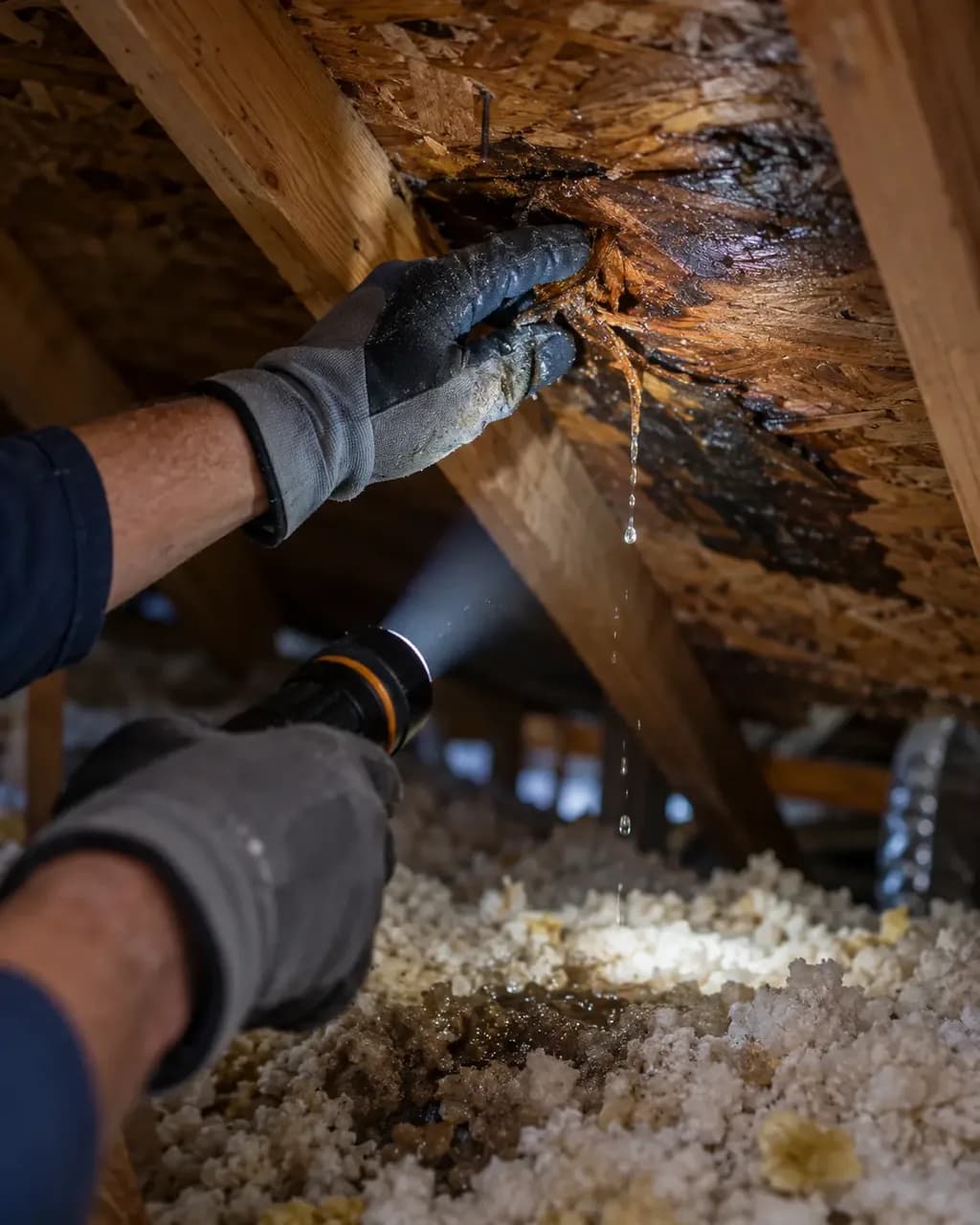
Here's the insider part. After a Central Texas storm, the most common hidden problem isn't the visible ceiling stain. It's wind-driven rain that tracked along the underside of the roof deck and saturated insulation several feet away from where the leak shows. That's why a moisture meter sweep beyond the obvious wet spot matters before anyone calls a room dry. Check past the stain. Storm water and rising flood damage cleanup are different problems, but both reward fast, thorough drying.
Wind-driven rain entering through a roof or window breach is usually Category 1 or 2 water, which prices at roughly $3.00 to $6.50 per square foot against the $3.00 to $7.50 Central Texas band for all water losses (industry cost data, scoped under ANSI/IICRC S500). The emergency tarp or board-up is a separate line, and it is the one that stops the number growing.
| Affected floor area | Clean, caught during the storm | Grey, sat a day or more |
|---|---|---|
| 250 sq ft, one room under a breach | $750 to $1,000 | $1,000 to $1,625 |
| 600 sq ft, water tracked down a wall to the floor below | $1,800 to $2,400 | $2,400 to $3,900 |
| 1,100 sq ft, several rooms plus ceilings | $3,300 to $4,400 | $4,400 to $7,150 |
That is published market arithmetic on a floor area, not a quote. Whole San Marcos jobs run about $1,200 to $8,500 or more (industry cost data), and roof replacement is not in any of those figures. We tarp and mitigate; a roofer does the permanent repair, and that is a separate trade and a separate invoice.
Two storms can put the same amount of water in the same room and produce completely different claims. What matters is the path.
| How the water entered | Homeowners policy | Needs a flood policy |
|---|---|---|
| Wind or hail opened the roof, then rain came through | Usually covered | No |
| A window or door was broken by debris, then rain entered | Usually covered | No |
| Rain driven horizontally through an existing gap in the envelope | Often disputed, depends on wear and tear wording | No |
| Water rose off the ground and came in at floor level | Excluded | Yes |
| A creek or the river came up into the property | Excluded | Yes |
| Storm drain or sewer backed up during the storm | Excluded without a backup endorsement | Sometimes, conditions apply |
Sitting where San Marcos sits, in Flash Flood Alley with the San Marcos and Blanco Rivers close by, that fourth row is not hypothetical. A single storm can produce a wind claim on your homeowners policy and a rising-water loss that only an NFIP policy touches, in the same house, on the same night. Photograph the breach and the water line separately, because the adjuster is being asked to separate them too.
Our San Marcos water damage cost guide walks the full scope, and flood insurance versus homeowners insurance in Texas covers the split.
The order matters more than the speed. Stopping water entry comes before drying, drying comes before rebuild, and documenting comes before all of it, because once the tarp is up nobody can photograph what the opening looked like.
| Window | What has to happen | Why then |
|---|---|---|
| First hour | Make it safe, kill power to affected areas, photograph everything before touching it | Photographs taken after cleanup are worth far less to an adjuster |
| Hours 1 to 6 | Tarp or board the opening | Every hour of open envelope enlarges the loss and the claim argument |
| Hours 6 to 24 | Extract standing water, remove saturated insulation, set drying equipment | Category 1 water starts degrading toward Category 2 inside a day or two |
| Day 2 to 4 | Monitored drying, daily readings at marked points | This log is what supports the equipment-day line on the claim |
| Day 3 onward | Roofer schedules the permanent repair | Tarps are temporary, and Central Texas gets a second front often enough |
| After dry standard | Rebuild starts | Closing a wall over wet framing is how a storm claim becomes a mold claim |
After a wide-area storm every restoration company in Hays County is triaging at once, and anybody promising an exact arrival time across a county-wide event is guessing. We tell you honestly where you sit in the queue, and we would rather talk you through tarping a breach yourself tonight than leave you waiting on a crew that cannot reach you until morning.
Before and after
Storm losses are two jobs. First stop water coming in, because every hour of open envelope adds interior damage. Then dry and rebuild what the water already reached.
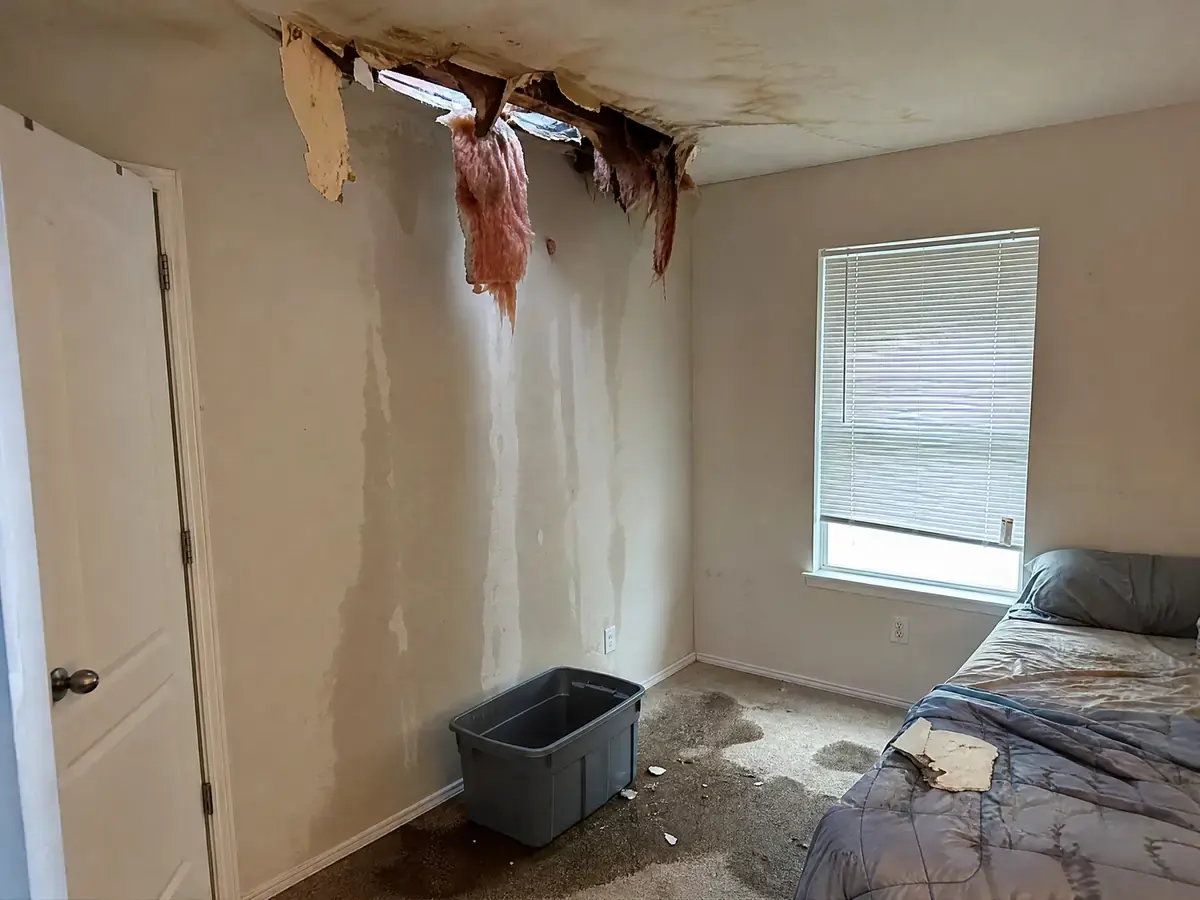 Before, envelope open
Wind-driven rain entering through a breach, insulation and ceiling wet below it, and the loss still growing until the opening is covered.
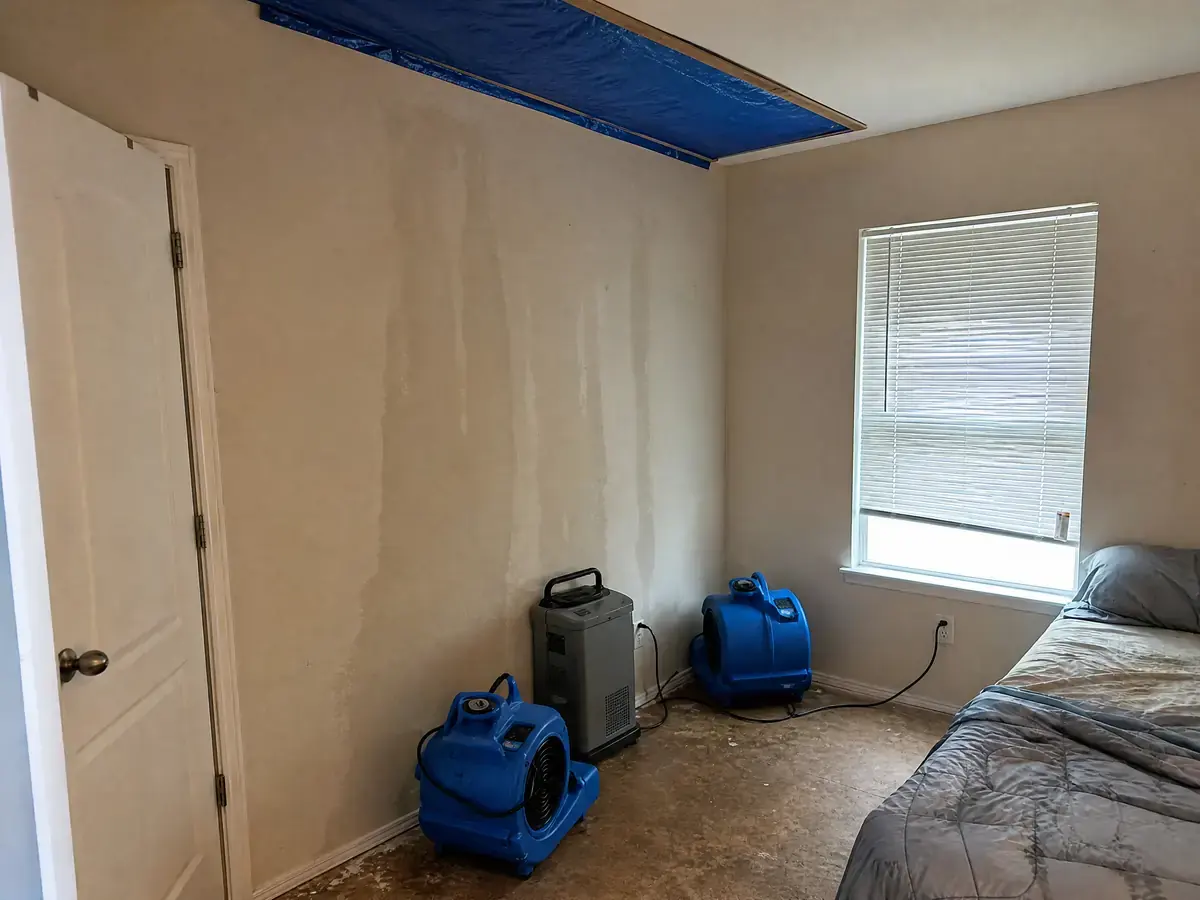 After, secured and dried
Opening covered so the loss stops, then interior drying to standard while the permanent roof repair is scheduled with a roofer.
Standing water? Call now, we answer 24/7.
A real local person picks up, then a crew heads your way.
Who we are
We put the things most companies keep vague in writing: real price ranges for this market, the standards we work to, and a moisture log your adjuster can read.
24/7
A real local person answers, day or night
24-48 hrs
The critical window to limit secondary damage
~25 mi
Served from our San Marcos hub across Hays, Comal & Caldwell
S500
The ANSI/IICRC drying standard our process follows
One local team handles every stage, so you are not juggling separate vendors.
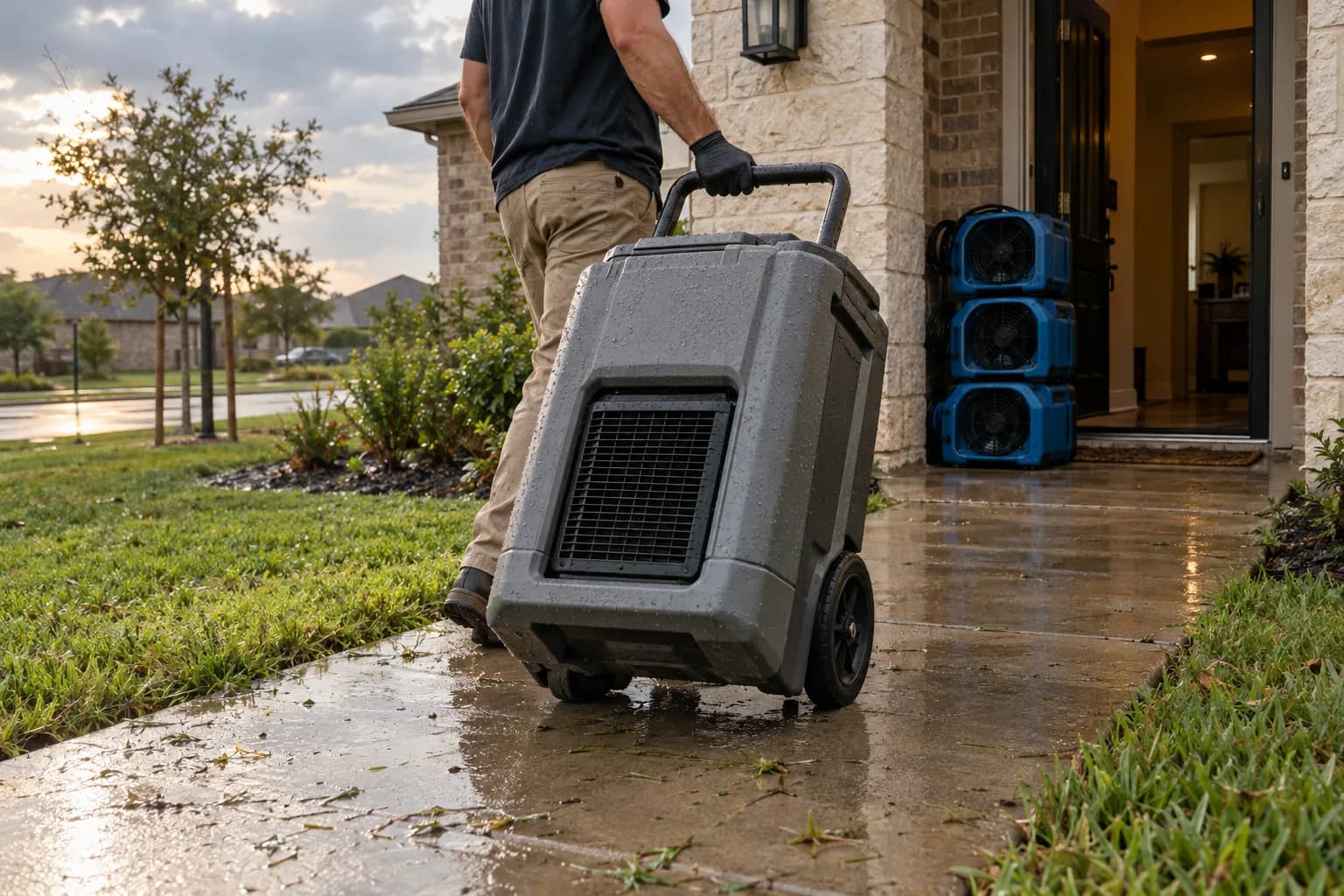
Start hereFast removal of standing water with truck-mounted and portable units before it soaks into more material.
See emergency water extraction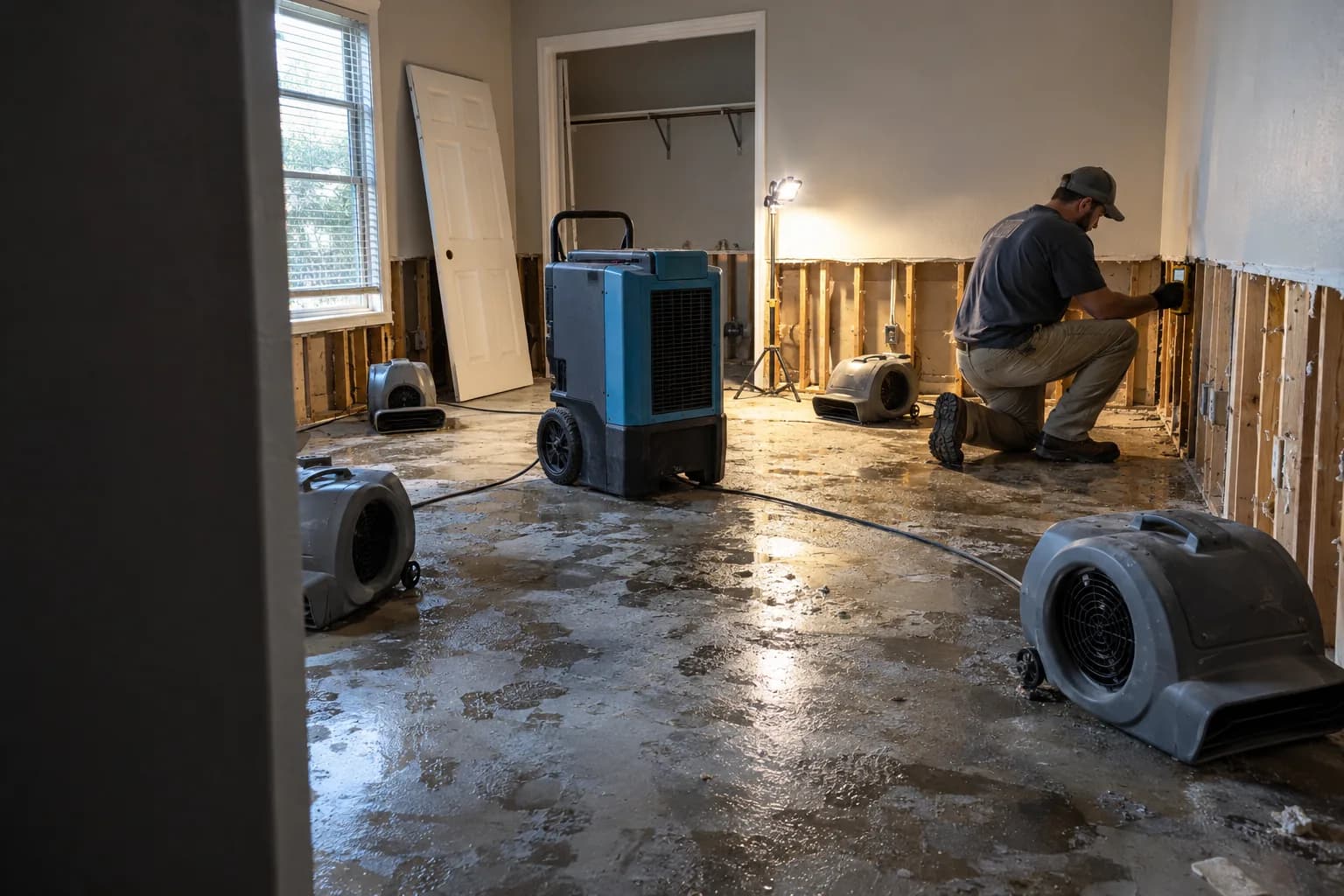
Air movers and LGR dehumidifiers with daily moisture readings, dried to a documented standard.
See structural drying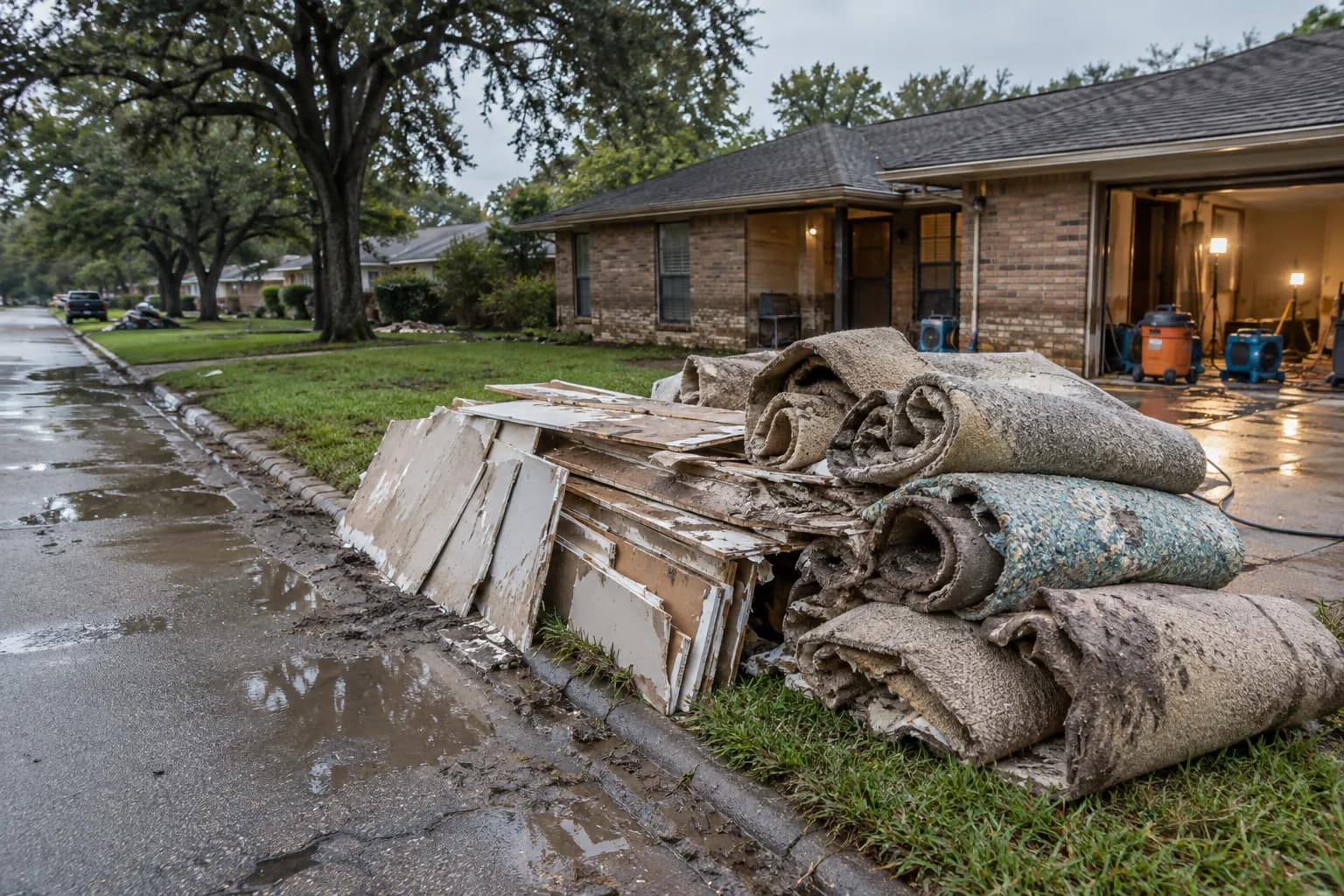
Muck-out and restoration after river flooding and flash floods along the San Marcos and Blanco Rivers.
See flood damage cleanupFAQ
Straight answers to what San Marcos homeowners ask most, on cost, insurance, mold timelines, and what to do first.
24/7
A real local team across Hays, Comal & Caldwell counties. Every job dried to a documented standard.
Have a question on your mind?
Get a quoteStorm-related water damage is often covered when sudden wind or hail creates an opening that lets rain in, but coverage depends on your policy and cause. Insurers usually distinguish a sudden storm event from gradual leaks or flooding from rising water, which needs separate flood coverage. Cause matters. Document everything before cleanup with photos and notes. Our Texas water damage insurance guide walks through how Texas policies typically treat storm damage. We can also coordinate directly with your adjuster during the claim.
We tarp and mitigate; we do not replace roofs. After a storm we install emergency tarping or board-up to stop water from getting in, then extract water and dry the structure to standard. We dry, roofers rebuild. Full roof replacement is specialized work, so we refer that to a licensed roofer and focus on protecting and drying the interior. This honest split keeps your restoration and your roof rebuild handled by the right people.
Our goal is to reach you as quickly as possible after you call, since stopping intrusion early prevents far more damage. The clock starts at the call. Emergency tarping is the priority step because the first 24 to 48 hours decide how far water spreads into insulation, drywall, and framing. We treat storm response as round-the-clock work, day or night, and aim to be San Marcos-fast. Call us and tell us what you're seeing, and we'll tell you our realistic arrival window.
First make sure everyone is safe and stay away from sagging ceilings and water near light fixtures or outlets. Safety, then photos. Take photos and short videos of the damage for your insurer before anything is moved or cleaned. Then call us so we can tarp the opening, extract standing water, and start drying before mold sets in. If your roof needs rebuilding, we'll point you to a licensed roofer while we protect and dry the interior.
Tell us straight what is happening and we will tell you the next step. We pick up, then we are on the way.
A real local person answers, 24/7. Tell us what is happening and we are on the way.