 Start here
Emergency Water Extraction
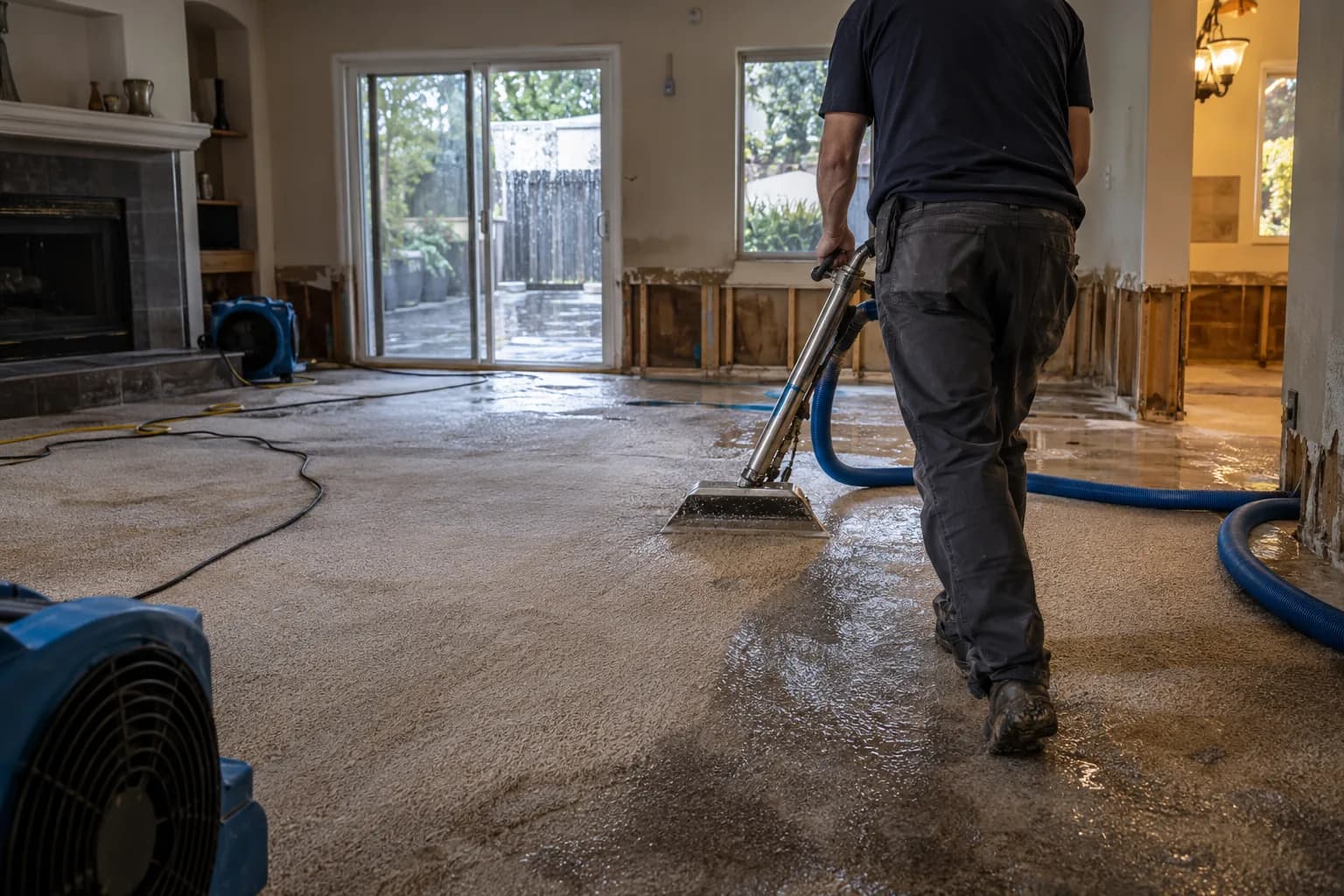
Fast removal of standing water with truck-mounted and portable units before it soaks into more material.
See emergency water extraction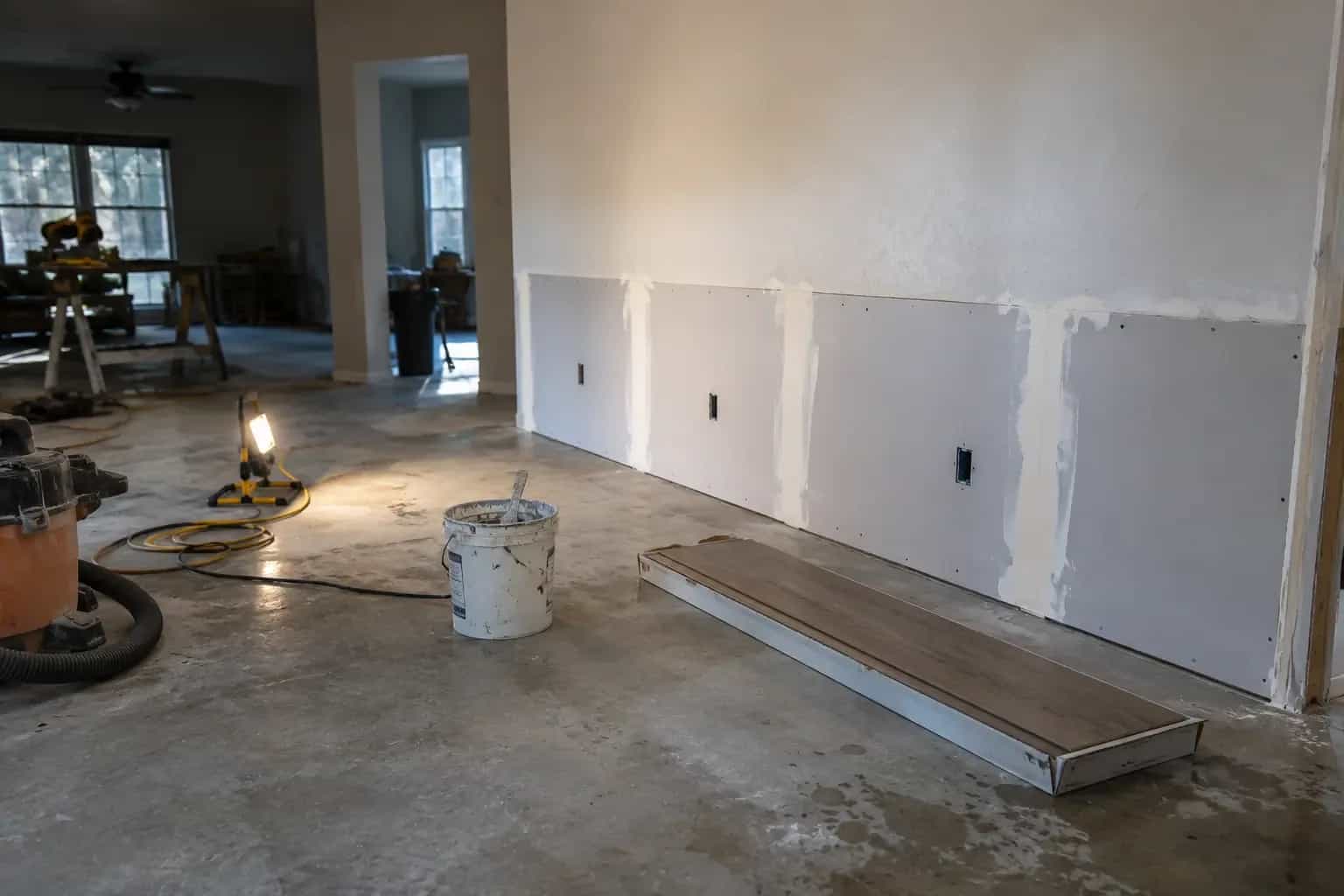
San Marcos, TX & Hays County · 24/7 response
Once the structure reads dry, the drywall, flooring, trim, and paint go back. One local crew does the mitigation and the rebuild, so nothing gets handed off mid-job.
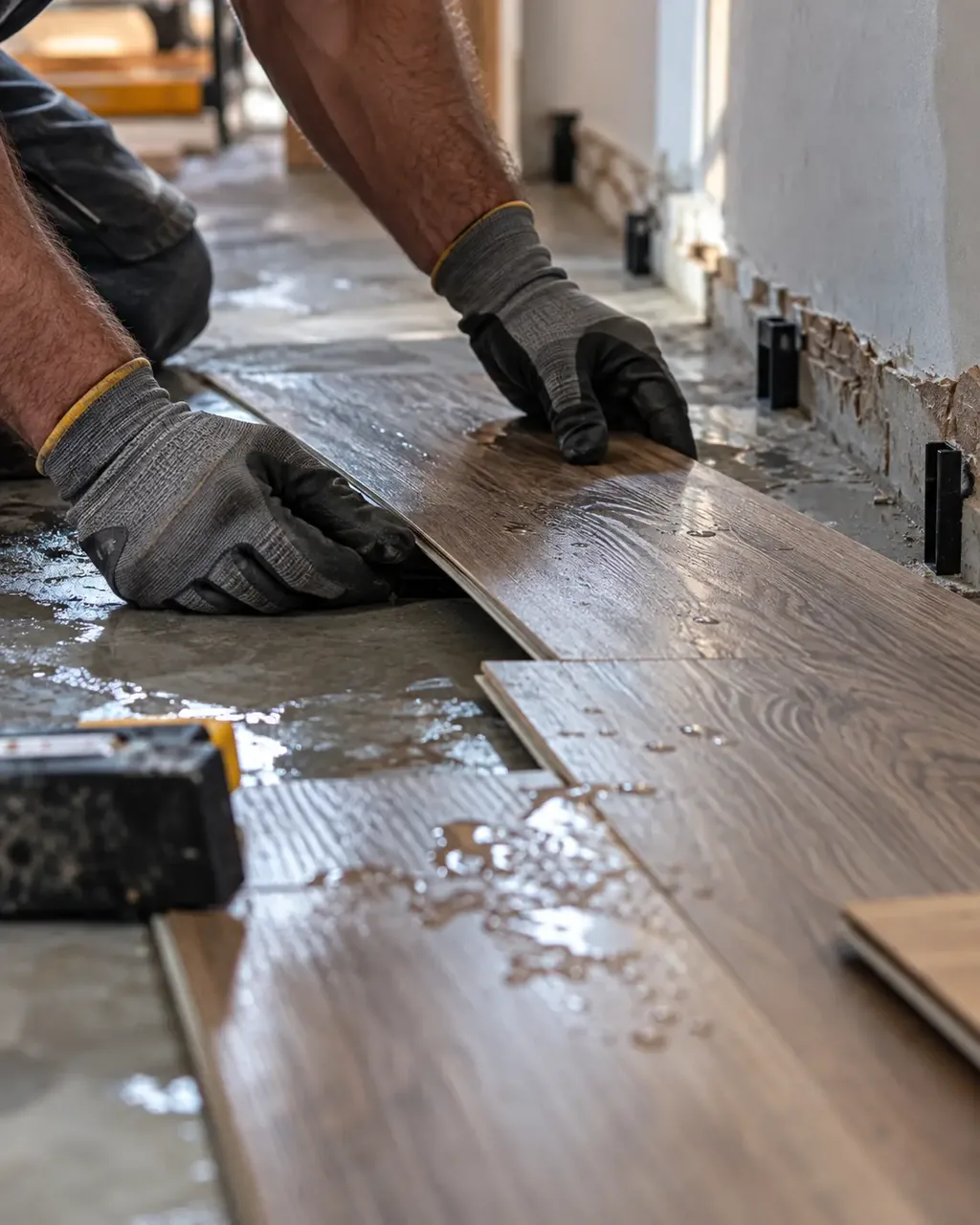
Water damage repair is the reconstruction phase after drying: replacing cut drywall, subfloor, flooring, baseboards, and paint to return the property to pre-loss condition. Repair only starts once moisture readings confirm the assembly is dry. San Marcos jobs run about $1,200 for a small clean-water loss to $8,500 or more for a large one.
The water's out. The room's torn down to studs and subfloor, fans are gone, and you're staring at a shell that used to be your kitchen. You want it back to normal, with one team handling it instead of a string of contractors. This is the relief stage, and reconstruction is a defined phase with a finish line you can see. Call now to start the rebuild.
Water damage repair, also called reconstruction, is the rebuild phase that happens after drying. It replaces damaged drywall, flooring, trim and paint to return the property to its pre-loss condition. The whole point is simple. The work begins only once affected materials are dried to standard, so finishes aren't trapped over moisture that can warp or rot them later.
In practice that covers a familiar set of materials. Drywall and sheetrock get patched or replaced depending on how far up the water wicked. Flooring, whether carpet, vinyl plank, engineered wood, or solid hardwood, gets dried, refinished, or swapped out. Baseboards, trim, and paint go back on during rebuild, plus cabinetry where a loss reached it and the lower runs of casework had to come out to dry the wall behind them properly. The room should look the way it did before.
The most common rebuild mistake is closing the wall up too soon. If drywall goes up before the framing and bottom plate are dried to standard, the trapped moisture has nowhere to go. Weeks later you get a second failure. That means a musty wall, cupped flooring, mold behind new paint.
Tempting, when you want your house back. But it festers, and you're paying twice.
That's why reputable repair waits for a verified dry reading. Numbers, not guesses. Dry-to-standard, the benchmark from ANSI/IICRC S500, means a material has returned to the moisture content of similar unaffected materials in the same building, not just "feels dry." Doing the drying and the rebuild as one team is about not skipping that verification step. The crew that confirms the cavity is dry is the same crew that closes it. That's the point of our structural drying to standard feeding straight into the rebuild.
The meter decides, and the material's porosity decides how much say the meter gets. Non-porous and semi-porous materials usually dry and stay. Porous materials that absorbed contaminated water, or that lost structural integrity while wet, come out regardless of how they look on the day.
| Material | Usual outcome | What tips it the other way |
|---|---|---|
| Solid wood framing | Dries in place | Rot, delamination at glue lines, or Category 3 exposure over time |
| Plywood or OSB subfloor | Usually dries | Swelling at the edges, delamination, or sag between joists |
| Drywall, clean water, caught early | Often dries in place | Any sag, crumbling at fasteners, or paper separating from the core |
| Drywall, Category 2 or 3 | Comes out, cut above the wick line | Nothing saves it, this is a contamination rule not a strength one |
| Fibreglass batt insulation | Comes out | It rarely dries in place inside a closed cavity |
| Carpet | Sometimes cleanable, pad almost never | Category 2 or 3, delamination, or more than 48 hours wet |
| Solid hardwood | Often saved with mat drying | Cupping that does not relax, crowning, finish failure, subfloor damage |
| Engineered wood and laminate | Usually replaced | The core swells irreversibly once water reaches it |
| Tile over concrete | Usually saved | Loss of bond, or a slab that stays wet under it |
| Kitchen cabinetry, particleboard carcass | Usually replaced at the base | Swelling at the bottom rail, which is where it always starts |
| Kitchen cabinetry, plywood carcass | Often saved | Face frame separation or a wet toe kick left too long |
Two things worth knowing before somebody tells you it all has to go. Hardwood cupping frequently relaxes during controlled drying, so a floor that looks ruined on day one can read flat by day five, and pulling it on day one removes that option permanently. And an insurance scope written before drying finishes is a guess. Here that means the honest sequence is dry first, measure, then write the replacement scope.
Here's how most restoration jobs go wrong. A company dries your house, hands you a clearance, and disappears, leaving you to hire a separate contractor, re-explain the loss, and hope they trust the last crew's dry readings. We keep one team from dry-out through rebuild.
Our model is built so one team can take you from dry-out through the finished rebuild. The people who confirmed the space is dried to standard are the same ones who put the wall and floor back, so nothing gets closed up over hidden moisture. That removes the coordination gap between mitigation and reconstruction. We focus on water-loss build-back.
After the 2015 Memorial Day Flood and the October flooding that same year, many San Marcos homes near the river and in Blanco Gardens needed full rebuilds, not just drying. Drywall, flooring, and finishes all had to come out and go back. That's exactly the rebuild phase this page covers, and this area has needed it before.
The local climate shapes how we do it. Central Texas humidity means a floor or wall rebuilt before it's truly dried to standard can trap moisture and warp again, so we don't rush the dry reading. Materials matter too. Newer neighborhoods like Blanco Vista, La Cima, Kissing Tree, and Stonebridge often have engineered wood and luxury vinyl plank, which behave differently from solid hardwood when wet. A plank that looks like wood isn't wood, so we match the fix to it.
Usually the rebuild is the second half of a covered water-loss claim. The carrier pays for mitigation and drying first, then for repair back to pre-loss condition. Coverage depends on your policy and the cause of loss, and the rebuild scope must match the documented damage from the original inspection.
Two phases, one claim. That is another reason the inspection-to-rebuild handoff matters. We can document the rebuild scope and coordinate with your adjuster. Our guide on filing a water damage insurance claim in Texas explains the phases.
Rebuild is priced by what is being put back, not by the square footage of the loss, which is why it is quoted separately from mitigation. Mitigation in Central Texas runs about $3.00 to $7.50 per square foot (industry cost data, scoped under ANSI/IICRC S500), and reconstruction is a second scope on top of that.
First, the mitigation half, so you can see both numbers side by side. Applied to a floor area, the published Central Texas band works out like this.
| Affected floor area | Category 1, clean | Category 2, grey | Category 3, black |
|---|---|---|---|
| 200 sq ft | $600 to $800 | $800 to $1,300 | $1,400 to $1,500 |
| 500 sq ft | $1,500 to $2,000 | $2,000 to $3,250 | $3,500 to $3,750 |
| 1,000 sq ft | $3,000 to $4,000 | $4,000 to $6,500 | $7,000 to $7,500 |
Whole San Marcos jobs, mitigation plus a modest rebuild, span about $1,200 for a small clean-water loss to $8,500 or more for a large or contaminated one, with mid-range multi-room work near $2,500 to $5,000 (industry cost data). The rebuild half is quoted on what is being put back.
| Rebuild element | What drives the price | Notes that change the number |
|---|---|---|
| Drywall, tape, texture, paint | Area, texture type, ceiling versus wall | Texture matching is the hidden cost, and blending often loses to a full skim |
| Baseboard and trim | Linear feet, profile, paint or stain grade | A discontinued profile means milling or replacing the whole run |
| Flooring | Material, area, subfloor condition | Matching an existing run is usually impossible, so the scope grows to a transition |
| Cabinetry | Repair a base versus replace a run | A single swollen base cabinet in a matched run is the worst case |
| Insulation | Area and type | Straightforward, and it must be replaced if it got wet |
| Subfloor | Area, joist condition, access | Access is most of the cost when flooring above must come up |
| Paint | Whether you can stop at one wall | You usually cannot, and stopping mid-wall shows |
Two honest points about the total. Matching is where rebuild costs escape a scope. In practice that means paint fades, flooring runs get discontinued, and trim profiles change, so "back to pre-loss condition" often means redoing more area than the water touched. And we build the scope after drying, so the number lines up with what is actually being rebuilt rather than a round figure guessed before anyone measured.
See how restoration pricing works and mitigation versus restoration explained.
One honest boundary. We do water-loss build-back, returning a property to pre-loss condition after a documented water event. We don't do general remodeling or new construction unrelated to a water loss. If you want to redo a kitchen that never flooded or finish out an addition, that's a remodeler's job, and we'll point you toward one.
Three words get used interchangeably and they mean different phases of the same job. Mitigation is stopping the damage and drying the structure. Restoration is the whole process end to end. Reconstruction, or repair, is putting the building back. On an insurance claim they are usually scoped, and sometimes paid, separately.
| Phase | Also called | What happens | When it starts |
|---|---|---|---|
| Mitigation | Water mitigation, emergency services | Extraction, removal of unsalvageable material, drying to a documented standard | Immediately, ideally within hours |
| Reconstruction | Repair, rebuild, build-back | Insulation, drywall, texture, trim, flooring, paint | Only once readings hit the dry standard |
| Restoration | The umbrella term | Both of the above, from first call to final walkthrough | Describes the whole job |
The distinction matters for two practical reasons. Carriers frequently approve mitigation quickly and reconstruction slowly, because mitigation is urgent and reconstruction can be negotiated, so knowing which phase your approval covers stops work stalling halfway. And some companies only do one half. A mitigation-only firm dries your house and leaves you to find a contractor for the rebuild. The short version is a second scope, a second schedule, and a gap where each blames the other for what the drying left behind.
We do both, so the person who wrote the dry-standard reading is the person who closes the wall over it. Our guide on water mitigation versus water restoration covers the terminology in full.
Before and after
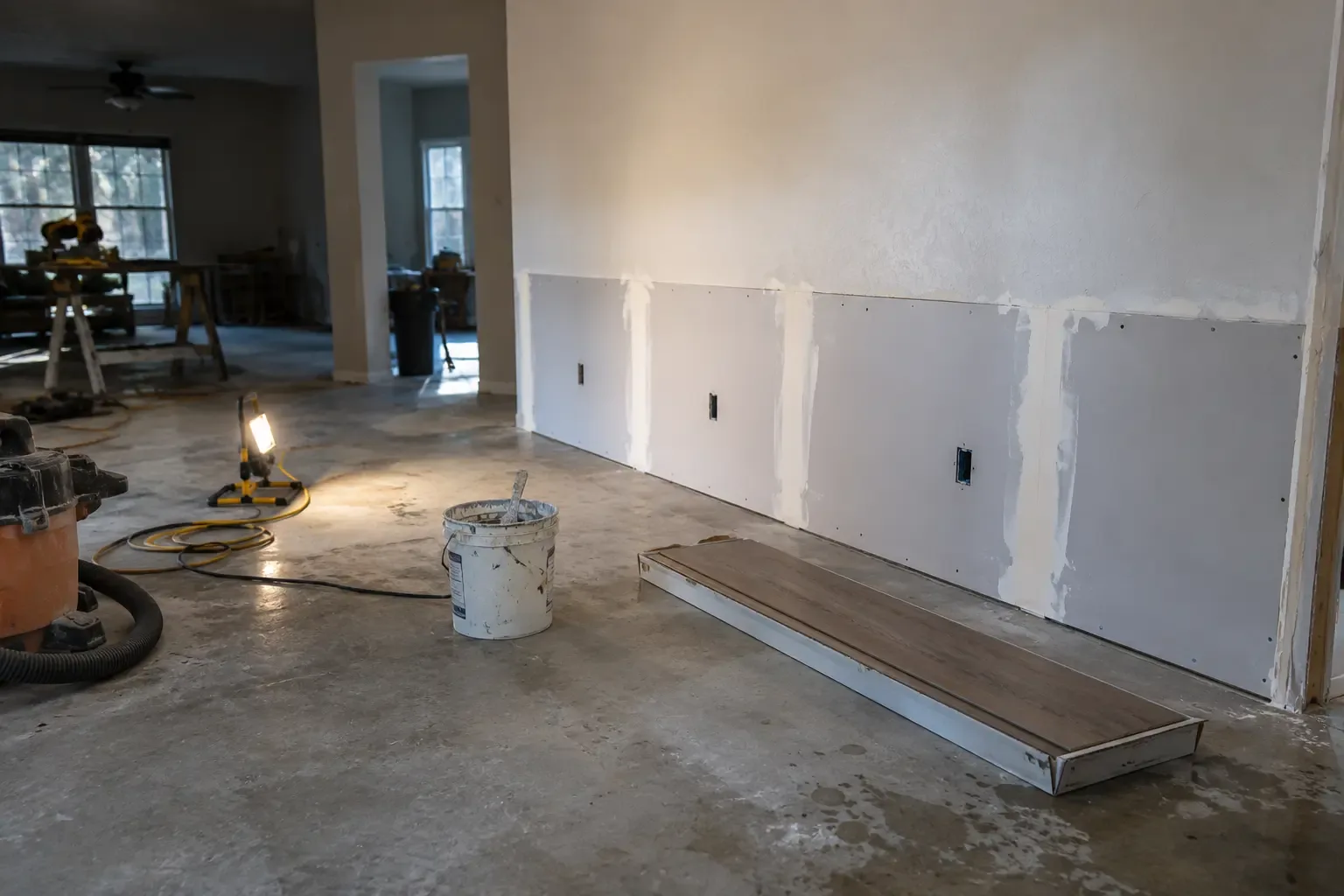
Repair is the second half of the job. Closing a wall over framing that still reads wet is how a finished room turns into a mold call three months later, so the rebuild waits on the meter.
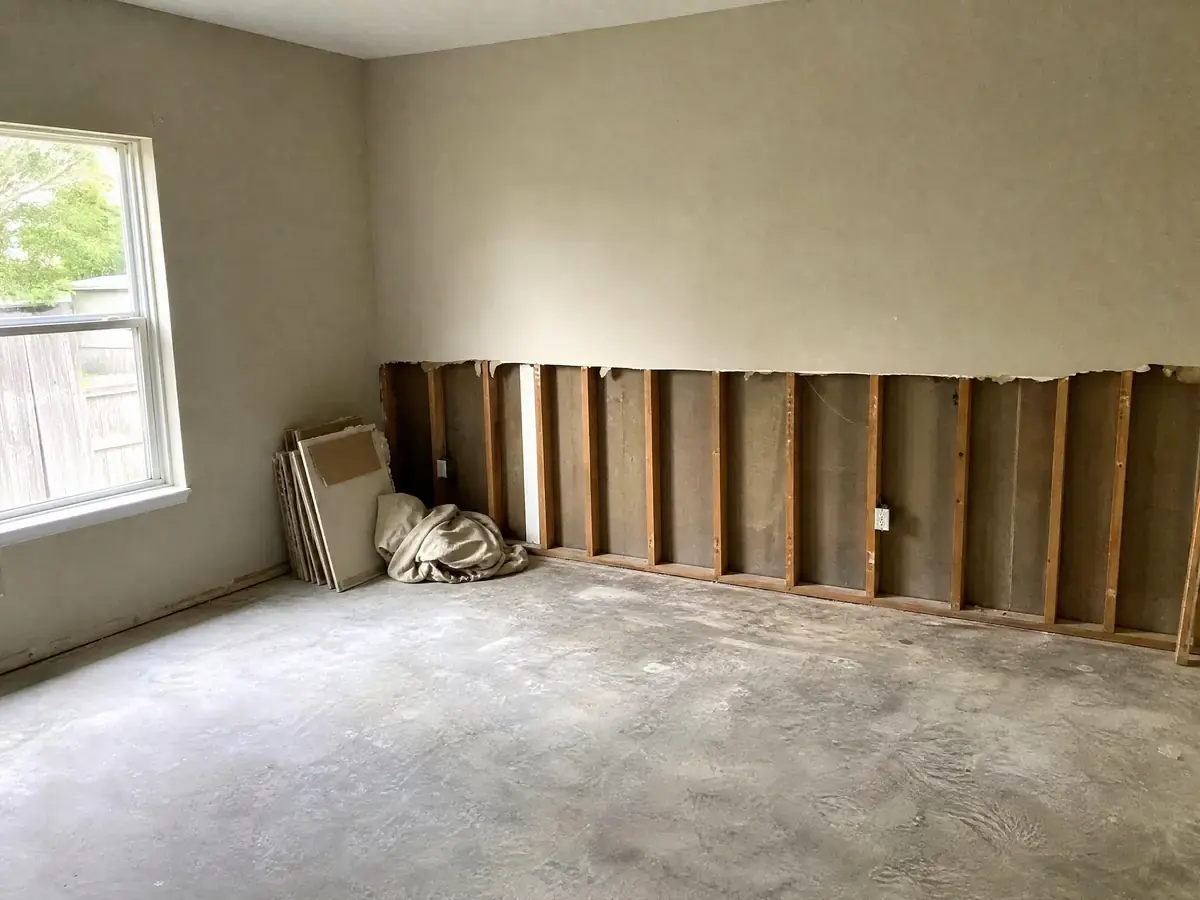 Before, open and still wet
Drywall cut back to sound material, insulation out, framing exposed and still above the dry standard. Nothing gets closed at this stage.
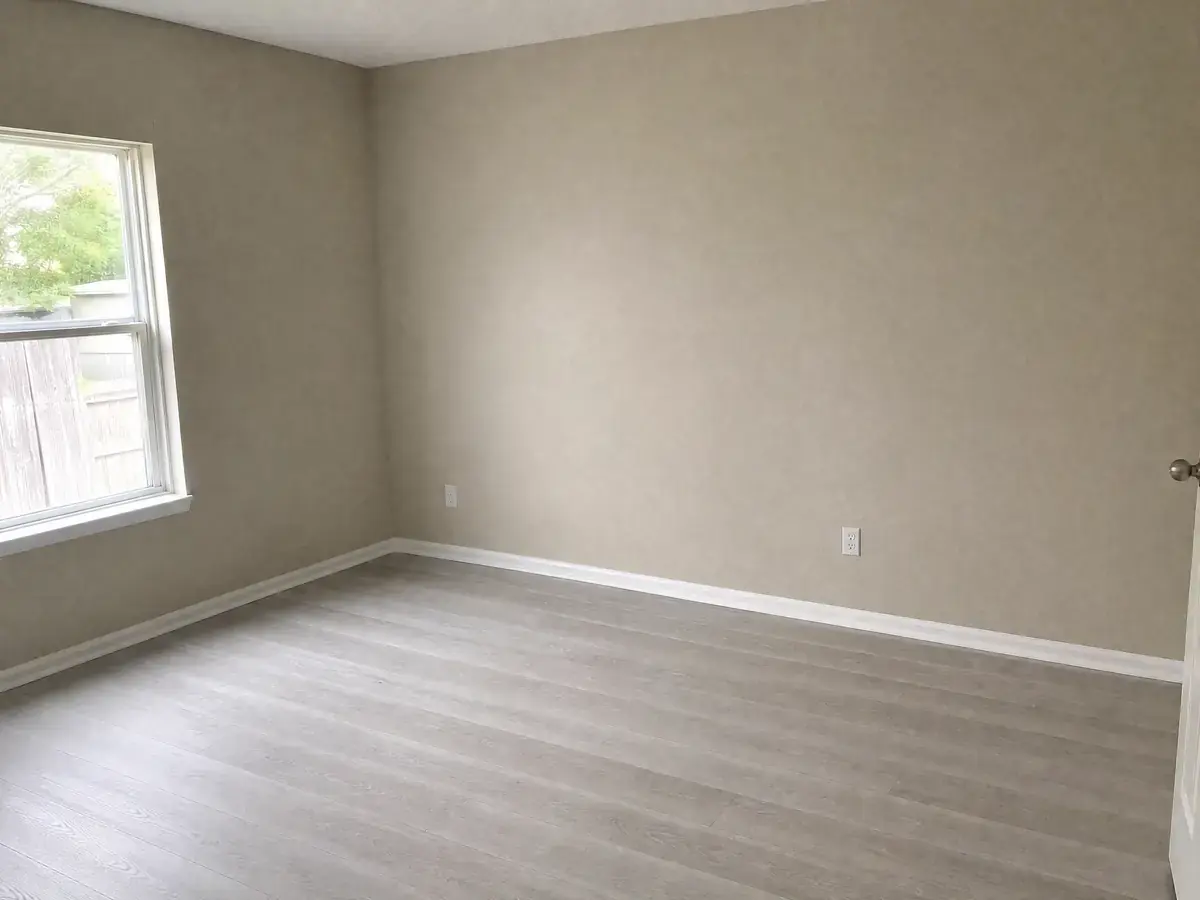 After, closed and finished
Framing at the dry standard, then insulation, drywall, tape, texture and paint back to a match. The final reading is recorded before the first sheet goes up.
Standing water? Call now, we answer 24/7.
A real local person picks up, then a crew heads your way.
Who we are
We put the things most companies keep vague in writing: real price ranges for this market, the standards we work to, and a moisture log your adjuster can read.
24/7
A real local person answers, day or night
24-48 hrs
The critical window to limit secondary damage
~25 mi
Served from our San Marcos hub across Hays, Comal & Caldwell
S500
The ANSI/IICRC drying standard our process follows
One local team handles every stage, so you are not juggling separate vendors.
Start hereFast removal of standing water with truck-mounted and portable units before it soaks into more material.
See emergency water extraction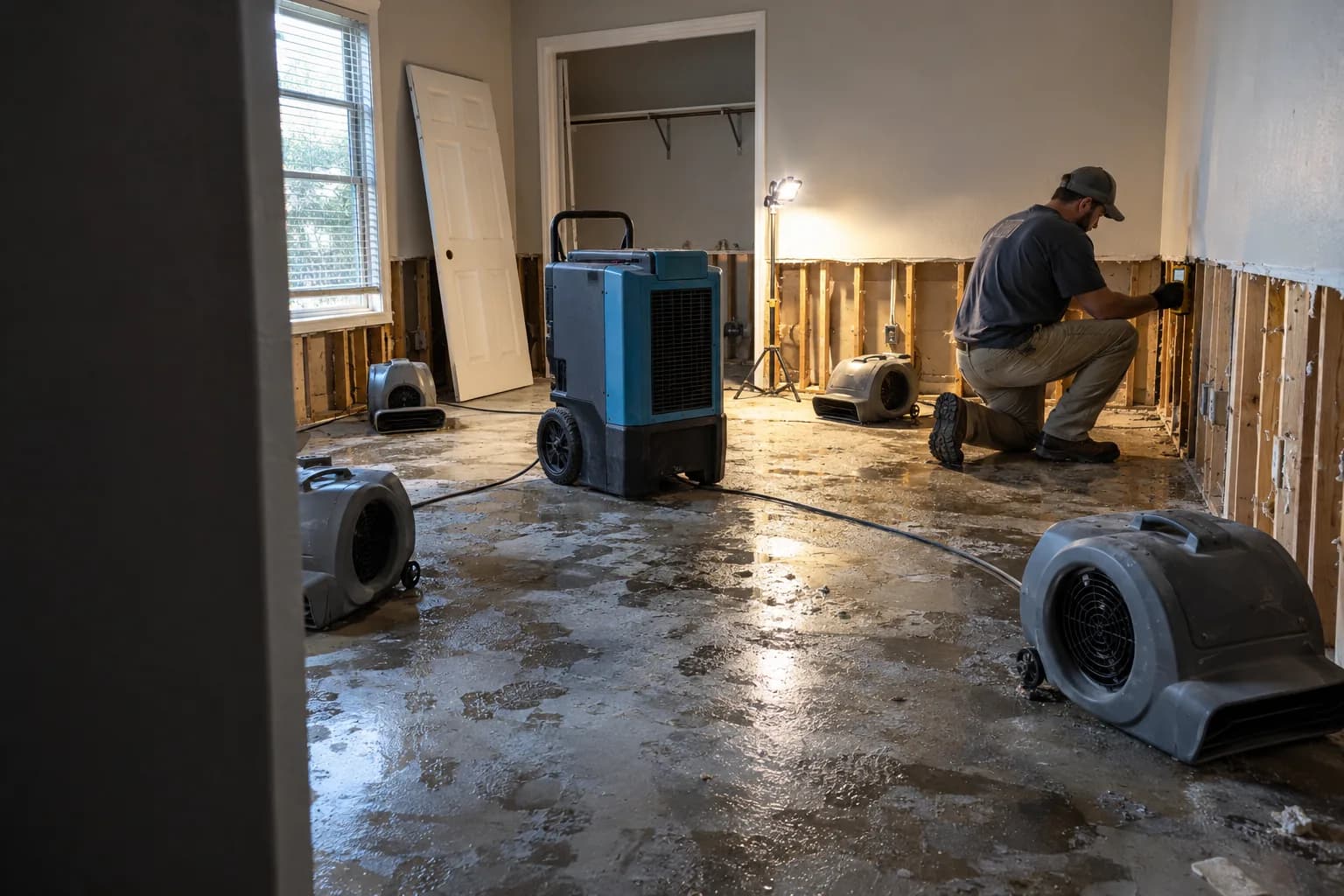
Air movers and LGR dehumidifiers with daily moisture readings, dried to a documented standard.
See structural drying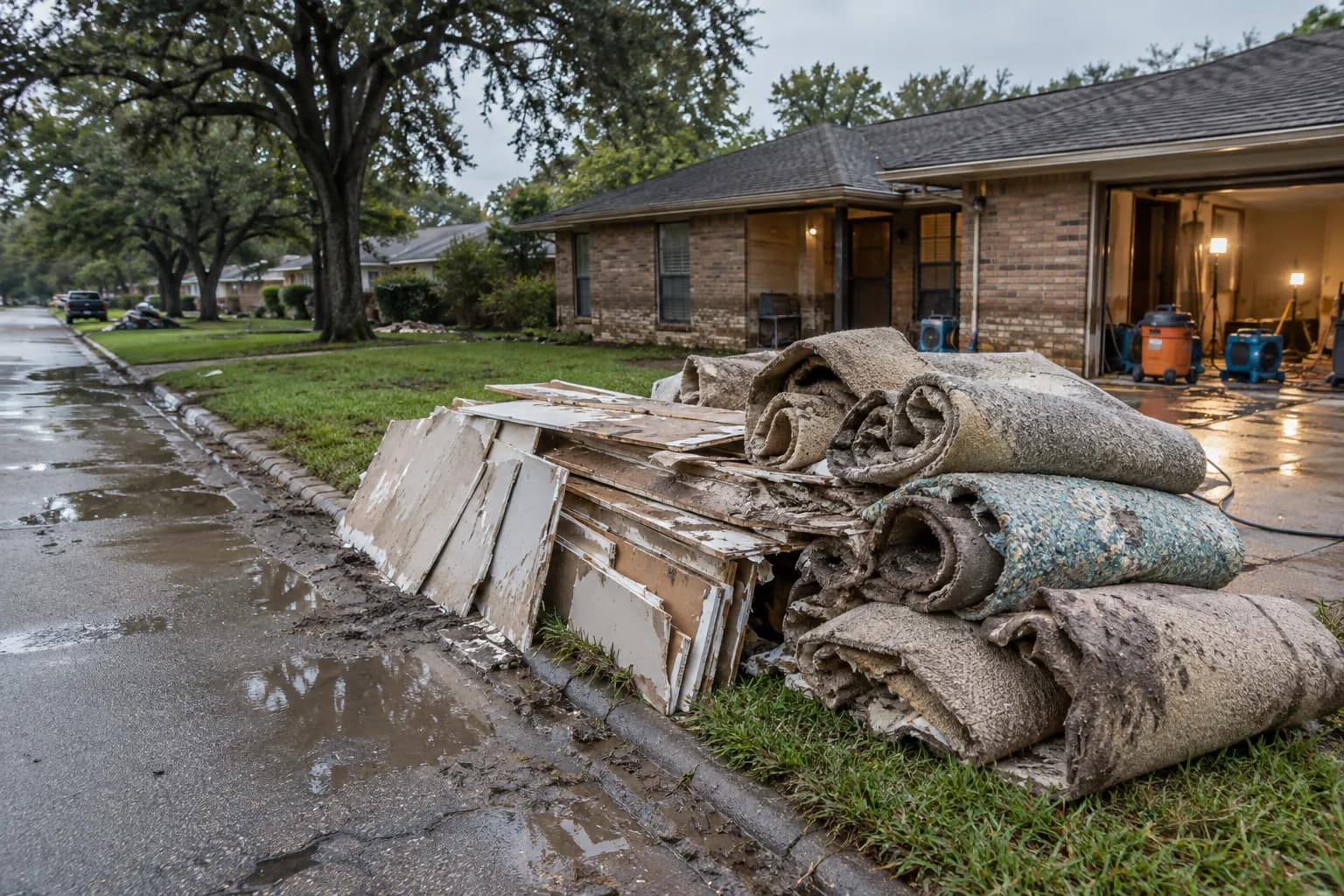
Muck-out and restoration after river flooding and flash floods along the San Marcos and Blanco Rivers.
See flood damage cleanupFAQ
Straight answers to what San Marcos homeowners ask most, on cost, insurance, mold timelines, and what to do first.
24/7
A real local team across Hays, Comal & Caldwell counties. Every job dried to a documented standard.
Have a question on your mind?
Get a quoteIt depends on how far the moisture went and how long it sat. Mild cupping in solid hardwood can sometimes be saved by drying the floor fully to standard and then sanding and refinishing once the boards stabilize. Past a point, no. Severe cupping, crowning or buckling, delaminated engineered wood, or boards over a saturated subfloor usually need replacement. The honest call comes after the floor is dried and re-measured, not while it's still wet, which is why we never quote a replacement before drying is confirmed.
Repair timelines depend on the size of the loss and which materials are involved, but the rebuild phase only starts once everything is dried to standard. A single room with drywall, flooring and paint moves faster than a multi-room loss that needs subfloor and structural work. Size drives the clock. We build a scope of work first so you can see the sequence and a realistic timeline before anything begins. One team, no gap. Because we keep dry-out and rebuild under that one team, there's no waiting on a separate contractor to start.
In many covered water-loss claims, the reconstruction is the second half of what's paid, first the mitigation and drying, then the repair back to pre-loss condition. Coverage depends on your policy and the cause of loss, so the rebuild scope needs to match the documented damage from the original inspection. Scope must match. We can document the rebuild scope of work and coordinate with your adjuster as the claim moves through. Our guide on water damage insurance claims in Texas explains how the mitigation and rebuild phases are typically handled.
Our model is built so one team can take you from dry-out through the finished rebuild, instead of handing you off to a separate contractor. That means the people who confirmed the space is dried to standard are the same ones who put the wall and floor back, so nothing gets closed up over hidden moisture. One crew throughout. Keeping it under one team is meant to remove the coordination gap that usually sits between mitigation and reconstruction. We focus on water-loss build-back specifically, not unrelated remodeling.
Tell us straight what is happening and we will tell you the next step. We pick up, then we are on the way.
A real local person answers, 24/7. Tell us what is happening and we are on the way.