San Marcos water damage guide
Water Mitigation vs Water Restoration: What's the Difference?
You're staring at an estimate or an email from your insurer, and the job is split into two things. "mitigation" and "restoration." Two line items, two scopes, and a quiet worry that you're being charged twice for the same work. You're not. Understanding water mitigation vs water restoration comes down to one idea. Mitigation is the emergency work that stops the damage from spreading, and restoration is the rebuilding that puts your home back together afterward. They're two genuinely different phases, and they happen in that order. In flood-prone San Marcos, TX, the mitigation half is the urgent one, the part that can't wait.
Published · Updated
Need mitigation started now? Call for emergency help.
What's the Difference Between Water Mitigation and Water Restoration?
Mitigation stops damage; restoration rebuilds. Water mitigation is the emergency work that extracts standing water, removes wet materials, and dries the structure. Water restoration is the rebuilding that follows, returning the property to pre-loss condition with new drywall, flooring, and finishes. Mitigation always comes first.
| Phase | What It Includes | Timing | Goal |
|---|---|---|---|
| Mitigation | Water extraction, removing soaked materials, structural drying, dehumidification, dry-to-standard verification | Immediate, time-critical | Stop secondary damage from spreading |
| Restoration | Drywall, flooring, paint, trim, finishes, build-back | After mitigation confirms dry | Return the home to pre-loss condition |
Mitigation follows the ANSI/IICRC S500 standard, the industry reference for how a water loss gets stabilized and dried. We use it here as a framework, not a credential.
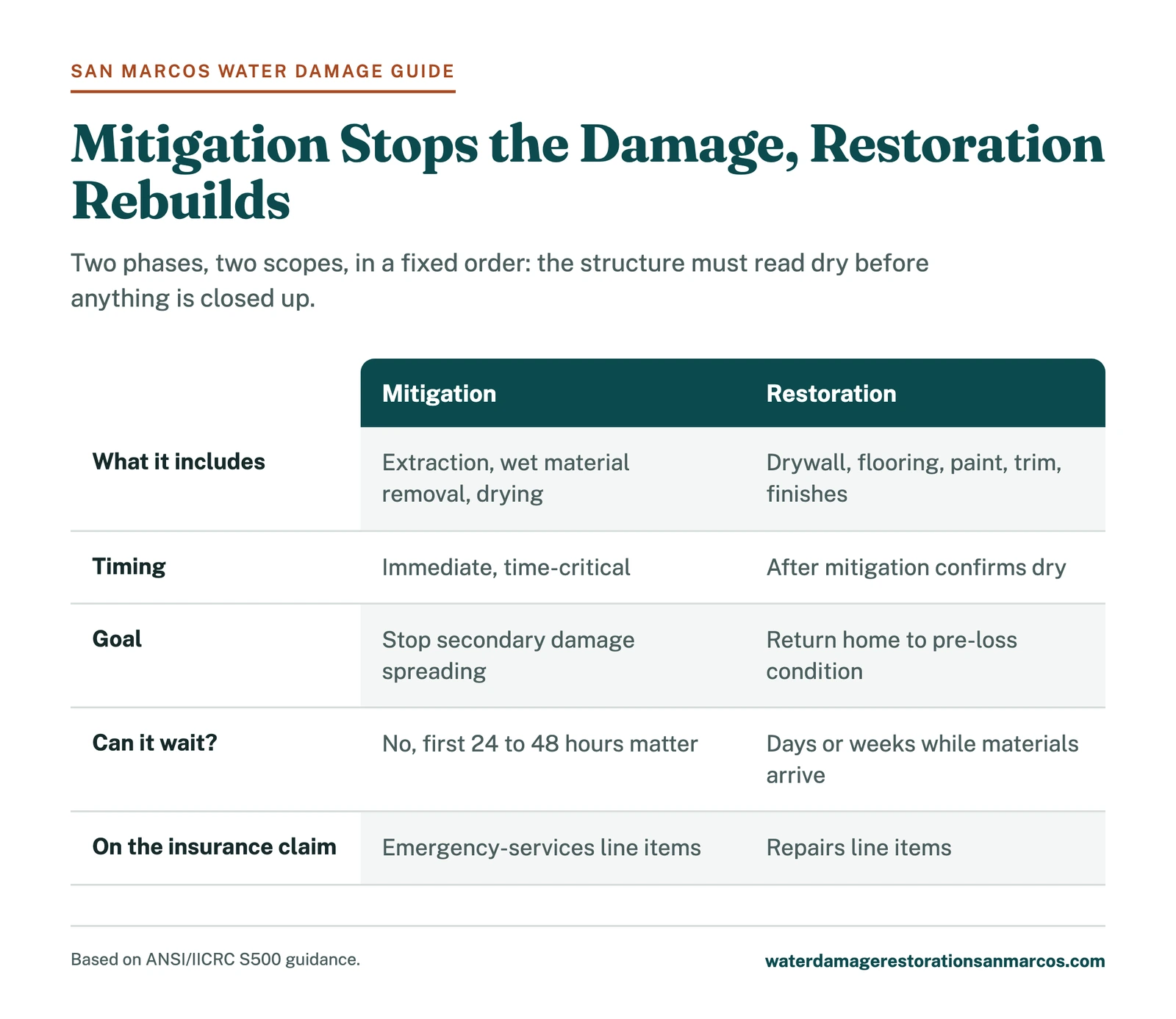
Text version of this infographic
Mitigation Stops the Damage, Restoration Rebuilds. Two phases, two scopes, in a fixed order: the structure must read dry before anything is closed up.
| Item | Mitigation | Restoration |
|---|---|---|
| What it includes | Extraction, wet material removal, drying | Drywall, flooring, paint, trim, finishes |
| Timing | Immediate, time-critical | After mitigation confirms dry |
| Goal | Stop secondary damage spreading | Return home to pre-loss condition |
| Can it wait? | No, first 24 to 48 hours matter | Days or weeks while materials arrive |
| On the insurance claim | Emergency-services line items | Repairs line items |
Based on ANSI/IICRC S500 guidance.
What Water Mitigation Involves
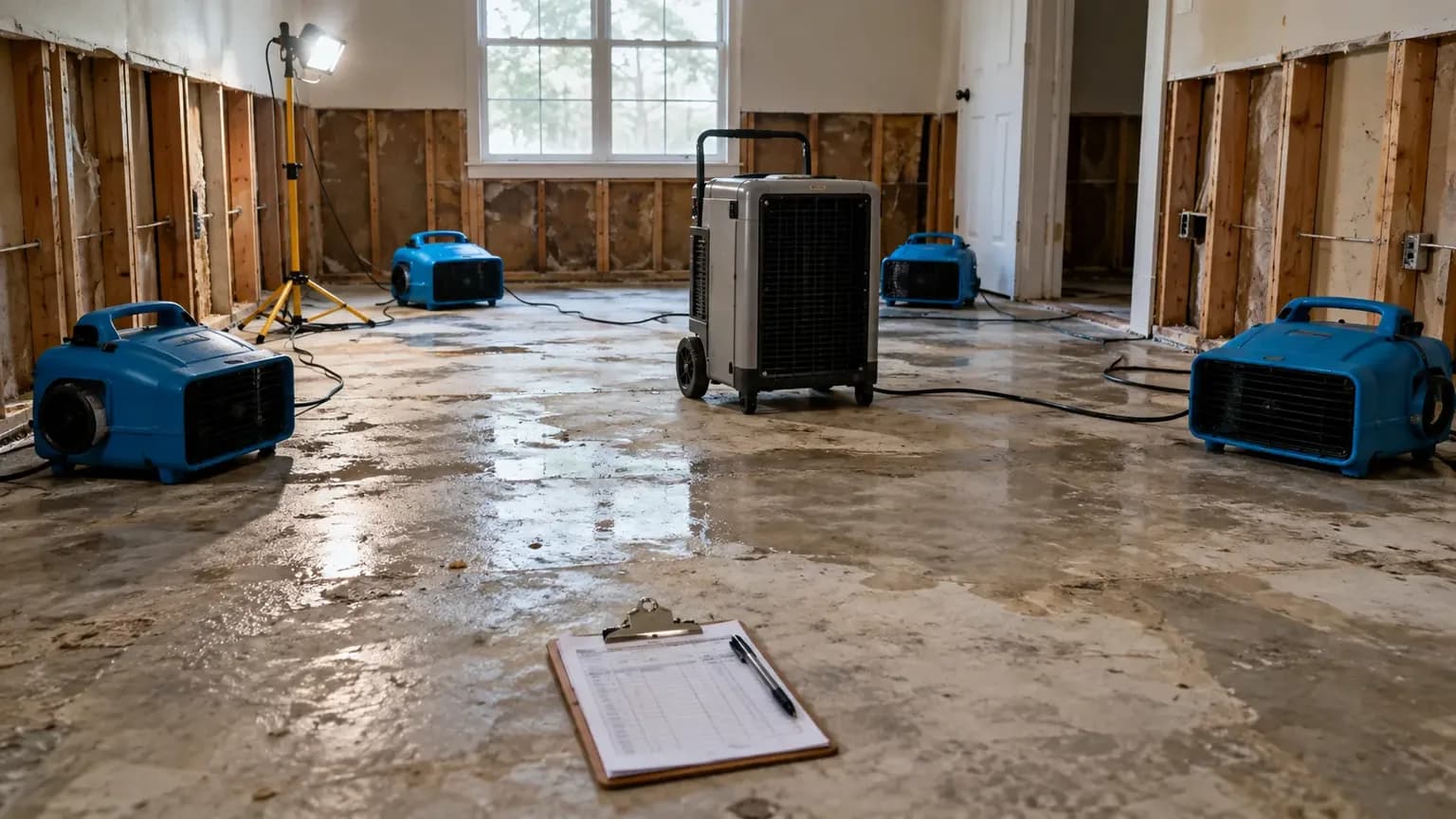
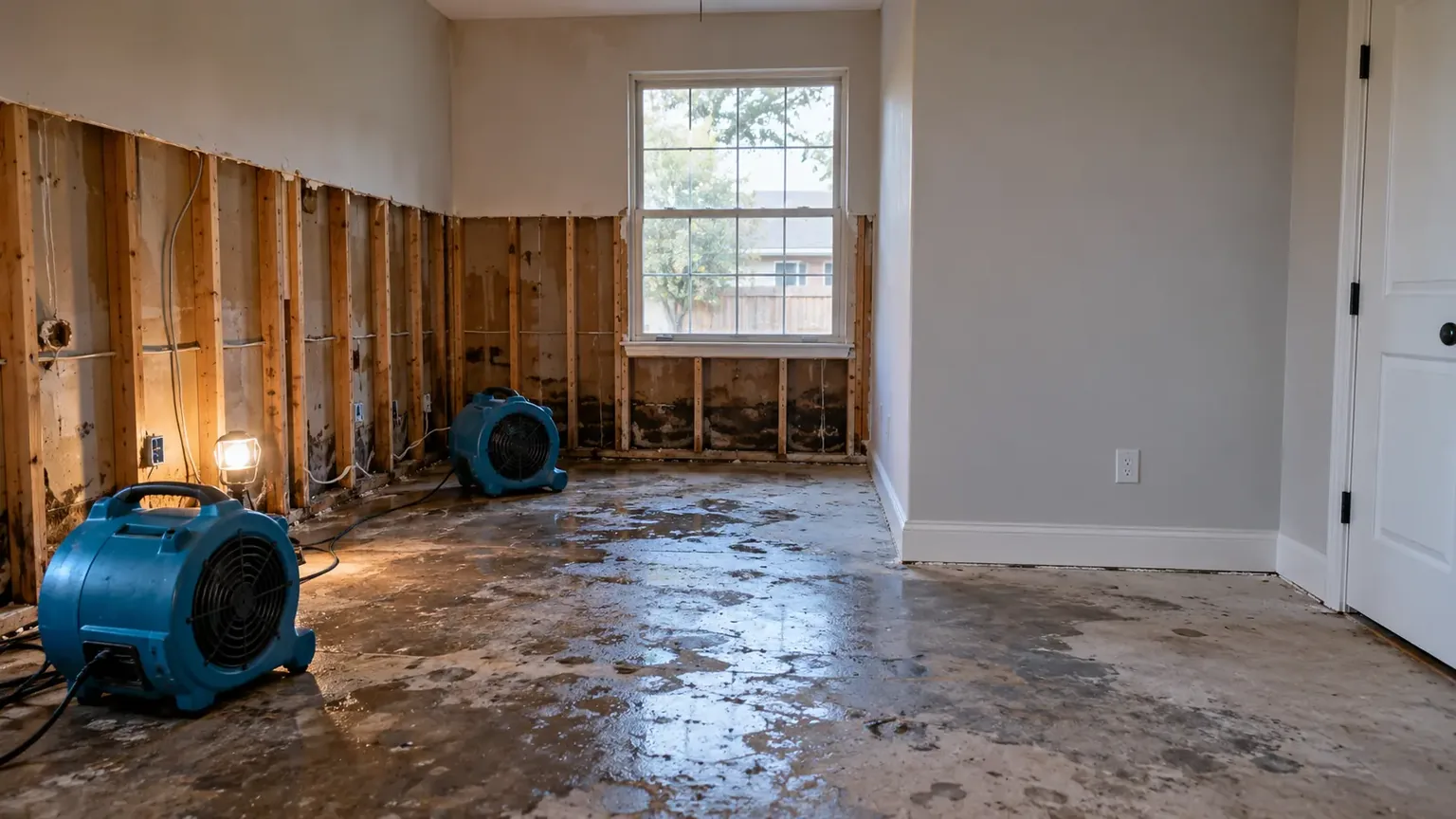
Mitigation is the panic stage. It starts with emergency water extraction, then removal of anything too saturated to save, then structural drying until moisture readings confirm the affected materials are dry-to-standard, a measured target rather than a feel or a guess.
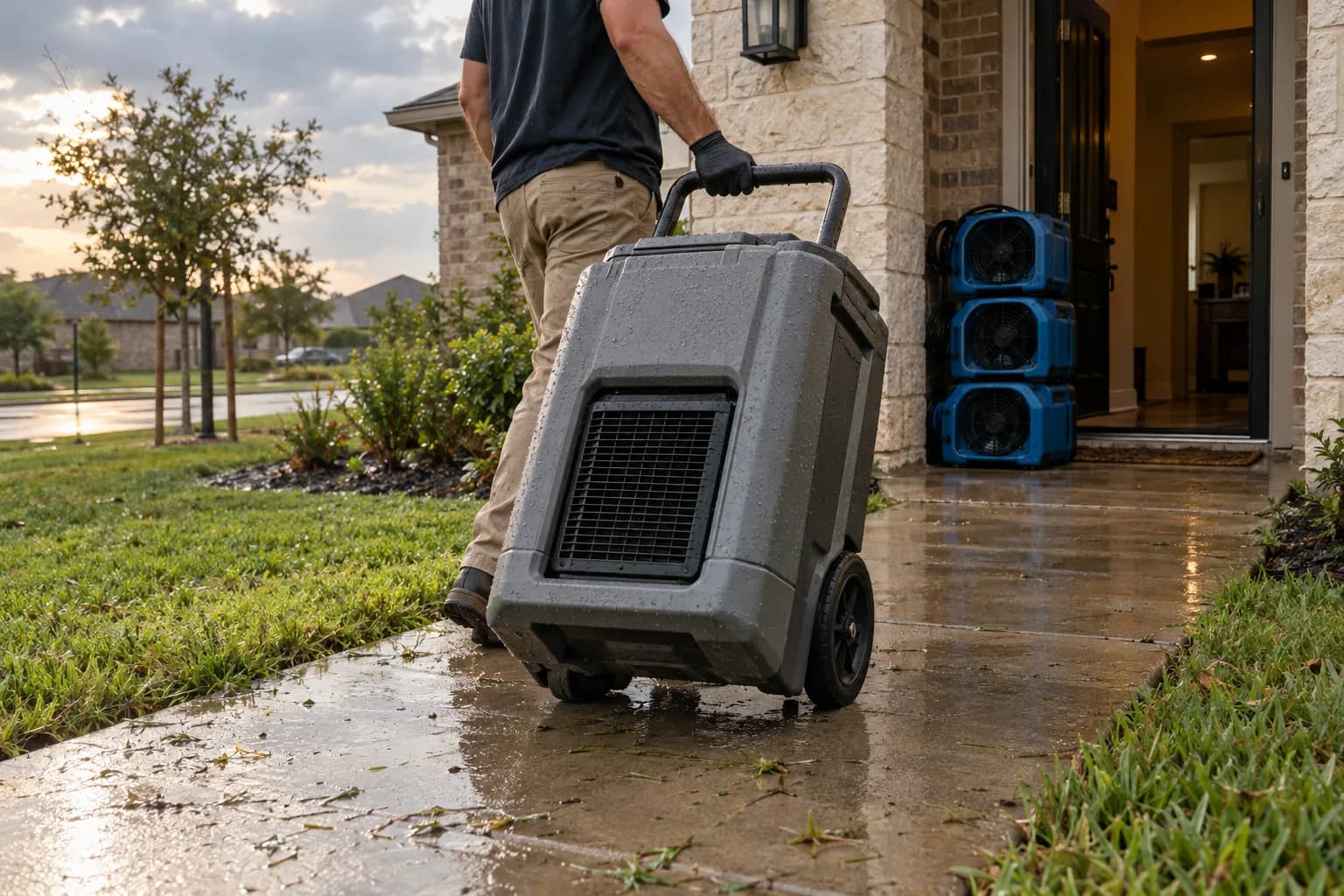
Truck-mounted units handle volume, portable extractors handle tight or upstairs rooms. Out goes soaked carpet pad, swollen baseboard, and drywall that wicked water up the wall. Then air movers and LGR dehumidifiers pull bound moisture out of framing, subfloor, and concrete.
The whole phase is a clock. The first 24 to 48 hours decide how much secondary damage you're stuck with, because every hour water sits, it migrates farther and the contamination risk climbs. Mitigation is the part that cannot wait for an insurance approval to land.
Get water extracted and dried before it spreads. Request service.
What Water Restoration Involves
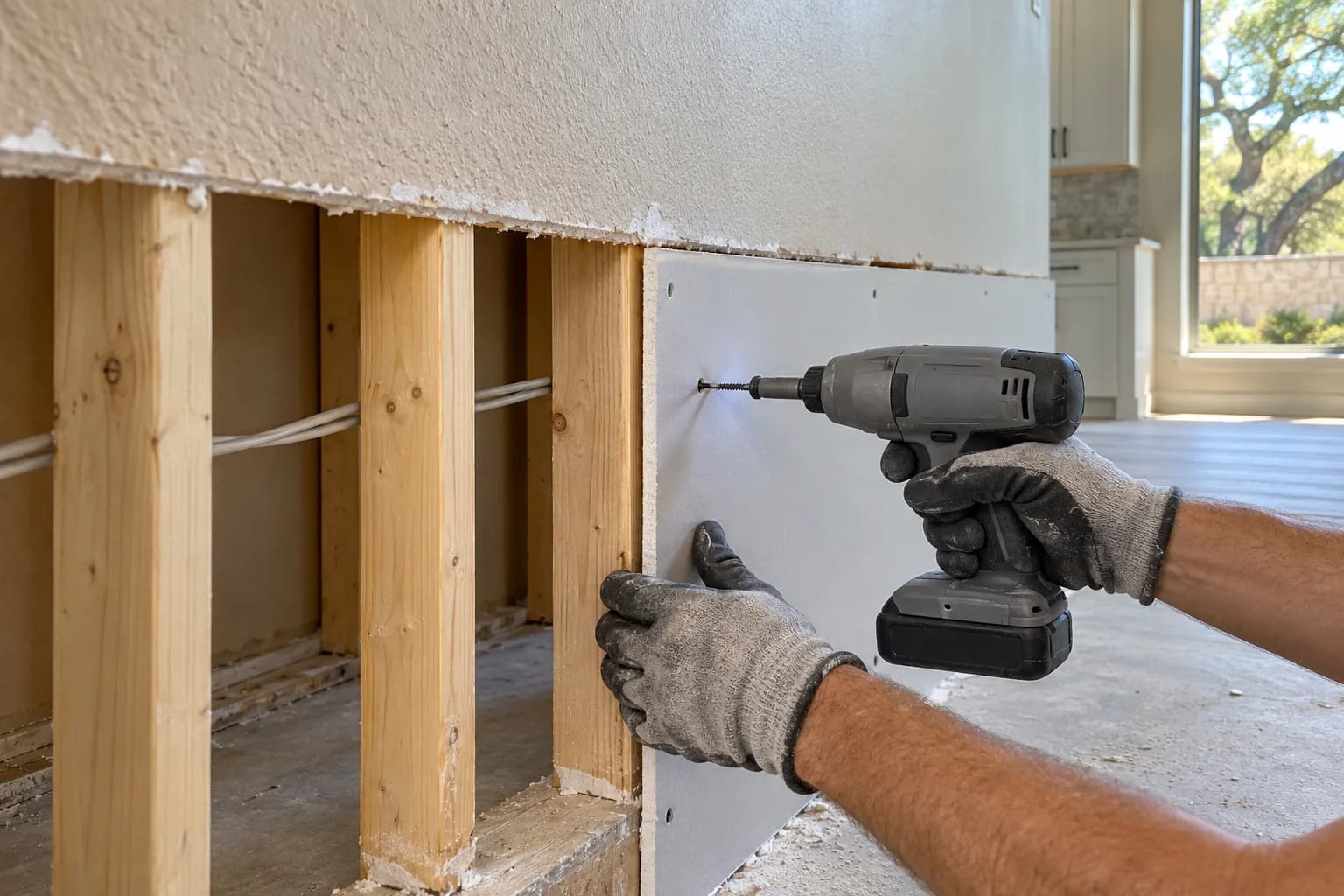
Restoration is the rebuild. It is the part you actually see when it's finished. Here that means new drywall goes up where wet board was cut out, flooring gets replaced, trim goes back, walls get painted, and the room returns to pre-loss condition through water damage repair and reconstruction.
The work here looks like remodeling, because in a sense it is, just remodeling driven by a water loss instead of a design choice. Restoration isn't time-critical the way mitigation is. It can wait days or weeks while materials are ordered. What it can't do is start early.
The scope can be small or sweeping. A clean-water leak under a kitchen sink might mean one cabinet base, a strip of flooring, and a coat of paint. A flooded ground floor in a slab-on-grade San Marcos home is a different project. In practice that means replacement flooring across several rooms, lower drywall and insulation cut out at a consistent height, new baseboard, and repainting where the water line ran. The bigger the affected footprint, the longer the rebuild, which is why a restoration timeline only firms up once mitigation has confirmed exactly what came out and what stayed.
Why Mitigation Always Comes First
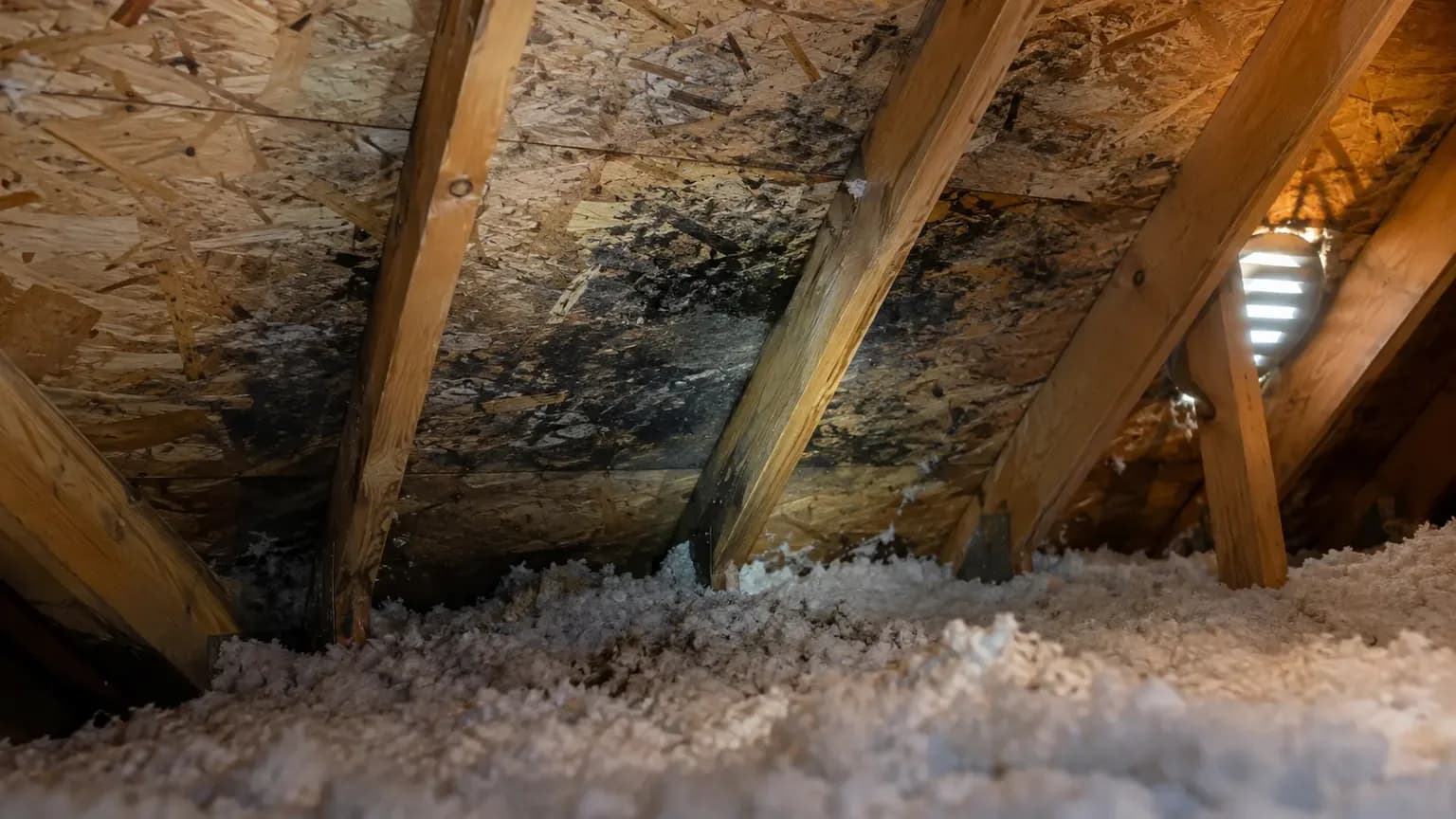
You cannot rebuild over wet framing. Hang fresh drywall on studs still holding moisture and you have sealed a mold problem inside the wall, where you won't find it until it smells. Flooring over a damp subfloor warps, buckles, and fails. The sequence isn't a preference, it's physics.
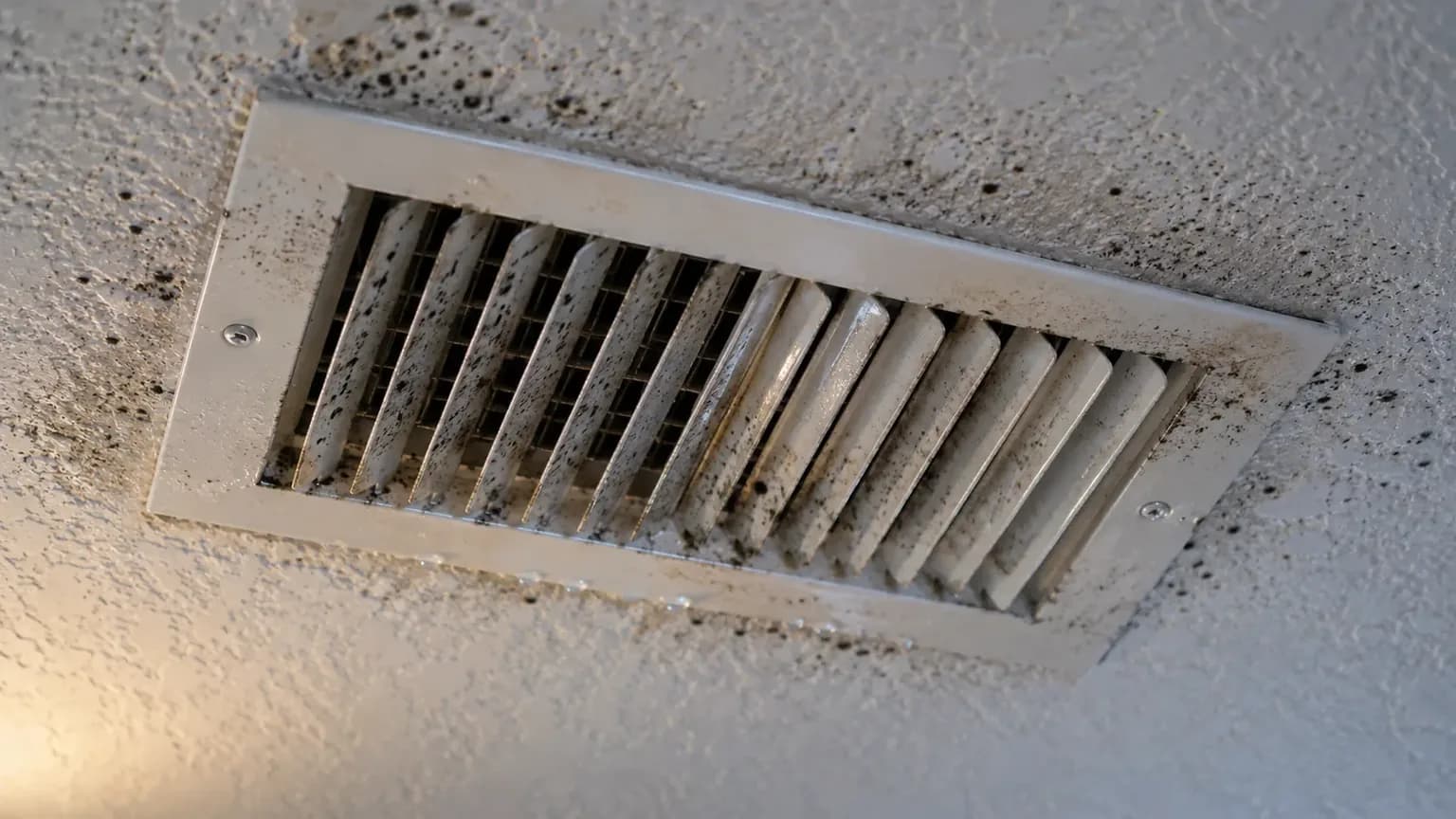
Mitigation dries the structure to a documented standard first, and only then does restoration close everything back up. Central Texas makes this stricter, not looser. Warm, humid air is exactly what mold wants. Skip the order and you're not saving time, you're booking a second job.
How Mitigation and Restoration Show Up on Your Insurance Claim
Two scopes, not one. On most water claims, mitigation and restoration are billed separately. Mitigation lands under emergency-services line items and restoration lands under repairs. They are sometimes approved at different times, because insurers want the emergency damage stopped before the rebuild scope is finalized.
This is the part nobody explains, and it's the root of the double-billing fear. Seeing both on your paperwork is completely normal. Two scopes, not one. It's not the same work charged twice, it's two phases with different labor and materials. Coverage depends on the cause of the water, not which phase the work falls under, which is why documenting the source matters from hour one. For the full mechanics, see how a Texas water damage insurance claim works.
The Advantage of One Team for Both
When one company handles mitigation and a different contractor handles the rebuild, there is a handoff, and handoffs are where things fall through. The drying crew's notes don't match the rebuild crew's assumptions. The moisture documentation lives in two systems. Nobody owns the whole scope.
Here's where the two-phase structure can quietly cost you. Out-of-town franchises and Austin operators often run this way, subcontracting the rebuild to whoever's available. Using one team from extraction through reconstruction keeps a single owner on the scope and the documentation in one record for your insurer. One record, one crew. That's the practical benefit, not a guarantee, just one less seam for problems to slip through.
Written by the Water Damage Restoration San Marcos team
Local water-damage restoration in San Marcos, TX and Hays County. Our guidance follows the ANSI/IICRC S500 and S520 reference standards the industry plans around. Questions about your situation? Call (512) 778-8417, we answer 24/7.