San Marcos water damage guide
Water Damage Lessons From the San Marcos, TX 2015 Flood
The water damage San Marcos saw during the 2015 floods still shapes how the river-corridor neighborhoods think about a rainy spring. Over one Memorial Day weekend, the Blanco River rose from a quiet stream to a record crest, tore through homes from Wimberley down into Hays County, and left families sorting through what the water left behind. This is not a sales story. It is what those floods taught about recovering from water damage, written by people who pay close attention to the rivers that run through our work, including water damage restoration in Wimberley along the same Blanco corridor.
Published · Updated
What Happened in the San Marcos 2015 Flood?
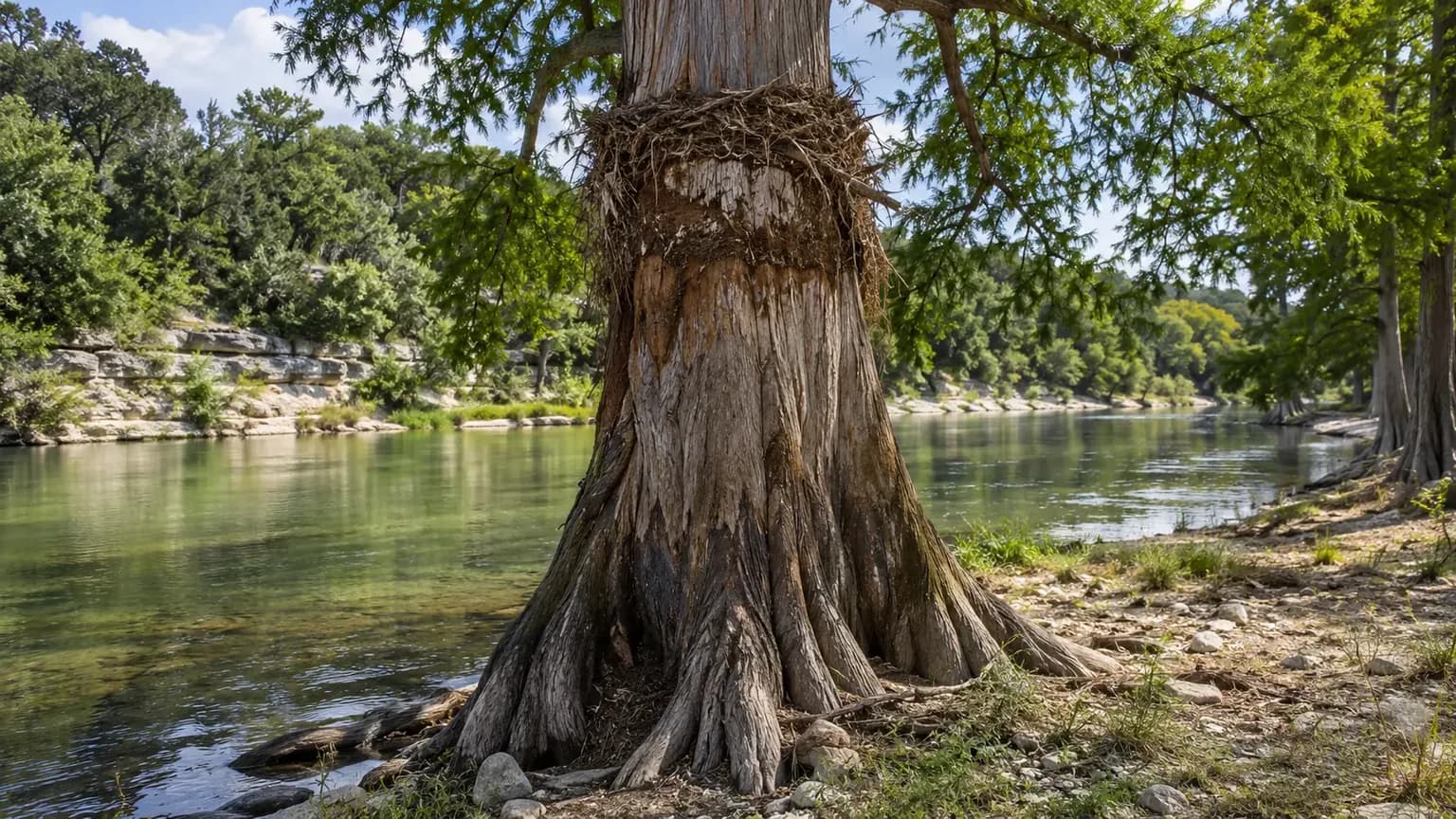
In May 2015, the Memorial Day flood sent the Blanco River to a record crest of about 40.21 feet, destroying more than 2,000 homes across Hays County and killing at least 12 people, with Blanco Gardens among the hardest hit. A second flood struck that October.
That repeat was a stark reminder of how the area's flood risk returns.
The numbers are sobering, and they deserve to be stated plainly. The river rose mostly overnight. People who went to bed beside a calm channel woke to water in their living rooms, and Blanco Gardens, which sits low along the river corridor, took some of the worst of it. We say all of this carefully, because behind every statistic is a neighbor who lost something. The point is not to relive the loss. It is to learn from what the water did so the next storm does less harm.
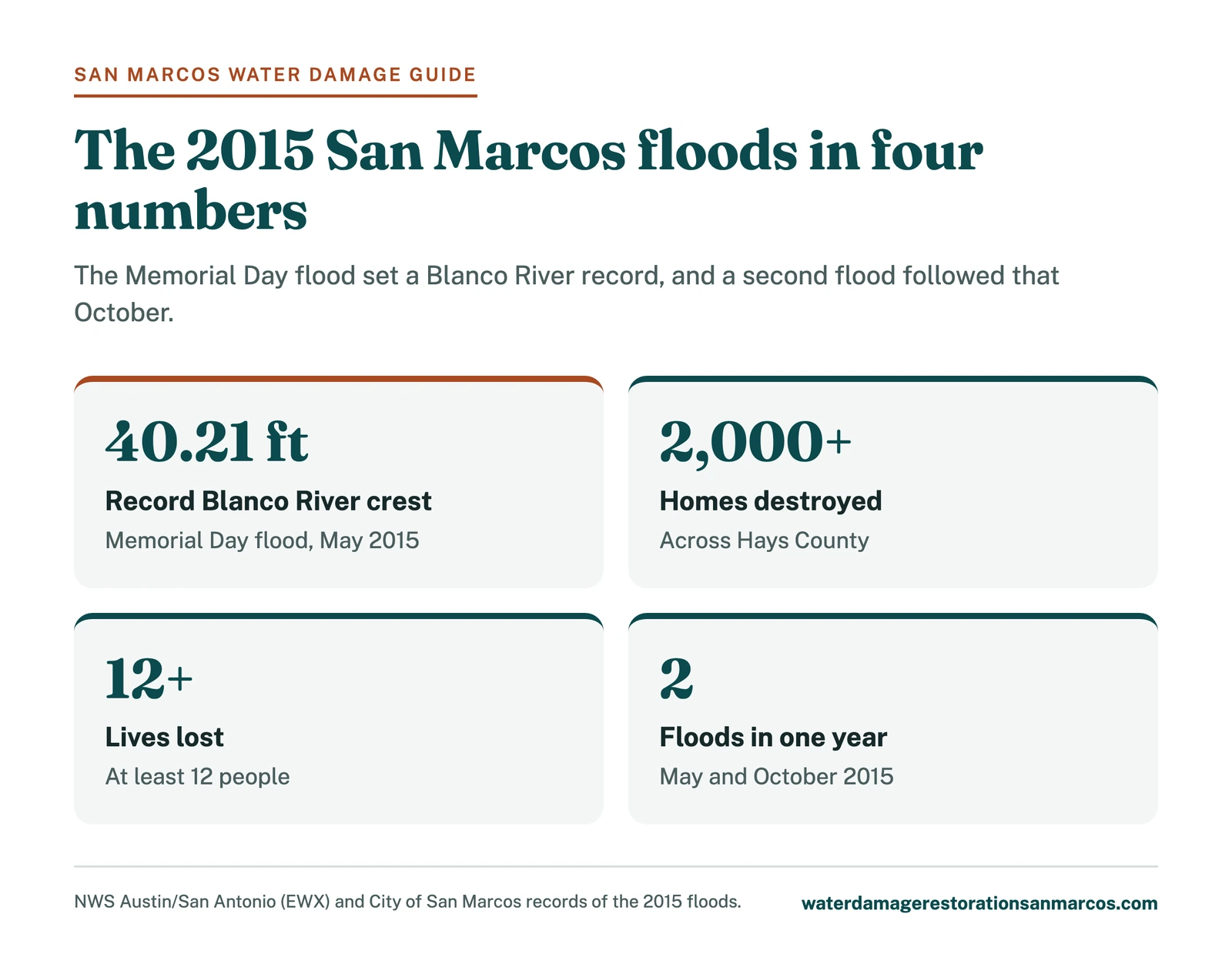
Text version of this infographic
The 2015 San Marcos floods in four numbers. The Memorial Day flood set a Blanco River record, and a second flood followed that October.
- 40.21 ft Record Blanco River crest
- Memorial Day flood, May 2015
- 2,000+ Homes destroyed
- Across Hays County
- 12+ Lives lost
- At least 12 people
- 2 Floods in one year
- May and October 2015
NWS Austin/San Antonio (EWX) and City of San Marcos records of the 2015 floods.
Why San Marcos Floods So Fast (Flash Flood Alley)
Geography did this. San Marcos sits in a stretch of Central Texas where thin limestone soils and steep ground shed rain instead of soaking it up, and that runoff pours straight into the San Marcos and Blanco Rivers. A storm parked over the hills upstream can swell the river miles before the rain reaches your street.
That is the cruel part of living here. The danger often arrives ahead of the weather you can see. Rain that fell near Wimberley in 2015 became a wall of water downstream while the sky over parts of San Marcos looked almost ordinary. If you want the full mechanism behind it, we wrote a separate piece on why San Marcos floods so fast that walks through the limestone and the watershed. The short version. This is not bad luck repeating itself. It is the land doing exactly what limestone country does when the rain comes hard and fast.
The October 2015 Flood, Repeat Exposure
It happened twice. Five months after the Memorial Day disaster, an October flood, sometimes called the All Saints flood, hit San Marcos again. Families who were still drying out, still arguing with insurers, still deciding whether to rebuild, faced rising water a second time in a single year.
That repeat is the lesson most people miss. Flood risk here is not a once-in-a-lifetime event you survive and forget. The same conditions that produced May produced October, and they can line up again any year the storms cooperate. Treating 2015 as a freak outlier is exactly the mindset that leaves a home unprepared, because the river does not care that you already had your turn.
What the 2015 Floods Taught About Water Damage Recovery
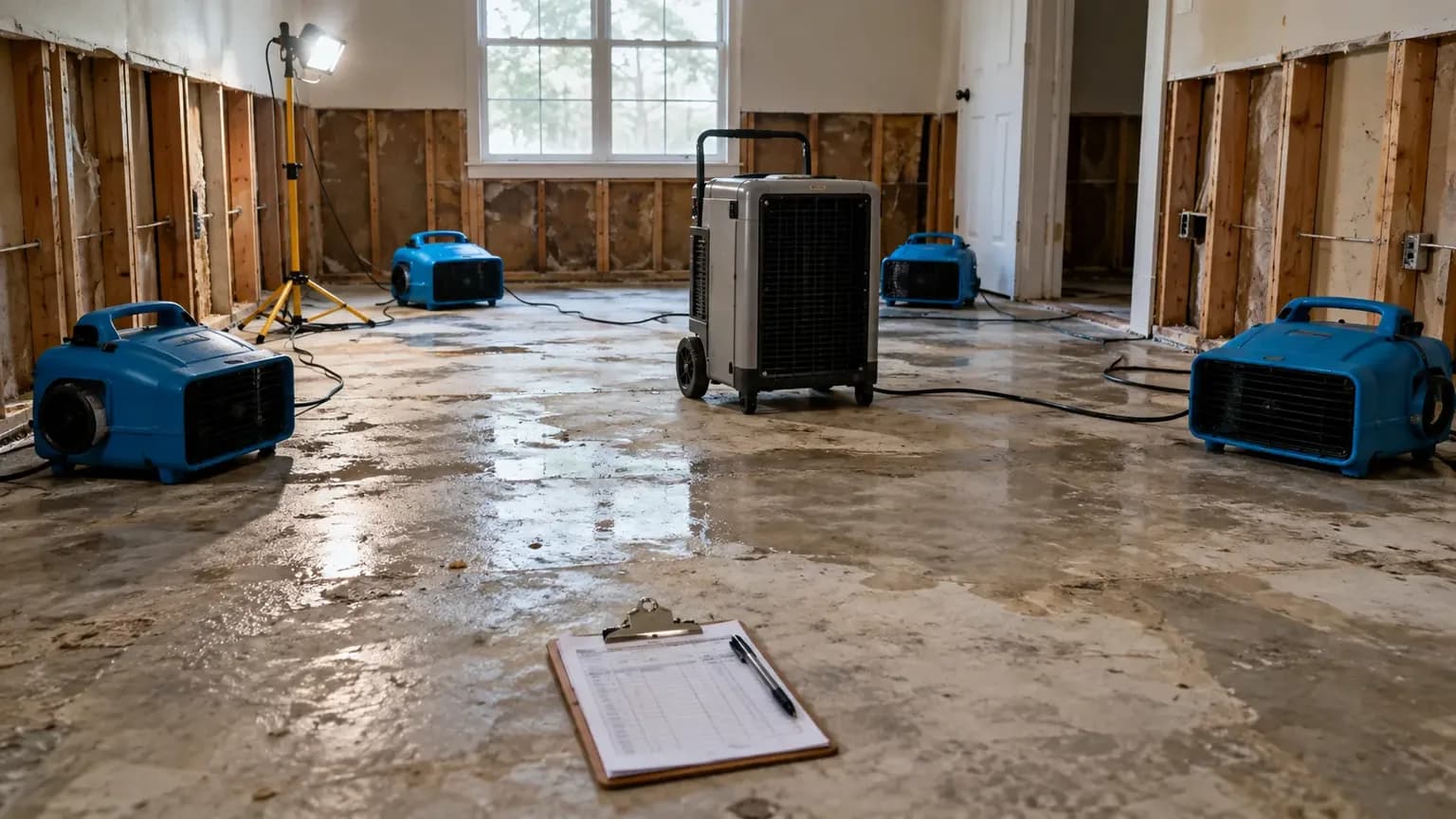
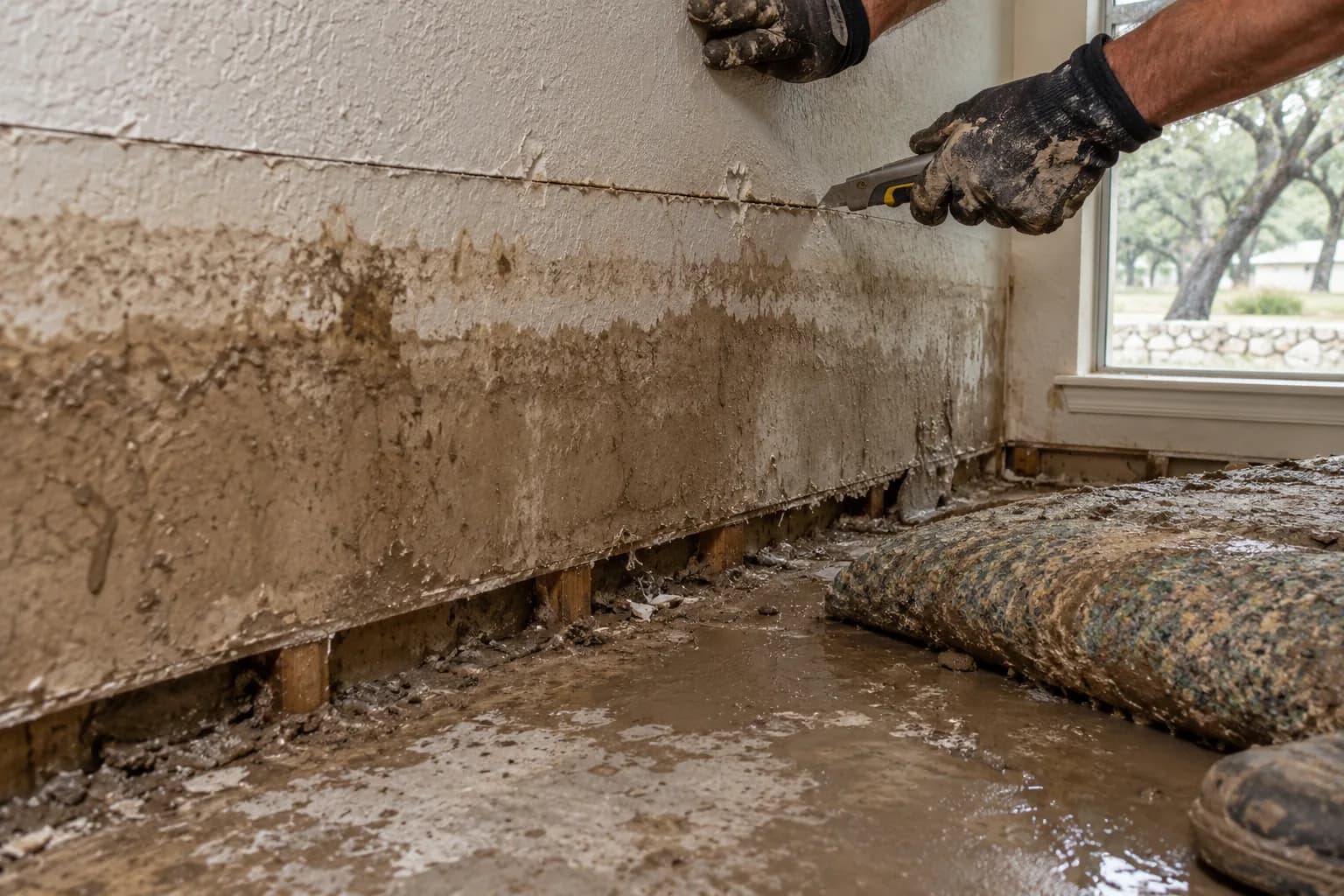
Speed decided everything. The 2015 floods were a hard reminder that the most damaging delays were not the floodwater itself but the days materials sat wet while the whole region competed for help. Homes where extraction started fast lost drywall; homes that waited lost framing.
Speed. That word carries most of the lesson, and the homes that waited often gained mold too.
River floodwater is not clean water. It carries sewage, fuel, mud, and whatever the current picked up along the way, which makes it Category 3 black water under restoration standards. That means soaked drywall, carpet, and pad generally come out rather than dry in place, and hard surfaces get cleaned and sanitized before anything goes back. Skipping that step to save a few hundred dollars is how a flooded house becomes a sick house.
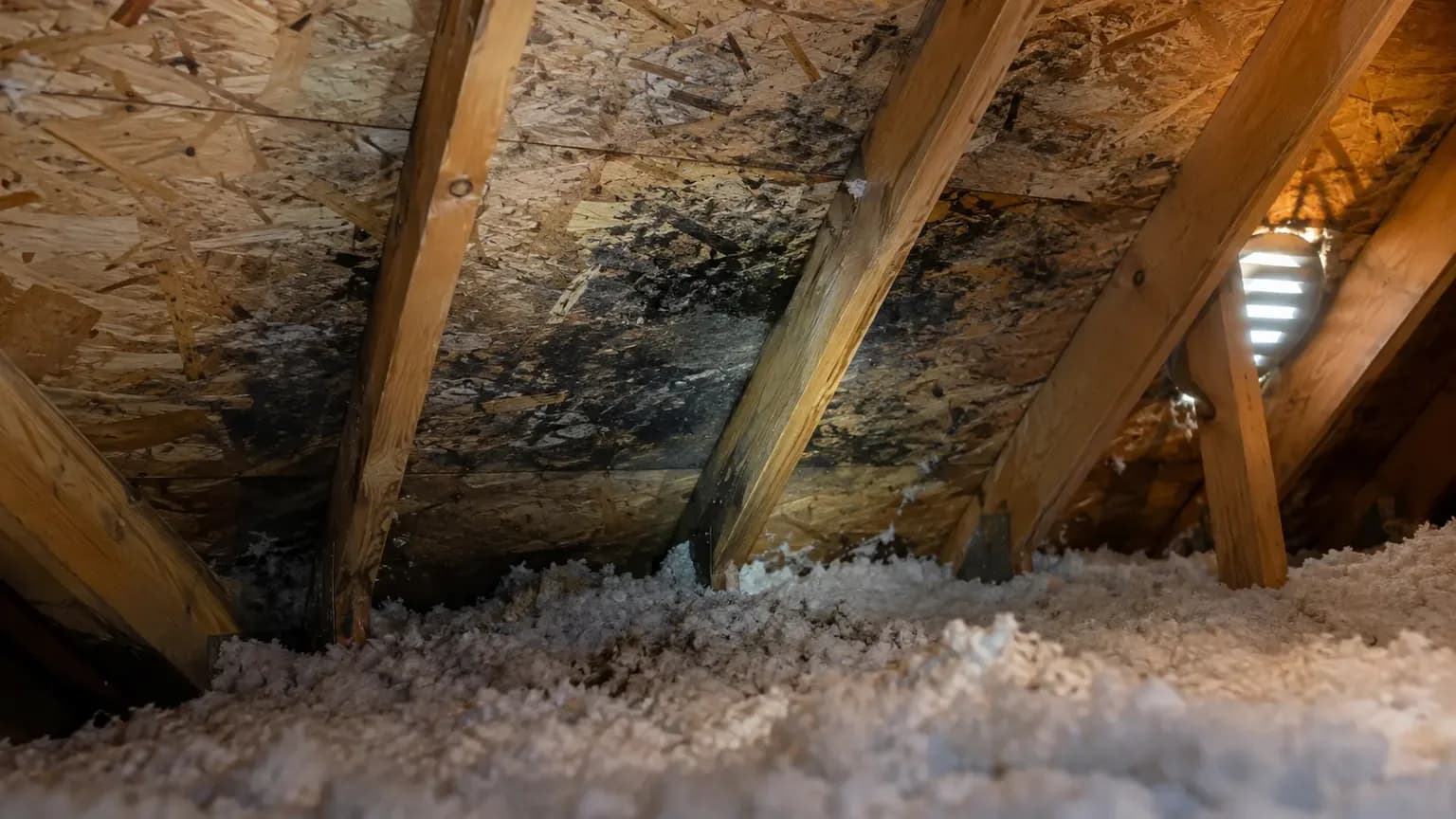
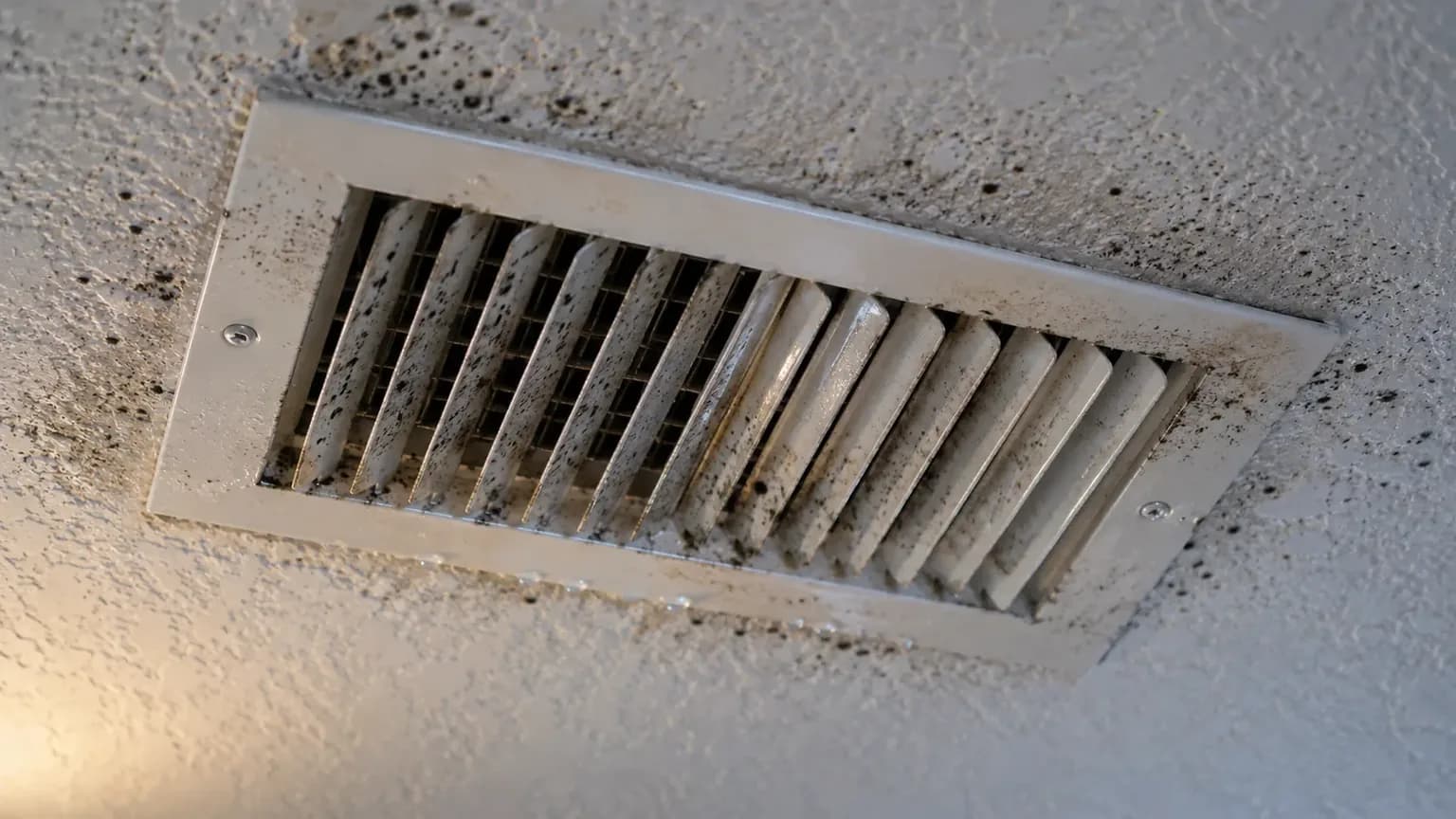
Mold is the second clock. In our humid climate, mold can take hold within roughly 24 to 48 hours of materials staying wet, so the window to extract and start drying is short. A home dried to standard in that window often stays sound. A home left wet for a week while the owner waited on a callback is a different, costlier project.
A few practical takeaways from 2015.
- Floodwater is contaminated. Treat it as a health hazard, not just a mess.
- The first day matters most. Extraction and drying that start fast save materials.
- Photograph everything before you remove it, for both insurance and your own peace.
- Dry to a documented standard, not to "feels dry." Hidden moisture is what feeds mold.
When the next river event comes, fast and documented flood damage cleanup in San Marcos is what separates a home that recovers cleanly from one that fights mold for months.
We know the rivers, call us, (512) 778-8417
Flood Insurance Lessons
Here is the part that stung the most in 2015. A standard homeowners policy in Texas does not cover flooding from rising river or surface water. Many of the homes that took on water that May were not in a mapped high-risk flood zone, and plenty of those owners assumed their regular policy had them covered. It did not.
Flood coverage comes through a separate policy, usually the National Flood Insurance Program, and the gap between what people thought they had and what they actually had turned an already brutal recovery into a financial one. We compare the two policies in detail in our guide to flood insurance vs homeowners insurance in Texas.
The honest takeaway is uncomfortable. Low-risk homes flooded too. Living outside a flood zone is not the same as being safe from floods, and the families who recovered fastest tended to be the ones who had separate flood coverage and a record of their belongings before the river ever rose.
Being Ready Before the River Rises
You cannot stop the Blanco from cresting. You can decide ahead of time how your household will respond, and that decision is worth more than any sandbag. Arrange flood insurance early, photograph your rooms and valuables, know your evacuation route, and keep the number of a local cleanup team somewhere you can find it at 2 a.m.
Spring through early summer is when our flash-flood risk peaks, so the time to get ready is the quiet stretch before the storms, not the morning the forecast turns. Plan now, not then. We put together a full San Marcos flood season preparation checklist for exactly that reason. If you live in Blanco Gardens, along the river through downtown, or downstream toward Martindale, treat preparation as routine maintenance, the same way you'd service an HVAC unit before August.
Being a respectful local means telling you the truth. Preparation reduces loss, it does not erase the risk. The river will do what the river does. What you control is how ready you are when it does.
Written by the Water Damage Restoration San Marcos team
Local water-damage restoration in San Marcos, TX and Hays County. Our guidance follows the ANSI/IICRC S500 and S520 reference standards the industry plans around. Questions about your situation? Call (512) 778-8417, we answer 24/7.