San Marcos water damage guide
How Fast Does Mold Grow After Water Damage in Central Texas?
How fast does mold grow after water damage? Within 24 to 48 hours of the water getting in, and around San Marcos the humid Central Texas air shortens even that window. Here it runs faster. If you just had a leak, a slab seep, or river water sitting on the floor, you still have time to stop it, but the clock is real. Dry it fast. Done quickly, most leaks never turn into a mold job.
Published · Updated
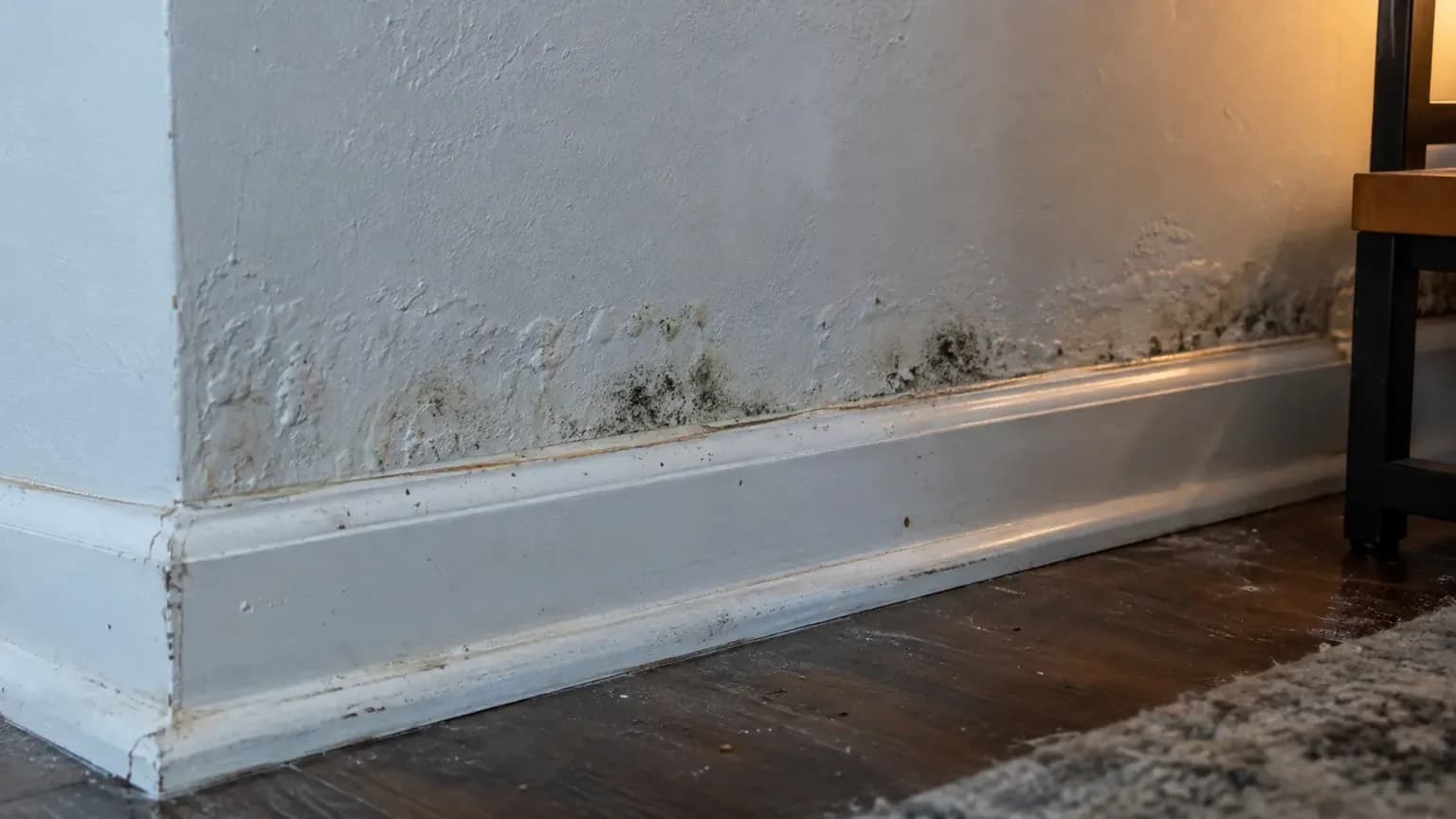
How Fast Does Mold Grow After Water Damage?
Mold can begin growing within 24 to 48 hours after water intrusion, and the humid Central Texas climate around San Marcos accelerates it. The EPA advises that if a wet area is not fully dried within 24 to 48 hours, you should assume mold growth has started.
Speed wins here. Fast extraction and documented drying are what keep a leak from becoming a mold job.
Here is the rough timeline most restoration crews work against.
| Time since the water | What is happening |
|---|---|
| 24 to 48 hours | Mold can start. Spores already in the home wake up on wet, porous material. |
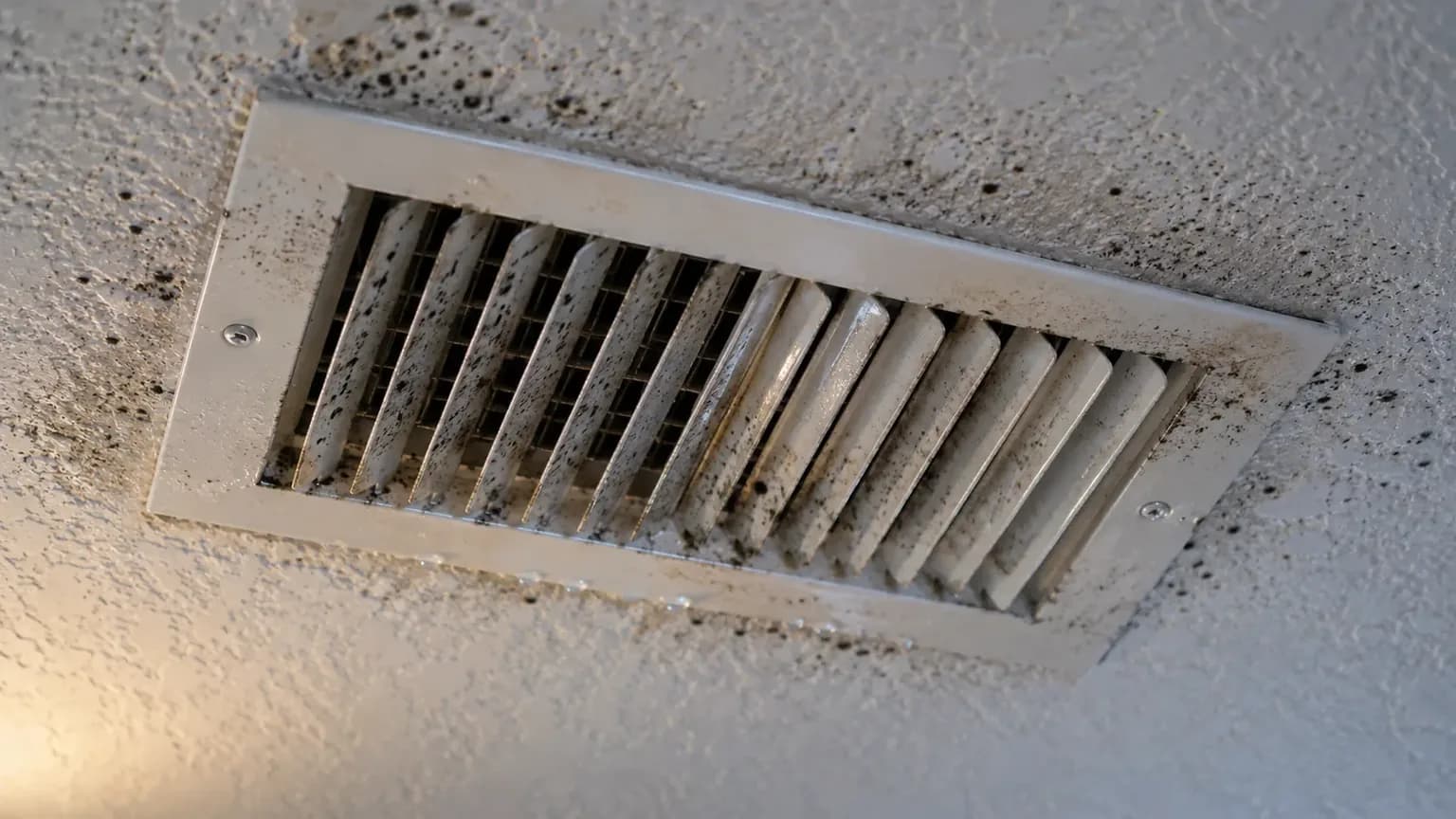
| 48 to 72 hours | Growth often becomes visible. You may see fuzzy patches or staining at baseboards. |
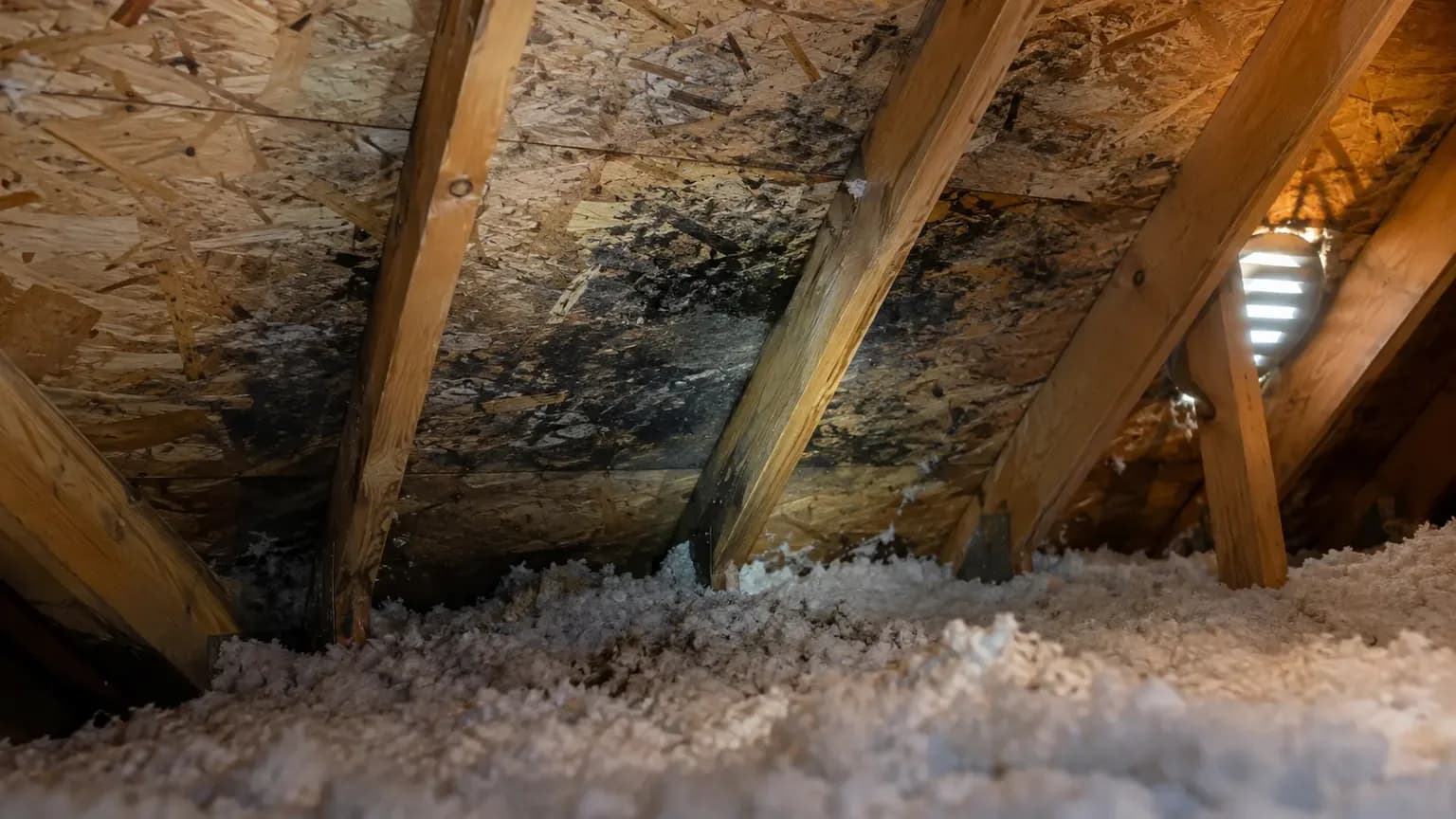
| 1 week or more | Colonies are established. Remediation is usually needed, not just drying. |
Spores are everywhere already. They drift in on shoes, settle in carpet, ride the AC. They sit harmless and dormant until they get the one thing they were waiting for. Water. Add moisture to a porous surface and elevated indoor humidity, and the dormant spore has what it needs to germinate, which is exactly why the first two days after any water event matter more than anything you do in week two.
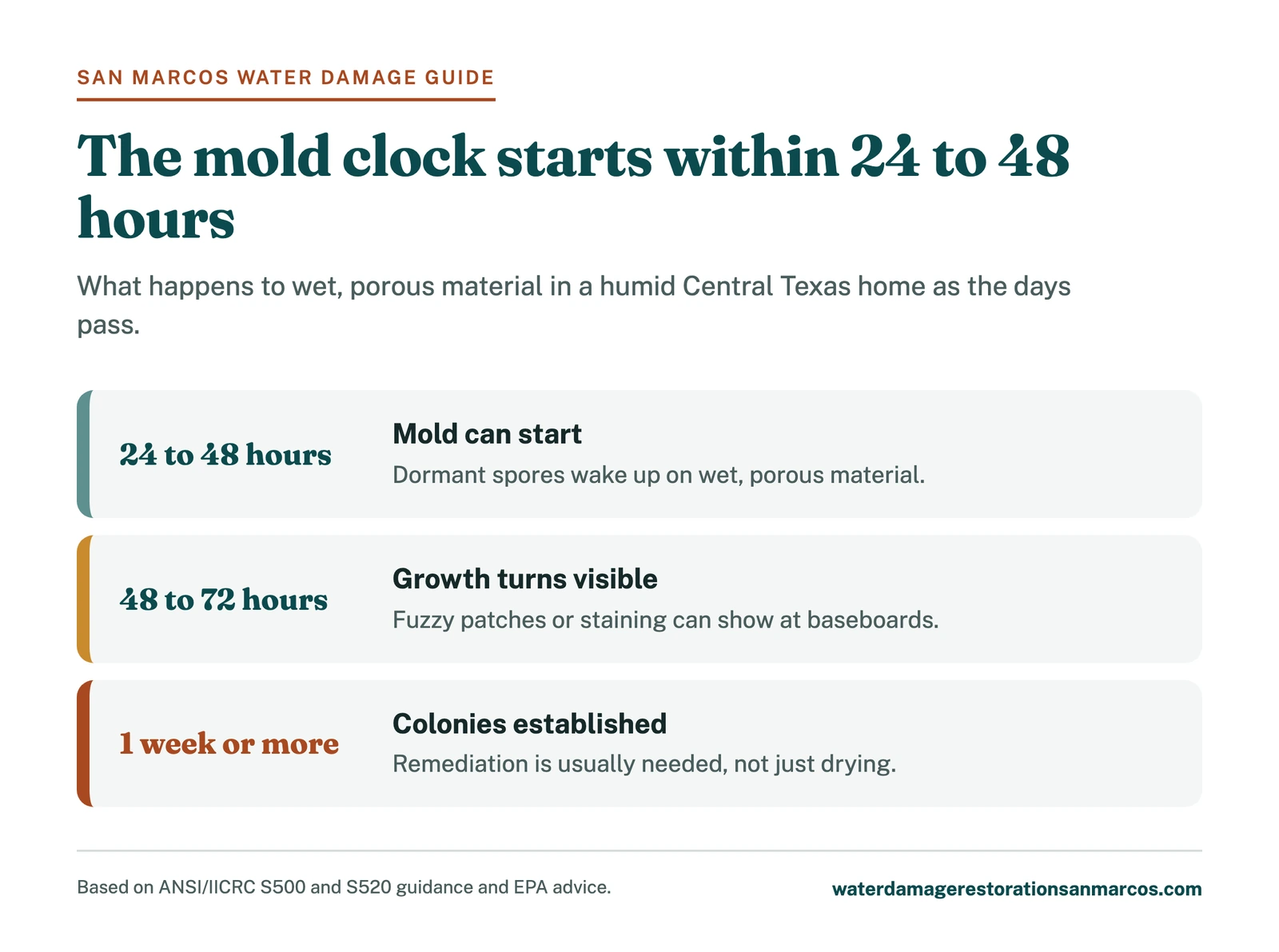
Text version of this infographic
The mold clock starts within 24 to 48 hours. What happens to wet, porous material in a humid Central Texas home as the days pass.
- 24 to 48 hours Mold can start
- Dormant spores wake up on wet, porous material.
- 48 to 72 hours Growth turns visible
- Fuzzy patches or staining can show at baseboards.
- 1 week or more Colonies established
- Remediation is usually needed, not just drying.
Based on ANSI/IICRC S500 and S520 guidance and EPA advice.
Can Mold Grow in 24 Hours?
Yes, mold can begin growing within 24 hours when moisture and humidity are present, though you usually will not see it that fast. Beginning and visible are two different moments. The colony starts at the microscopic level inside the first day, then surfaces as something your eye catches over the next one to three days.
That gap is the trap. People mop up the visible water, feel the floor, and decide it dried out fine. Meanwhile the spore that landed in the drywall paper or the carpet pad is already feeding. Quick math from the field. A clean-water spill caught and dried inside 24 hours rarely molds at all, while the same spill left for a long weekend almost always does. Speed beats severity. A small leak ignored for five days is a worse mold risk than a big leak extracted the same afternoon.
Why Central Texas Humidity Makes Mold Worse
Humidity is the accelerant nobody sees. Mold needs moisture, and around San Marcos the air itself supplies plenty most of the year. When indoor relative humidity climbs past roughly 60 percent, mold can keep feeding even after the standing water is gone.
The porous materials never get a chance to fully release their moisture back into drier air.
Summer is the hard stretch. The same heat that has everyone cranking the AC also loads the air with water vapor, and air conditioning is doing double duty as your dehumidifier. When a unit underperforms or a condensate line clogs, indoor humidity creeps up and the drying that should be happening stalls out. The AC matters. I have walked into rooms in July where the floor felt dry to the touch and the moisture meter still read soaked, purely because the ambient humidity was holding moisture in the material. If you want the deeper seasonal picture, our guide to summer humidity and mold risk in Central Texas covers the AC-condensate angle in detail.
Why "Surface Dry" Isn't Dry
Surface dry is the most expensive mistake homeowners make. A room can look bone dry, feel dry underfoot, smell fine on day three, and still be quietly growing mold inside the wall cavity or under the floor. Mold does not need a puddle, only moisture in porous material plus humidity.
Drywall, baseboard, subfloor, and carpet pad all hold water long after the surface has given up the show.
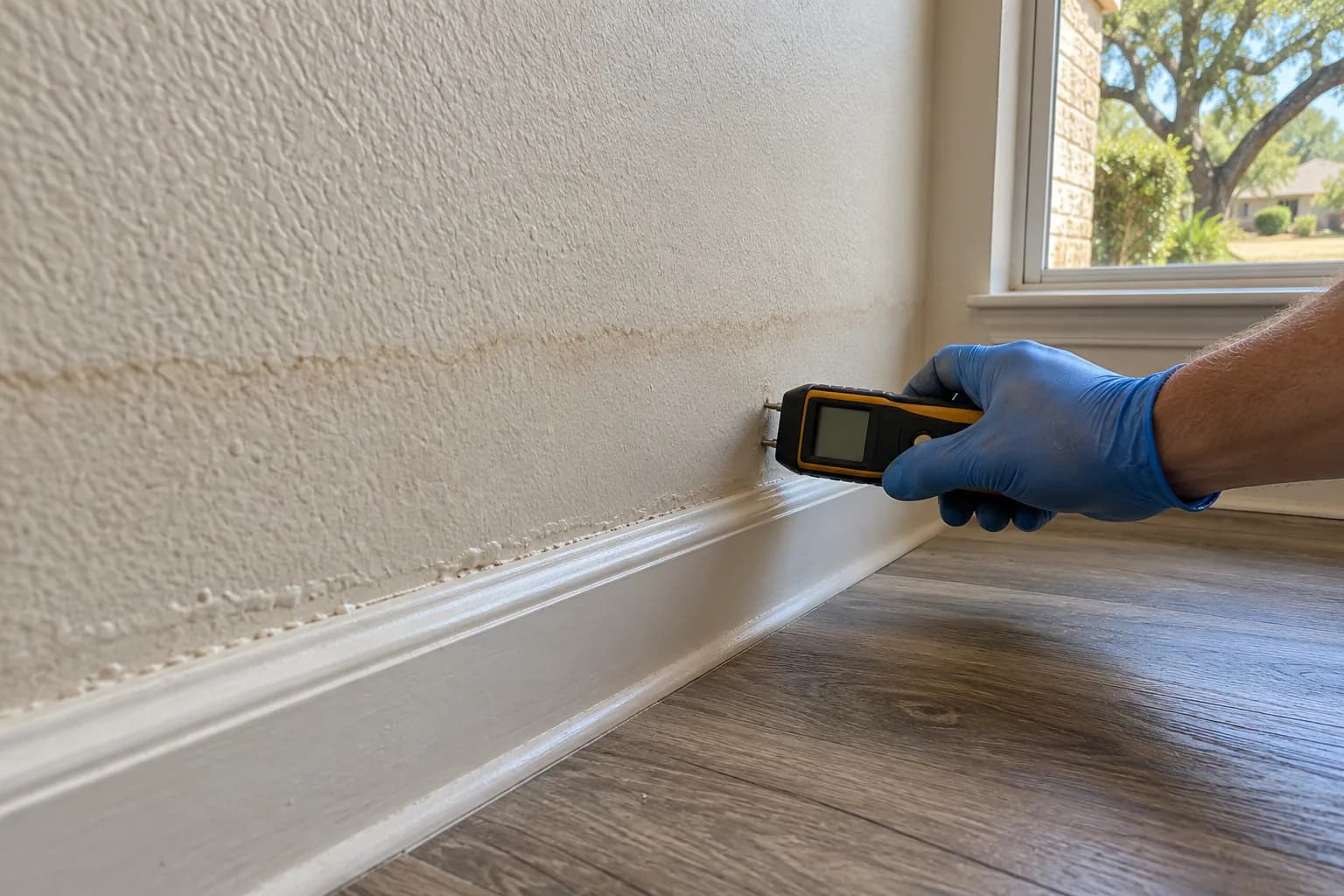
Here is the part that matters. The wall cavity behind the baseboard, the underside of the subfloor, the insulation, none of that air-dries on the same schedule as the visible surface. Water wicks up drywall and sideways into framing, then sits there in the dark with no airflow. It hides well. The only way to know a material is actually dry is a moisture meter reading, not a hand on the wall. That is the difference between air-drying and drying to a documented standard, where readings get logged daily until the material matches a dry baseline. Looks dry is an opinion. A meter reading is a fact.
How to Stop Mold After a Leak
Stopping mold is a race, and the steps are not complicated. They just have to happen fast. Find and stop the water source, extract everything standing, remove porous materials that stayed saturated, then run air movers and dehumidifiers until meters confirm a dry standard.
- Extract the water first. Standing water keeps feeding everything around it, so pull it out before anything else. Wet vac, pump, or a pro extraction unit for anything past a small spill.
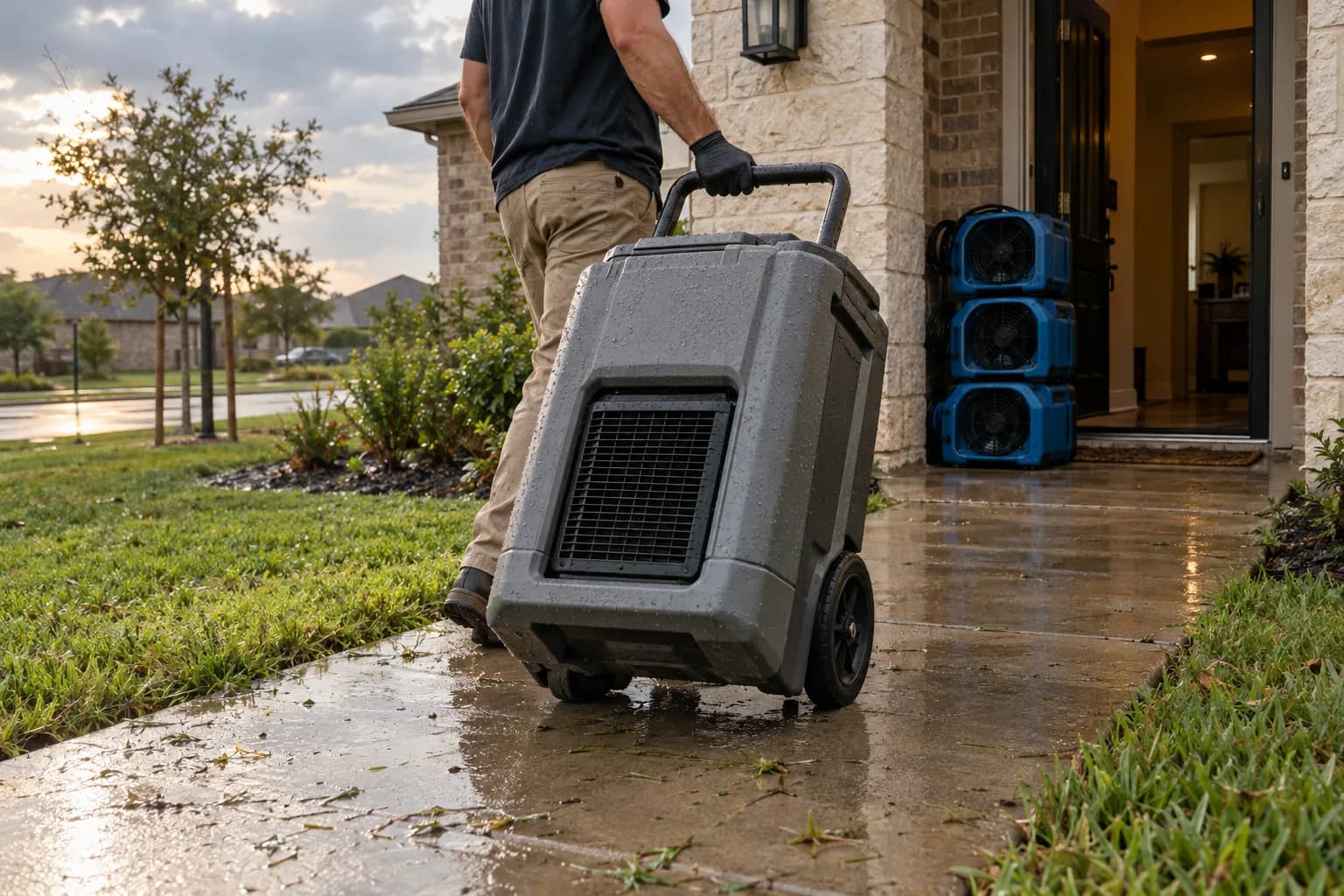
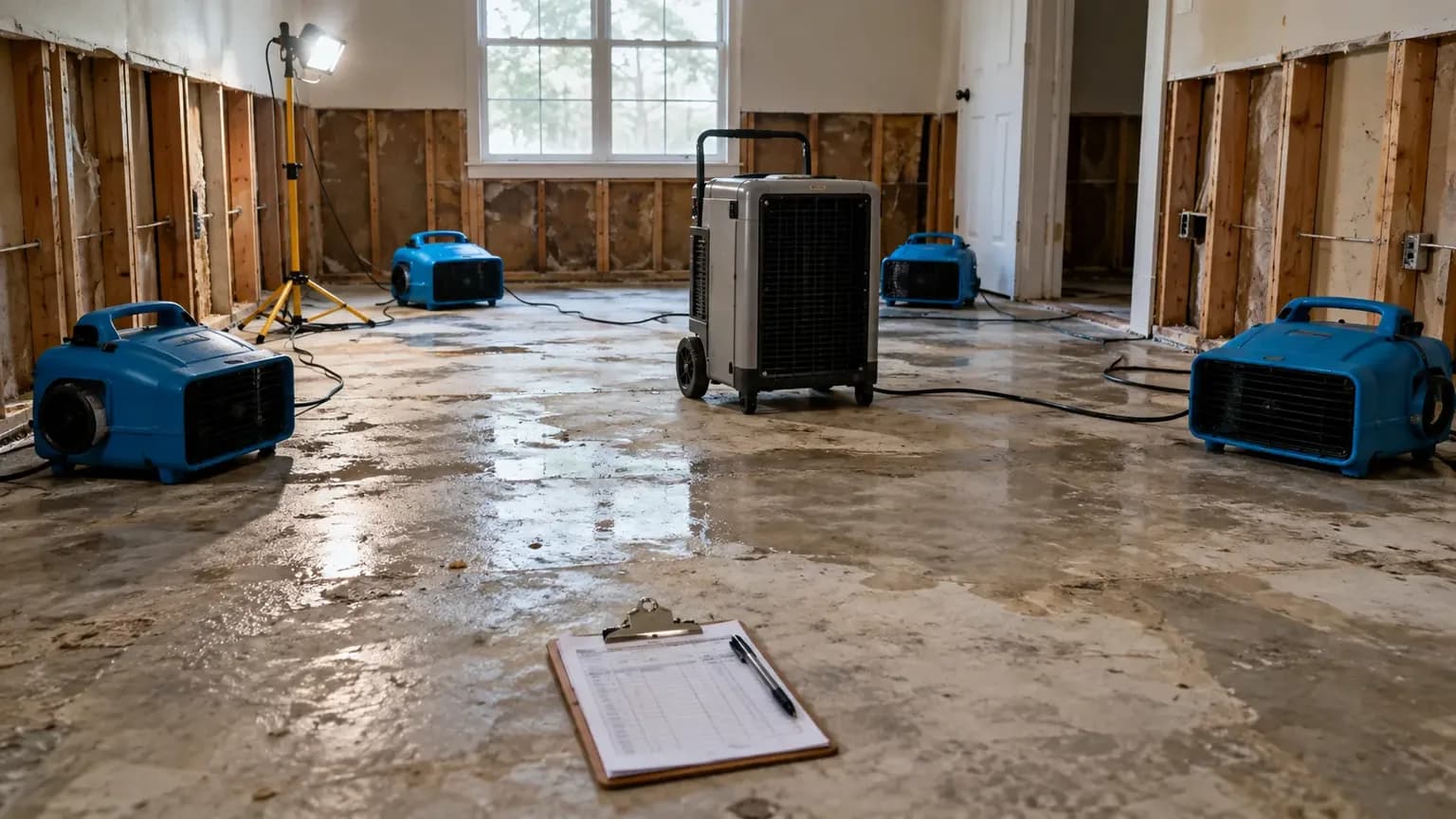
- Dry the materials, not just the air. Air movers across wet surfaces plus dehumidifiers pulling moisture out of the room work together, and that combination is exactly where most rented-equipment DIY drying falls short of a real recovery.
- Knock the humidity down. Get indoor relative humidity under 60 percent and keep it there until materials read dry. Run the dehu.
- Confirm with readings. Daily moisture meter checks tell you when the wall, floor, and framing are actually dry, not just the surface.
- Document as you go. Photos and readings protect you if mold or an insurance question comes up later.
When do you call a pro? If the water sat overnight, if it touched walls or flooring you cannot get fully dry yourself, or if it was anything dirtier than clean supply-line water. The first hour sets the tone, and our walkthrough on what to do first when your house floods maps out those opening moves. If mold has already taken hold, that shifts from drying into mold remediation in San Marcos. The short version is containment and removal, not a fan and hope.
Worried it's already started? Call us and we will talk through what you are seeing.
Is Mold From Water Damage Dangerous?
Mold from water damage can affect indoor air quality, and some people, especially those with asthma, allergies, or weakened immune systems, react to it more than others. That is reason enough to take visible mold seriously as both a health and a structural concern.
Some folks feel it. It is not reason to panic, and it is not something to self-diagnose. The type of mold and how far it has spread should be assessed by a professional rather than guessed at from a phone photo, and any health symptoms belong to a doctor, not a restoration blog. Get it looked at.
On the cleanup side, recognized mold remediation follows the ANSI/IICRC S520 standard, which calls for containment so spores do not spread during removal, HEPA filtration, and proper disposal of materials too far gone to save. We reference that standard as the way the work should be done. The honest takeaway is that a fast, documented dry-out is what keeps you out of remediation entirely, and that is always the cheaper, calmer path. If you are already past that point, our mold remediation cost ranges show what the work runs by area of the home.
Written by the Water Damage Restoration San Marcos team
Local water-damage restoration in San Marcos, TX and Hays County. Our guidance follows the ANSI/IICRC S500 and S520 reference standards the industry plans around. Questions about your situation? Call (512) 778-8417, we answer 24/7.