San Marcos water damage guide
Summer Humidity and Mold Risk in Central Texas
Central Texas humidity and summer mold risk go hand in hand, and most San Marcos homeowners never connect the two until they smell it. The number that matters is 60 percent. Remember it. Once indoor relative humidity climbs past roughly that mark, mold can start feeding even with no leak, no flood, no obvious cause. July and August are when the air outside is thick, the AC is fighting it the whole afternoon, and the inside of your home quietly turns into exactly the warm, damp environment mold needs to take hold.
Published · Updated
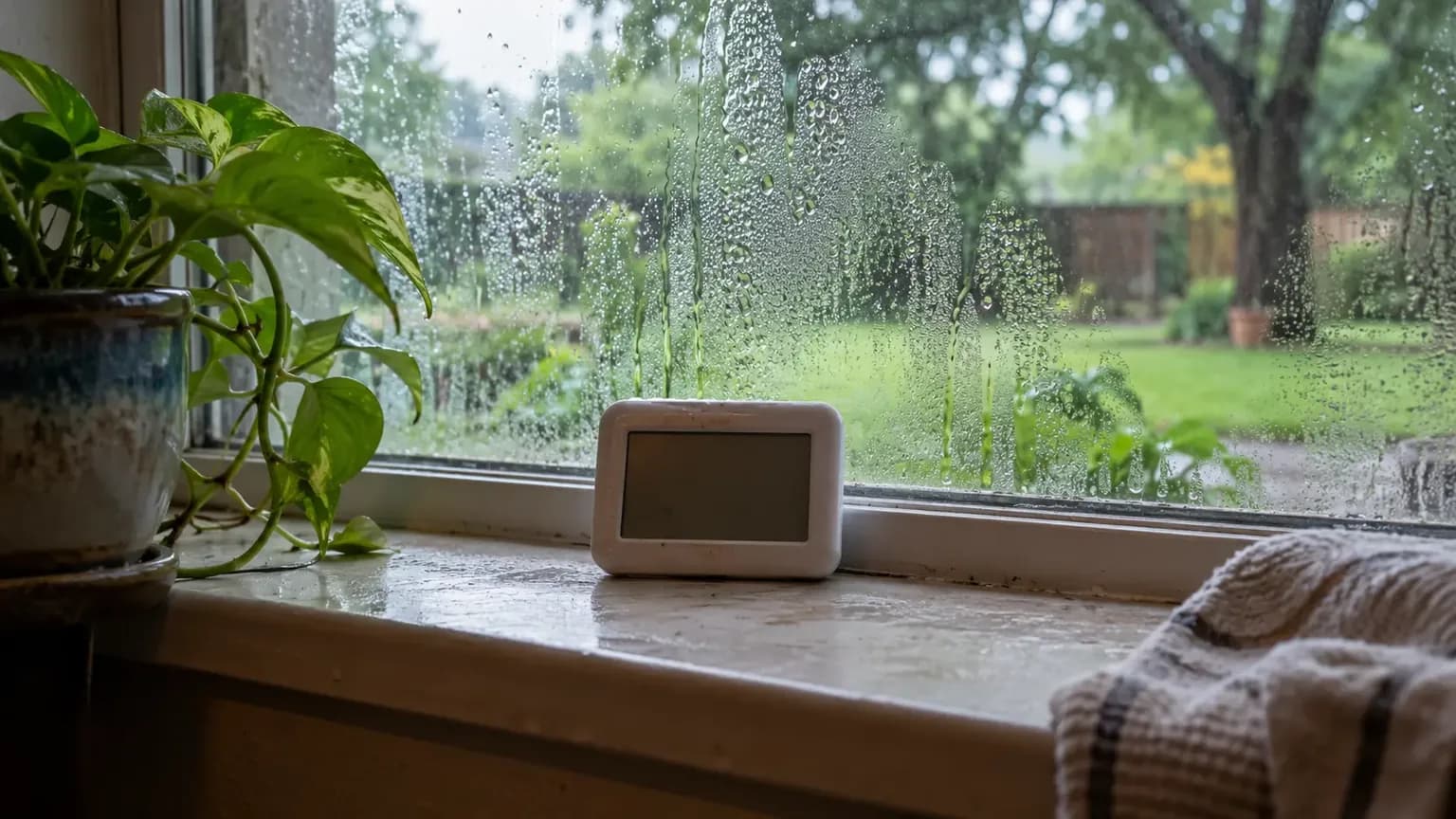
Does Summer Humidity Cause Mold in Central Texas?
Yes, summer humidity drives mold. High indoor humidity feeds mold even without a visible leak, and mold thrives when indoor relative humidity climbs above about 60 percent, which happens when air conditioning underperforms, a condensate line clogs, or a home is left closed up.
The short version of how to cut your summer mold risk.
- Run the AC consistently, even when you are away for a few days, since it quietly dehumidifies the whole house while it cools and that is your main line of defense in summer.
- Keep indoor relative humidity under 60 percent, ideally between 30 and 50.
- Clear the AC condensate line at the start of the season and keep watching for water pooling below the unit all summer, because a slow clog is the single most common hidden source we see.
- Fix any leak fast. Stay inside that 24-to-48-hour window before trapped moisture starts feeding mold behind the drywall.
- Add a standalone dehumidifier in the rooms that stay damp, like a closed-off guest room or a slab-floor laundry, where the central AC simply never moves enough air to pull the moisture back down.
None of these are expensive. None of them. The expensive thing is the remediation you avoid by doing them.
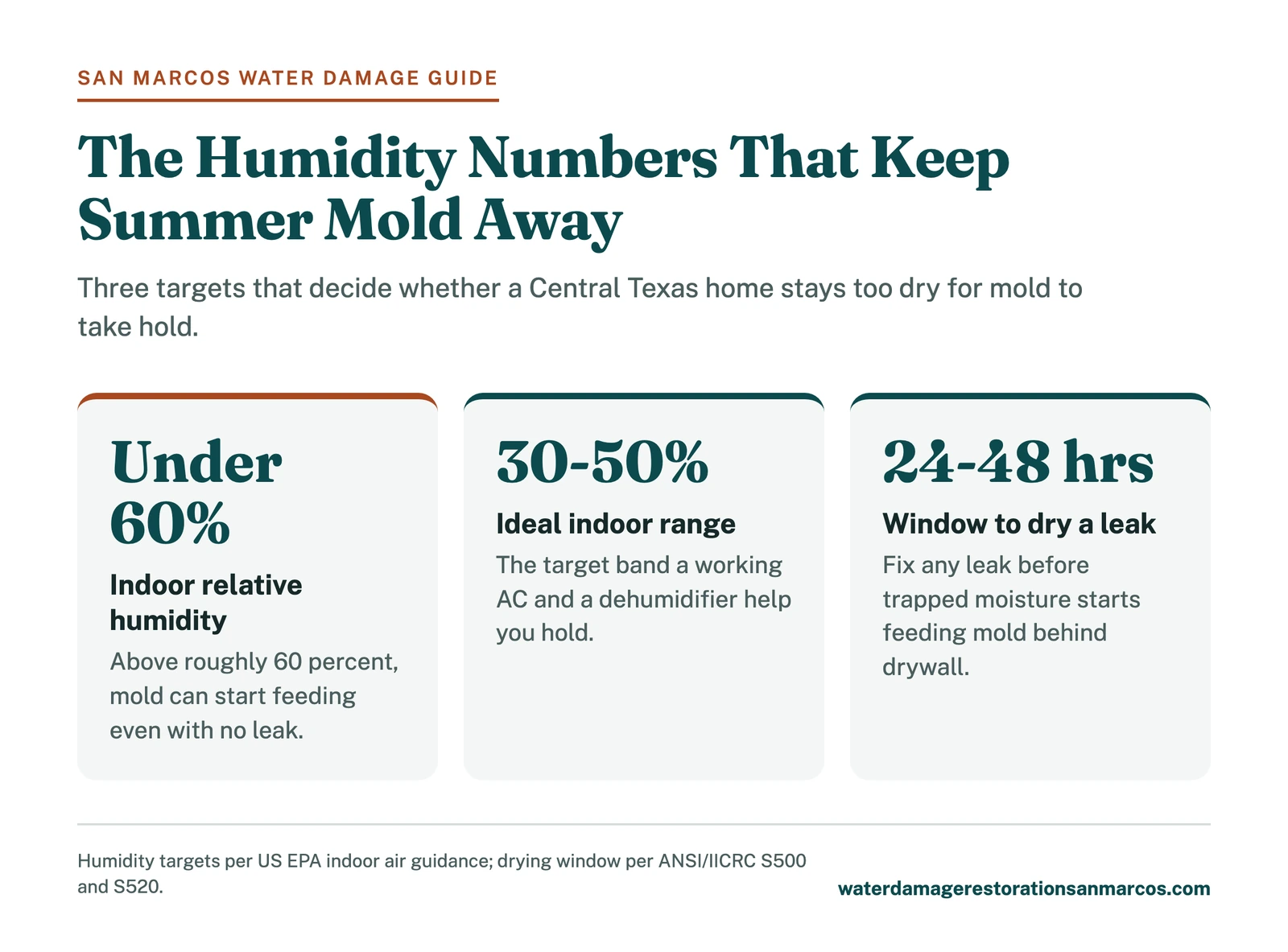
Text version of this infographic
The Humidity Numbers That Keep Summer Mold Away. Three targets that decide whether a Central Texas home stays too dry for mold to take hold.
- Under 60% Indoor relative humidity
- Above roughly 60 percent, mold can start feeding even with no leak.
- 30-50% Ideal indoor range
- The target band a working AC and a dehumidifier help you hold.
- 24-48 hrs Window to dry a leak
- Fix any leak before trapped moisture starts feeding mold behind drywall.
Humidity targets per US EPA indoor air guidance; drying window per ANSI/IICRC S500 and S520.
How Humidity Causes Mold (Even Without a Leak)
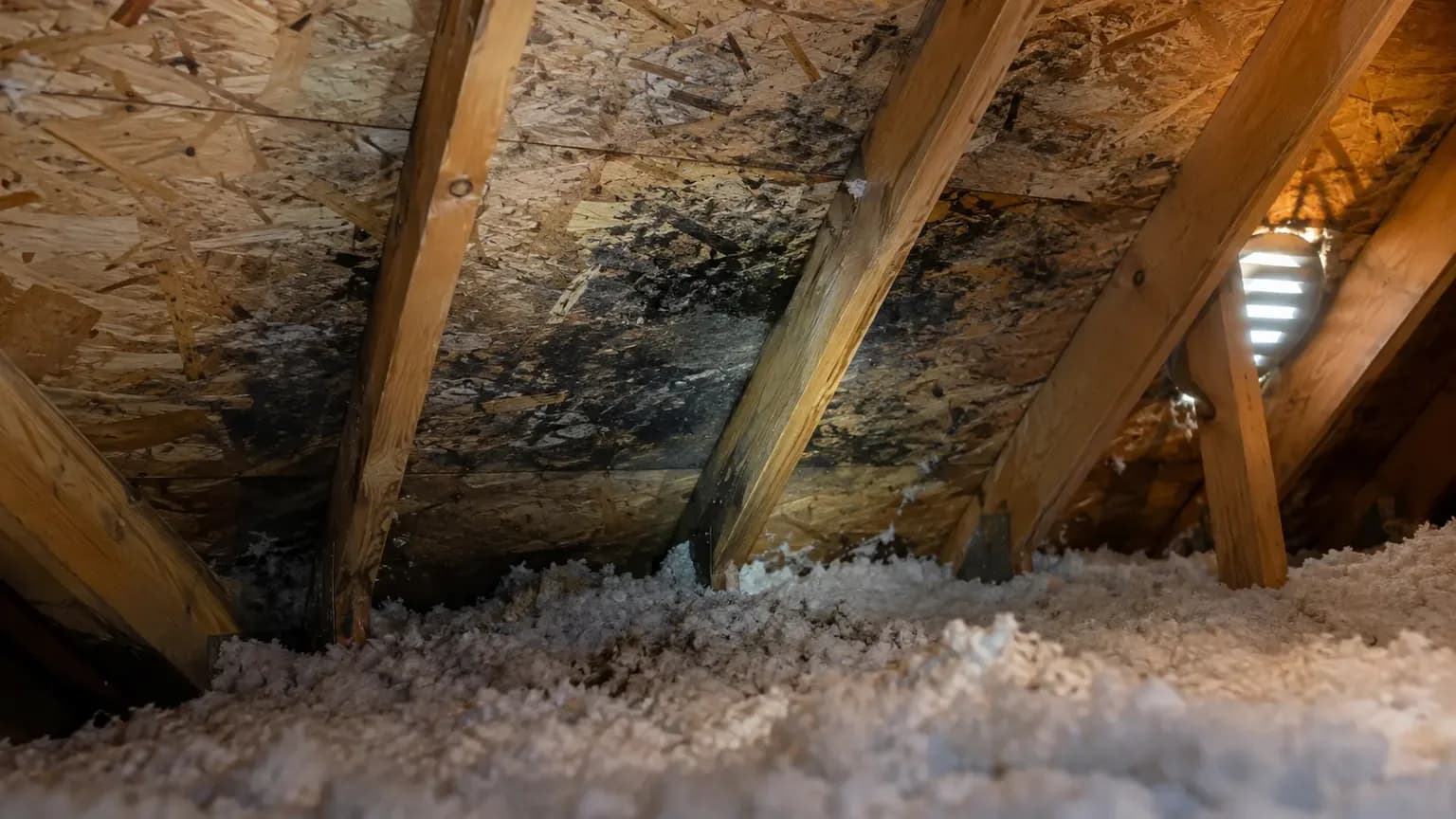
Mold is simpler than people think. It needs three things, which means spores, which are already in your home, a food source, which is most building material, and moisture. Humidity supplies the moisture without a single drop of liquid water ever appearing in the room.
No leak at all. It picks the cold spots. When the air holds enough water vapor, it condenses on the first cool surface it touches. That means a window, a closet wall against the north side, the back of a dresser pushed tight to an exterior wall.
That cool-surface part is the dew point at work. Simple physics. Warm humid air hits something cooler than itself and gives up its moisture as condensation, and that thin film of dampness is all a spore needs to germinate. It is why the corner of a closet can grow mold while the middle of the room stays fine. Above roughly 60 percent indoor humidity, those cool spots stay damp long enough for mold to establish, which is the same trap that lets mold start fast after a leak, covered in our guide to how fast mold grows after water damage.
The AC Connection, Condensate and Underperformance
Your AC is the swing factor. People think of it as the thing that cools the house, but in a humid climate it is also the main dehumidifier, pulling water vapor out of the air and draining it away where it cannot come back.
When it runs well, indoor humidity stays comfortable and mold has nothing to work with. When it does not, the whole picture changes fast.
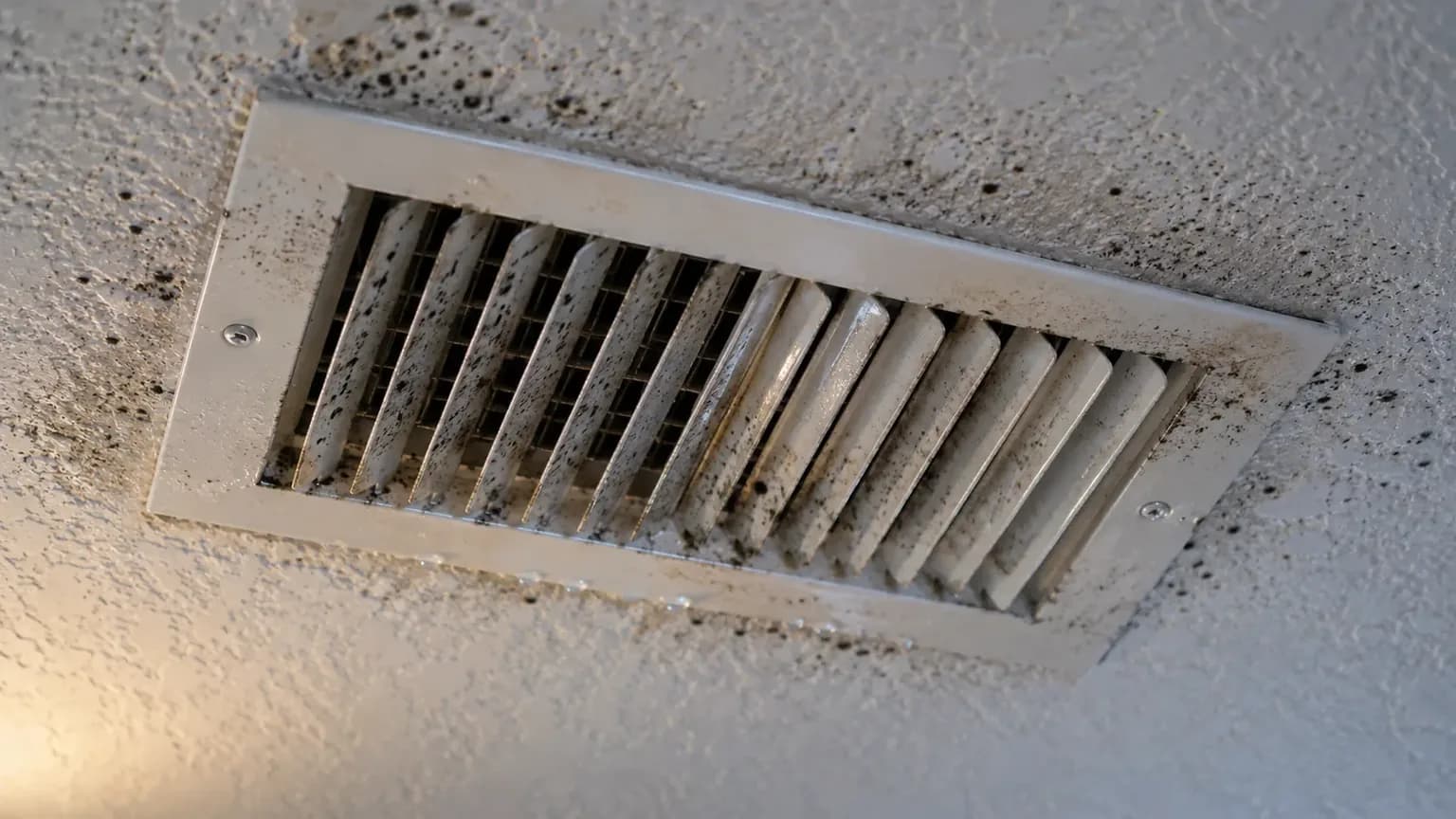
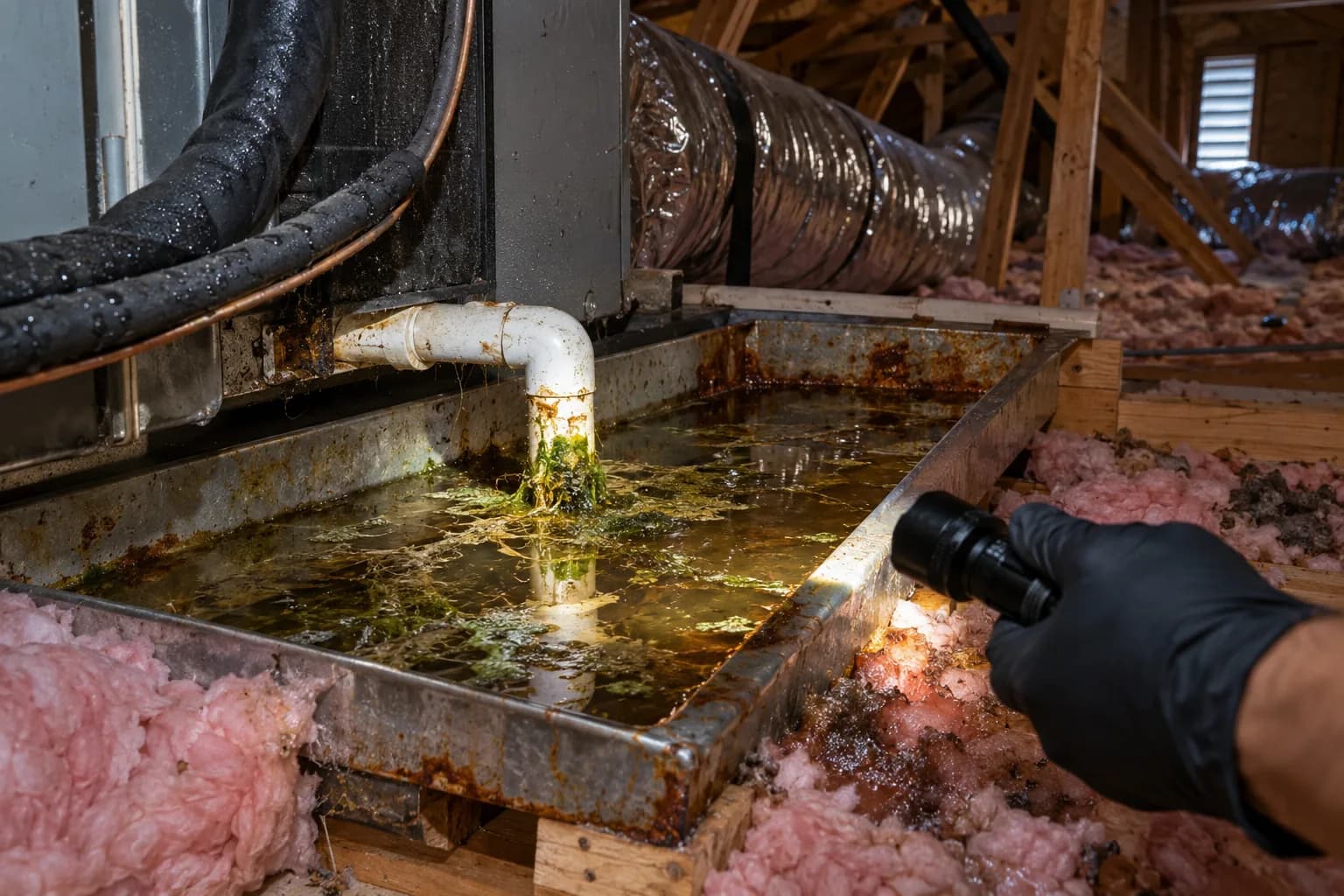
Two things go wrong in a Central Texas summer. Both are common. First, the AC underperforms, an aging unit, a dirty coil, an undersized system, and it cools the air without removing enough moisture, so humidity climbs while the thermostat still reads fine. Second, and more common, the condensate line clogs. That line carries the water the AC pulls from the air, and over a summer it fills with algae and sludge until it backs up. The pan overflows, water finds the ceiling or floor below an attic air handler, and now you have both a leak feeding mold and rising indoor humidity feeding it from the other side. Homes with attic units are the ones this catches, and it falls squarely into AC condensate and appliance leak cleanup. Check that line. It is a five-minute look that prevents a five-thousand-dollar problem. If you are already smelling it through the vents, see mold in air ducts and the AC coil before paying anyone for duct cleaning.
Why Closed-Up Summer Homes Grow Mold Fastest
No leak needed. Leave town for two weeks in August and turn the AC way up to save money, and you may come home to a smell. This is the fastest mold scenario in Central Texas, because with the AC barely running nothing pulls moisture out of the air.
No leak needed. Indoor humidity drifts up toward the outdoor level, sits there for days, and every cool surface in a stale, unventilated house becomes a landing pad.
The fix is almost annoyingly simple. Do not shut the AC off when you travel in summer. Leave it on. Set it to a reasonable hold, somewhere that keeps the system cycling and the humidity in check, and if the house has a problem room, leave a dehumidifier running on a drain. A few dollars of electricity beats coming home to mold on the closet ceiling and a remediation bill. Same logic for vacant rentals and listed homes sitting empty between tenants.
How to Cut Summer Mold Risk
It comes down to humidity. Summer mold control is humidity control plus moisture vigilance. Here that means keep indoor relative humidity under 60 percent, let the AC run long enough to dehumidify rather than just cool, clear the condensate line, and check under sinks monthly.
- Keep humidity under 60 percent. A cheap hygrometer tells you where you stand. Most problems live in rooms you rarely check.
- Maintain the AC condensate line. Check it often. Clear it in spring, watch the drain through summer, and treat any ceiling stain below an air handler as urgent.
- Respond to leaks fast. The 24-to-48-hour rule is even tighter in summer heat, so do not let a small leak wait for the weekend.
- Use a dehumidifier where the AC can't reach. Think dead air. Closets, slab-floor rooms, and closed-off spaces hold humidity the central system never touches.
- Get hidden moisture found before it spreads. Trust the smell. If a musty odor persists with humidity already under control, something is wet where you cannot see it.
When the smell does not quit or you find a stain, that is the line where DIY ends. That is the signal. A persistent musty odor with no visible source usually means hidden moisture, and finding it cleanly is what mold remediation in San Marcos and a proper moisture inspection are for.
Musty smell won't quit? Call us and we will help you track it down.
Written by the Water Damage Restoration San Marcos team
Local water-damage restoration in San Marcos, TX and Hays County. Our guidance follows the ANSI/IICRC S500 and S520 reference standards the industry plans around. Questions about your situation? Call (512) 778-8417, we answer 24/7.