San Marcos water damage guide
Sewage Backup: Is It Safe to Stay in the House?
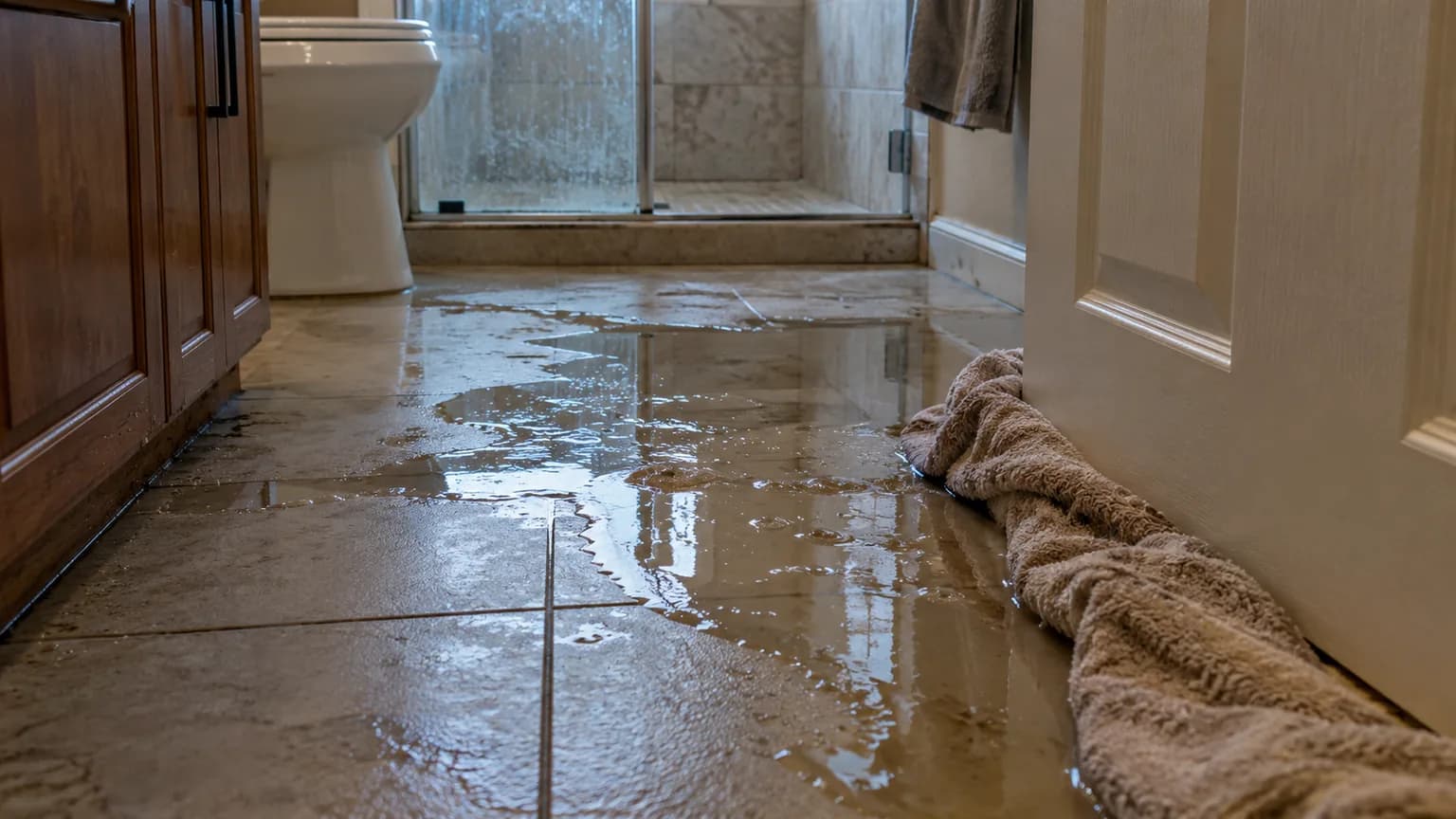
If you are asking whether a sewage backup is safe to stay around in your house, the short answer is. Treat it as a real health hazard, not a mess to mop. Sewage is Category 3 black water, the most contaminated kind, and the safety call depends on how much there is, where it went, and who is home. A small contained backup in a downstairs bathroom is different from water across a living floor with a toddler in the house. Either way, there is one move most people skip that turns a bathroom problem into a whole-house one. Leaving the HVAC running. More on that below. First, the verdict.
Published · Updated
Sewage backup? Call for biohazard cleanup now. (Phone line being finalized for launch.)
Is It Safe to Stay in a House With a Sewage Backup?
A sewage backup is Category 3 black water and a serious health hazard. Staying near it is not safe. Keep everyone out of the affected area, especially children, the elderly, and pets, avoid all contact, and turn off the HVAC so it does not spread contamination.
Leave the home if the backup is widespread or you feel unwell.
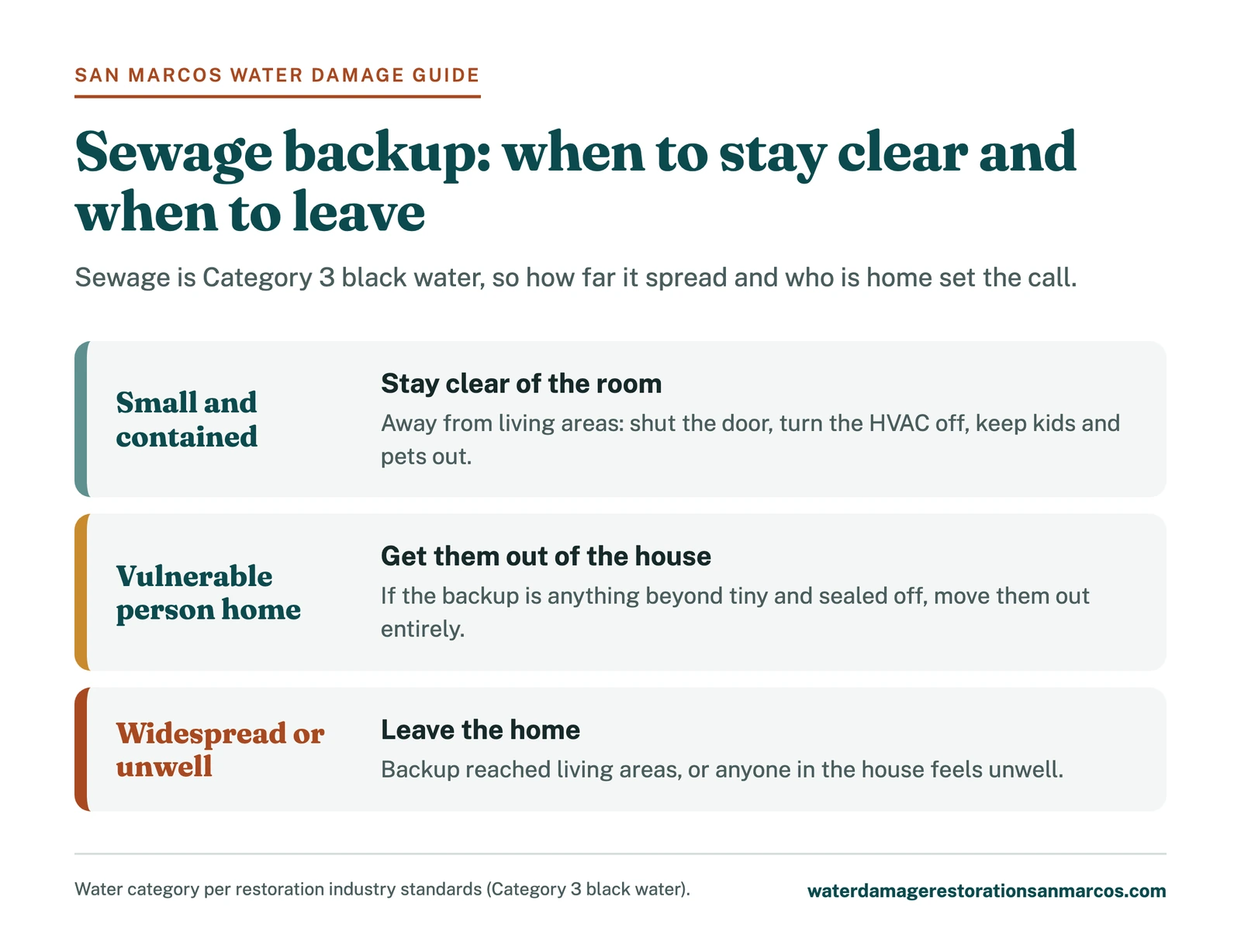
When to leave, and when staying clear of the room is enough.
- Leave the home if the backup is widespread, has reached living areas, or anyone is feeling unwell.
- Leave if someone in the house is medically vulnerable and the contamination is anything more than tiny and contained.
- Stay clear of the room at minimum if the backup is small, contained, and away from where people live, with the door shut and the HVAC off.
- Keep kids, pets, and elderly family out of the area entirely, no exceptions, regardless of size.
The smell alone is not a measure of risk. Odor is not the test. A small backup with no strong odor still carries the same pathogens as a big one.
Text version of this infographic
Sewage backup: when to stay clear and when to leave. Sewage is Category 3 black water, so how far it spread and who is home set the call.
- Small and contained Stay clear of the room
- Away from living areas: shut the door, turn the HVAC off, keep kids and pets out.
- Vulnerable person home Get them out of the house
- If the backup is anything beyond tiny and sealed off, move them out entirely.
- Widespread or unwell Leave the home
- Backup reached living areas, or anyone in the house feels unwell.
Water category per restoration industry standards (Category 3 black water).
Why Sewage Is Category 3 "Black Water"
Sewage sits at the top. Restoration work sorts water into three categories by contamination. Category 1 is clean water from a supply line, Category 2 is gray water, used but not heavily contaminated, and Category 3 is black water carrying bacteria and pathogens.
It is the worst tier the industry recognizes. If you want the full breakdown, here is what Category 3 black water is.
The label is not a formality. Sewage backup means human waste, the bacteria and viruses that come with it, and whatever was already in the drain line, all now sitting on your floor. Contact is a real exposure route, and so is touching surfaces it splashed.
There is also a materials problem. Porous things that soaked up Category 3 water, carpet, pad, drywall that wicked it up, upholstered furniture, usually cannot be saved. They get cut out and disposed of, not cleaned, because you cannot reliably sanitize the inside of a wet, porous material that absorbed sewage. Hard, non-porous surfaces can be cleaned and sanitized. The soft stuff that drank it in generally goes.
The Hidden Risk, HVAC and Airborne Spread
Here is the part that catches people. The danger is not only the water you can see. It is the air. A running HVAC system pulls air from the contaminated room and pushes it through every duct in the house, seeding rooms the water never reached.
Sewage water releases bacteria and gases as it sits, and they go airborne. Now picture your AC kicking on. The return pulls air from the contaminated area, runs it through the ducts, and pushes it out of the vents in every room, including the bedrooms upstairs the water never reached. You can contaminate a whole house from one bathroom backup without a drop of water leaving that bathroom. The warm, humid Central Texas climate only speeds the bacterial growth feeding that air. The heat makes it worse.
This is exactly why professionals shut the HVAC down first, seal off the affected area with containment, and work in PPE. It is also why "just mop it up" exposes the household far past the wet spot, and why the people most at risk, the ones breathing that recirculated air, may be in a room that looks perfectly fine.
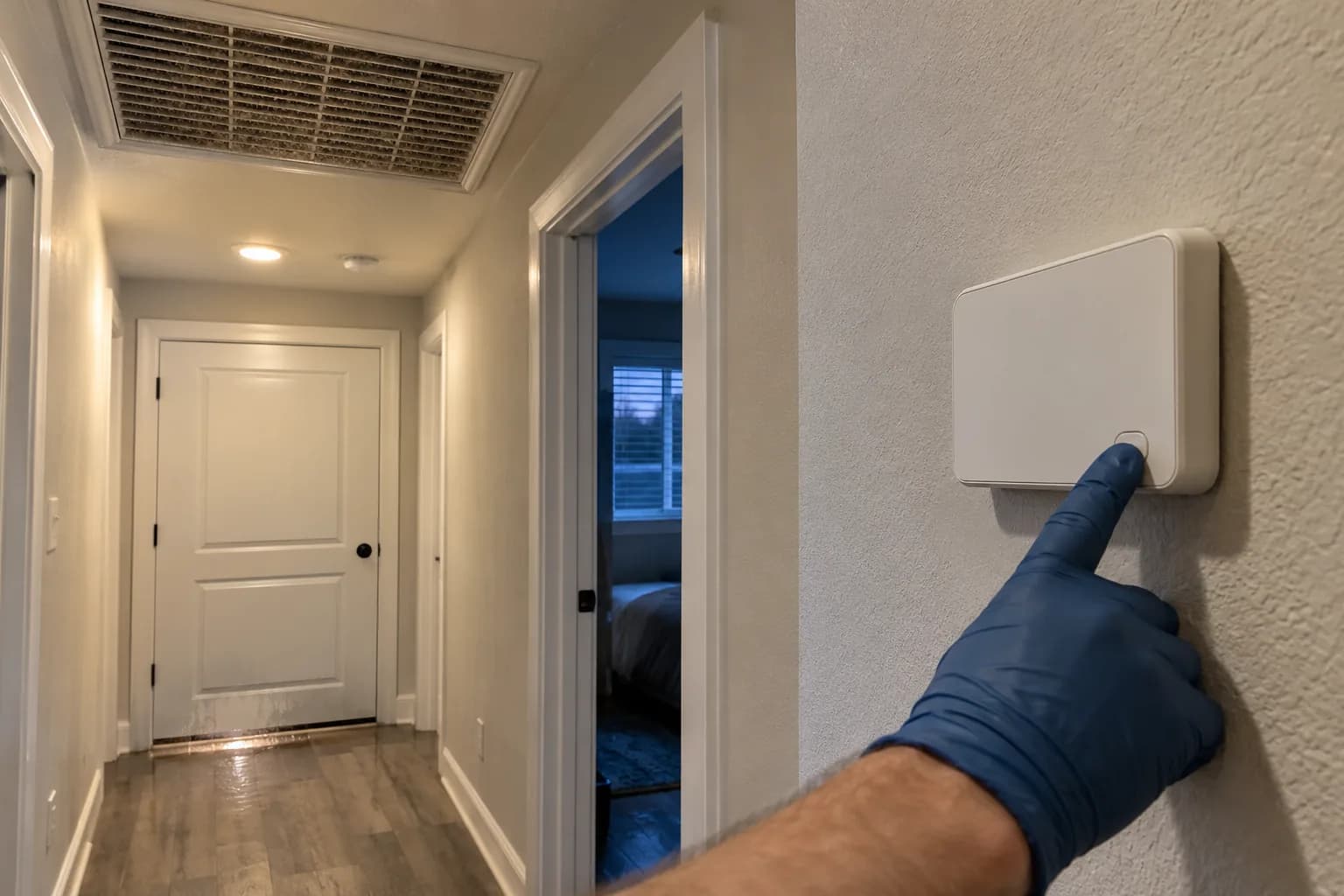
So before anything else. Turn off the HVAC. Not to "save energy." To stop the spread.
What Not to Touch and What to Do Right Now
Do this in order. Calm and methodical beats fast and exposed here, so before you touch anything or move a single item out of the room, run through this short list. Getting the sequence right protects your health first and your claim second.
- Turn off the HVAC so it stops moving contaminated air through the house.
- Keep everyone out of the affected area, children, elderly, pregnant family members, and pets first.
- Avoid all contact with the water and anything it touched. No bare hands, no bare feet.
- Do not run fans pointed into the room trying to dry it, you are just aerosolizing more.
- Photograph the damage for your insurance claim from a safe distance before anything is moved.
- Do not try to DIY it. This is not a wet-vac job.
If you are dealing with a storm-related backup, the same first steps from the first-hour flooded-house steps apply, with the added rule that this water is contaminated, so the "stay out" line is firm.
Get safe, professional sewage cleanup. (Phone line being finalized for launch.)
Who Is Most at Risk
Not everyone faces the same level of risk from the same backup. Some people are far more vulnerable. The exposure hits hardest for children, the elderly, pregnant people, and anyone with a weakened immune system. Pets too, who will walk through it and lick their paws without a second thought. They feel it first.
For those households, the threshold for leaving drops. If a vulnerable person is home and the backup is anything beyond tiny and sealed off, the right call is usually to get them out of the house entirely, not just out of the room, because of that airborne spread through the HVAC. Landlords and property managers run into the same question with tenant units near Texas State, where habitability is on the line and a backup in one student rental is not something a tenant should be living on top of. When in doubt about who is vulnerable, err toward leaving.
Why Sewage Cleanup Needs Professionals
This is not a DIY job. That is not a sales line, it is the nature of Category 3 water. The work needs PPE, containment, antimicrobial treatment, removal and disposal of contaminated porous materials, and verification that the space is sanitary rather than merely dry.
Proper cleanup means full PPE, containment to keep the contamination from spreading, antimicrobial sanitizing of every surface that water touched, removal and disposal of the porous materials that cannot be saved, and verification that the space is actually clean, not just clear. That is the equipment and the method behind professional sewage cleanup and biohazard removal in San Marcos. Skipping any of it leaves contamination behind in the materials and the air, which is how a "cleaned up" backup turns into a lingering odor and a mold problem weeks later, the point where mold remediation becomes the next call.
There is a local pattern worth knowing. Backups show up more in San Marcos's older downtown homes with aging plumbing, and in the heavily-used student rentals near Texas State where the lines take a beating. In Flash Flood Alley, heavy rains can overwhelm the sewer system and push backups into low-lying homes, so a storm does not always mean clean floodwater, sometimes it means sewage coming up the drains. Whatever sent it, the safe move is the same. That means stay out, keep the vulnerable away, kill the HVAC, and bring in people with the right gear.
Written by the Water Damage Restoration San Marcos team
Local water-damage restoration in San Marcos, TX and Hays County. Our guidance follows the ANSI/IICRC S500 and S520 reference standards the industry plans around. Questions about your situation? Call (512) 778-8417, we answer 24/7.