San Marcos water damage guide
Musty Smell But No Visible Mold? Here's Why
You walk into a room and there it is. That damp, earthy, basement-y smell, the musty smell with no visible mold anywhere you look. You check the obvious spots, behind the toilet, under the sink, the closet corner, and find nothing. Still nothing. So you wonder if you are imagining it. You are not. In the humid Central Texas climate around San Marcos, that smell almost always has a real source, usually hidden moisture or mold behind a wall, under the floor, or inside the HVAC. Your nose found it before your eyes could, and here is why that happens.
Published · Updated
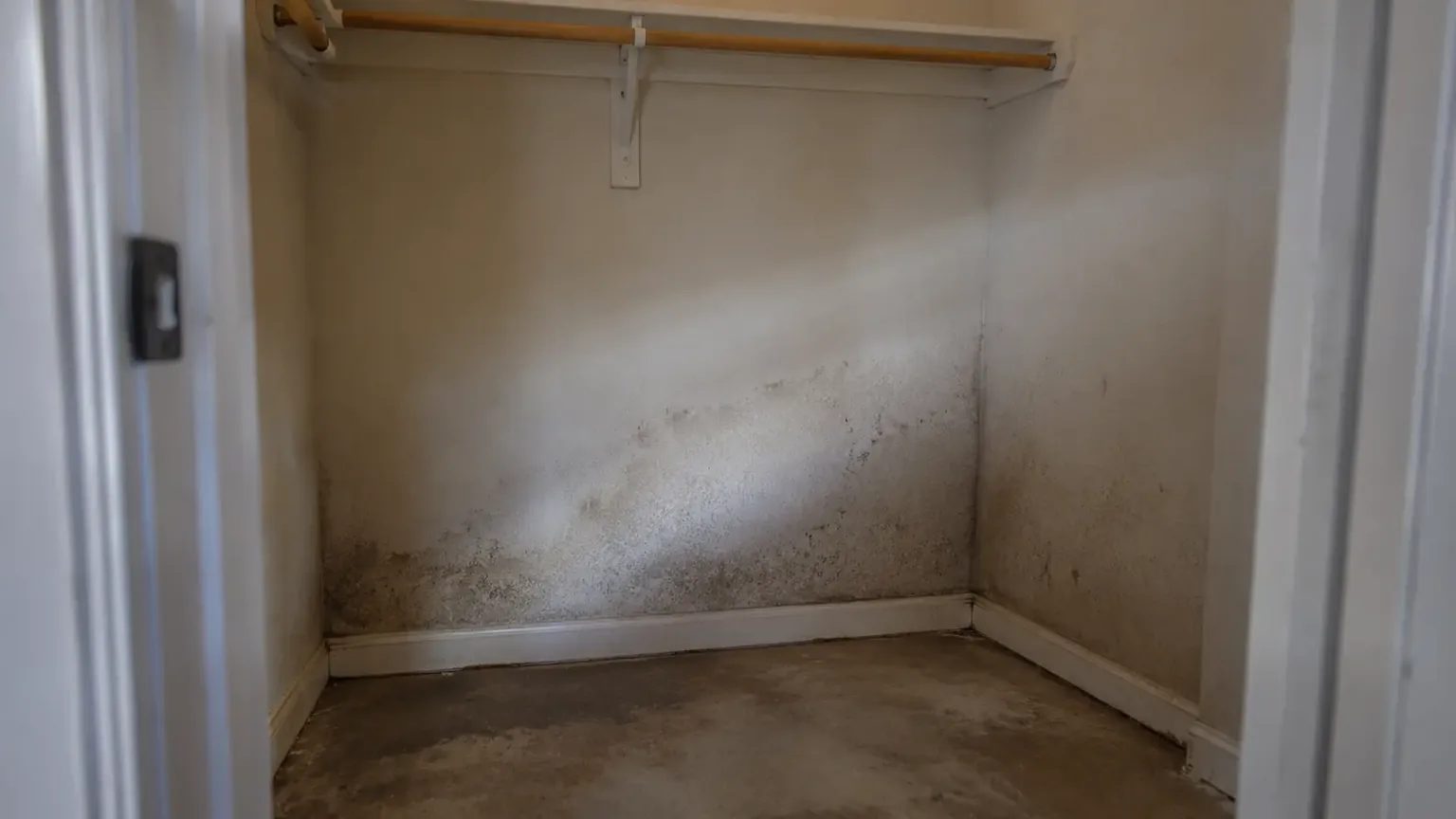
Why Does My House Smell Musty With No Visible Mold?
A musty smell with no visible mold usually means mold is growing somewhere hidden. Here that means behind walls, under flooring, or inside the HVAC system. The odor comes from microbial volatile organic compounds the mold releases as it grows, so you smell it before you can see it.
Your nose knows first. Persistent musty smells point to a hidden moisture source, and it has to be found and dried.
The common hiding spots, in roughly the order we find them.
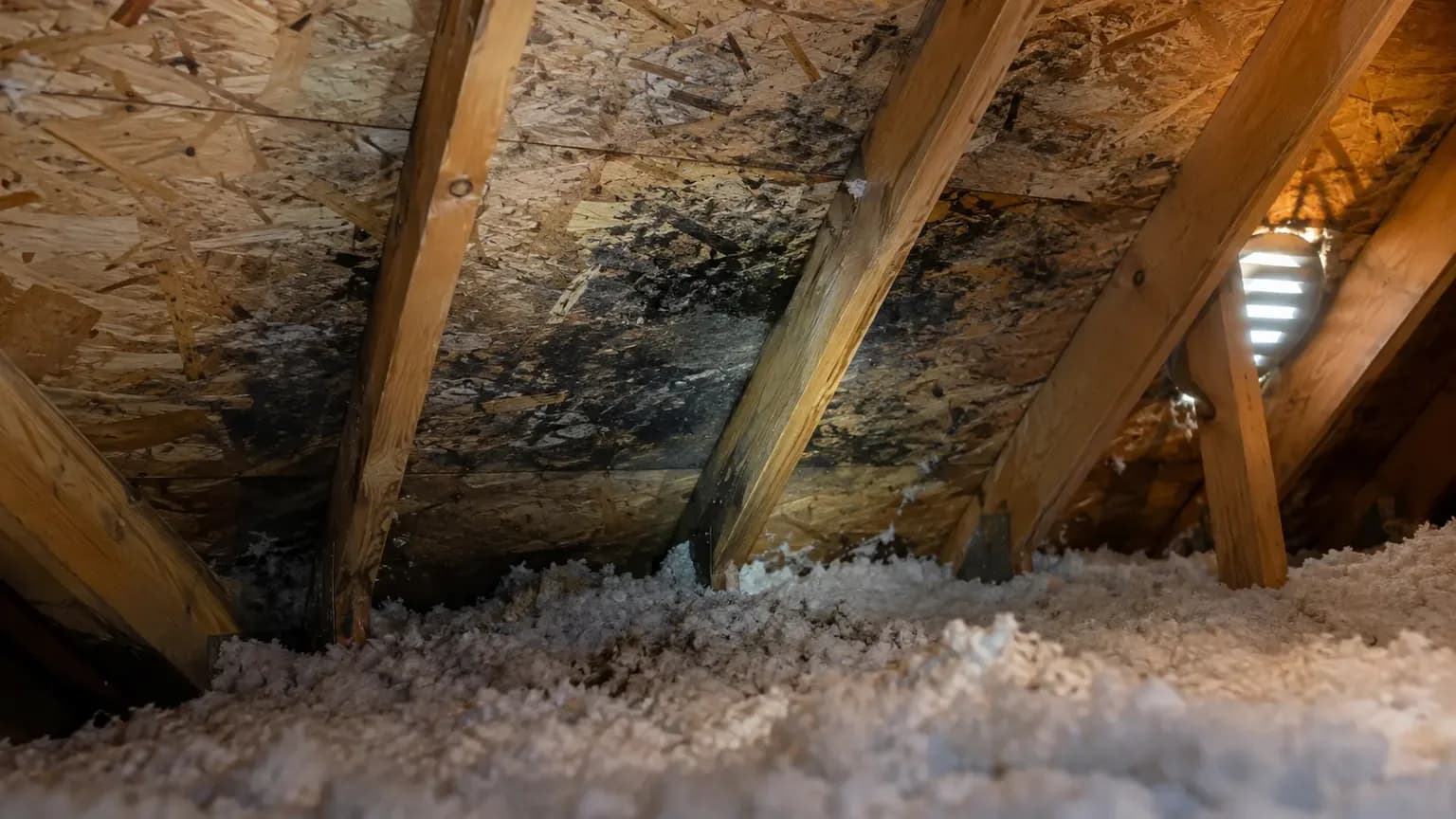
- Inside wall cavities, where a slow supply-line leak wets the drywall from behind.
- Under flooring, especially on the slab-on-grade homes common around San Marcos, TX, where trapped moisture has nowhere to go but up through the boards and into the room above.
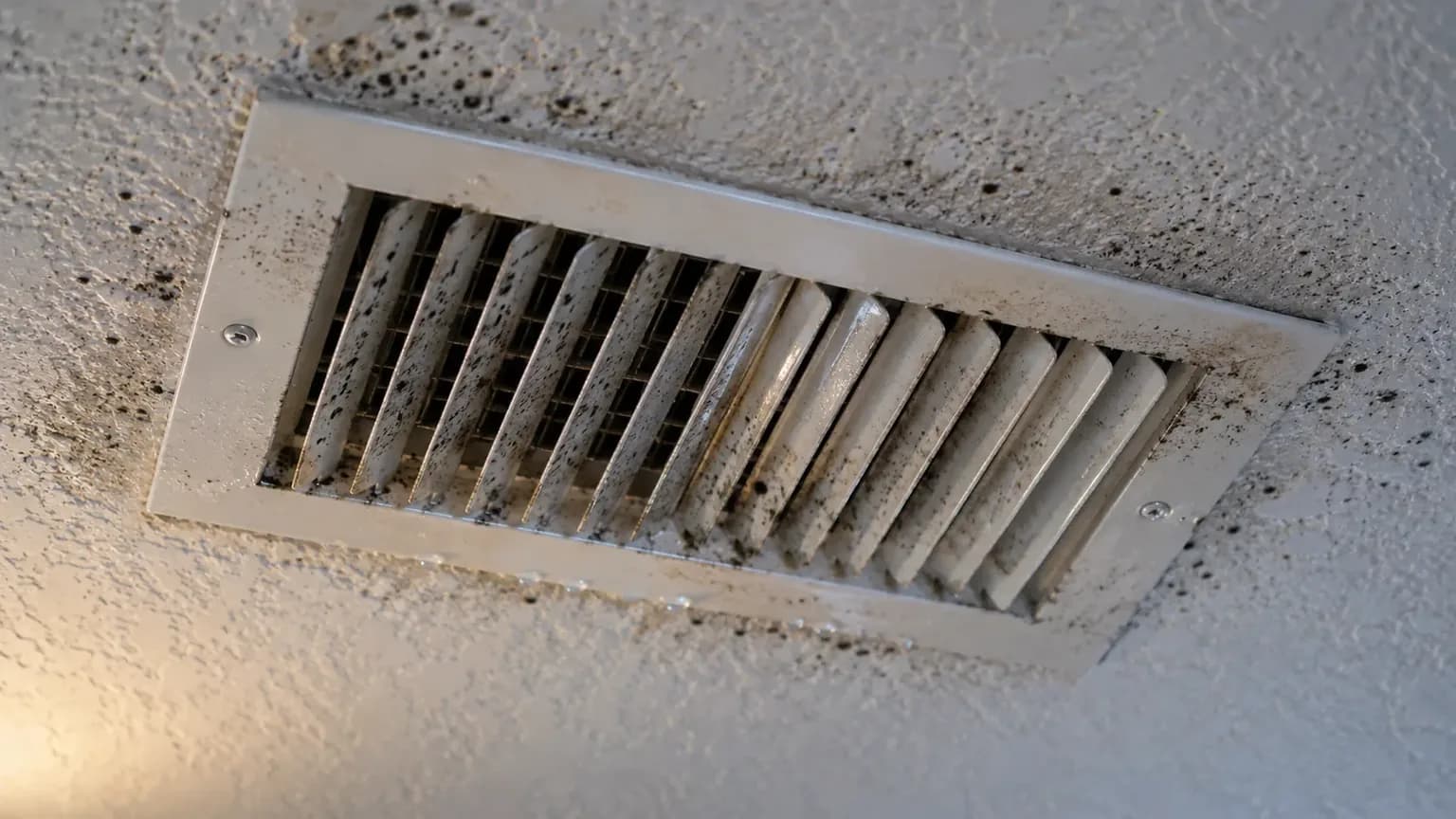
- In the HVAC system, on a damp coil or in ductwork that collects condensation. If the smell tracks with the AC cycling on, start with mold in your air ducts, which explains why the coil is the more likely culprit than the duct runs.
- In a crawl space or behind cabinets, dark and unventilated by design.
- Anywhere lingering moisture or summer condensation sits long enough to grow something.
What the Smell Actually Is (MVOCs)
Here is the part most articles skip. That musty odor is not dust or old air. It is a group of gases called microbial volatile organic compounds, MVOCs, and they are the byproduct of mold actively metabolizing, the chemical exhaust of a colony doing its thing. When you smell musty, you are literally smelling mold grow.
That single fact explains the whole mystery. Mold sealed inside a wall cavity or pinned under a floating floor cannot be seen, but the gases it releases drift right through drywall, around baseboards, and out into the room you are standing in. The gases travel. The colony has no visual presence yet and a very real chemical one. It is also why your nose beats a flashlight here, because the eyes need a colony big enough and exposed enough to spot before they register anything at all. The nose picks up the MVOCs the moment the mold starts working, which is usually days or weeks earlier. No visible mold does not mean no mold. It means the mold is somewhere you cannot point a flashlight.
Common Hidden Sources in San Marcos Homes
The source usually follows the local conditions, and around here a few patterns repeat. Slab-on-grade construction traps moisture under flooring, aging plumbing downtown seeps behind plaster, upstairs bathrooms in two-story rentals leak into ceilings below, and AC condensate pans overflow through the summer.
AC condensate overflow tops the list in summer. It hides well. The line that drains your air handler clogs, the pan backs up, and water seeps into the ceiling or floor below, often an attic unit dripping into the room beneath. Nothing shows on the surface for a while, but the moisture is already feeding something, and the humid Central Texas air keeps it fed. Slow supply-line leaks are next, a pinhole behind a wall or a weeping connection under a cabinet that releases just enough water to stay invisible.
Then there is geography. Slab-on-grade homes across San Marcos, TX, Kyle, and Buda can trap moisture under the flooring where the smell rises but nothing is ever visible up top. Older properties in the downtown and historic district, with aging building envelopes, tend to smell musty after rain, because water finds its way in through tired flashing, window seals, or foundation gaps. And if a home took on water in a past event, near the river corridor especially, a spot that was never fully dried to standard can quietly hold moisture for years. Our guide to Central Texas summer humidity and mold digs into the seasonal side of this. The patterns repeat.
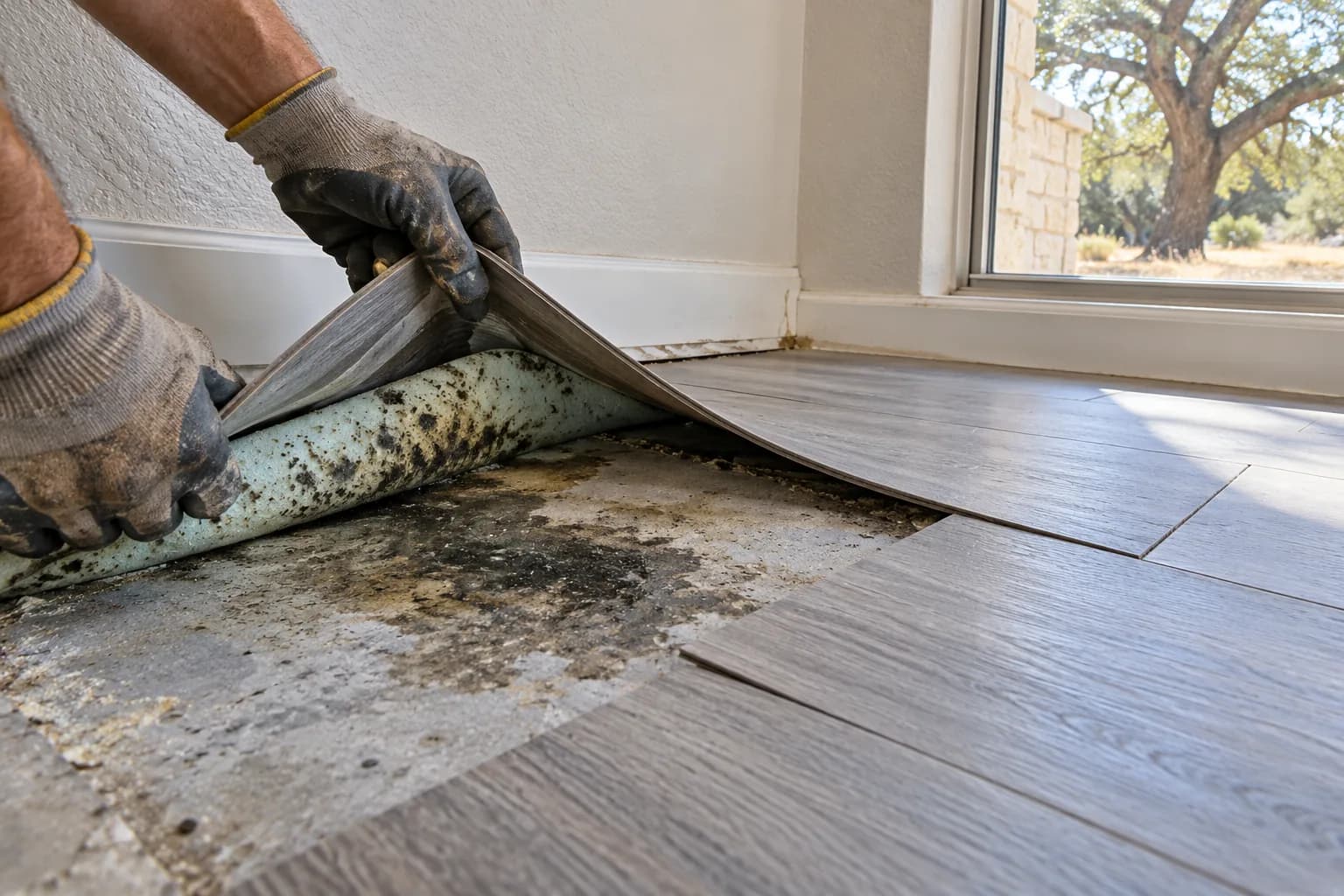
How to Track Down the Source
Start with your nose and a little patience. Walk the house and notice where the smell is strongest, then check that zone low and high. In practice that means baseboards, the floor near exterior walls, the ceiling under any upstairs bathroom or attic unit. Work systematically.
Pull the AC supply registers and sniff, since a damp coil pushes that smell through the whole house. Grab a cheap hygrometer and check indoor humidity. If it is over 60 percent, that alone is part of the problem.
DIY looking ends where the wall begins. You can find a stain, a soft spot, a warm or cold patch, but you cannot see inside a cavity without either opening it up or using the right tools. That is where thermal-imaging moisture detection comes in. A thermal camera reads the temperature difference a wet area creates behind a surface, flagging the likely spot, and a moisture meter then confirms whether that drywall or subfloor is actually wet, no demolition required. It turns a guessing game into a map.
Find the hidden moisture before mold spreads. Get a moisture inspection.
When It's Just Humidity vs When It's Mold
Not every musty smell is a crisis. Sometimes it really is just humidity. The short version is a closed-up room, a damp stretch of weather, a house that needs more airflow. Knock the indoor humidity below 60 percent, open it up, run the AC, and a humidity-only smell tends to fade within a day or two.
The persistence test sorts it out. If the smell lingers after you have dried the air out, comes back with every rain, or started after a leak, you are most likely dealing with hidden moisture and probably mold, not just stuffy air. Timing matters too, because mold can start within 24 to 48 hours of moisture, covered in our guide to how fast mold grows after water damage. A smell that survives good ventilation has a wet source feeding it. That is your tell.
What to Do About It
The order of operations matters here, and most people get it backwards. Find and fix the moisture source first, then dry the affected materials fully, and only then deal with any mold that confirmed growth. Skipping straight to scrubbing visible spots while the leak keeps feeding the cavity just resets the clock.
What you should not do is mask it. An air freshener covers the MVOCs for an afternoon and changes nothing underneath, while the colony keeps growing. If a moisture source turns up and mold is confirmed, that moves into mold remediation in San Marcos, which means proper containment and removal rather than a spray bottle. The smell is a smoke alarm. Find the fire, not the off switch.
Talk to a mold and moisture expert. Reach out here.
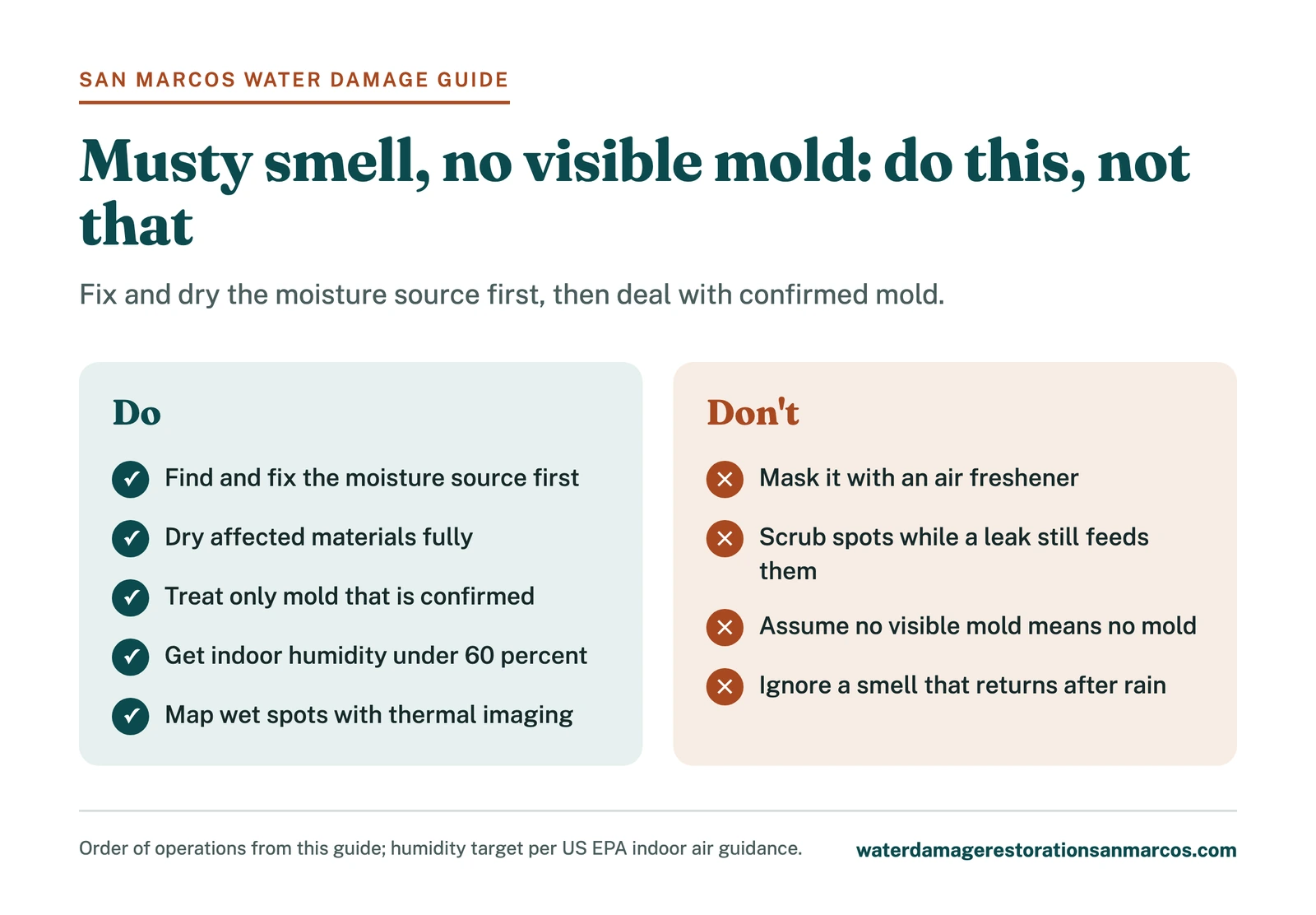
Text version of this infographic
Musty smell, no visible mold: do this, not that. Fix and dry the moisture source first, then deal with confirmed mold.
Do
- Find and fix the moisture source first
- Dry affected materials fully
- Treat only mold that is confirmed
- Get indoor humidity under 60 percent
- Map wet spots with thermal imaging
Don't
- Mask it with an air freshener
- Scrub spots while a leak still feeds them
- Assume no visible mold means no mold
- Ignore a smell that returns after rain
Order of operations from this guide; humidity target per US EPA indoor air guidance.
Written by the Water Damage Restoration San Marcos team
Local water-damage restoration in San Marcos, TX and Hays County. Our guidance follows the ANSI/IICRC S500 and S520 reference standards the industry plans around. Questions about your situation? Call (512) 778-8417, we answer 24/7.