San Marcos water damage guide
How to Document Water Damage for an Insurance Claim
Documentation is what wins or loses a water damage claim, and most of it has to happen before you clean up. Once the water's gone and the soaked drywall is in a dumpster, the proof of how bad it was goes with it, and the adjuster has only your word. Knowing how to document water damage for insurance, fast and in the right order, is the difference between a smooth payout and a fight. Two Texas realities shape the job.
Published · Updated
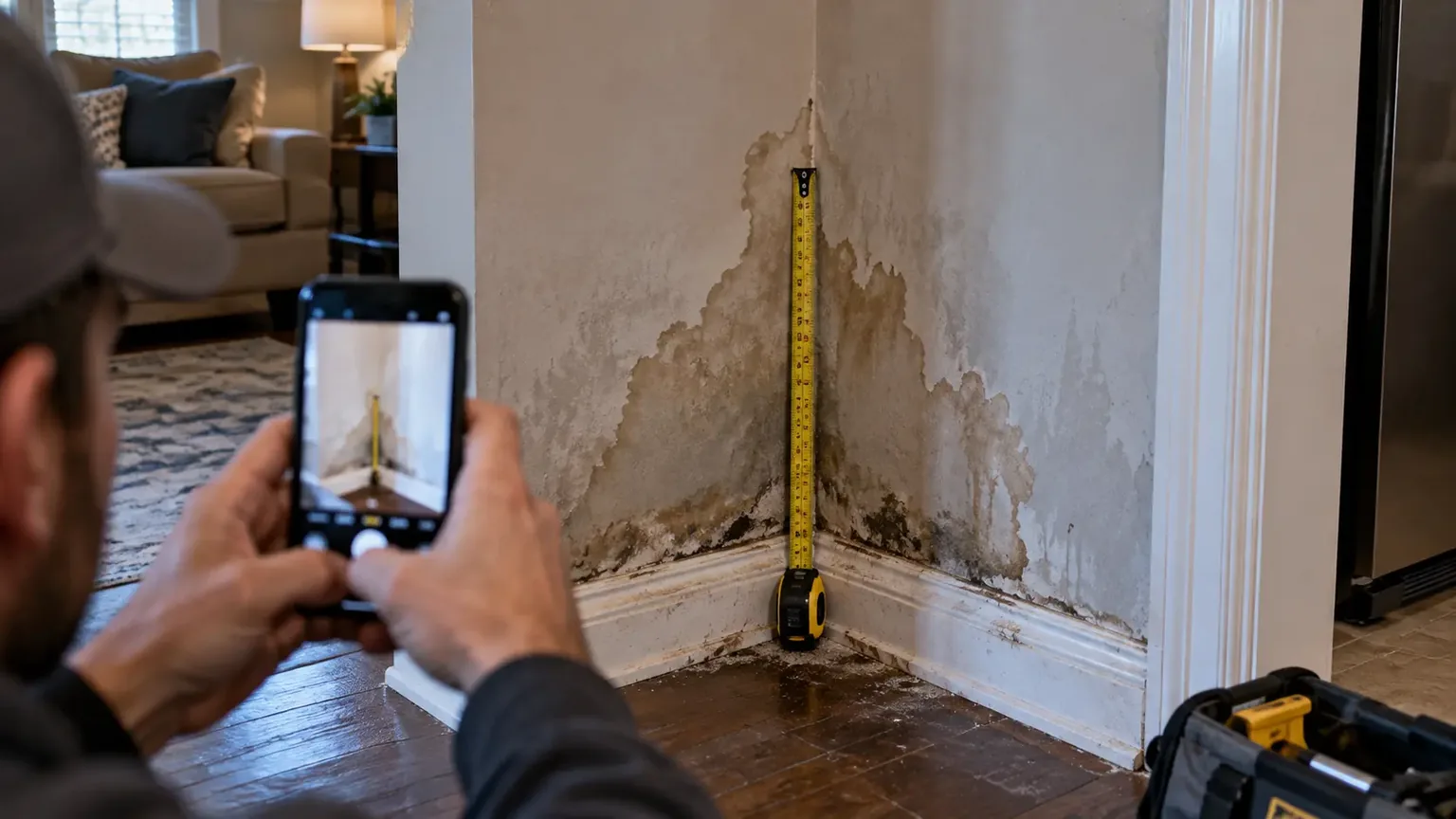
Coverage hinges on showing the damage was sudden and accidental, not a slow gradual leak. And the humid Central Texas climate means you cannot wait days; mitigation should start within 24 to 48 hours, so your documentation has to come first and come quick. Here is the checklist, and the reasoning behind each part.
Need documented evidence for your claim? Talk to us.
How to Document Water Damage for an Insurance Claim
To document water damage for an insurance claim, photograph and video everything before you clean up, capturing the source and the depth of standing water. Make a written inventory of damaged items with values and serial numbers, save all receipts, and keep a log of moisture readings.
Move fast here. This evidence builds your proof of loss and helps establish the damage was sudden. The order matters.
Run the checklist in this order.
- Photograph and video everything wet, every room and every soaked surface, before a single towel comes out and before anything is touched or moved.
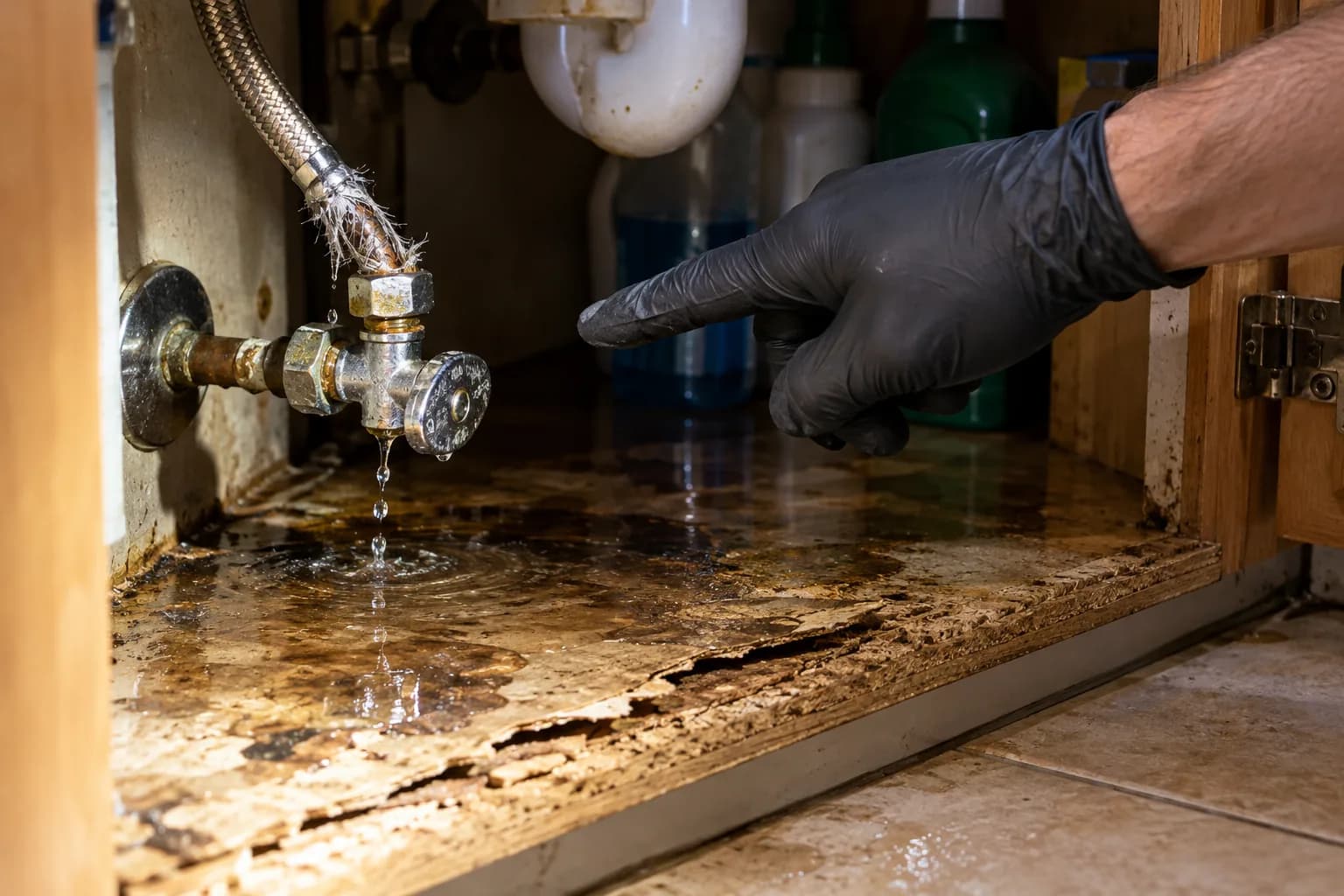
- Capture the source clearly, the burst line or failed appliance, plus a separate shot with a ruler or tape measure showing the depth of standing water against a baseboard.
- Build a written inventory of damaged items with values, models, and serial numbers.
- Save every receipt, the originals if you have them, and any repair or replacement invoices.
- Start a moisture log and record readings as the structure dries.
- Note the date and the cause the moment you find the failure, so the file shows a sudden event rather than a slow one that crept along for months unnoticed.
That is the spine of a proof of loss, the dated record an adjuster leans on when the room is dry and the debris is already gone. Build it well. The rest of this guide is how to do each step so it holds up.
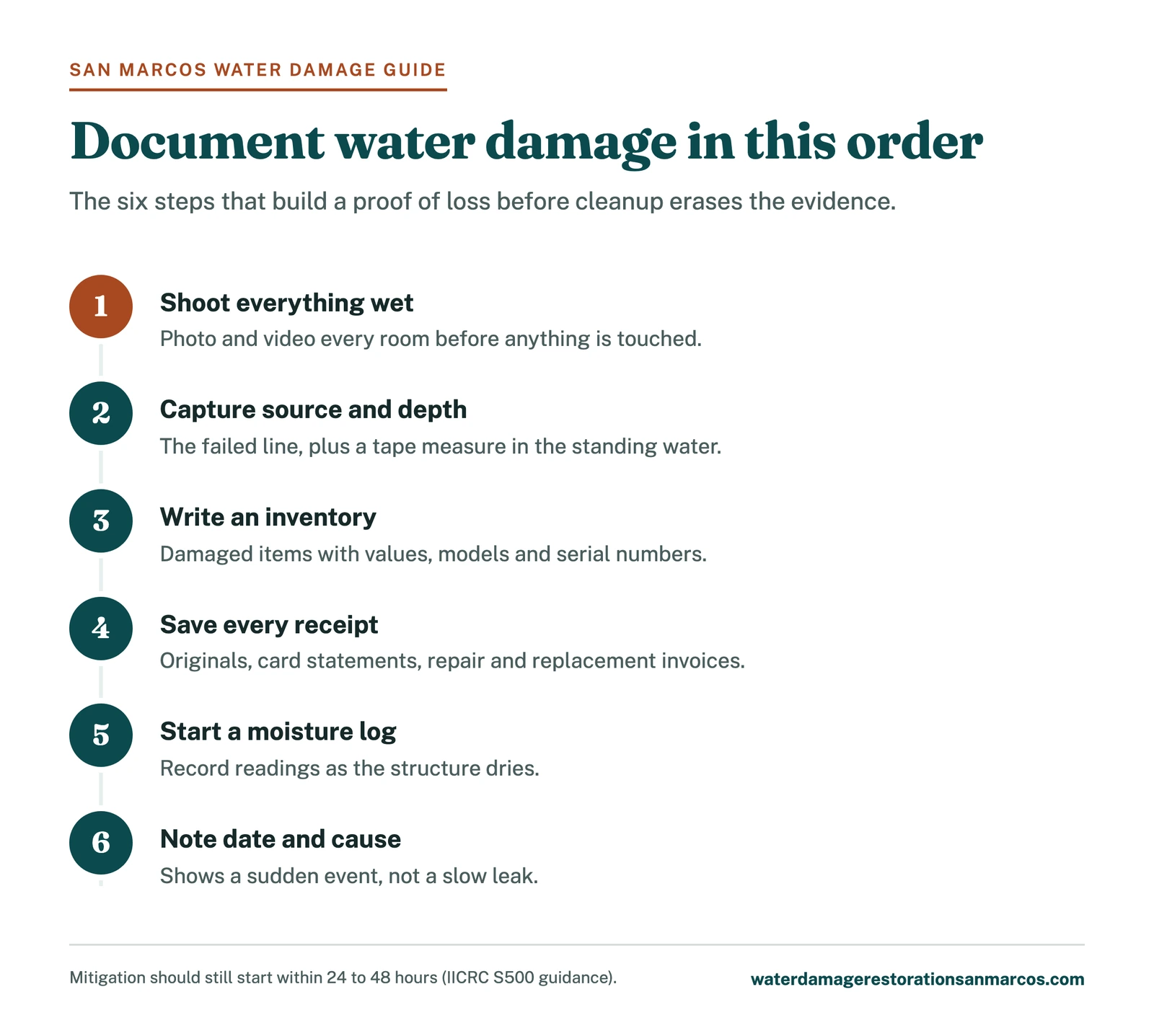
Text version of this infographic
Document water damage in this order. The six steps that build a proof of loss before cleanup erases the evidence.
- Shoot everything wet. Photo and video every room before anything is touched.
- Capture source and depth. The failed line, plus a tape measure in the standing water.
- Write an inventory. Damaged items with values, models and serial numbers.
- Save every receipt. Originals, card statements, repair and replacement invoices.
- Start a moisture log. Record readings as the structure dries.
- Note date and cause. Shows a sudden event, not a slow leak.
Mitigation should still start within 24 to 48 hours (IICRC S500 guidance).
Document Before You Clean Up (This Is the Big One)
If you remember one thing, remember this. The mistake that costs people money is cleaning up before documenting. Once water's extracted and the wet materials are hauled out, the evidence of extent is gone, and the adjuster is left with a dry room and your description of how bad it used to be.
So before a single towel comes out, capture the scene. Get the source. In practice that means the burst supply line under the sink, the failed water heater, the ceiling stain spreading from the upstairs bath. Then get the extent. The short version is standing water across the floor, the line where it wicked up the baseboards, the rooms it reached. Capture it all. The instinct in a crisis is to grab a mop. Resist it ten minutes and shoot everything first, because in this climate mold can take hold within a day or two and mitigation can't wait long after that.
What Photos and Video to Take
Shoot wide, then close. Start with wide shots of each affected room so the adjuster sees the whole space and how the water spread. Then move in, which means a clear close-up of the source, the standing water, the soaked carpet, the stained ceiling, the swollen cabinet base.
For depth, give the adjuster a reference. Stand a tape measure or a ruler against a baseboard in the standing water and photograph it, or use a doorframe and a known measurement. A photo that says "two inches up the wall in the living room" beats a photo that just shows a wet floor, because depth and reach are how an adjuster sizes the loss.
Take video too, narrated as you walk. Say the date, the room, what you are looking at, and what you think the source was. Narrate as you go. Turn on the timestamp if your phone offers it. Get the contents as well as the structure. That means furniture, electronics, baseboards, the ceiling, anything the water reached. You can always discard photos later; you cannot go back and re-shoot a room that's already dry.
Make an Inventory of Damaged Items
Photos prove the room. An inventory proves the contents. Write a list of every damaged item with its approximate value, the brand and model, and the serial number where there is one, on electronics and appliances especially. Match each item to a photo.
Pull receipts wherever you can. Originals are best, but card statements, order confirmation emails, and manuals all help establish what an item was and what it cost. For older things without a receipt, note the purchase year and a fair replacement value.
And do not throw anything away yet. Keep damaged items until your adjuster has inspected and released them, because tossing soaked carpet or furniture too early removes the proof of the loss. Bag what you safely can, photograph each piece, and wait for the insurer's go-ahead to dispose of it. Hold onto everything.
Keep a Moisture and Drying Log
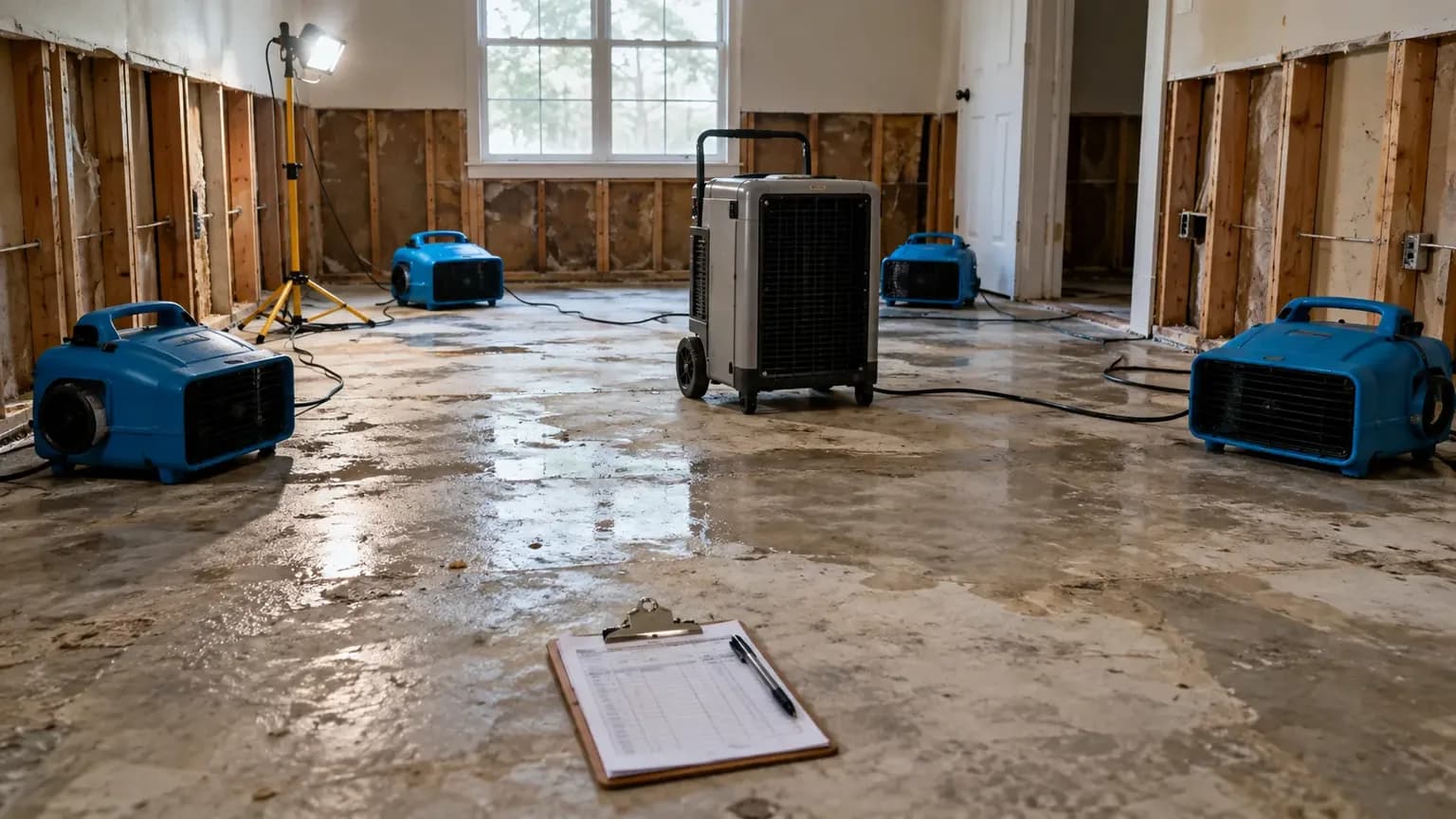
A moisture log turns a single bad day into a documented timeline. Readings taken over the days of drying show how wet the structure was and how it came down, which proves both the loss and the work done to address it.
This is where we can help. As we dry a structure, we take daily moisture readings in the affected materials and record them, so there is a dated trail showing the framing and subfloor going from soaked to dry to standard. That log does two jobs. It proves the materials were genuinely wet, and it pins the timeline to dates. A solid moisture log is often what prevents a denial in the first place, so see the partner piece, what to do if your claim is denied.
Get moisture mapping and a documented scope. Talk to us.
Establish That the Damage Was Sudden
Coverage in Texas turns on this. A sudden, accidental event, a pipe that bursts or a water heater that lets go, is the kind of loss a homeowners policy is built for. A gradual leak that seeped for months usually is not.
So your documentation should make the sudden nature obvious. Here that means capture the source the moment you find it, note the date and time you discovered it, and show the failure itself, the split pipe or cracked fitting, not just the puddle.
For homes along the San Marcos River or the Blanco River, nail down a second distinction. Document whether the water entered as flooding from outside or from an internal failure inside the home. That single fact decides whether this is a homeowners claim or an NFIP flood claim, and the two are handled differently. Photograph the entry point clearly. For more on the coverage line, see what Texas homeowners insurance covers.
How a Restoration Company's Documentation Helps
You should do all of the above even if you hire a pro. Your photos and your inventory protect you. But a restoration company adds a layer adjusters recognize. In practice that means calibrated moisture readings, a moisture map, a Category classification, and a daily drying log kept against a documented standard.
We document the loss to the standard insurers expect. The short version is moisture mapping that shows where water traveled, dated photographs of the source and affected materials, and a written scope of work listing what was damaged and what it takes to put it right. We line that up with what your adjuster looks for and coordinate it directly. For the assessment side, here is a documented water damage inspection, and for the larger context, the full Texas water damage insurance claim guide.
One honest note. Good documentation protects the homeowner first, and speeds the claim second. The final coverage decision always rests with the insurer; what strong evidence does is make the cause and extent hard to dispute.
Written by the Water Damage Restoration San Marcos team
Local water-damage restoration in San Marcos, TX and Hays County. Our guidance follows the ANSI/IICRC S500 and S520 reference standards the industry plans around. Questions about your situation? Call (512) 778-8417, we answer 24/7.