San Marcos water damage guide
How to Prevent Water Damage in Your Home
How to prevent water damage in your home starts with two cheap fixes most people skip. Swap your rubber appliance hoses for braided stainless steel, and find out how old your water heater is. Those two cause a surprising share of the indoor flooding calls we get. Add a few habits around your shut-off valve, leak detectors, and drainage, and you've headed off most of what soaks San Marcos houses. None of it is hard. In Central Texas, prevention runs on a calendar too, because the threats change with the season.
Published · Updated
Get a moisture inspection. Request one here if you suspect something's already leaking behind a wall or under the slab.
How Do You Prevent Water Damage in Your Home?
To prevent water damage at home, replace rubber appliance hoses with braided stainless steel, check the age and condition of your water heater, know where your main shut-off valve is, install leak detectors near appliances, and keep gutters and drainage clear. In Central Texas, also prepare for freeze, flood, and humidity seasons throughout the year. Season matters here.
Here's the full checklist, roughly ordered by payoff.
- Replace rubber appliance hoses with braided steel. Washing-machine and dishwasher hoses are the usual failures, and braided lines cost a few dollars each.
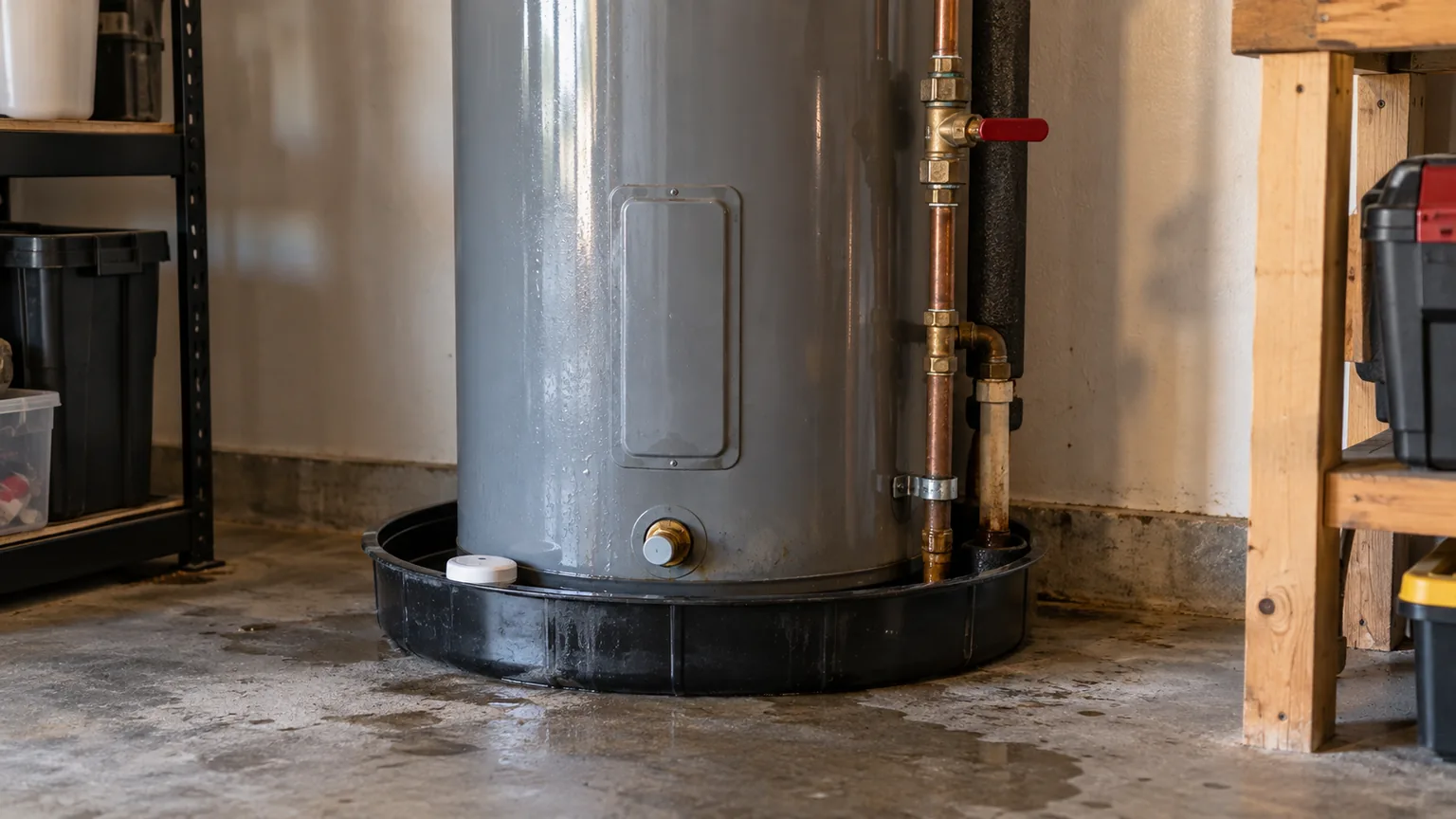
- Note your water heater's age and plan to replace it around 10 to 12 years. A tank that lets go can dump 40 or 50 gallons across the floor.
- Locate your main shut-off valve and make sure it actually turns. In a leak, every minute it takes to find the valve is more water in your walls and floors, so locate it before you ever need it in a hurry.
- Install leak detectors near the water heater, under sinks, and behind the washer. The cheap battery pucks alarm; the smarter ones can cut the water automatically. Either beats none.
- Keep gutters clear and your grading sloping away from the foundation, so the heavy storm runoff this region gets drains off to the yard instead of pooling against the house and finding a way in.
- Watch for slab-leak signs, which we'll get into, since so many local homes sit on slabs.
- Run a seasonal prep rhythm for freeze, flood, and humidity. More on that below.
- Check the supply lines under sinks and behind toilets twice a year for corrosion or seepage.
You won't do all eight this weekend, and you don't need to. Knock out the first two, and you've covered the failures we see most.
The Two Cheapest, Highest-Impact Fixes
Start right here. Do these two if you do nothing else. Replace rubber washing-machine hoses with braided stainless steel, and put a drip pan with a moisture alarm under the water heater. Together they cost under a hundred dollars and prevent the two most common indoor floods.
The single best prevention upgrade is replacing the rubber supply hoses on your washing machine and dishwasher with braided stainless steel. Rubber hoses age, harden, and split, and when one fails it doesn't drip, it sprays, sometimes for hours before anyone notices. A burst washer hose left running while you're at work can put hundreds of gallons through a laundry room and into the rooms next door. Braided steel lines resist that failure and cost about the price of lunch. Swap them this weekend.
The second is knowing your water heater's age. Most tanks last roughly 10 to 12 years, and the failure mode is rarely gentle. The tank corrodes from the inside, then the bottom gives way and the whole thing drains across your floor, often into a hallway or a cabinet base before you smell or hear it. Check the manufacture date on the label, and if your heater is creeping toward a decade, budget for replacement before it picks the worst possible morning to quit. Together, those two predictable, preventable failures drive a large slice of the appliance leak cleanup in San Marcos work we handle.

Text version of this infographic
Two cheap fixes that stop the most common floods. Appliance hoses and aging water heaters cause a large share of indoor water damage.
- 10-12 yrs Typical water heater life
- Plan replacement before the tank gives way.
- 40-50 gal Water a failed tank can dump
- Often into a hallway or cabinet base first.
- ~5 yrs Washer hose replacement
- Sooner with bulging, cracking or rust.
- Under $100 Both fixes together
- Braided steel hoses plus a pan with an alarm.
Water heater service life per appliance industry data.
Know Your Shut-Off and Add Leak Detection
Two systems, one goal. Stop water fast, or catch it before it gets bad. Find your main shut-off now and make sure the valve actually turns, then add cheap point-of-use moisture alarms under sinks, behind the washer, and near the water heater.
Your main shut-off is your emergency brake. It's usually where the water line enters the house or out at the meter near the curb, and you want to find it on a calm afternoon, not while you're ankle-deep at midnight. Turn it, confirm it moves, and show everyone in the house. An old gate valve can seize up, so if yours won't budge, that's worth a plumber's visit before you need it.
Leak detectors fill the gap your eyes miss. Place them at the failure-prone spots, which means beside the water heater, under kitchen and bathroom sinks, behind the washer, and near the dishwasher. The simple ones sound an alarm when they get wet. The smart ones tie into your shut-off and can kill the water on their own, which is the kind of thing that turns a vacation disaster into a phone notification you handle from the lake. Suspect a hidden leak right now? Call us.
Watch for Slab-Leak Signs in San Marcos Homes
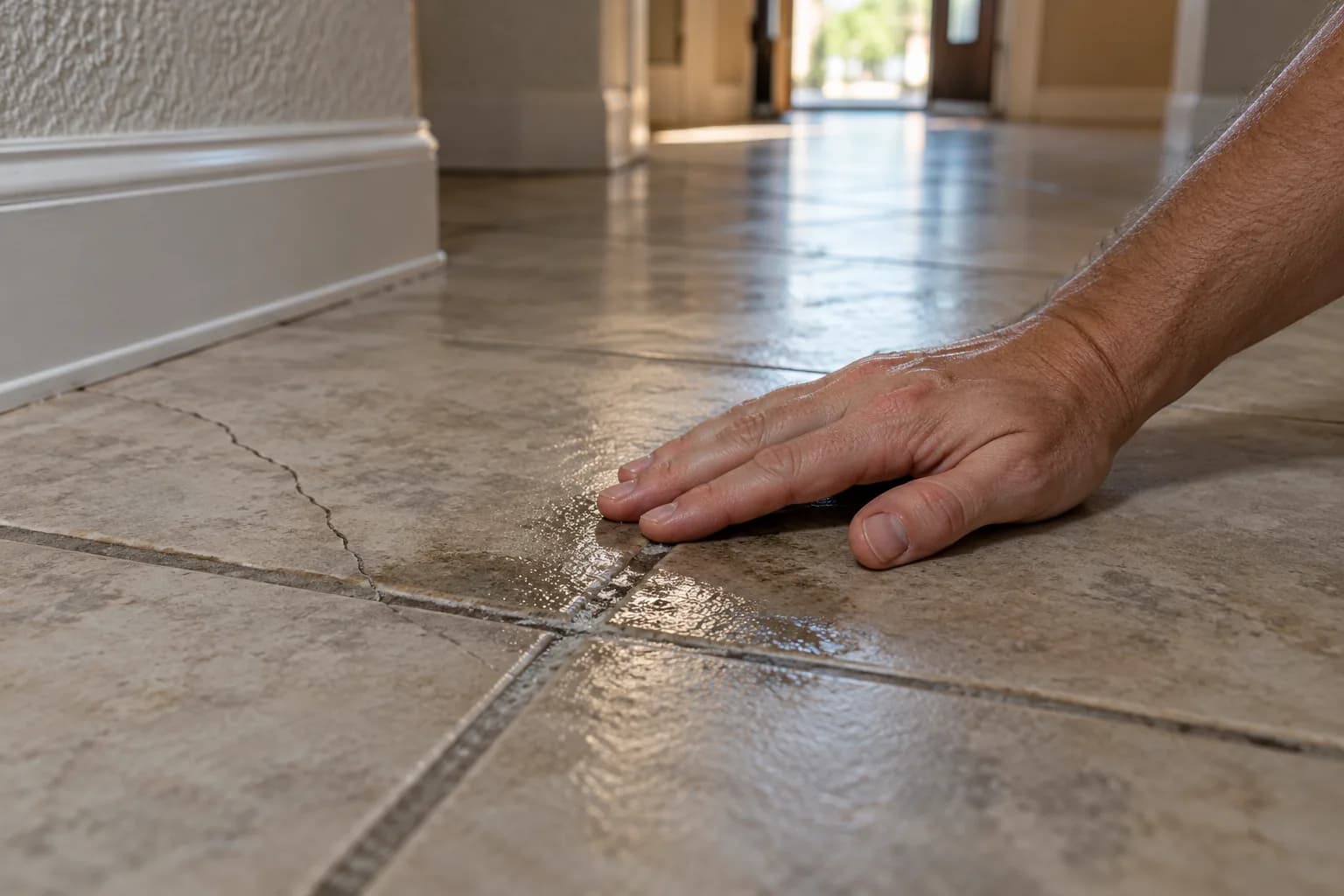
Local reality check. A lot of San Marcos houses, older ones and new builds in Kyle and Buda alike, sit on a concrete slab with the water lines running through or under it. When one of those lines springs a leak, you can't see it. It hides under the floor until the clues pile up.
Here's a scenario we run into. A homeowner notices a warm patch on the tile in a room nobody heats, then the water bill jumps for no reason they can name, and there's a faint hiss of running water when the house is dead quiet. That combination, an unexplained bill, a warm or damp floor spot, the sound of water with everything off, and sometimes cracking in the flooring, points to a slab leak. Because the water moves under the slab and into the foundation, this is the kind of thing where a moisture inspection early saves you a much larger repair later. Don't sit on it.
A Central Texas Seasonal Prevention Rhythm
Prevention here isn't one-and-done. The risk rotates through the year, so your attention should too. Spring and early summer bring flash flooding, high summer brings AC condensate and humidity, and a hard winter front brings freeze bursts. Each season has a different weak point.
Spring brings the flash floods. Central Texas sits in flood country, and the rivers around San Marcos rise fast, so this is the season to check drainage and review your plan. Our San Marcos flood season preparation guide walks through it. Summer brings heat and humidity. That means mold moves quickly anytime moisture gets loose indoors, and your AC condensate line becomes a sneaky source of slow leaks. Winter brings the occasional hard freeze, and that's a different playbook entirely, covered in our Texas freeze pipe-burst prevention guide. Treat each season as a quick walkthrough rather than a chore, and you stay ahead of all three without ever doing much at once.
If Prevention Fails, What to Do
Honest truth. No checklist stops everything. Hoses fail early, freezes hit hard, and slab leaks start without a sound. When prevention falls short, speed is what limits the damage, so shut the water off, cut power to affected rooms, photograph everything, then call. Speed is everything.
Shut off the water at the main, kill power to any wet area at the breaker, and start documenting with photos before you clean up. Then get moisture out fast, because the first 24 to 48 hours decide whether you're drying a room or rebuilding it. Our guide on what to do first when your house floods lays out the safety steps in order, and we're available around the clock when you need extraction and drying.
Written by the Water Damage Restoration San Marcos team
Local water-damage restoration in San Marcos, TX and Hays County. Our guidance follows the ANSI/IICRC S500 and S520 reference standards the industry plans around. Questions about your situation? Call (512) 778-8417, we answer 24/7.