San Marcos water damage guide
Water Heater Leaking, Flooded Floor: What to Do First
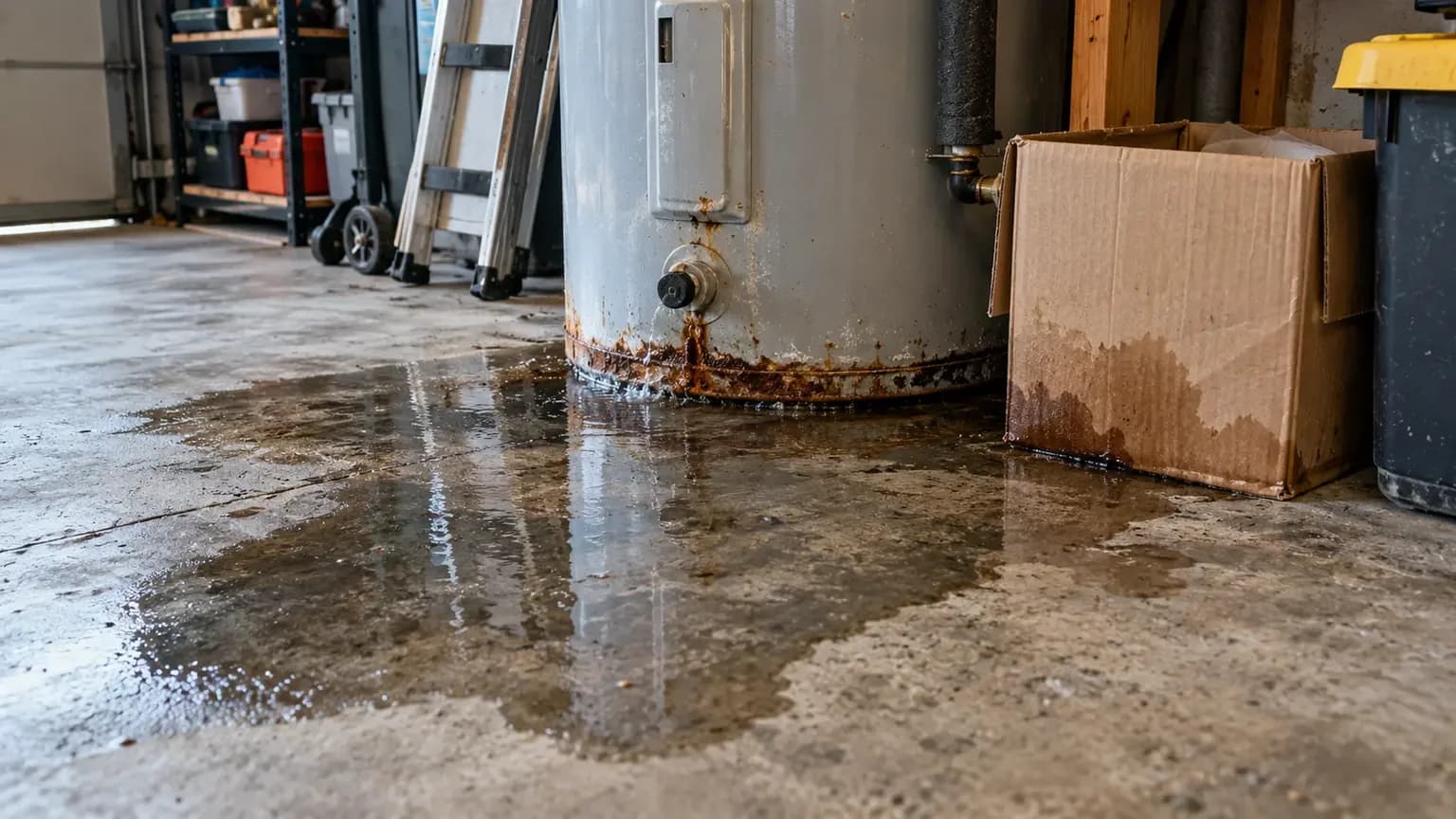
A water heater leaking with a flooded floor is one of those mornings you do not forget. You came down, or stepped into the garage, and there it is. Water spreading out from the tank across the floor, already reaching for the closet door or the kitchen. Take a breath. The first steps are simple and fast, and you can do them in seconds. What you cannot see yet is the part that actually costs money, the water already sliding under the cabinets and into the wall base. In a San Marcos slab home, that spread happens quick. Here is what to do, in order, starting now.
Published · Updated
Water heater flooding now? Call 24/7. (Phone line being finalized for launch.)
What to Do When Your Water Heater Is Leaking and the Floor Is Flooded
If your water heater is leaking and the floor is flooding, shut off the water at the cold-inlet valve on top of the tank, then cut power to the heater. Flip the breaker for an electric unit or turn the gas valve off. Stay clear of hot and standing water.
Then extract and dry fast before it reaches cabinets and subfloor.
The steps.
- Shut the cold-inlet valve on top of the tank. That is the fastest way to stop the bleed.
- Cut the power. Flip the heater breaker if it is electric, or turn the gas control to off.
- Stay away from hot water and any standing water near outlets. A failed tank can dump scalding water.
- Move valuables and anything off the floor in the path of the spread.
- Photograph the damage for your insurance, the tank, the water, the wet cabinets.
- Start extraction or call for help before water reaches cabinets and subfloor.
That is the sequence. The first two steps are the ones that matter most, because shutting the inlet and killing the power stop the leak from feeding and take the shock risk off the table.
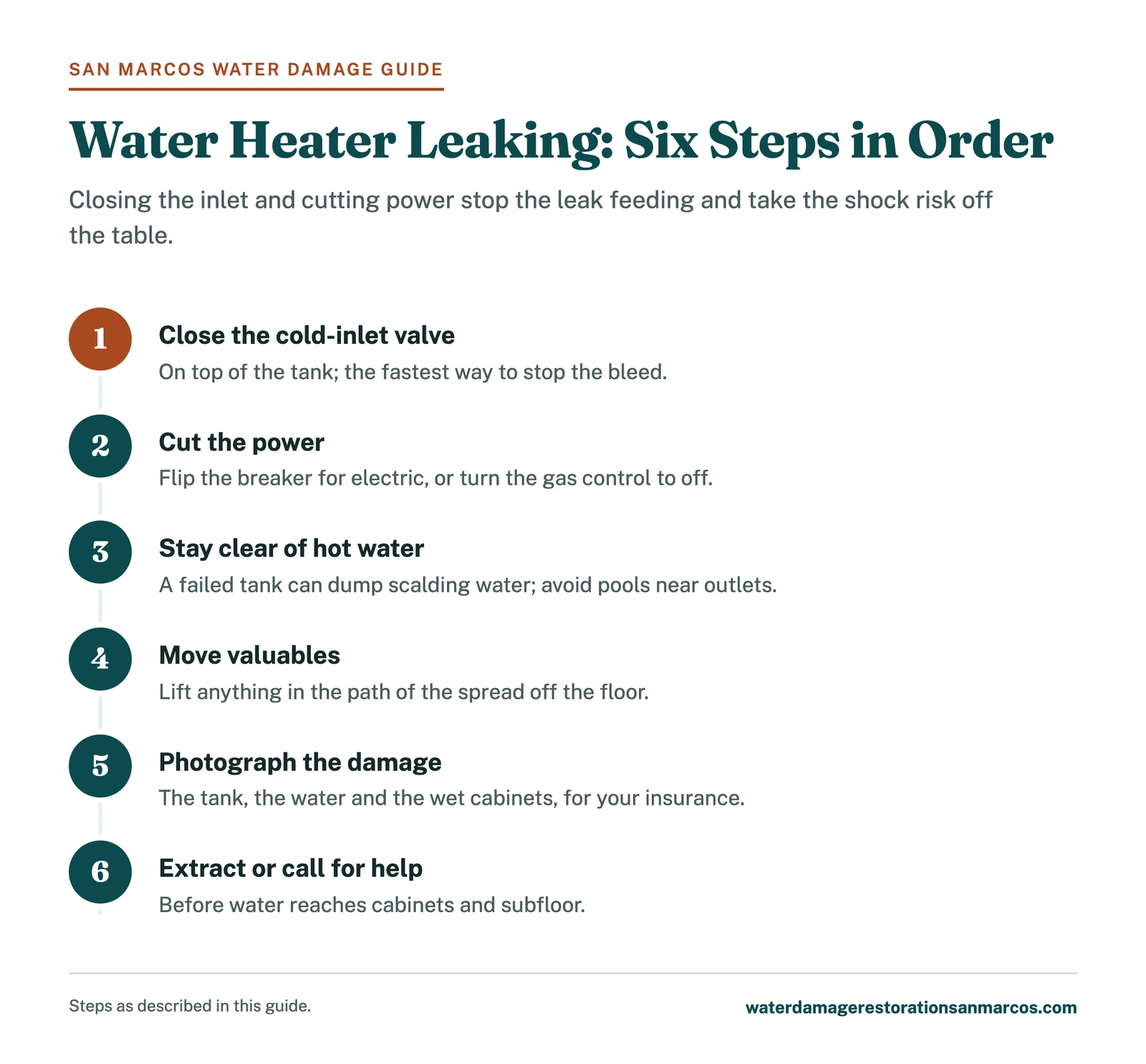
Text version of this infographic
Water Heater Leaking: Six Steps in Order. Closing the inlet and cutting power stop the leak feeding and take the shock risk off the table.
- Close the cold-inlet valve. On top of the tank; the fastest way to stop the bleed.
- Cut the power. Flip the breaker for electric, or turn the gas control to off.
- Stay clear of hot water. A failed tank can dump scalding water; avoid pools near outlets.
- Move valuables. Lift anything in the path of the spread off the floor.
- Photograph the damage. The tank, the water and the wet cabinets, for your insurance.
- Extract or call for help. Before water reaches cabinets and subfloor.
Steps as described in this guide.
How to Shut Off a Leaking Water Heater Safely
The valve you want is on top of the tank, on the cold-water inlet, usually a lever or round handle on the line feeding into the heater. Close it. That stops water refilling the tank and feeding the leak, faster than running to the whole-house main.
It also leaves the rest of the house with water while you work. If you cannot find or turn that valve, go to the main shut-off where the supply enters the home.
Power is next, and it splits two ways. Two paths, one goal. For an electric heater, go to the panel and flip the breaker for the water heater. For a gas unit, turn the gas control valve on the front of the tank to the off position. You want the energy source off so the burner or element is not firing against a draining or empty tank.
A word on the heat. The water coming out of a failed tank can be near scalding, so do not wade through it barefoot or reach into it. There is also a T&P valve, the temperature and pressure relief valve on the side or top, and if that is what is discharging, it is venting pressure on purpose, which is its job. Either way, get the inlet closed and the power off first.
If you want the broader version of this for any flooding event, here is the full first-hour flooded-house checklist.
What's Really at Risk, Cabinets, Subfloor, and Walls
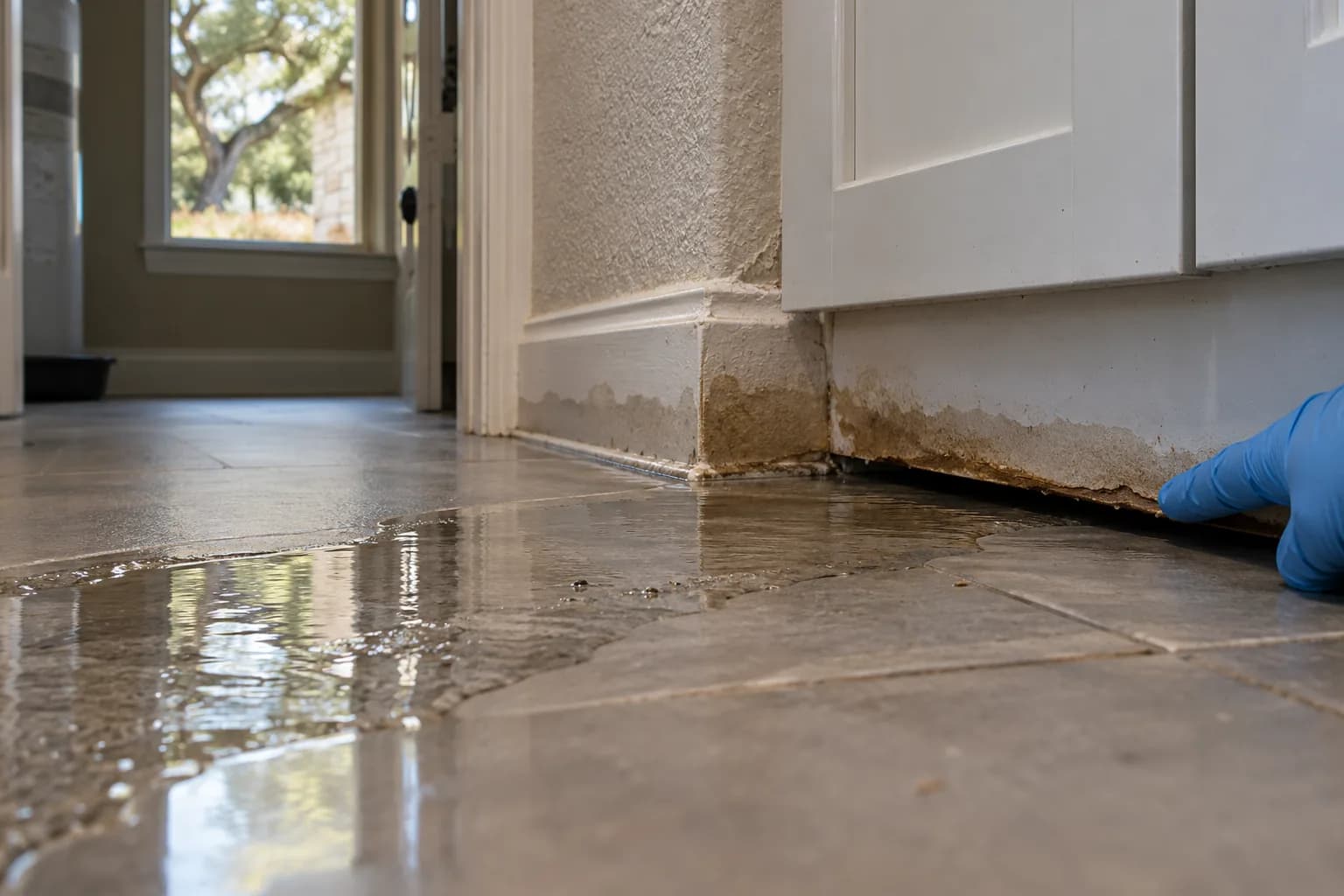
Here is the part homeowners miss. The puddle you can see is not the problem. The problem is where the water already went. The short version is under the cabinet kickplate, into the subfloor, up the drywall bottom plate, and along the joists to rooms nobody has checked.
Water travels under the cabinet kick-base and behind the baseboards, into the bottom plate of the wall, where a towel and a mop never reach. It sits in those cavities, soaks into the subfloor, and just stays there. Many San Marcos homes, especially newer builds in Blanco Vista, Kissing Tree, and La Cima, put the water heater in a garage or an interior closet, so a tank failure floods straight into adjacent rooms and the cabinet runs next to it before you have even found the valve.
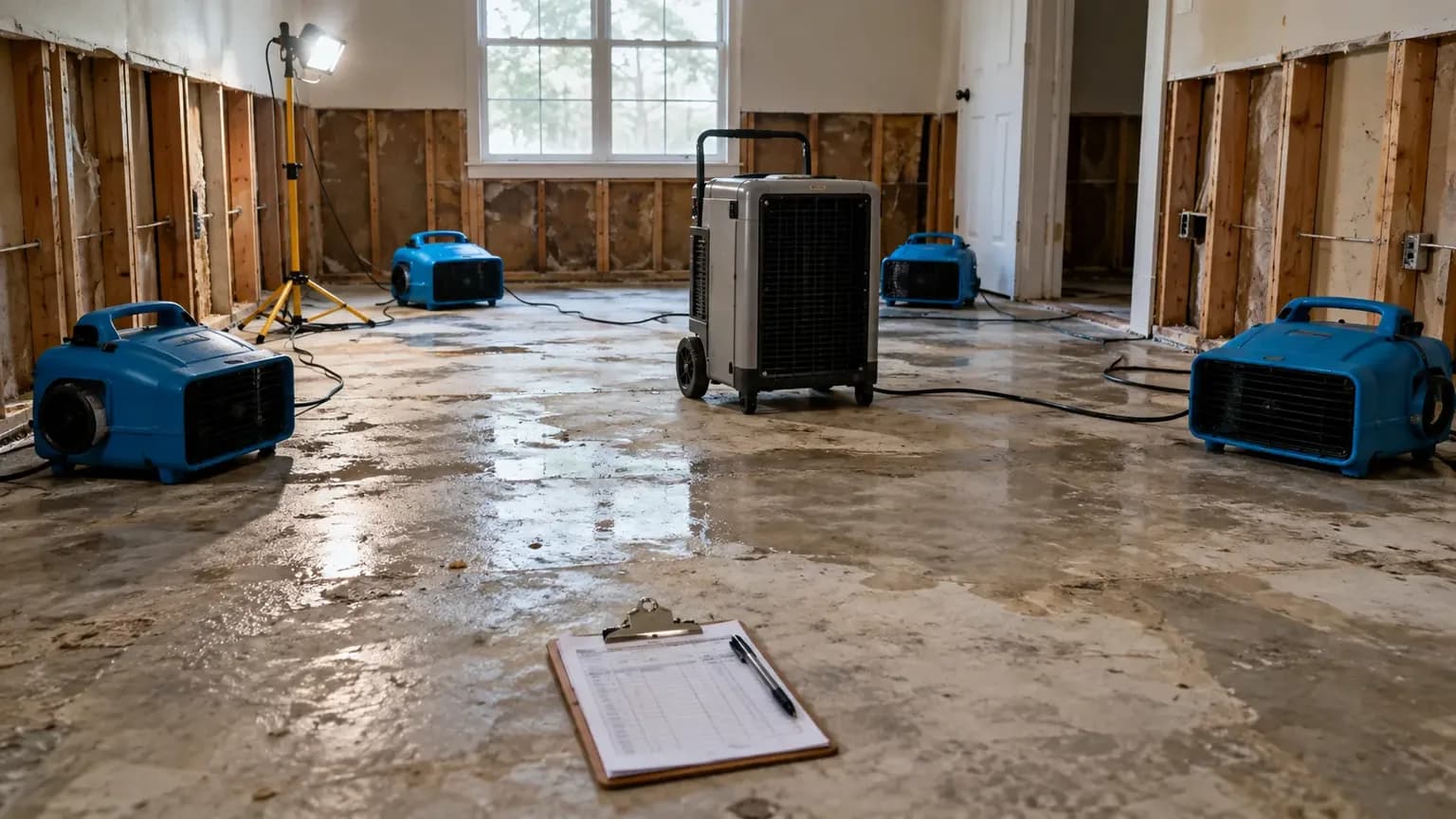
Slab-on-grade construction, the norm across San Marcos, TX, Kyle, and Buda, makes it worse. Water spreads flat and fast across the slab and wicks up into everything that touches the floor. You mop the visible water, the floor looks dry, and three weeks later the cabinet base is swelling and the room smells off. That is the hidden water you never extracted, which is why mopping is a start and not a fix, and why this is when professional structural drying earns its keep.
Why Fast Extraction and Drying Matter
Speed decides the outcome. The first 24 to 48 hours after a leak are the window where you can pull water out before materials are wrecked and before mold gets going. Past it, cabinets swell, subfloor delaminates, and a drying job becomes a rebuild.
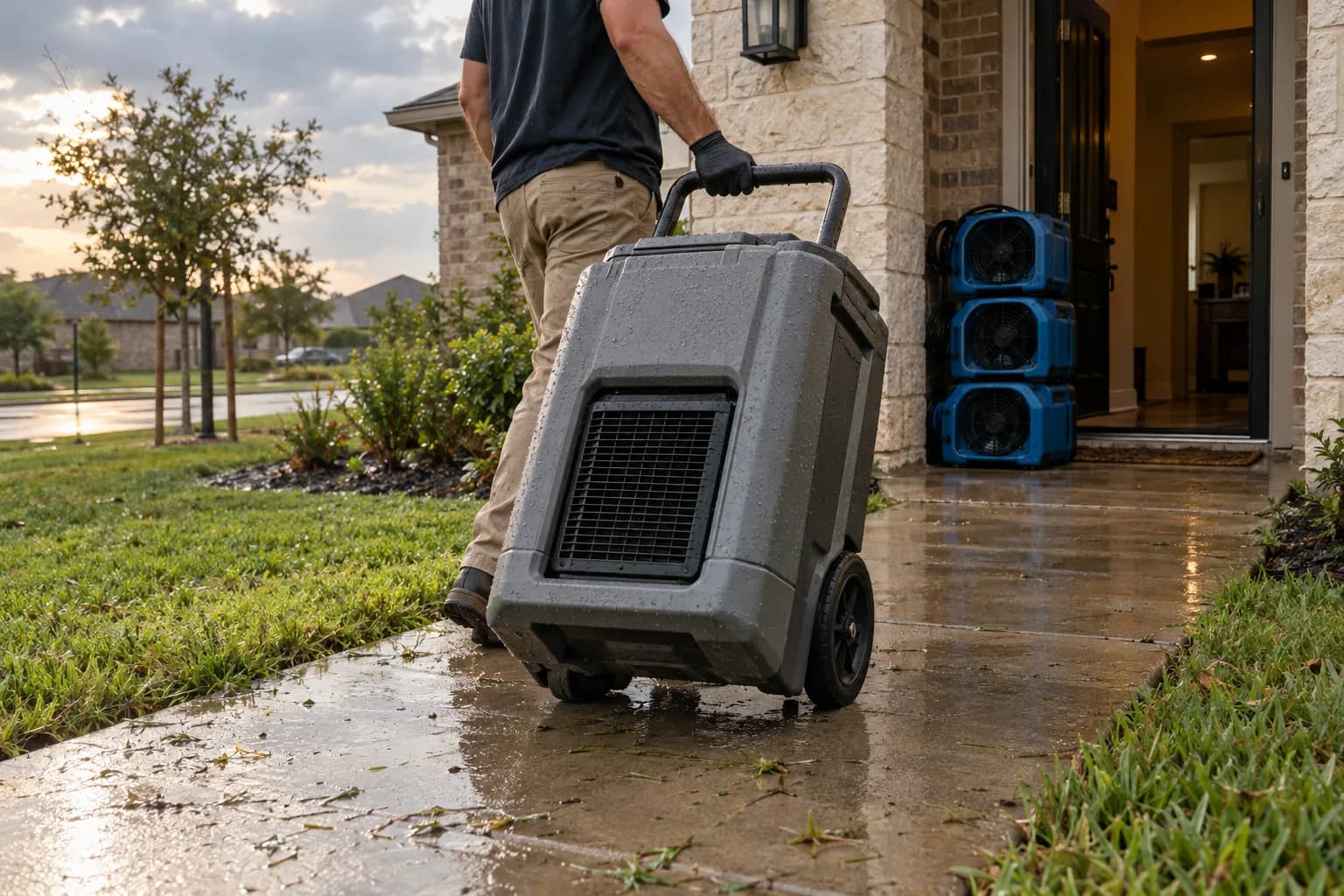
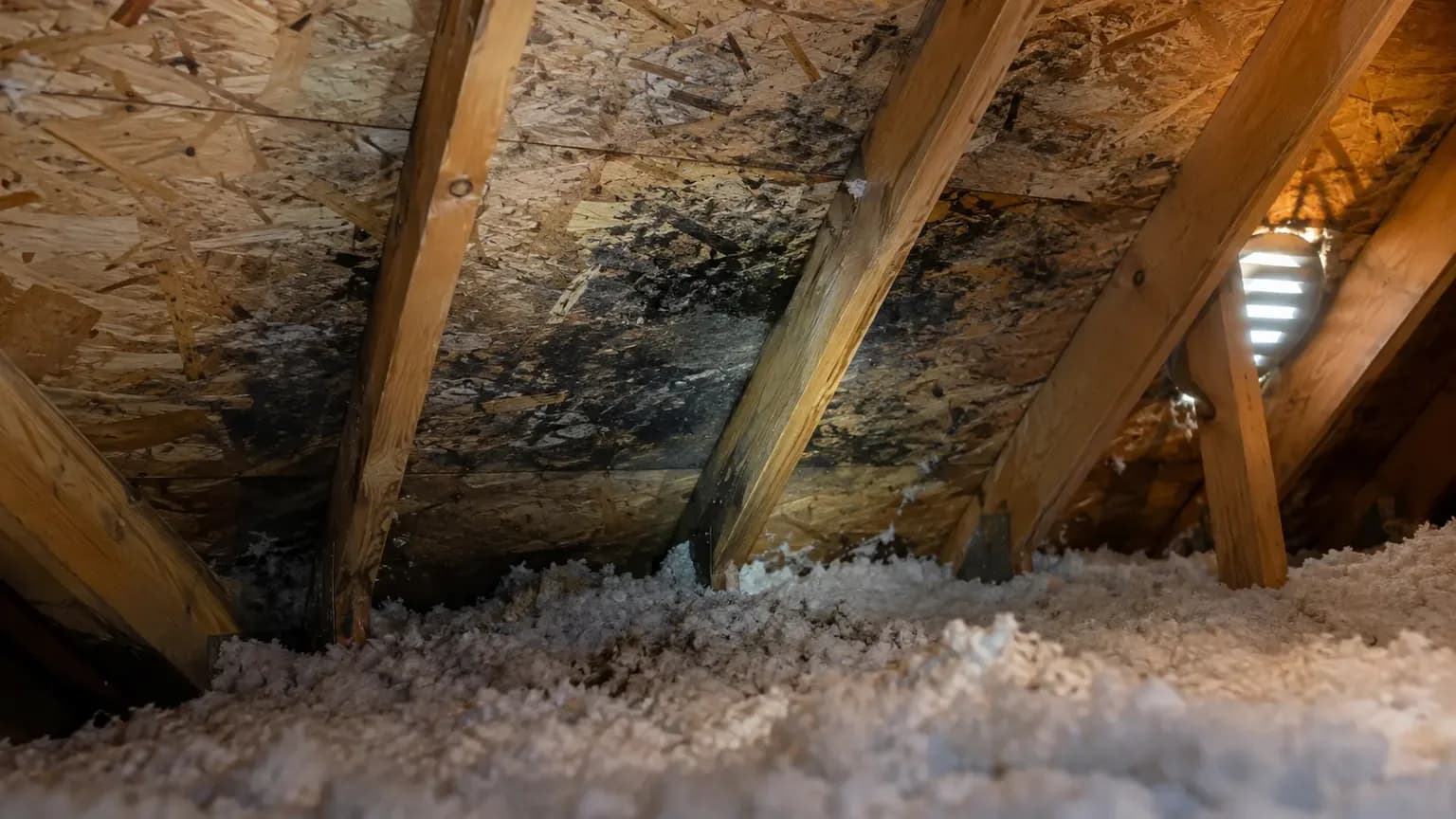
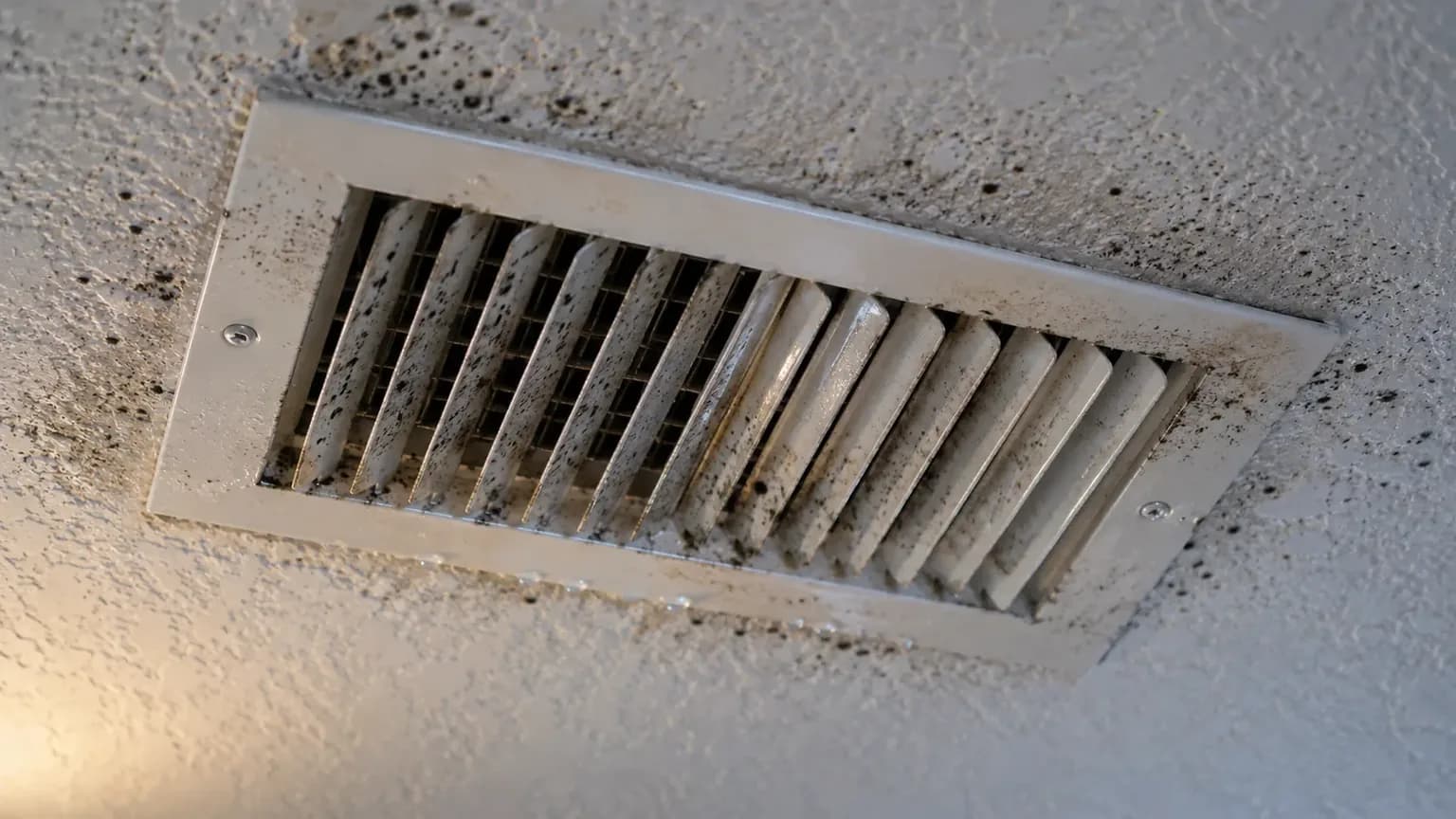
The warm, humid Central Texas climate stacks the odds against a wet floor. The heat works against you. Moisture lingers, the air does not dry things out, and mold can begin colonizing damp organic material inside that same day-or-two window. A flooded floor left to "air dry" overnight in a San Marcos summer is a flooded floor growing a problem. That is the case for emergency water extraction sooner rather than later. It removes the water trapped in the subfloor and wall cavities, not just the sheen on the tile.
Get emergency extraction started. (Phone line being finalized for launch.)
When to Call a Professional
Some of this you can handle. Some of it you should not. Shutting the valve and mopping a small spill is homeowner work. Water that reached cabinets, crossed into another room, or sat overnight needs a moisture meter and drying equipment you do not own.
You can shut the valve, cut the power, move things, and shoot photos. That is the safe DIY part. Where it crosses into call-a-pro territory is when the flood is more than a small contained spill, when water has reached cabinets or wall bases, when there is any hot-water or electrical risk you are not sure about, or honestly, when you are just not certain. Uncertainty is a fine reason to call.
A water heater that floods a closet or garage almost always sends water somewhere you cannot dry yourself. That is the call. That is the moment for water heater and appliance leak cleanup in San Marcos, where the hidden moisture under cabinets and behind walls actually gets extracted and dried to a standard, not just wiped up.
Written by the Water Damage Restoration San Marcos team
Local water-damage restoration in San Marcos, TX and Hays County. Our guidance follows the ANSI/IICRC S500 and S520 reference standards the industry plans around. Questions about your situation? Call (512) 778-8417, we answer 24/7.