San Marcos water damage guide
The Water Damage Restoration Process Steps, Explained
The water damage restoration process steps run in a fixed order, which means inspect and map the moisture, extract standing water, dry the structure, clean and sanitize, then rebuild what can't be saved. What changes from job to job is the timeline, and that's set by two things. The water category, and the materials it soaked into. A clean supply-line leak on tile dries differently than river floodwater in a slab-on-grade San Marcos home with wet cabinet kicks. Same steps, different job. This guide walks the whole sequence the way a technician would explain it on your floor, including the one step homeowners almost never see.
Published · Updated
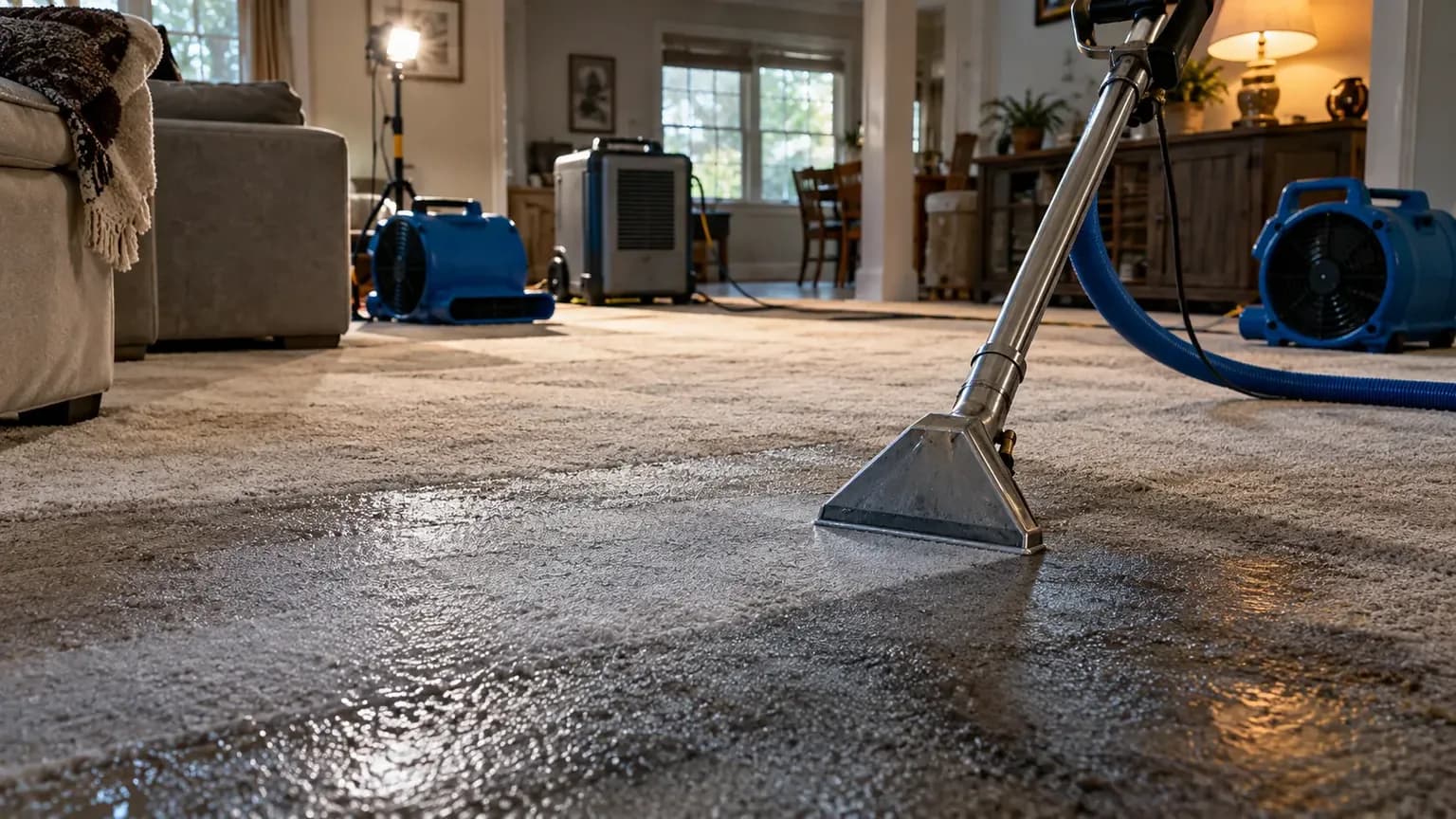
What Are the Steps of the Water Damage Restoration Process?
There are five core steps. Water damage restoration runs inspection and moisture assessment, water extraction, structural drying and dehumidification, cleaning and sanitizing, then restoration or reconstruction. The water category and the materials affected determine how long each step takes, and most drying runs about three to five days.
- Inspection and moisture assessment. Find the water, including what's hidden behind walls and under floors.
- Water extraction. Pull standing water out fast, before it wicks deeper.
- Structural drying and dehumidification. Dry framing, subfloor, and drywall to a measured target, not "looks dry."
- Cleaning and sanitizing. Clean affected surfaces, with antimicrobial treatment when the water was contaminated.
- Restoration / reconstruction. Rebuild the drywall, flooring, paint, trim, and finishes that had to come out, putting the room back to the pre-loss condition it was in before any water ever arrived.
That order isn't arbitrary. It mirrors the ANSI/IICRC S500 standard, the reference document the restoration industry uses to define how water losses get handled, and each step is deliberately built on the one before it so you never start rebuilding over framing that is still quietly holding water. We follow it as a framework here because it's what separates a real dry-out from a quick mop-and-pray.
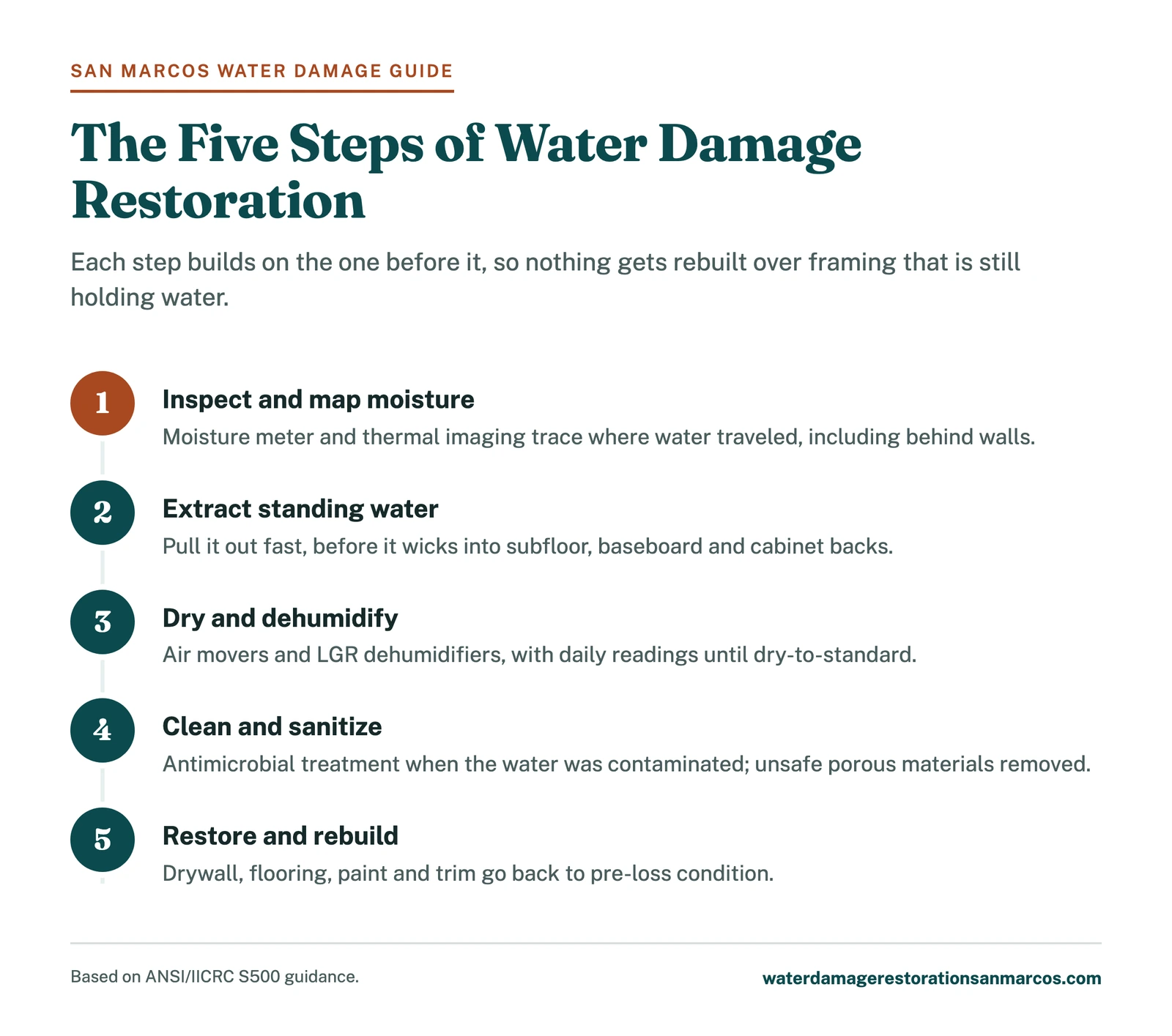
Text version of this infographic
The Five Steps of Water Damage Restoration. Each step builds on the one before it, so nothing gets rebuilt over framing that is still holding water.
- Inspect and map moisture. Moisture meter and thermal imaging trace where water traveled, including behind walls.
- Extract standing water. Pull it out fast, before it wicks into subfloor, baseboard and cabinet backs.
- Dry and dehumidify. Air movers and LGR dehumidifiers, with daily readings until dry-to-standard.
- Clean and sanitize. Antimicrobial treatment when the water was contaminated; unsafe porous materials removed.
- Restore and rebuild. Drywall, flooring, paint and trim go back to pre-loss condition.
Based on ANSI/IICRC S500 guidance.
Step 1 to 2, Inspection and Extraction
Find the water you can't see. A good first walkthrough uses a moisture meter and thermal imaging to trace where water traveled, because it rarely stays where it landed and a leak in one room can soak materials in the next one before anyone notices.
Both matter. Water finds the path of least resistance, so a leak in a hallway can show up in a bedroom closet two rooms over. The tech maps the wet zones, notes the suspected source, and writes down a scope before anything gets touched. Our water damage inspection and moisture detection page covers the equipment and the documented report it produces.
Extraction is next, and it's a race. The faster standing water comes out, the less of it soaks into porous materials like subfloor, baseboard, and the back of cabinets. We use truck-mounted units for big-volume jobs and portable extractors for tight rooms and upper floors. A large flood call might pull hundreds of gallons in the first pass. Time is the enemy. Speed here is exactly why the first 24 to 48 hours matter so much. Every hour standing water sits, it migrates farther into the structure and raises the odds of secondary damage. See water extraction in San Marcos for how that part of the job runs.
Step 3, Structural Drying and the Daily Monitoring Loop
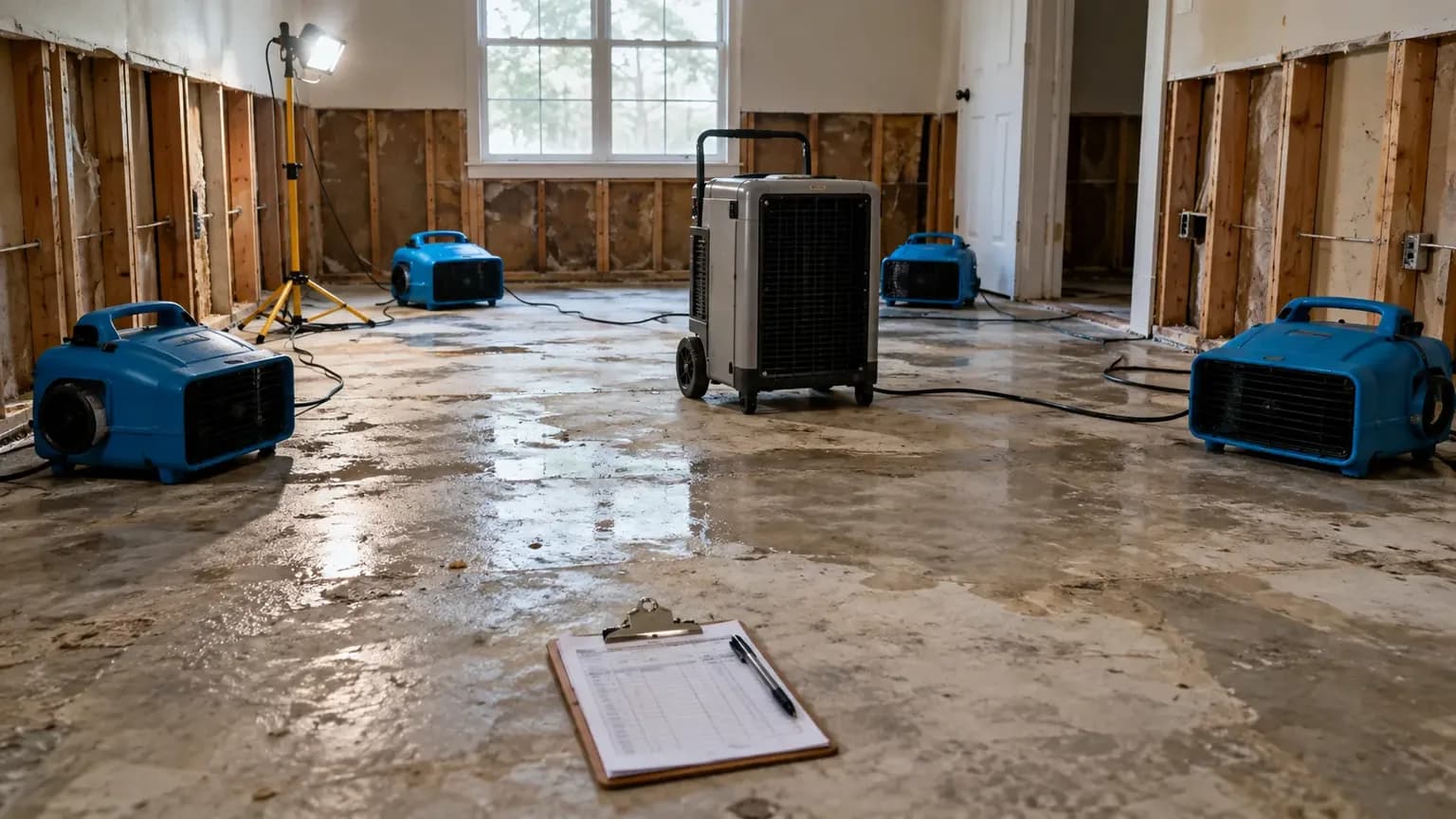
Drying is the invisible step. Homeowners almost never see it, and it's where good restoration actually happens, because after extraction the structure is still full of bound moisture you can't feel by touch. Air movers push evaporation off surfaces and LGR dehumidifiers pull that moisture out of the air.
It is the quiet one. In humid Central Texas, dehumidification isn't optional. Open the windows on a sticky June afternoon and you'd be drying the house with wetter air than you started with, which is why a controlled drying chamber beats fresh air here almost every time.
Here's the part that separates a finished job from a future mold call. A real drying job is a daily loop, not a set-and-forget. Every day, the tech takes moisture readings on the affected materials and compares them against an unaffected baseline elsewhere in the home. The numbers drive it. The equipment gets moved, added, or pulled based on what those daily readings say. Slab-on-grade homes around San Marcos drag this out, because concrete slabs and the cabinet bases sitting on them hold moisture far longer than a raised-floor house. The drying isn't done when the carpet feels dry underfoot. It's done when the readings hit dry-to-standard, a measurable target rather than a guess, and our structural drying and dehumidification page explains how those targets get set and tracked day to day.
A company that "sets up fans and leaves" skips this loop. That's how you end up dry on the surface and rotting underneath.
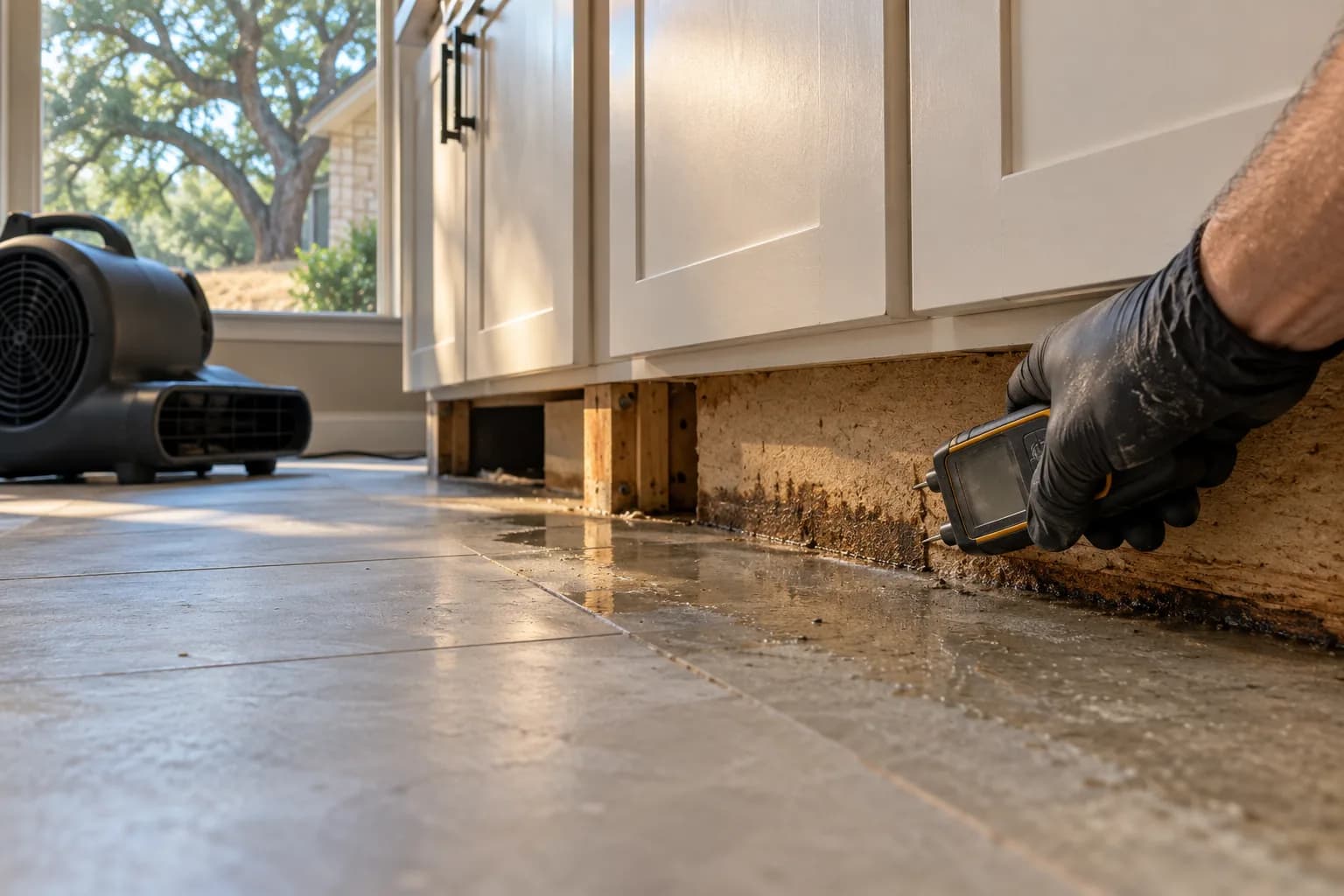
Step 4 to 5, Cleaning, Sanitizing, and Reconstruction
Once materials are dry, cleaning begins. For clean-water losses this can be straightforward. In practice that means wipe down, deodorize, done. When the source was gray or black water, affected surfaces get antimicrobial treatment, and porous materials that can't be safely cleaned come out rather than getting saved.
Contaminated water is a different animal. Think soaked drywall, carpet pad, or insulation. The goal is a sanitary structure, not just a dry one.
Reconstruction is the visible payoff. New drywall goes up where wet board was cut out, flooring gets replaced, trim and paint go back, and the room returns to pre-loss condition. Hard to predict the timeline here. A small bathroom might be a day or two of build-back; a flooded ground floor with cabinetry and hardwood can run weeks. Doing extraction, drying, and rebuild under one roof keeps the documentation consistent and avoids the gap where one crew dries and another rebuilds and nobody owns the whole job. Our water damage repair and reconstruction page covers the build-back scope.
How the Water Category Changes the Process
Same five steps, very different jobs. The difference is the water category. Category 1 is clean water from a sanitary source, Category 2 gray water is contaminated appliance discharge, and Category 3 black water is grossly contaminated sewage or river floodwater that forces the most aggressive removal.
The dirtier the water, the more the process tilts toward removal and sanitizing instead of saving and drying. The category sets the tone. A Category 1 hardwood floor might be dried in place; a Category 3 floor in the same room usually comes out. For the full breakdown, read water damage categories explained.
This matters locally. Flooding from the San Marcos and Blanco Rivers is Category 3 by definition, so a flood job in the river corridor starts at the most involved end of the scale, with heavier extraction, full sanitizing, and more material coming out than a clean-water leak ever would.
How Long Does the Process Take?
Three to five days, usually. That's the honest range for structural drying, and anyone promising a flooded house dried overnight is selling something. The variables are the category, how saturated the materials are, and what they're made of. A slab and cabinet kicks hold moisture longer than open drywall.
Materials decide the rest. Reconstruction adds time on top, anywhere from a couple of days for minor repairs to several weeks when there's significant build-back. We won't quote you a finish date before the inspection, because we'd be guessing. For a deeper look, see how long it takes to dry out water damage.
Questions about the process? Talk to us.
Written by the Water Damage Restoration San Marcos team
Local water-damage restoration in San Marcos, TX and Hays County. Our guidance follows the ANSI/IICRC S500 and S520 reference standards the industry plans around. Questions about your situation? Call (512) 778-8417, we answer 24/7.