San Marcos water damage guide
DIY Water Damage Cleanup vs Professional: When to Call
Nobody wants to pay a company for a job they could've handled with towels and a shop vac. So let's be straight about diy water damage cleanup vs professional work, because the honest answer isn't "always call us." A small, fresh, clean-water spill is often something you can dry yourself, and you should, if you can get it fully dry within a day or two.
Published · Updated
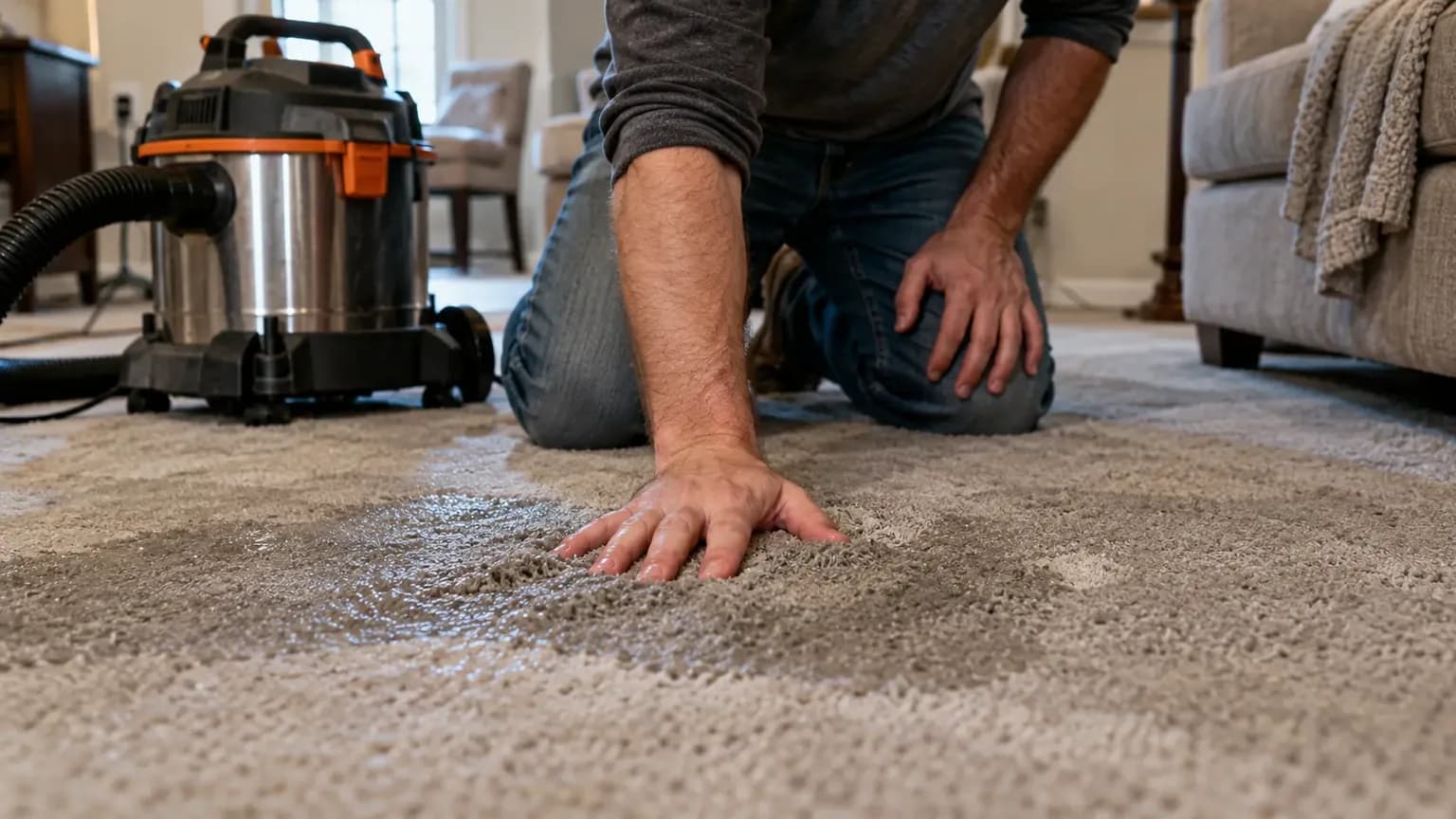
The line gets drawn when the water is contaminated, when it spread into walls or flooring, or when it's been sitting. One local wrinkle worth knowing up front. San Marcos humidity shortens how long a DIY job can safely sit before mold becomes the bigger problem. A clean spill in July behaves differently than the same spill in a dry climate.
Not sure if it's a DIY job? Talk to an expert.
Can You Clean Up Water Damage Yourself?
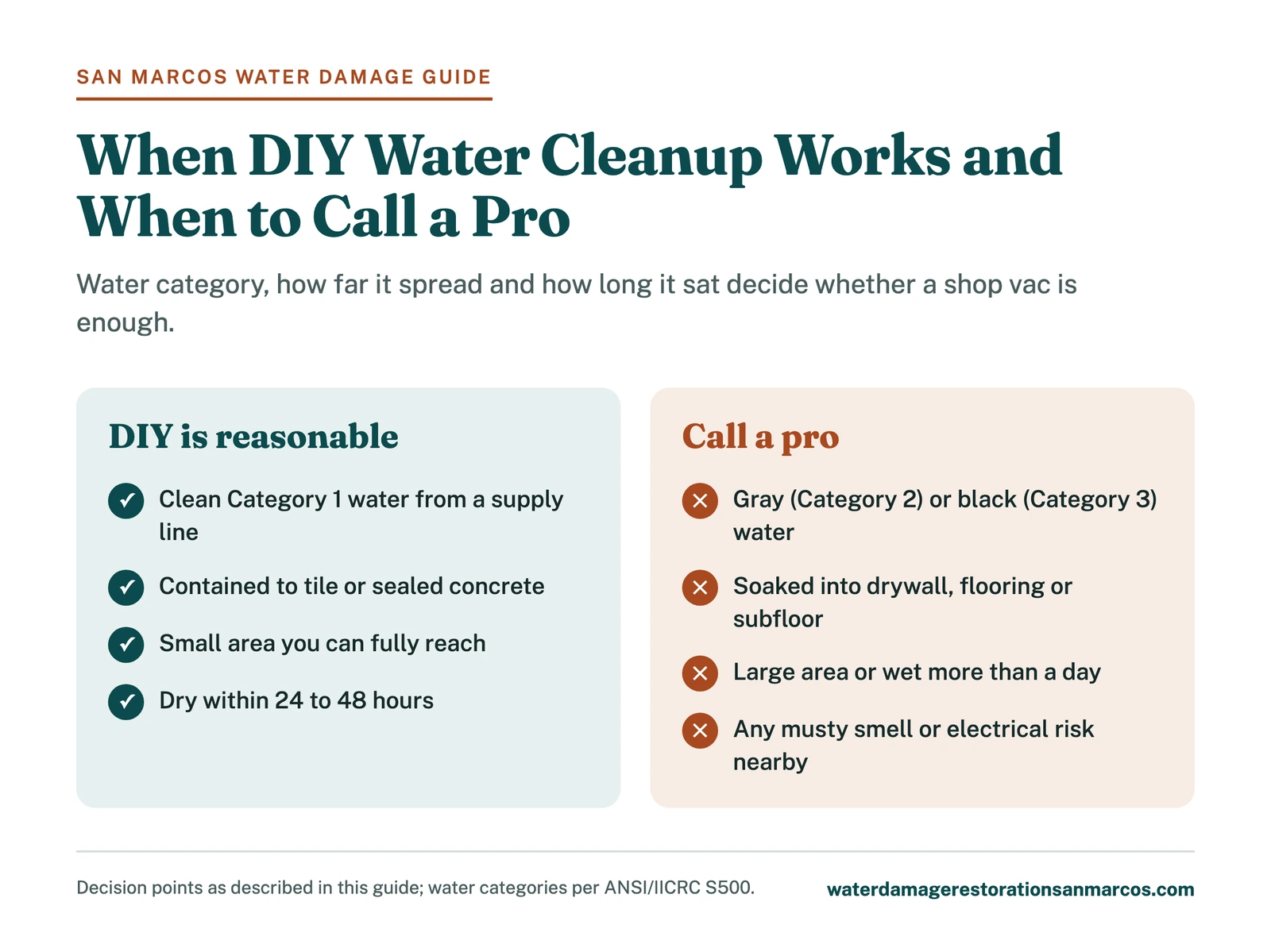
You can usually handle a small, fresh clean-water spill yourself if you dry it completely within 24 to 48 hours. Call a professional when the water is contaminated, when it has spread into walls, flooring, or subfloor, when it has sat more than a day, or when you smell anything musty.
Hidden moisture is the risk DIY misses, and gray or black water is never a DIY job.
Quick way to sort it.
DIY is reasonable when,
- The water is clean (Category 1, from a supply line or rain that didn't pool)
- It's contained to a hard surface like tile or sealed concrete
- It's a small area you can fully reach
- You can have it dry within 24 to 48 hours
Call a pro when,
- The water is gray (Category 2) or black (Category 3)
- It soaked into drywall, flooring, or subfloor
- It covers a large area or has been wet over a day
- You smell anything musty, or there's electrical risk nearby
Text version of this infographic
When DIY Water Cleanup Works and When to Call a Pro. Water category, how far it spread and how long it sat decide whether a shop vac is enough.
DIY is reasonable
- Clean Category 1 water from a supply line
- Contained to tile or sealed concrete
- Small area you can fully reach
- Dry within 24 to 48 hours
Call a pro
- Gray (Category 2) or black (Category 3) water
- Soaked into drywall, flooring or subfloor
- Large area or wet more than a day
- Any musty smell or electrical risk nearby
Decision points as described in this guide; water categories per ANSI/IICRC S500.
When DIY Cleanup Is Fine
Plenty of spills are genuinely yours to handle. A glass knocked over, a small overflow you caught right away, a clean supply leak on tile that didn't have time to travel. If the water is clean, the area is small, and you can get everything dry inside that 24-to-48-hour window, go for it.
The DIY playbook is straightforward. Extract the standing water first with a wet vac, not a regular vacuum. Get air moving with fans across the wet area. If you own or can rent a dehumidifier, run it with the windows shut, because in our climate open windows usually let in more moisture than they remove. Then keep checking the spot over the next two days, including the edges and anything porous nearby. If it stays dry and never smells off, you're done and you saved yourself a service call. That's a real outcome, and an honest company will tell you so.
When You Should Call a Professional
Some jobs are past a mop no matter how handy you are, and water category is the cleanest line to draw. Clean water is Category 1. Gray water, Category 2, carries some contamination, think a washing machine discharge or a dishwasher backup. Black water, Category 3, is the dangerous tier, and it's not a DIY job by definition.
Here in San Marcos, TX, Category 3 isn't hypothetical. River flooding off the San Marcos and Blanco Rivers brings in outdoor contamination, and the 2015 Memorial Day flood, when the Blanco crested around 40 feet and destroyed thousands of Hays County homes, is the reminder of how dirty that water is. Sewage backups are Category 3 too. Both need professional handling, full stop. Call a pro the moment any of these are true. The short version is the water is gray or black, it spread into walls, flooring, or subfloor, it's been wet more than a day, you smell musty, the area is large, or there's electrical anywhere near the water. When you reach that point, water damage categories explained breaks down exactly why the tier changes everything about how the cleanup is handled.
Past the DIY line? Call for help now.
The Hidden-Moisture Problem DIY Misses
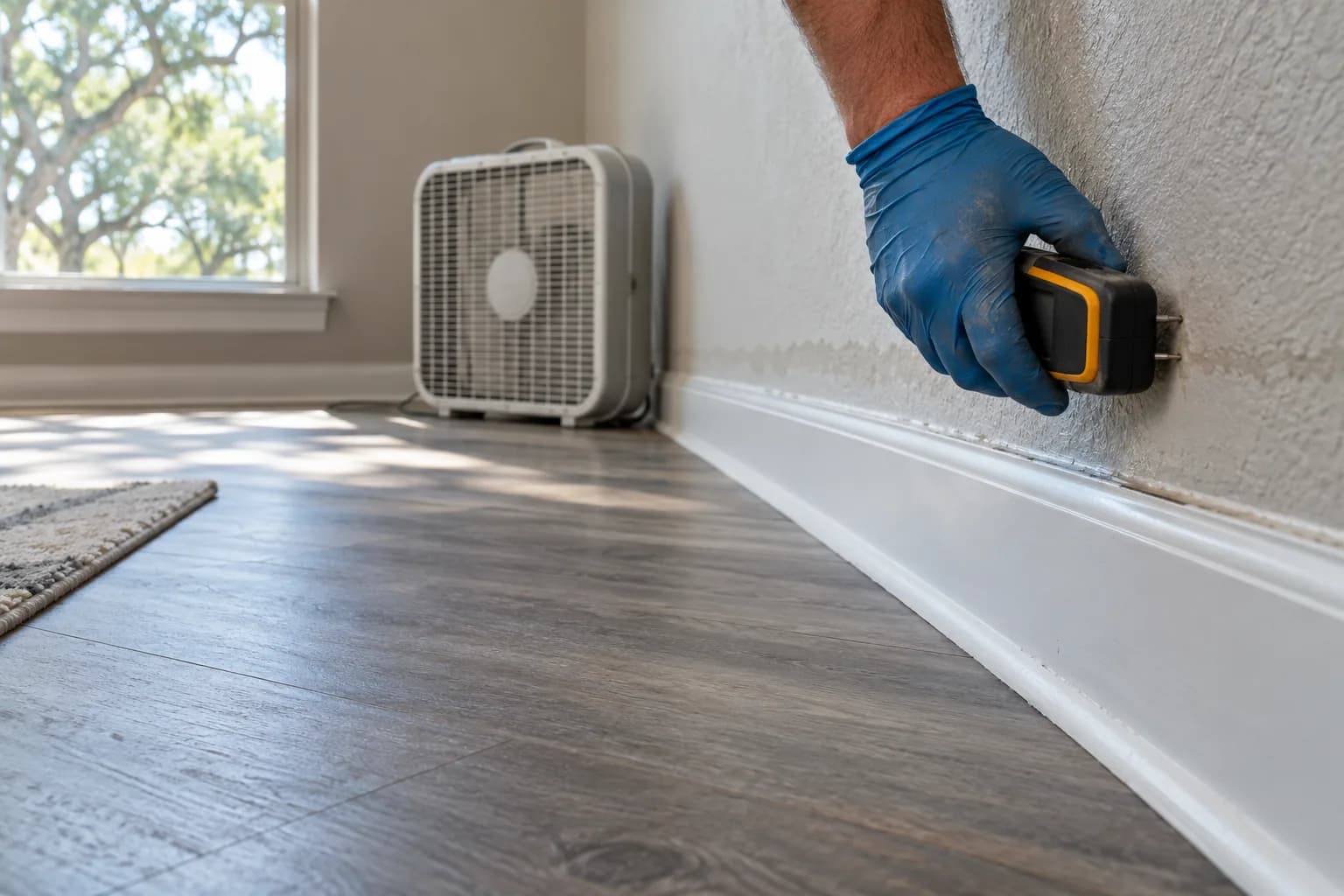
Here's the trap. It isn't the water you can see, it's the water you can't. You mop the floor, run a fan overnight, the surface feels dry, and you think you won. Meanwhile the bottom plate of the wall, the subfloor, and the wall cavity behind the baseboard are still holding moisture, and they'll keep holding it for days.
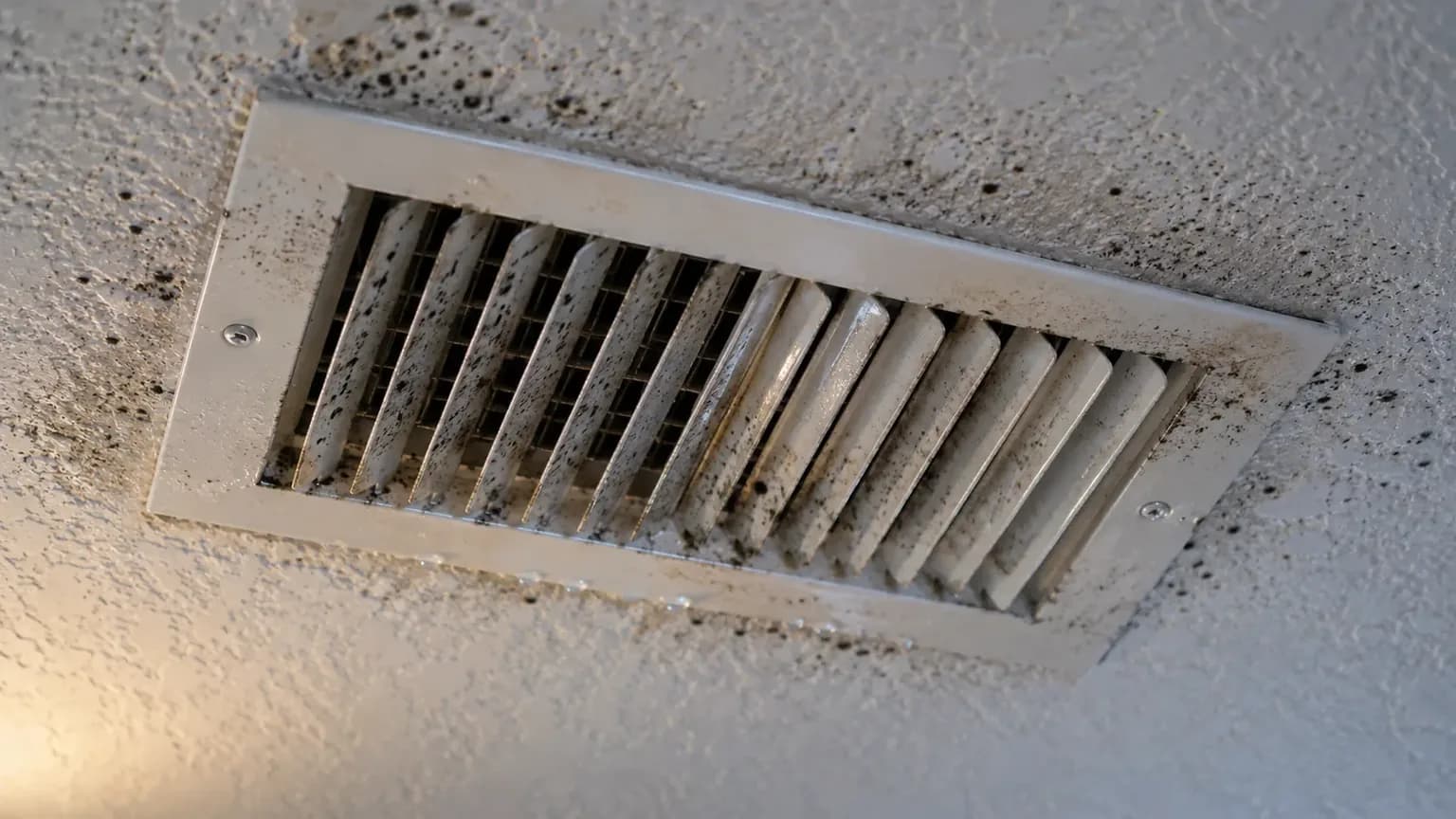
A surface can read bone dry while the material an inch in is soaked. Pros confirm dryness with a moisture meter checked against a dry reference area, the dry-to-standard method, while a homeowner with a box fan is honestly just guessing. That's the gap professional structural drying is built to close. Big gap, too. Slab-on-grade homes, common across Kyle, Buda, and newer San Marcos builds like Blanco Vista, make it worse, because water wicks into the slab and the base of the walls where a shop vac never reaches. And in humid Central Texas, a wrong guess doesn't stay quiet. It shows up as a musty smell two weeks later, which by then means hidden mold. If you have any doubt, a moisture inspection settles it before it costs you.
The Equipment Gap
This is the practical reason small jobs are fine and bigger ones aren't. Your home toolkit, a shop vac and a couple of box fans, handles surface water on a small clean spill. It does not handle a structure that's actually wet.
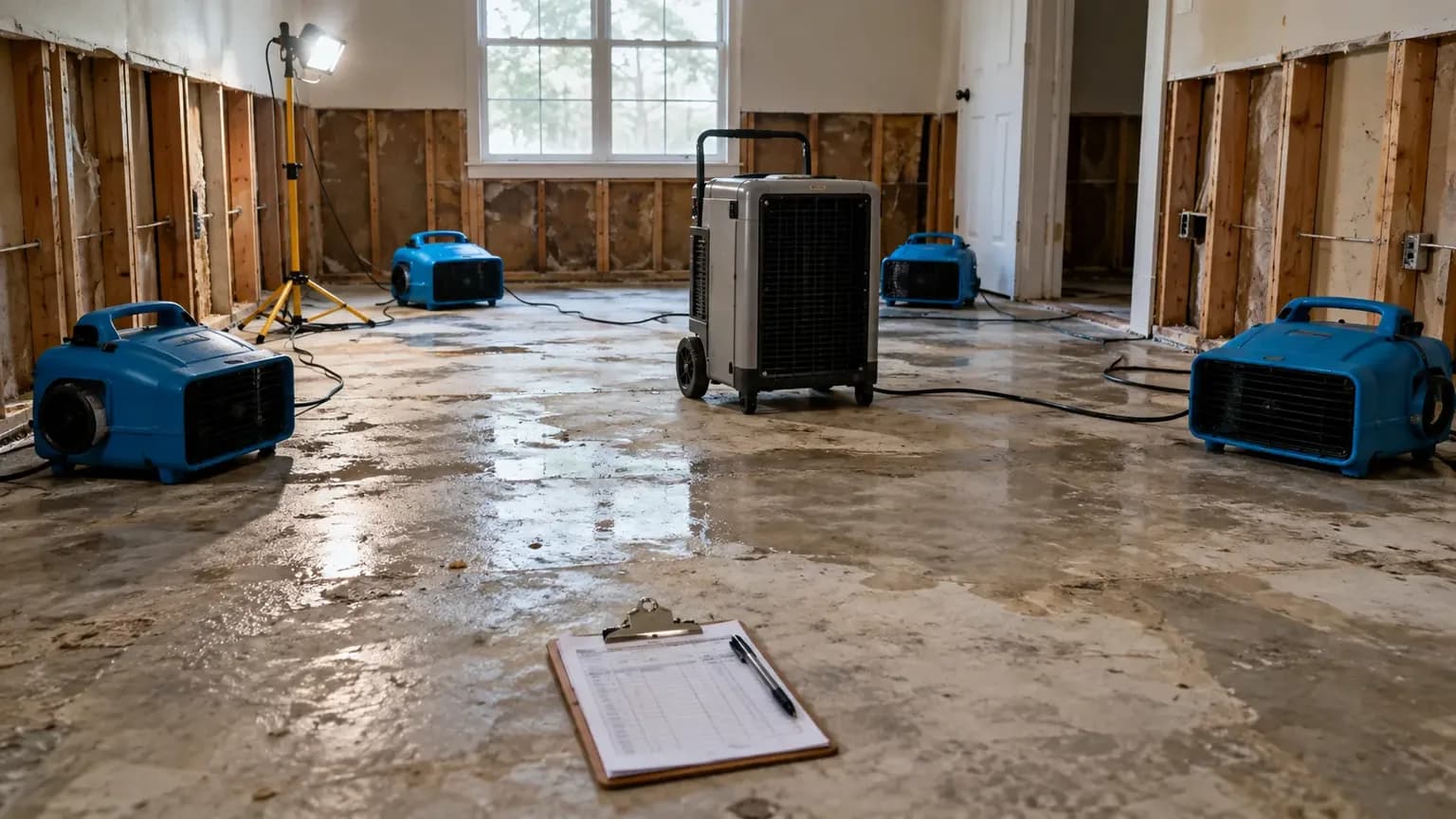
Professional gear plays a different game. Truck-mounted extraction pulls water out at a volume a shop vac can't touch. Air movers shear the still layer of air off wet surfaces to force evaporation fast, and then LGR dehumidifiers remove that evaporated moisture from the air so it doesn't just resettle into the walls you are trying to dry. And the whole thing is verified to a dry standard with meters, not declared finished because the floor feels okay. That combination, extraction plus airflow plus real dehumidification plus verification, is the difference between drying a surface and drying a structure, and it's why a shop-vac-and-fan approach quietly fails on anything that soaked in.
The Real Risk of Getting It Wrong
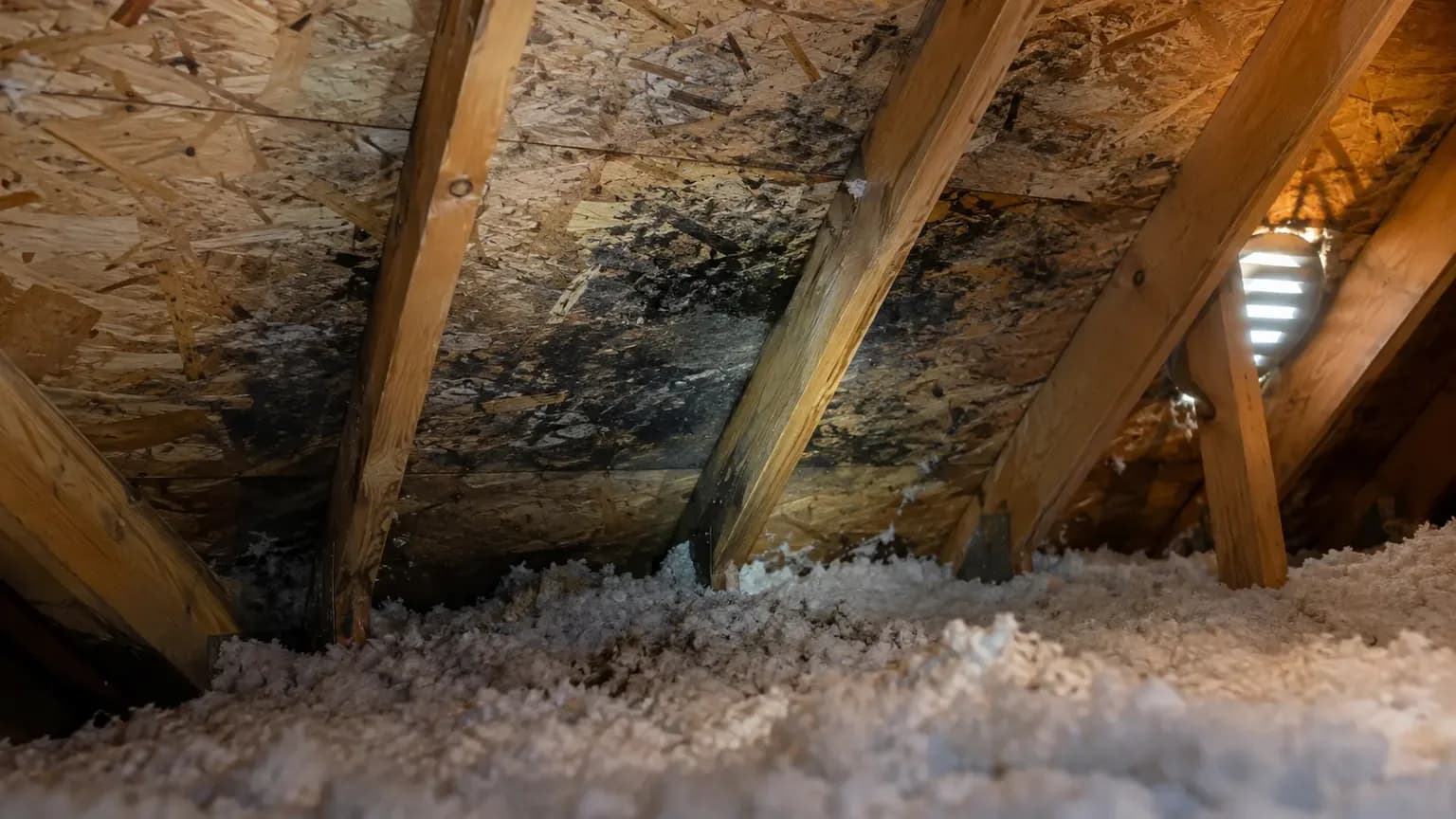
The downside of guessing wrong is rarely the spill itself. It's what the leftover moisture turns into. Mold can begin within 24 to 48 hours when materials stay damp, and in our heat and humidity it moves on the faster end of that.
Once it's in the wall cavity, you're no longer cleaning a spill, you're remediating mold. For the timeline in detail, here's how fast mold grows after water damage.
There's a money angle too. Trapped moisture warps hardwood, swells drywall, and rots subfloor, so the materials you might've saved by drying properly now have to be torn out and replaced. A small spill becomes a big repair. And if you ever file a claim, undocumented DIY work makes it harder, since the insurer wants to see the damage and the drying, not your word that you handled it. So the real question isn't whether you can mop. It's whether you can be sure it's fully dry. If you can, save your money. If you can't, the cheap move is calling before it spreads.
Written by the Water Damage Restoration San Marcos team
Local water-damage restoration in San Marcos, TX and Hays County. Our guidance follows the ANSI/IICRC S500 and S520 reference standards the industry plans around. Questions about your situation? Call (512) 778-8417, we answer 24/7.