San Marcos water damage guide
Student Housing Water Damage in San Marcos, TX: Landlord Guide
A tenant texts at 11 p.m. during finals week. Water's coming through the ceiling in unit 2. You're doing math before you've pulled on shoes. How many units are hit, how fast can someone get out there, will the tenant need somewhere to sleep, what does this do to your turnover schedule. Student housing water damage in San Marcos works differently than a single-family loss, and this guide is for the people who manage it. Landlords and property managers, not panicked homeowners. The thing to know up front is that water in a multi-unit building almost never stays in the unit where it started.
Published · Updated
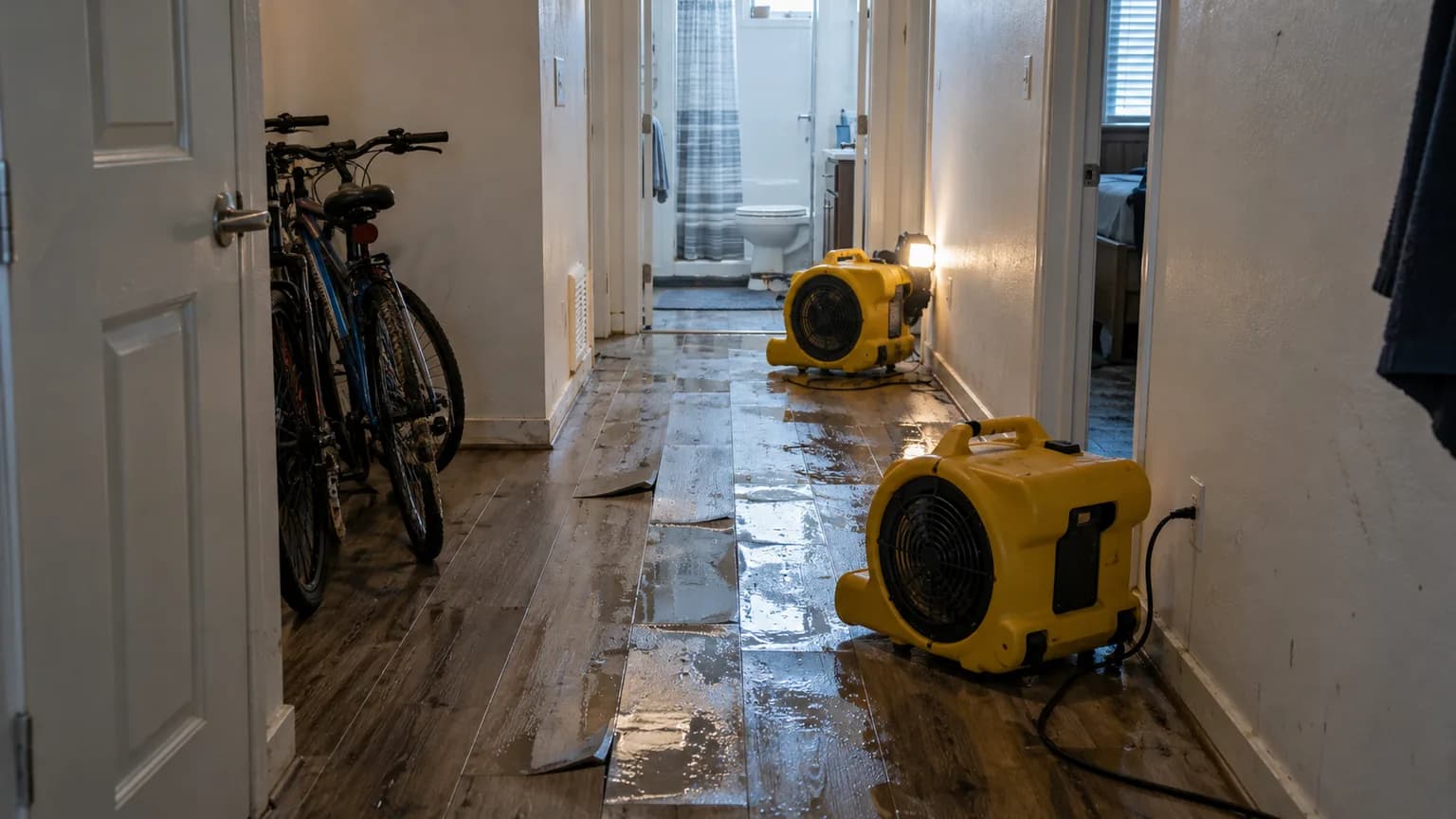
Property manager? Get a vendor you can put on speed-dial. Reach out here before the next 2 a.m. call.
What Property Managers Should Know About Student-Housing Water Damage
Student-housing water damage in San Marcos often spreads beyond the reported unit, because water travels down and into shared walls. Property managers need a vendor that responds after hours, maps moisture across adjacent units, minimizes downtime during turnover, and documents the loss for owners and insurers.
The reported unit is rarely the whole job. The first 24 to 48 hours decide the scope.
Five things matter. What you actually want from a restoration vendor in this market.
- After-hours response, because the worst leaks don't wait for office hours, and a finals-week burst can't sit until morning.
- Multi-unit capacity, so one crew can contain, map, and dry several spaces at once instead of stringing visits across days.
- Cross-unit moisture mapping, to find the water that traveled past the unit anyone reported.
- Owner-defensible documentation, with photos, moisture readings, and a clear scope an owner and an insurer can both read.
- Turnover awareness, meaning a vendor who understands that downtime during move-out costs you real revenue.
Get those five right and a leak becomes a managed incident instead of a scramble.
Why Student Rentals Flood More Often
Density plus age plus turnover. That's the short version. More fixtures and appliances per square foot than a single-family home, older plumbing in properties held as rentals for decades, and tenants who change every twelve months and may not know where a shut-off valve is.
The Texas State University area packs rentals into a small footprint. The short version is duplexes, fourplexes, and small complexes, many of them older homes near campus and downtown chopped into rentals years ago. Aging plumbing comes with the territory, and supply lines to washers, dishwashers, and water heaters fail more often in buildings that have seen a decade of student tenants who never report the slow drip under the sink. High occupancy means more fixtures running more hours.
Then there's the freeze exposure. A hard freeze like the Winter Storm Uri archetype doesn't politely hit one unit; it hits the whole building's exposed lines at once, and you can wake up to three units leaking instead of one. That mix of old plumbing, dense occupancy, and shared mechanical systems is why supply-line and appliance failures cluster here. Our appliance and supply-line leak cleanup near campus runs heaviest right when buildings fill back up each semester.
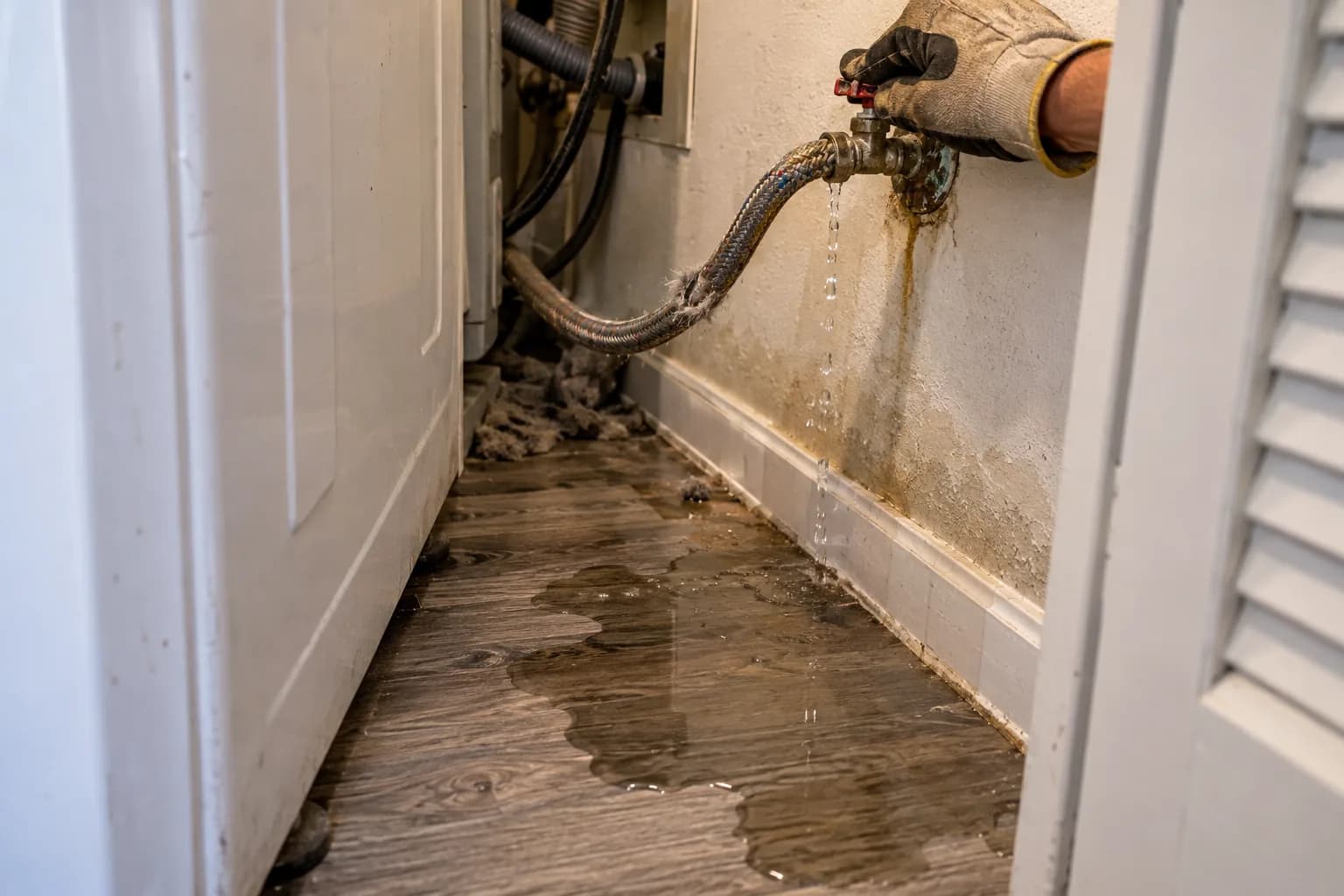
Water Doesn't Stay in One Unit
This is the part that costs owners money when a vendor gets it wrong, and it gets it wrong often. Water from a second-floor unit runs down shared wall cavities into the units below and beside it, so the wet footprint is usually wider than the complaint.
In multi-unit housing, the most expensive mistake is treating a leak as a single-unit job. Water follows gravity and structure. It runs down through the ceiling into the unit below, then sideways into shared wall cavities. So the leak reported in unit 4 is also, quietly, a job in unit 2, even if nobody there has noticed yet. A vendor who dries only the reported unit leaves wet framing you can't see, and that hidden moisture becomes a mold problem and a habitability complaint weeks later, with your name on it.
Mapping moisture across adjacent units up front protects the owner's budget and your reputation. Map it once. It means metering the unit below and the units on either side, checking shared cavities, and scoping the real footprint before the drying plan gets written. Done right, you handle the loss once. Done wrong, you're back in a month explaining to an owner why a "finished" job grew mold.
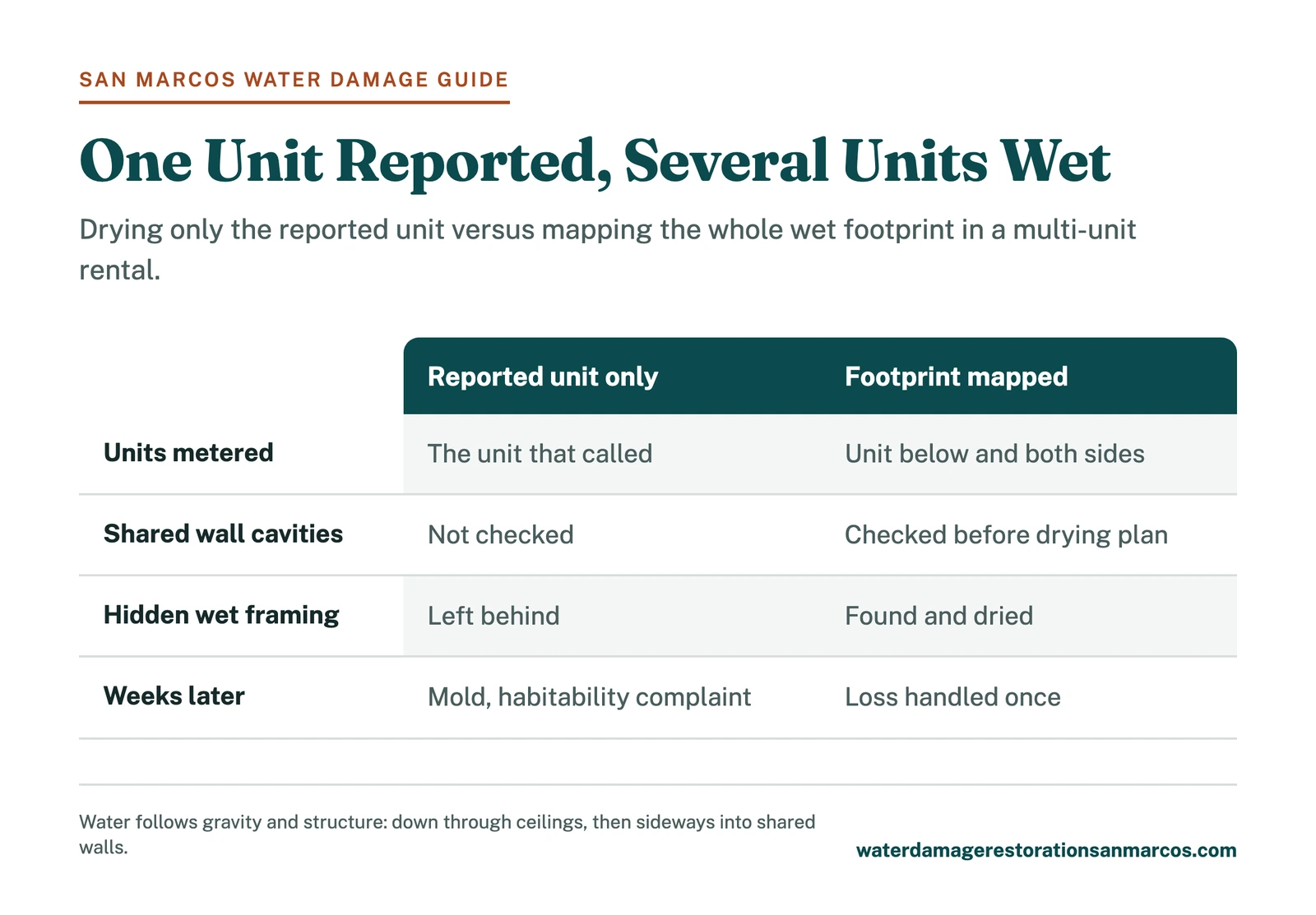
Text version of this infographic
One Unit Reported, Several Units Wet. Drying only the reported unit versus mapping the whole wet footprint in a multi-unit rental.
| Item | Reported unit only | Footprint mapped |
|---|---|---|
| Units metered | The unit that called | Unit below and both sides |
| Shared wall cavities | Not checked | Checked before drying plan |
| Hidden wet framing | Left behind | Found and dried |
| Weeks later | Mold, habitability complaint | Loss handled once |
Water follows gravity and structure: down through ceilings, then sideways into shared walls.
The Semester Clock, After-Hours and Turnover Pressure
Timing is its own pressure in this business, and a local vendor should know your calendar. August move-in and May move-out compress everything into days, and a unit still drying on turnover day is a unit you cannot lease. Winter break is the quiet window.
Two windows stack the deck against you. Finals week, when buildings are full and a midnight burst can't wait, and move-out, when you have days, not weeks, to flip a unit before the next lease starts. A water loss during either one isn't just a repair, it's a threat to your schedule and your revenue, since a unit that can't be dried and turned in time means a vacancy or a displaced tenant. That's why after-hours reachability and parallel drying matter more here than almost anywhere else. We frame our availability as after-hours response, not a guaranteed clock time, because honest expectations beat a promise that breaks during a regional freeze.
Habitability, Mold, and Liability
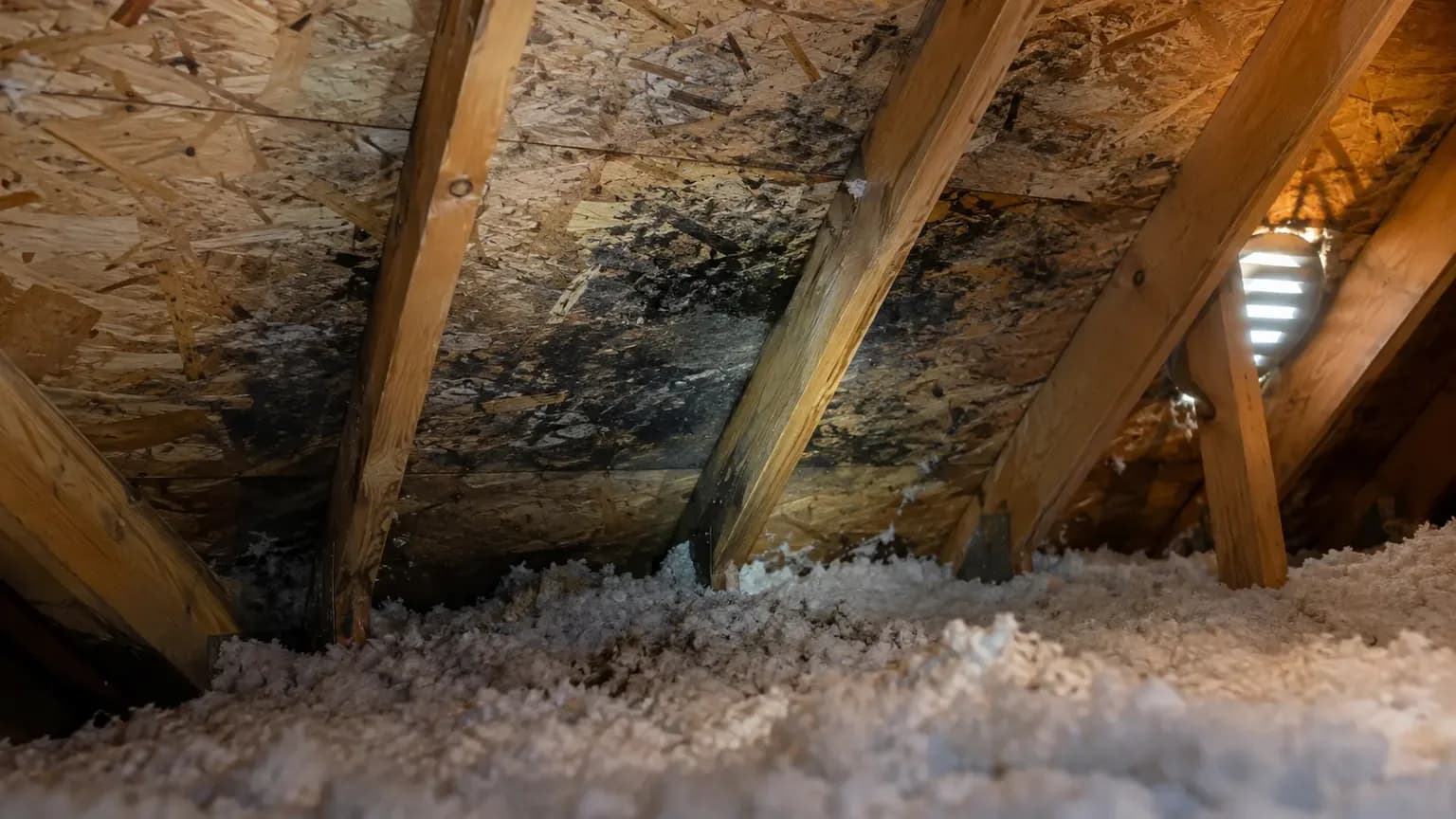
The clock that really matters is biological. Mold begins growing within the first 24 to 48 hours after water damage, and the humid Central Texas climate accelerates it. In a student rental, that timeline collides with habitability law and your lease obligations.
A unit with active mold growth or standing moisture isn't something you can hand to the next tenant, and a displaced student is a complaint, a refund, or worse waiting to happen.
Fast drying is the defense. Get moisture out of the structure inside that window and you usually avoid the mold question entirely. Miss it, and you're into containment, mold remediation, and demolition that pushes a unit offline for weeks. Weeks you don't have. Speed up front is cheap; mold on the back end is not. For property managers, drying fast isn't only about the building, it's about staying clear of the habitability and liability exposure that comes with handing a tenant a unit that isn't truly dry.
Documentation Owners and Insurers Expect
You answer to people, and the paperwork is how you do it cleanly. Owners and insurers expect a per-unit scope of work, dated moisture readings, a water Category classification, photos before anything is removed, and a clear log of what was done and when.
An owner approving an invoice wants to see what they're paying for. An insurer wants proof of loss before releasing a dollar. Both want the same thing. Proof. A good vendor gives both, which means dated photos of every affected area, moisture readings logged per unit, a written scope tying the work to the cause, and drying records showing the structure reached dry standard. That's the difference between an invoice an owner signs and one that drags into a week of back-and-forth. Our guide on how to document water damage for insurance goes deeper on proof of loss.
We'll coordinate the documentation and reporting, and where it helps we'll work with the carrier on the claim, though specific billing arrangements get confirmed per job, not promised in advance. What you get is a record that holds up in front of an owner and an adjuster, so the cost of the loss is defensible and responsibility is clear. Paper that holds up.
Building a Standing Vendor Relationship
Here's what property managers actually want, stripped down. That means one name that picks up after hours, knows your buildings, and runs the same process every time. Not a frantic review search while a ceiling drips at eleven at night in the middle of turnover week.
A standing relationship means we already know your portfolio, your turnover calendar, and how your owners like documentation, so a 2 a.m. call skips the explaining and goes straight to dispatch. It means reporting you can forward to an owner without rewriting it. And it means coverage across San Marcos and Hays County, so the same vendor handles your water damage restoration in Kyle units as your campus-adjacent ones. One vendor, the whole portfolio. The whole point of commercial water damage restoration in San Marcos for a property manager is removing the scramble. Set it up before you need it.
Written by the Water Damage Restoration San Marcos team
Local water-damage restoration in San Marcos, TX and Hays County. Our guidance follows the ANSI/IICRC S500 and S520 reference standards the industry plans around. Questions about your situation? Call (512) 778-8417, we answer 24/7.